
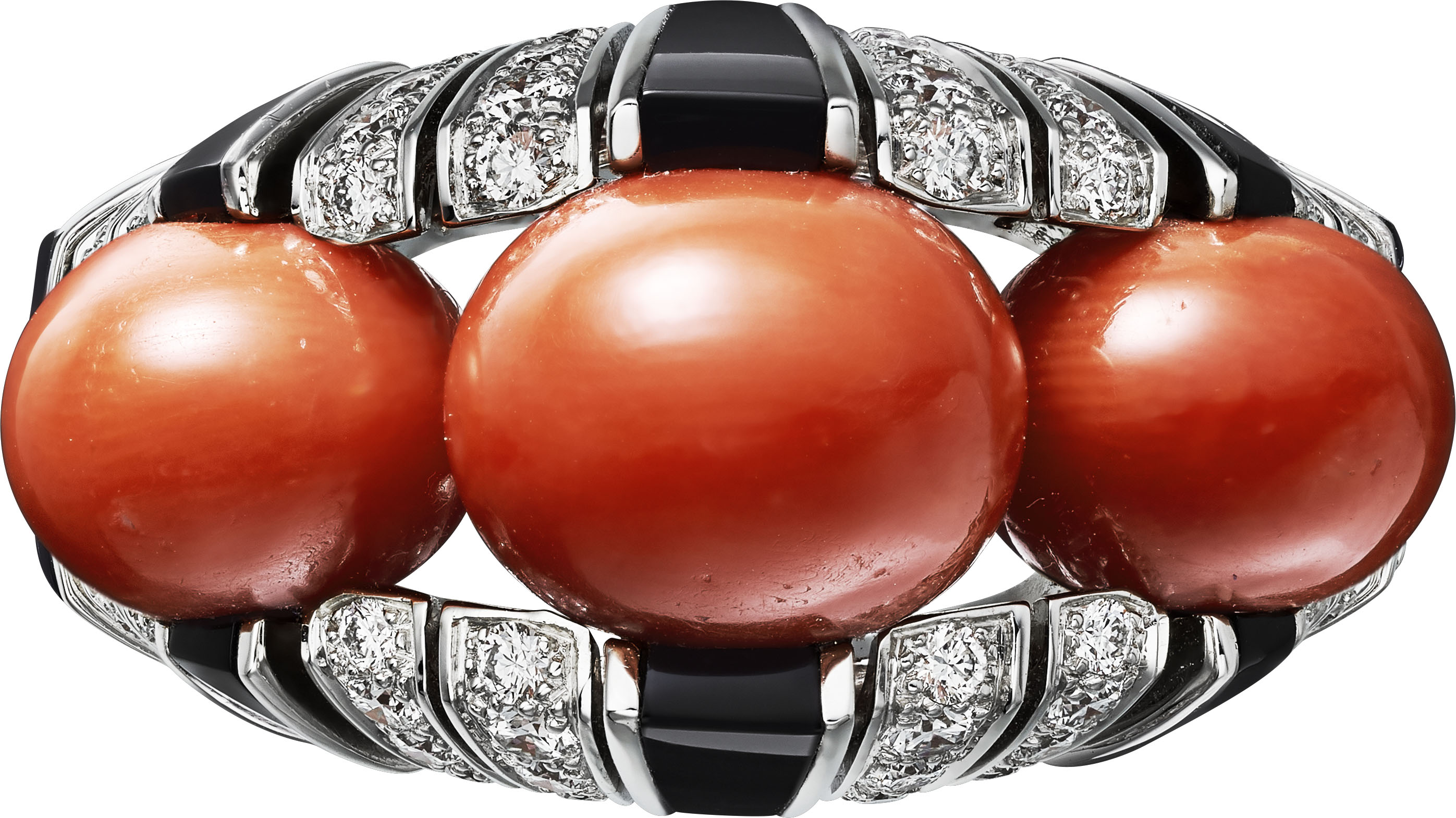
Coral, a strange marine organism, has been used by Cartier for nearly a century. Some of the Maison’s greatest clients wore coral.
- Substance: mineral secreted by an underwater organism
- Color: intense red to pale pink; white; black
- Renowned sources: Mediterranean Sea, Pacific Ocean
A strange sea animal
Often mistakenly thought to be a plant, coral is in fact an underwater organism of the phylum Cnidaria, to which jellyfish also belong. It thrives in warm waters, where each organism secretes an exoskeleton that varies according to species. This hard structure develops into branching shapes whose color ranges from bright red to pale pink. There are also white and black corals, whose harvest is now protected.
The mystery surrounding coral has fueled myths down through history. Described by the ancient Latin poet Ovid as the petrified blood of Medusa, coral was long thought by scientists to be an underwater tree.
Its resplendent color has made coral one of the most prized ornamental minerals since prehistoric days—precious coral objects have been discovered in tombs dating back to the Iron Age, that early stage of human civilization. People have long coveted coral: in Antiquity it served as currency, and in the sixteenth century was the focus of rivalry between the French and Genoese who, implanted along the coast of North Africa, were prepared to go to war to obtain a monopoly on coral fishing.
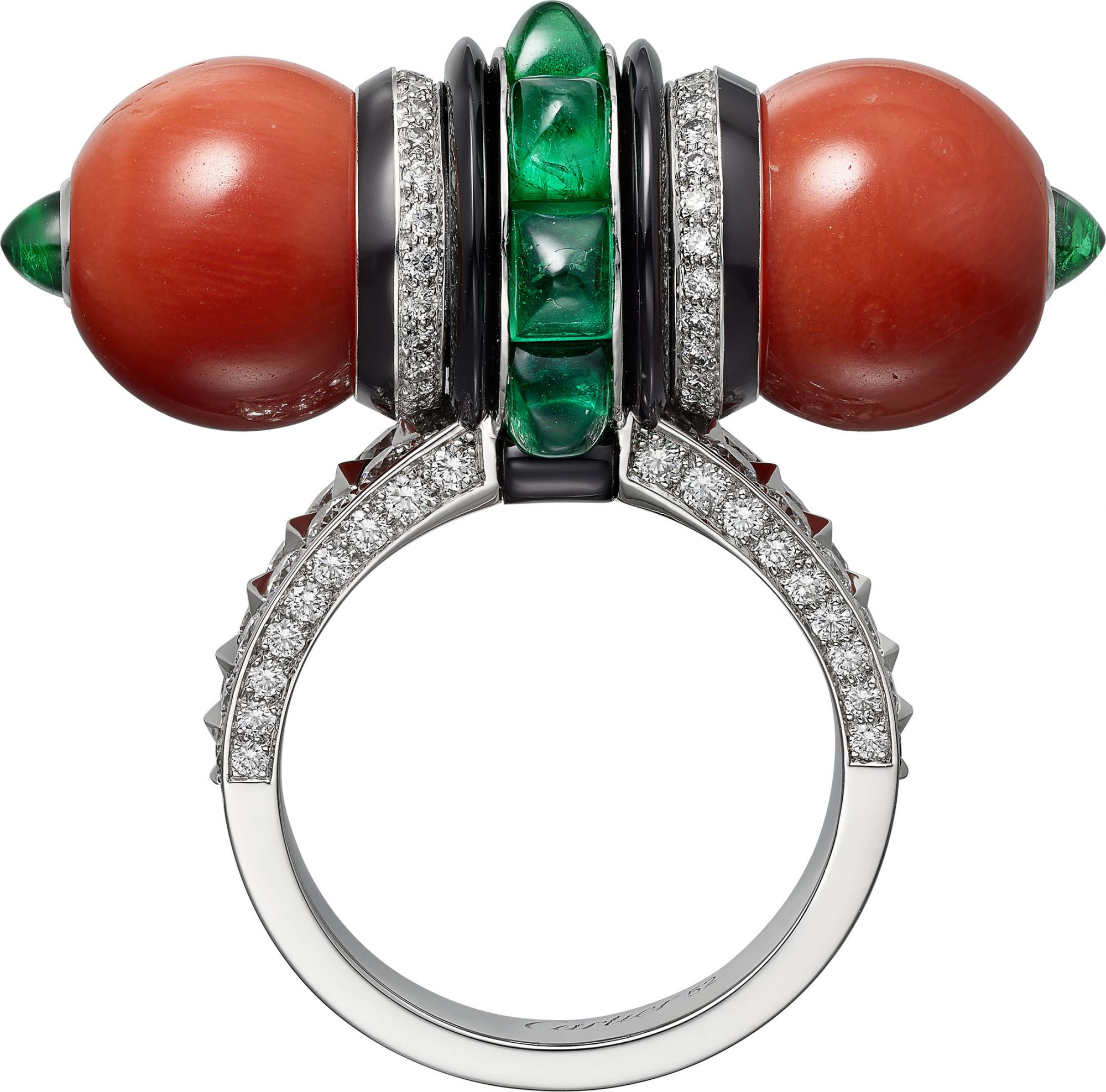
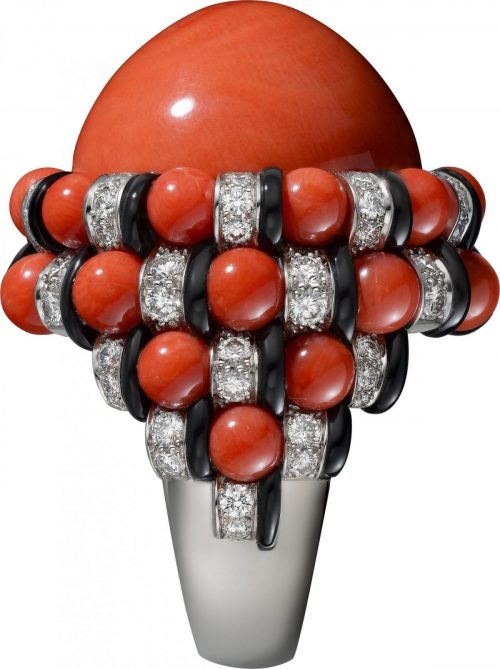
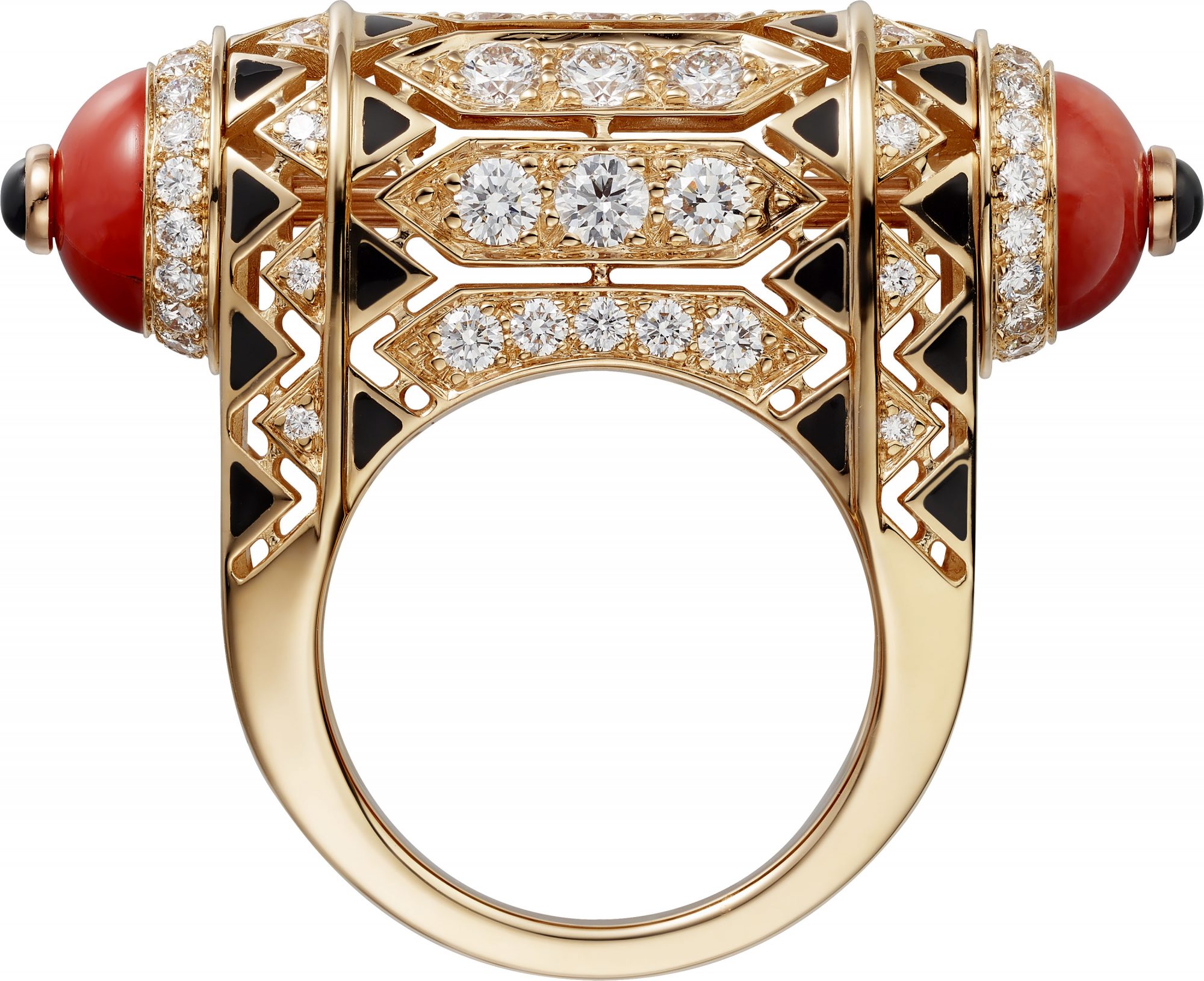
Today coral is partly protected by the Washington Convention, which regulates international trade in wild flora and fauna. That is why Cartier uses a specific, non-prohibited variety of coral found in the Mediterranean. The harvesting of this red coral, scientifically named corallium rubrum, is subject to strict local regulations, which are respected by Cartier’s suppliers.
Other species of coral, including corallium japonicum, are found in the Pacific Ocean, and are traditionally appreciated for their soft shade ranging from pink to red. These rarer varieties are occasionally used by Cartier for certain specific designs, notably special orders.
Cartier reveals coral’s elegance
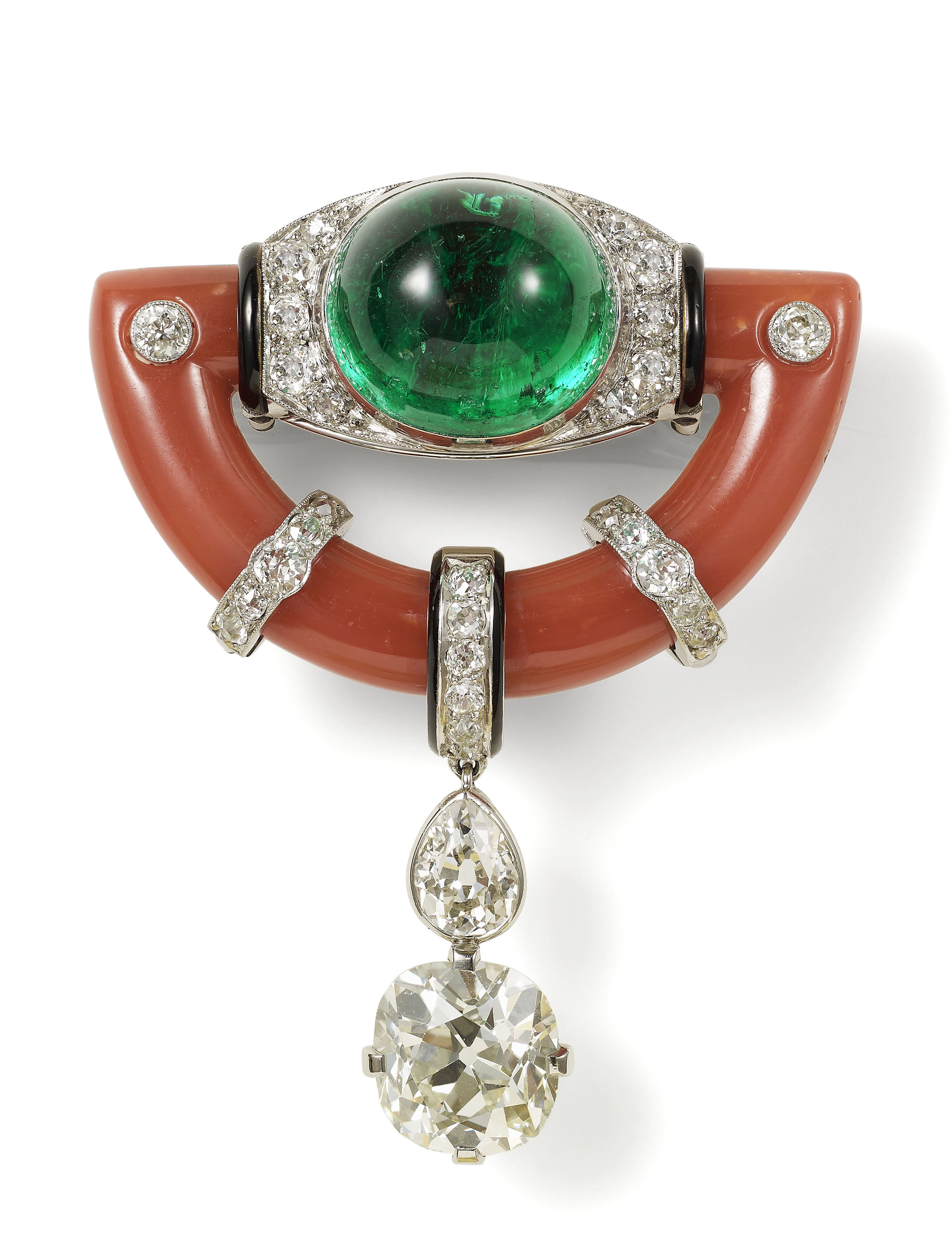
Whether sculpted, carved, or cut into beads, coral has participated in Cartier’s stylistic development over the years. Right from the early twentieth century, Cartier revealed how elegant coral can be, incorporating it into the pantheon of gemstones. At that time, influenced by the Ballets Russes, Cartier explored an Orientalist aesthetic through designs that featured explosive combinations of colors. This palette relied on turquoise, jade, lapis lazuli—and, above all, coral. Wedded to black onyx and green emerald (or jade), coral’s warm hues yielded bold items of jewelry described as “daring” and even “rather dangerous” by Baron Adolf de Meyer in Harper’s Bazaar of March 1926. Coral was therefore used in small touches, avoiding direct confrontation with glittering, flamboyant, or nacreous stones. On the contrary, coral was rendered more precious through Cartier’s skill and creativity in revealing all its sensuality and evocative power, to the point where La Gazette du Bon Ton, the bible of refined taste of the day, wondered whether “coral might be the most feminine of finery.”

Contrast of color was accompanied by contrast of shapes. Initially abstract, Cartier’s designs became increasingly structured, in which coral played a key role. This new, so-called “modern” style was a forerunner of Art Deco, the art movement made famous by the 1925 Art Deco exhibition in Paris, where Cartier exhibited numerous pieces of jewelry, including several with coral. In subsequent years Cartier would design carefully structured jewels, such as a 1933 ring crowned by little rods of onyx and coral, purchased by Marjorie Merriweather Post.
A feel for the Orient
At the same time, the world became infatuated with Egypt, sparked by the 1922 discovery of Tutankhamen’s tomb. Cartier had always been a jeweler inspired by distant horizons, composing an entire series of Egyptian-inspired pieces in which the Oriental feel of coral played an important role. For example, coral adorned several cigarette and vanity cases based on apprêts (fragments of ancient decorative items), and also embellished a clock made in 1927.
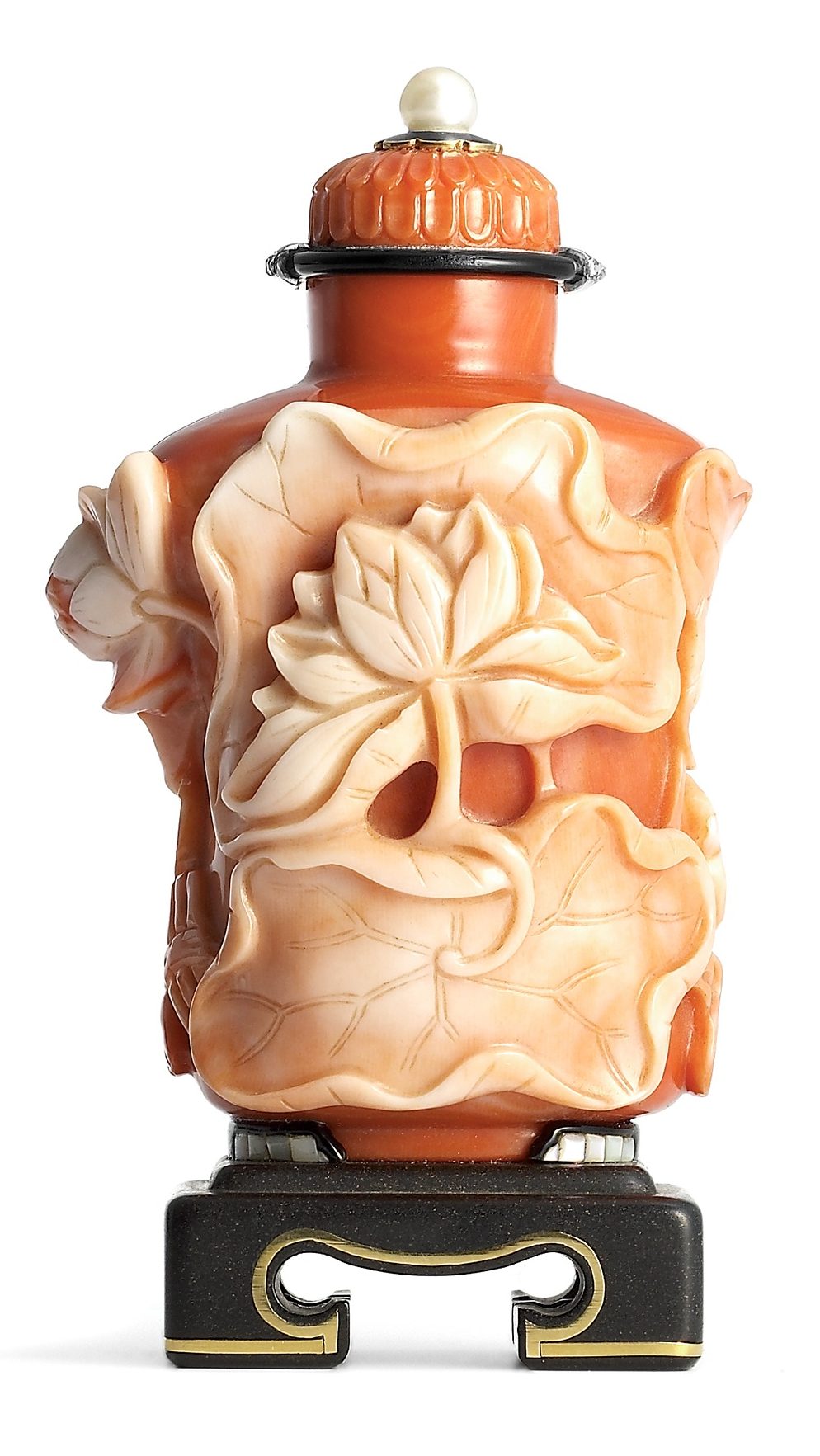
That was the year Cartier designed a gravity clock in the form of a Shinto shrine gate, whose coral decoration harmoniously contrasted with jade and nephrite, wonderfully evoking Asian artistry. This item testified to Cartier’s authentic, enduring interest in the Far Eastern aesthetic. There followed many precious objects of Asian inspiration enlivened with coral, such as clocks, vanity cases, and scent bottles, including one bought in 1926 by Mona Bismarck.
Cartier’s coral-studded menagerie and garden
It was through further exploration of this Far Eastern influence that Cartier introduced coral into the Maison’s animal jewelry of the 1920s. Playing on Oriental mythology, Cartier used coral on its famous chimera bracelets, one of which was acquired by singer Ganna Walska.

In 1930, a coral-bead bracelet ended in a clasp with a spotted pattern that evoked a panther, the cat that would become a Cartier icon.
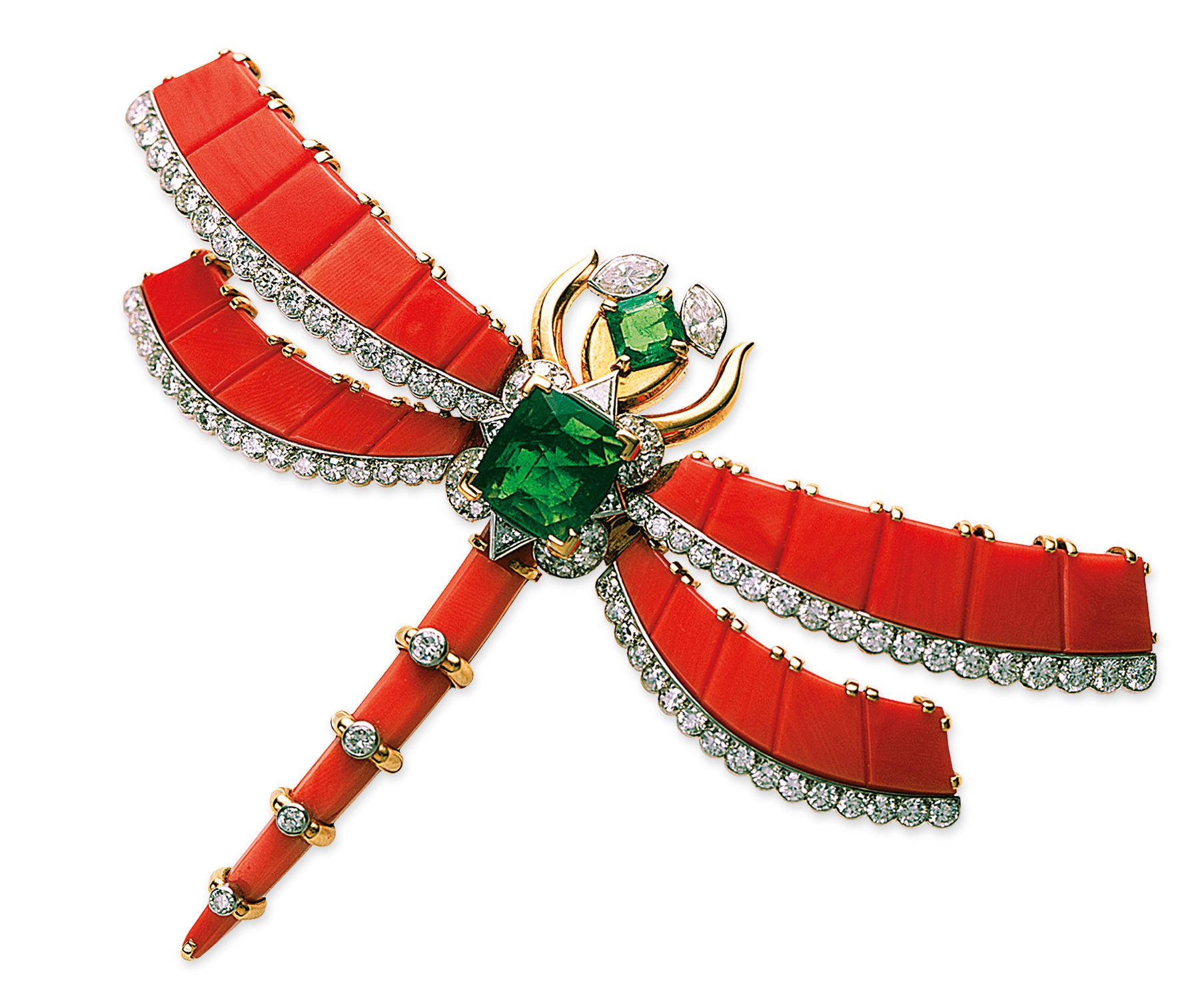
Under the aegis of Jeanne Toussaint, appointed Cartier’s Creative Director in 1933, coral’s role in jewelry grew. In the 1930s and 1940s Toussaint encouraged house designers to employ coral for certain features of its adorable animal jewels—the beak of a parrot, the wings of a butterfly, the shell of a snail, the bodies of lady-bugs spotted with diamonds (worn as stud earrings), and so on.
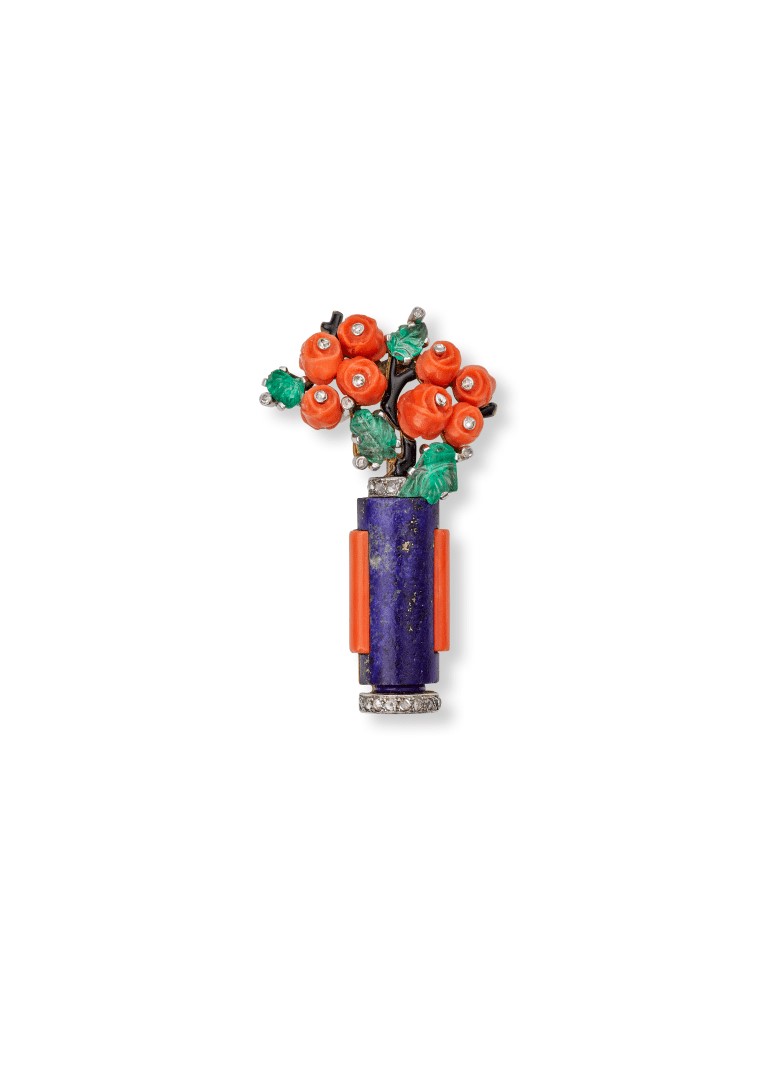
As a jeweler of both fauna and flora, Cartier also used coral in its floral designs. For example, a wonderful brooch of 1928 depicted a Chinese vase with carved flowers, while another brooch, made twenty-five years later, featured a pavé-set platinum stem whose coral petals emerge from an emerald bud.
A show of femininity
In the 1940s, coral featured in two items of jewelry important to Cartier’s history: the Oiseau libéré (Free Bird) brooch of 1944, with its proud breast of coral celebrating the Liberation; and a gadrooned gold ring crowned by a coral cabochon (encircled by gold wire leaves set with square emeralds tipped by diamonds), which was bought by the Duchess of Windsor in 1947.
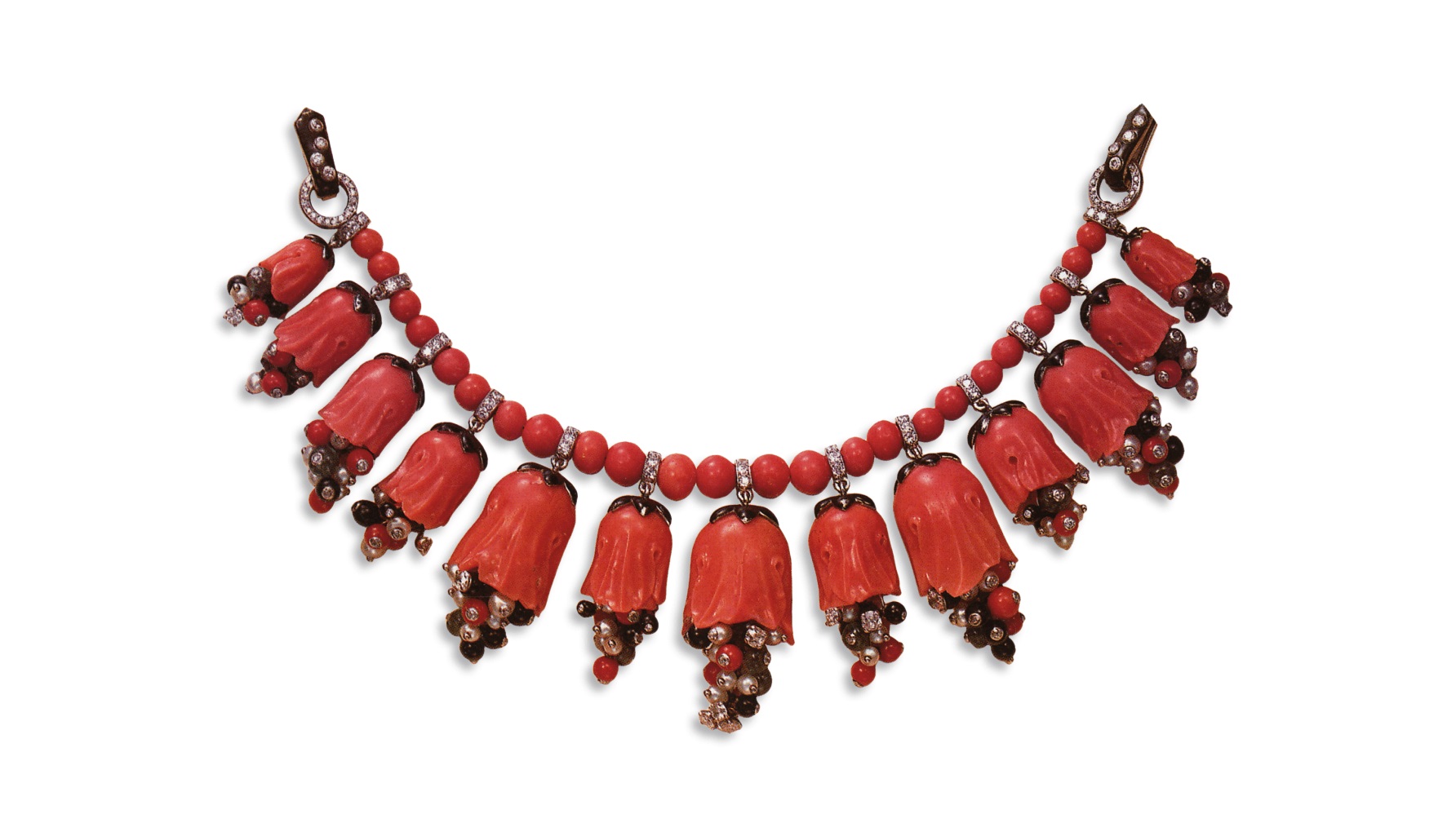
Coral’s renown grew in the 1950s once it seduced two icons of femininity. First came Princess Grace of Monaco, for whom Cartier made several animal brooches employing coral. Then there was Mexican actress María Félix, a faithful client who owned a necklace of coral beads adorned with carved bellflowers from which dangle clusters of onyx and emeralds.
Timeless
In keeping with the social euphoria of the 1960s and 1970s, Cartier produced not only new floral designs that used coral but also totally original jewelry that wittily referred to Pop Art. The latter included a Love brooch with letters of gold except for the “o,” which was represented by a heart-shaped coral. Then there was the Target brooch, whose center was set with a coral cabochon pierced by an arrow.
Around 1970, when coral was still highly popular, Cartier made several delightful, visually powerful pieces based on carved “angel-skin” (pale pink) coral, playing on the contrast with platinum and diamonds. In 1973, the Cartier Paris workshop also devised a sautoir of yellow gold and cultured pearls combined with coral beads that added an Oriental touch.
In recent decades, coral has surfaced in various pieces of jewelry and precious objects, celebrating the major features of Cartier’s stylistic grammar: a ring with nine berry-like coral beads set on delicate petals of pavé-set platinum saw the light of day in 2011, while in 2014 there emerged a visually impressive ring made of several striped bands of coral alternating with diamonds.
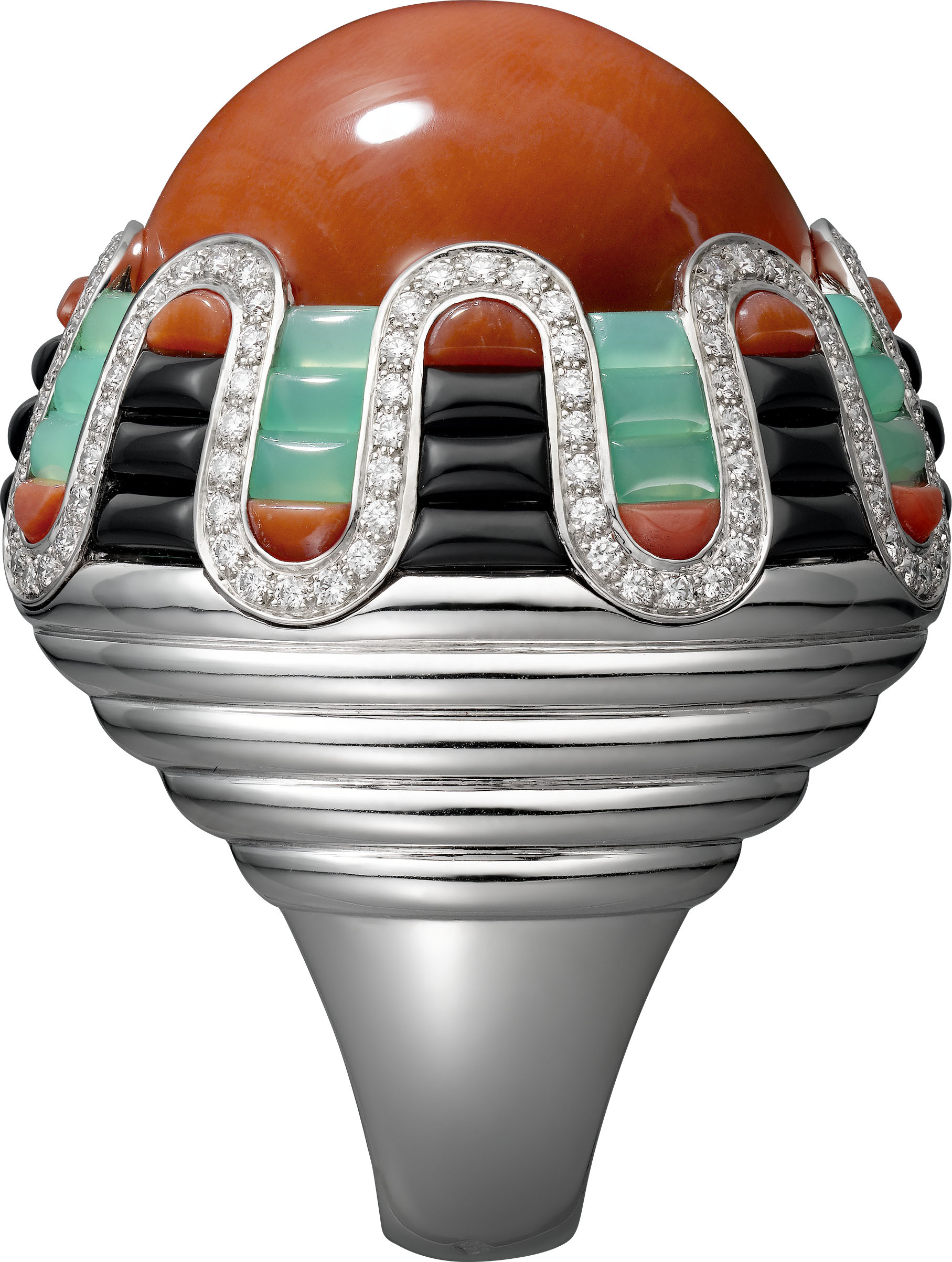
Coral also featured in the Étourdissant Cartier line in 2015. One bracelet was notably composed of fourteen coral beads dangling from intertwined curves of platinum, while a ring was crowned by an imposing coral cabochon encircled by a colorful pattern of onyx, chrysoprase, and coral.
Care of coral
Coral should not be exposed to overly high temperatures. To clean it, a soft, slightly damp cloth suffices—the use of alcohol, ammonia, or chorine is not recommended.