
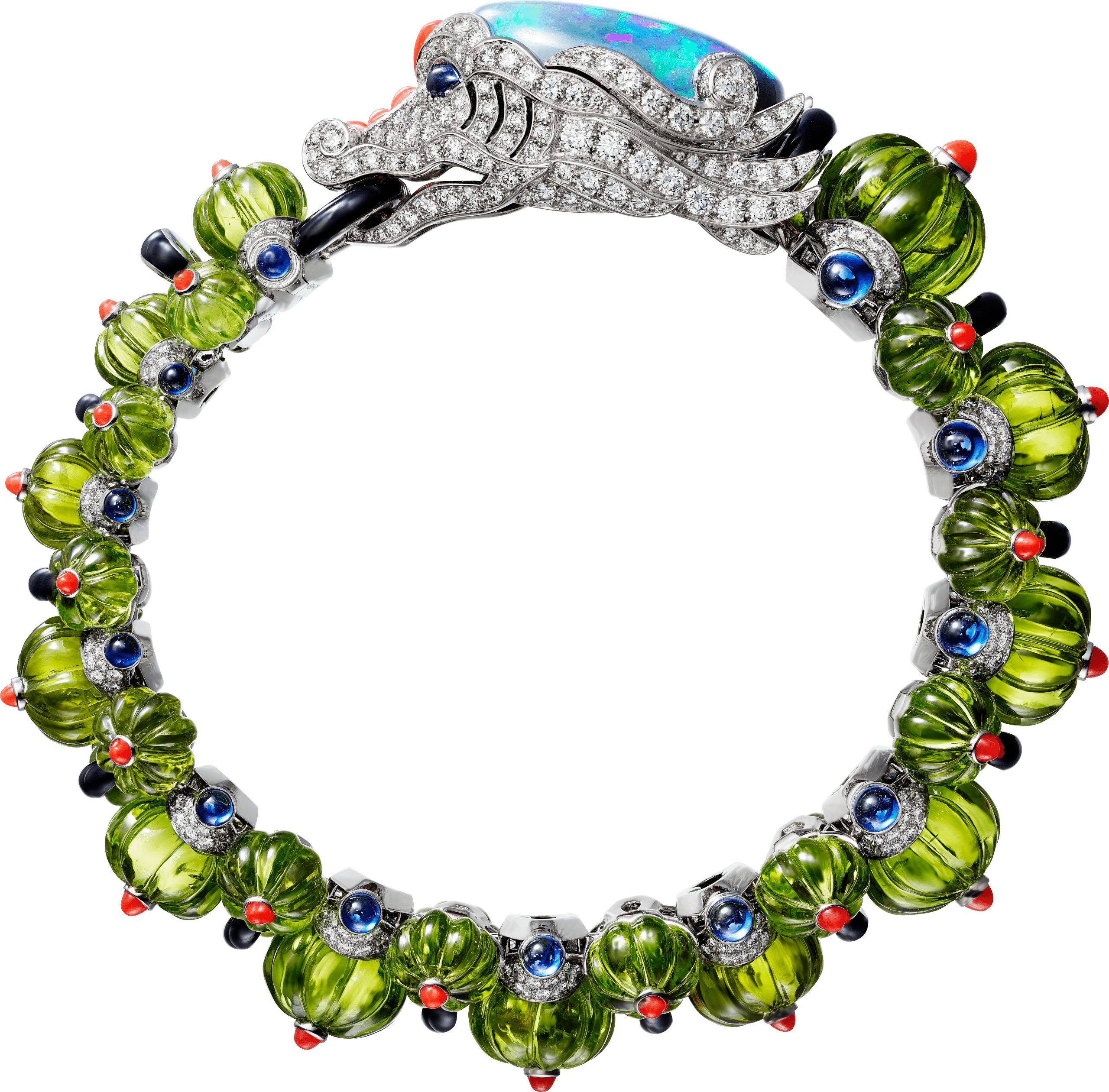
While Cartier’s bestiary features both wild and domesticated animals, it is also populated by mythological beasts, such as the chimera. This fearsome creature springs forth from ancestral legend, enhanced for original and emblematic creations.
The chimera is a legendary creature. It appeared in Greek mythology as a fire-breathing monster with hybrid anatomy. Its exact form varies from one tale to the next, but it is most frequently described as composed with the head of a lion, the body of a goat and the tail of a snake. In Chinese tradition, the chimera is one of the nine offspring of a mythical dragon. Ferocious, it takes the appearance of a fantastic lion that slays evil spirits. Its voracious appetite for wealth is taken as an auspicious token of prosperity.
The chimera joined the Cartier bestiary early on: the first mention in the archives refers to a brooch created in 1883. In the following decades, the creature became a recurrent theme in exquisite jewelry items, such as a Chinese-inspired brooch from 1900 and a silver belt buckle from the same year depicting a battle between dragons and chimeras, both of which are mentioned by Hans Nadelhoffer in his book about the Maison.
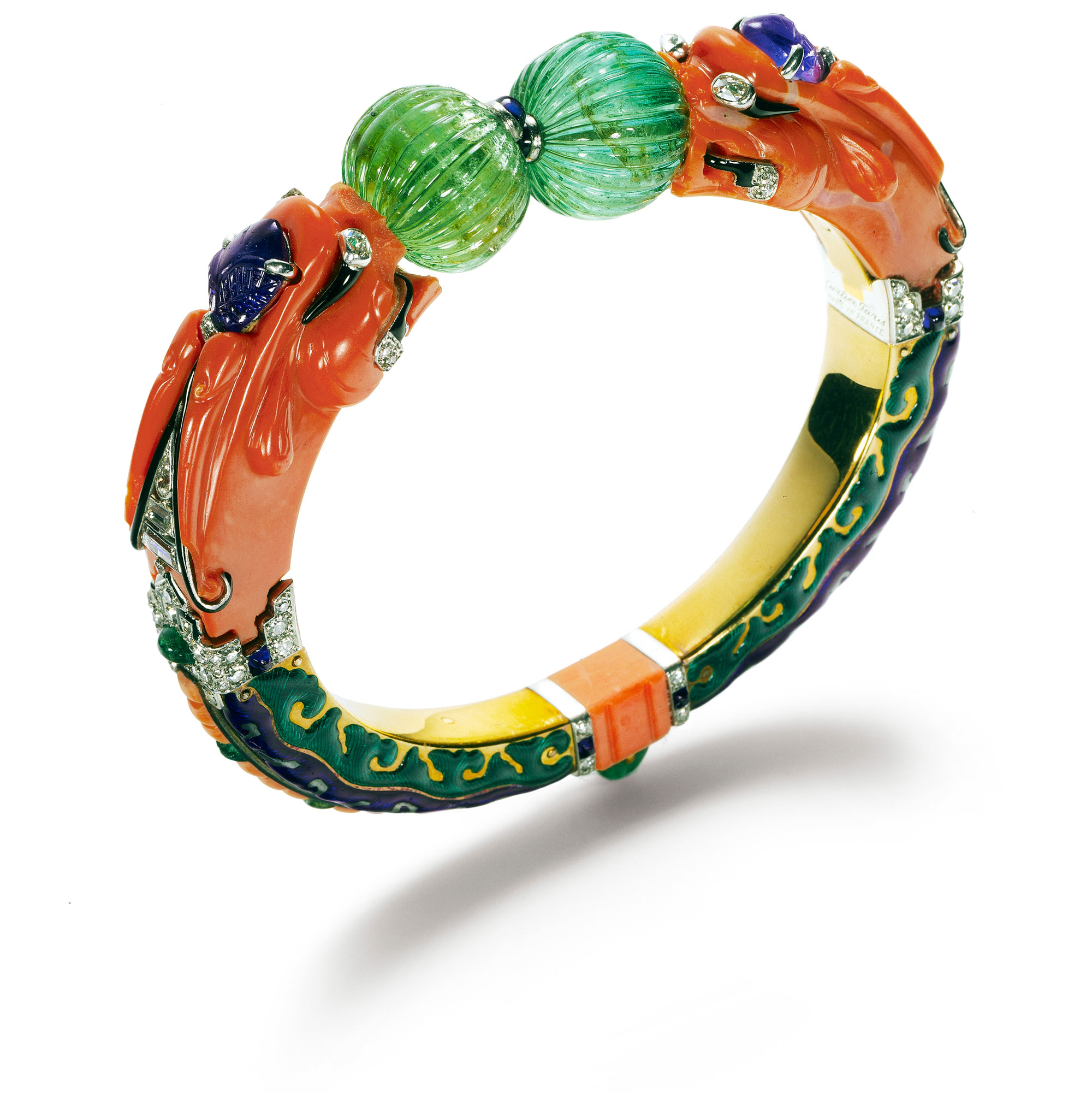
Starting in the 1920s, the Maison’s designers profoundly re-envisioned the mythological animal. Inspired by Indian tradition as well as ancient jewelry, they created bracelets terminating with the gaping maws of two chimera heads. Often crafted in coral and enhanced with precious stones or enamel, these original creations departed from the prevailing Art Deco style of the time but soon became of one Cartier’s great successes, continuing into the 1930s.
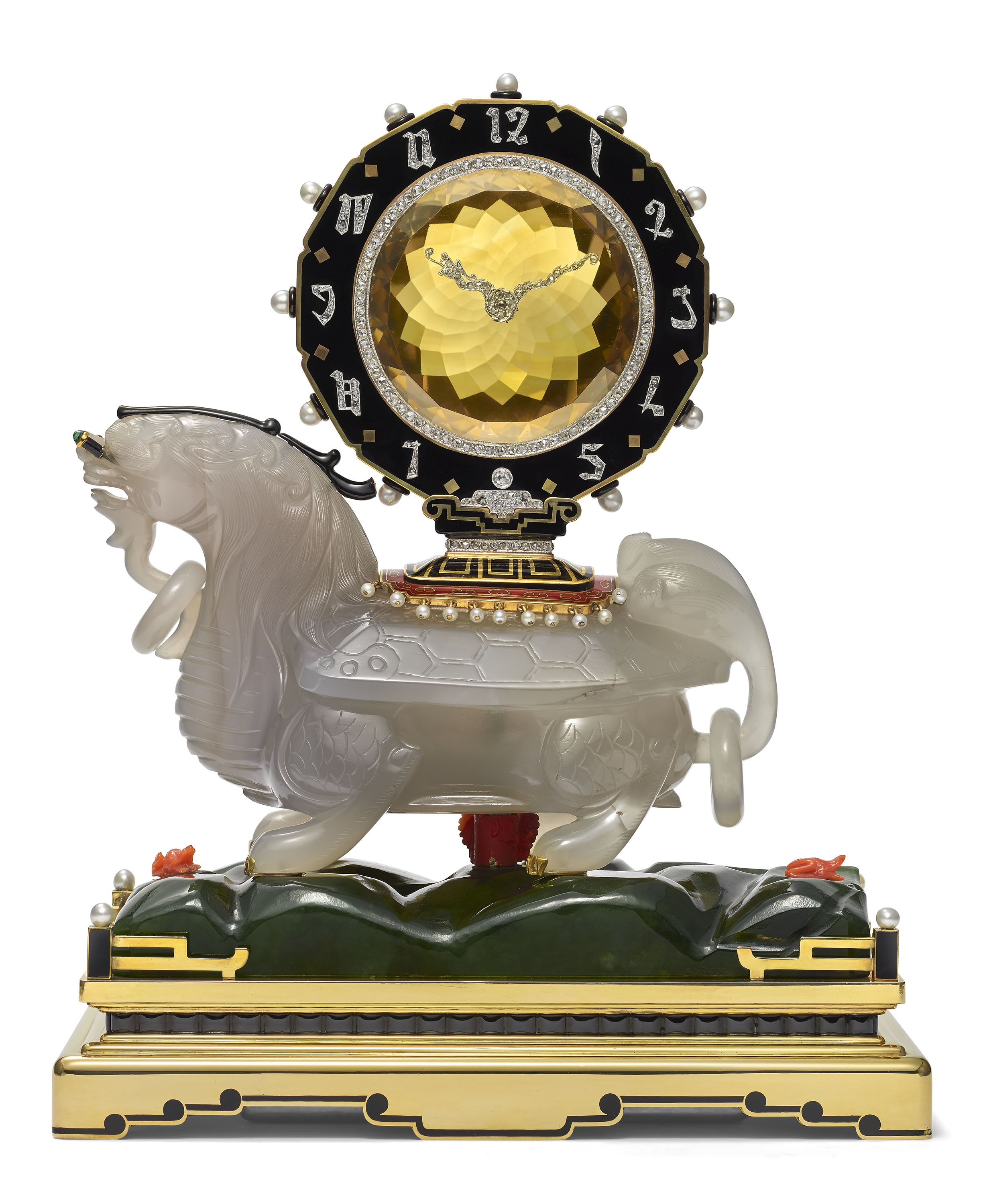
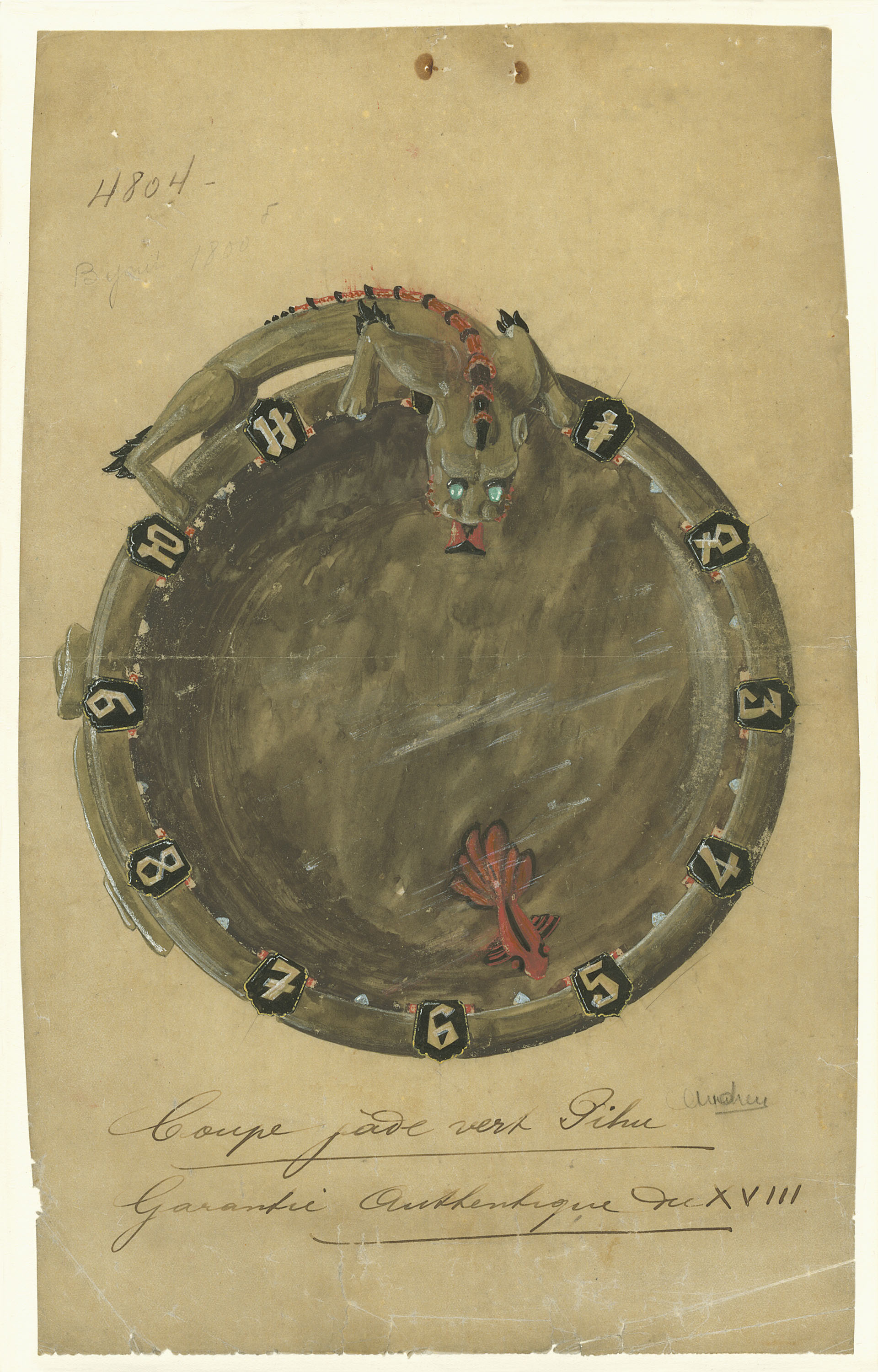
In timepieces, the chimera was more freely developed in its postures. Noble and proud, it adorned two mystery clocks created in 1924 and 1926. Three years later, it reappeared for a magnetic clock in a more predatory stance, lying in wait for its prey on the edge of an antique jade basin.
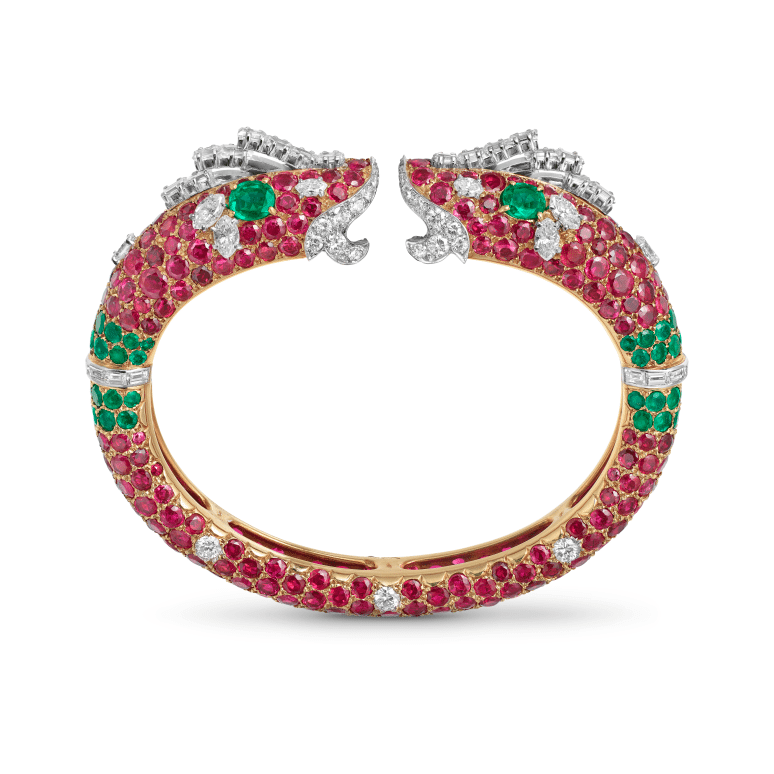
Under the influence of Jeanne Toussaint, Creative Director from 1933, the chimera regained its popularity in the 1950s. Its fearsome appearance tended to be softened in creations marked by a touch of poetry, many crafted in salmon pink or red coral as in the 1920s. On other models, the chimera’s body was completely covered in gems, as seen in a flamboyant bracelet from 1960 in rubies, emeralds and diamonds.
Uniting character and charm, the chimera seduced clients recognized as refined trendsetters. Among the most famous, were the opera singer Ganna Walska, the Baroness of Erlanger, and Daisy Fellowes, a wealthy American heiress and editor of Harper’s Bazaar.
The chimera, along with the panther and the crocodile, is now one of the creatures that reigns over the Cartier bestiary. A collection was dedicated to it in 2008, presented at the Grand Palais during the Biennale des Antiquaires alongside another mythical beast: the dragon. With each new High Jewelry collection, Cartier explores a new facet of the chimera in ever-more original creations. In 2018, it was the inspiration for an unprecedented bracelet, faithful to the spirit of Jeanne Toussaint, combining coral, peridots, sapphires, onyx and diamonds in a fireworks of colors.