
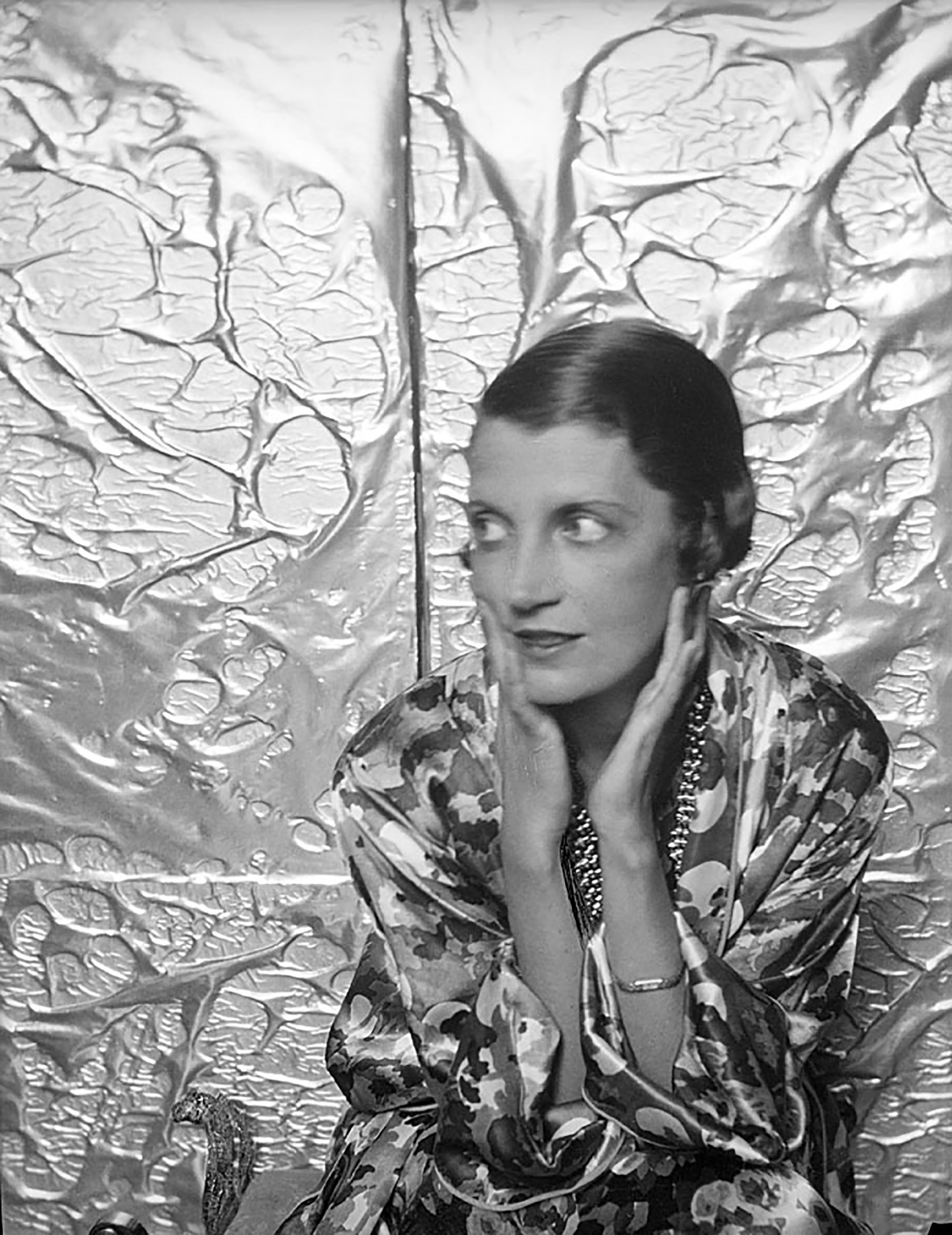
A high profile member of the Café Society, Daisy Fellowes (1890–1962) was renowned for her unerring taste. Dubbed “the most elegant woman of her time,” she had a refined talent for complementing the clothing of eminent couturiers with her Cartier parures.
Marguerite Séverine Philippine Decazes de Glücksberg, more commonly known as Daisy Fellowes, was born on April 29, 1890 in Paris. She was still quite young when she inherited a fortune from her grandfather, founder of the Singer sewing machine company. Her father, the 3rd Duke of Decazes and Glücksberg, introduced her into high-society circles at an early age. However, her childhood was marred by the death of her mother in 1896. She then went to live with her aunt, the Princess of Polignac and great patron of the arts, who raised her and taught her the art of the aesthete’s life.
In 1910, she married Prince Jean de Broglie, with whom she would have three children. Her husband died in 1918 and one year later she married the banker Reginald Fellowes.
She became one of the leading figures in the Café Society of the time, a high-profile circle developed between New York, London and Paris. Other illustrious members of the society included Mona Bismarck, Charles de Beistegui, Cecil Beaton and Elsa Schiaparelli, who shared an aesthetic complicity with Daisy Fellowes.
A modern, active woman, she wrote and published a few romance novels. However, it was in the fashion world that her influence was most felt. Her gift for style and good taste was noted by Harper’s Bazaar, which hired her as Paris correspondent from 1933 to 1935. A true arbiter of elegance, she appeared dressed in the most refined clothing, matched with perfectly selected jewelry to create a “studied simplicity” as her friend the photographer Cecil Beaton characterized it.
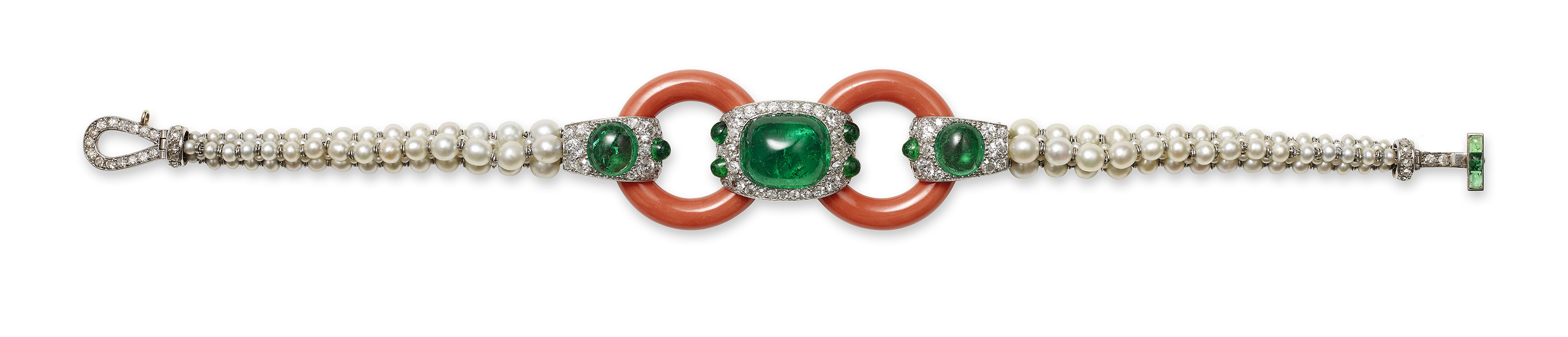
Her jewelry collection was one of the most important of the interwar years. A loyal Cartier client, her earliest purchases alternated between an extravagant taste for elsewhere and the clean lines of Art Deco.
Daisy Fellowes particularly appreciated carved stones, which she personally selected in India and brought back to the jeweler. In 1936, she ordered a “Hindu” necklace, which was a forerunner of what would later be known as Tutti Frutti, composed of gems recovered from three older pieces. It boasted a remarkable profusion of emeralds, sapphires, rubies, and diamonds, and was notable for the flexibility of its articulated platinum setting. The gems originated in India, but the main influence of the subcontinent lay in the design of the necklace.
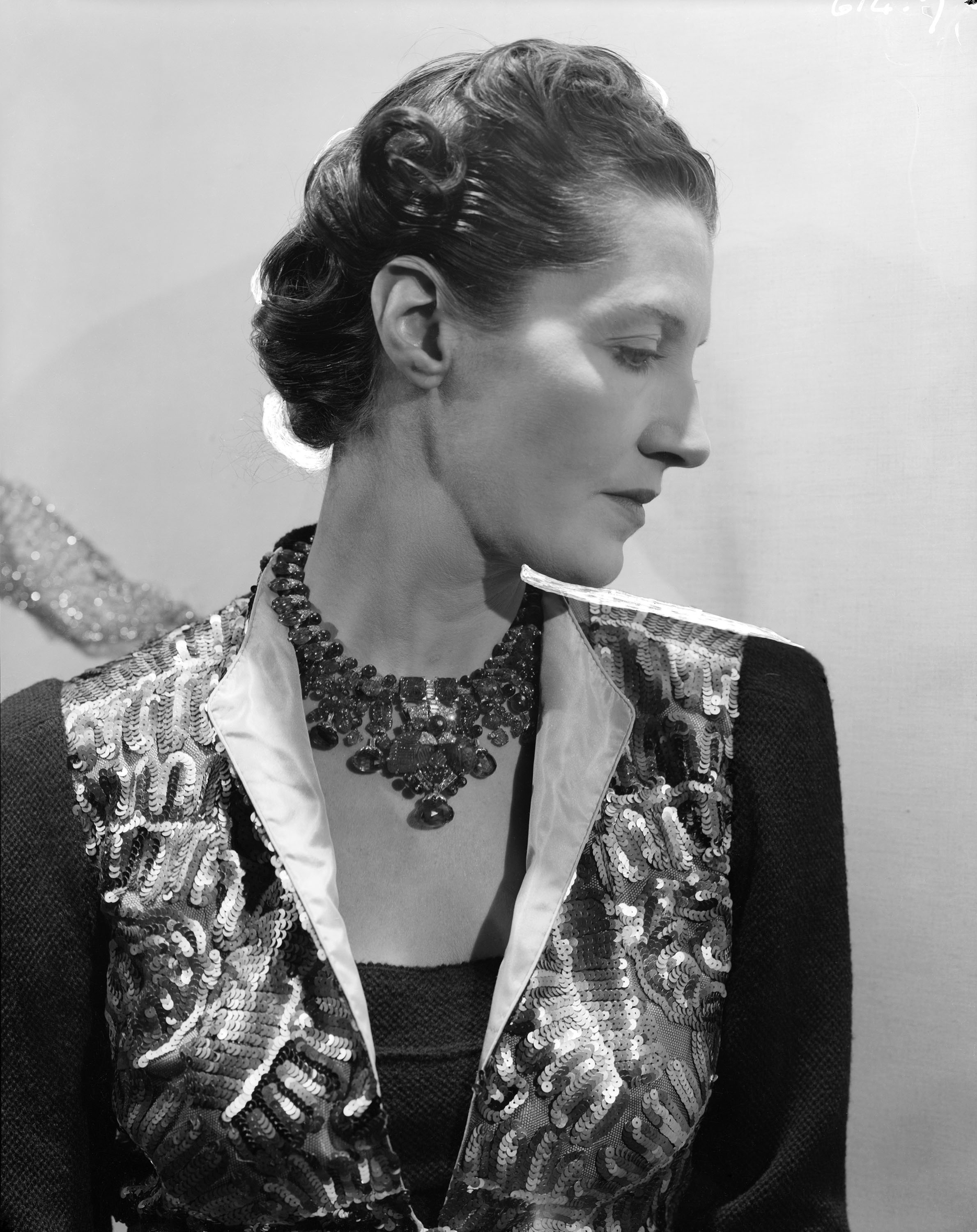
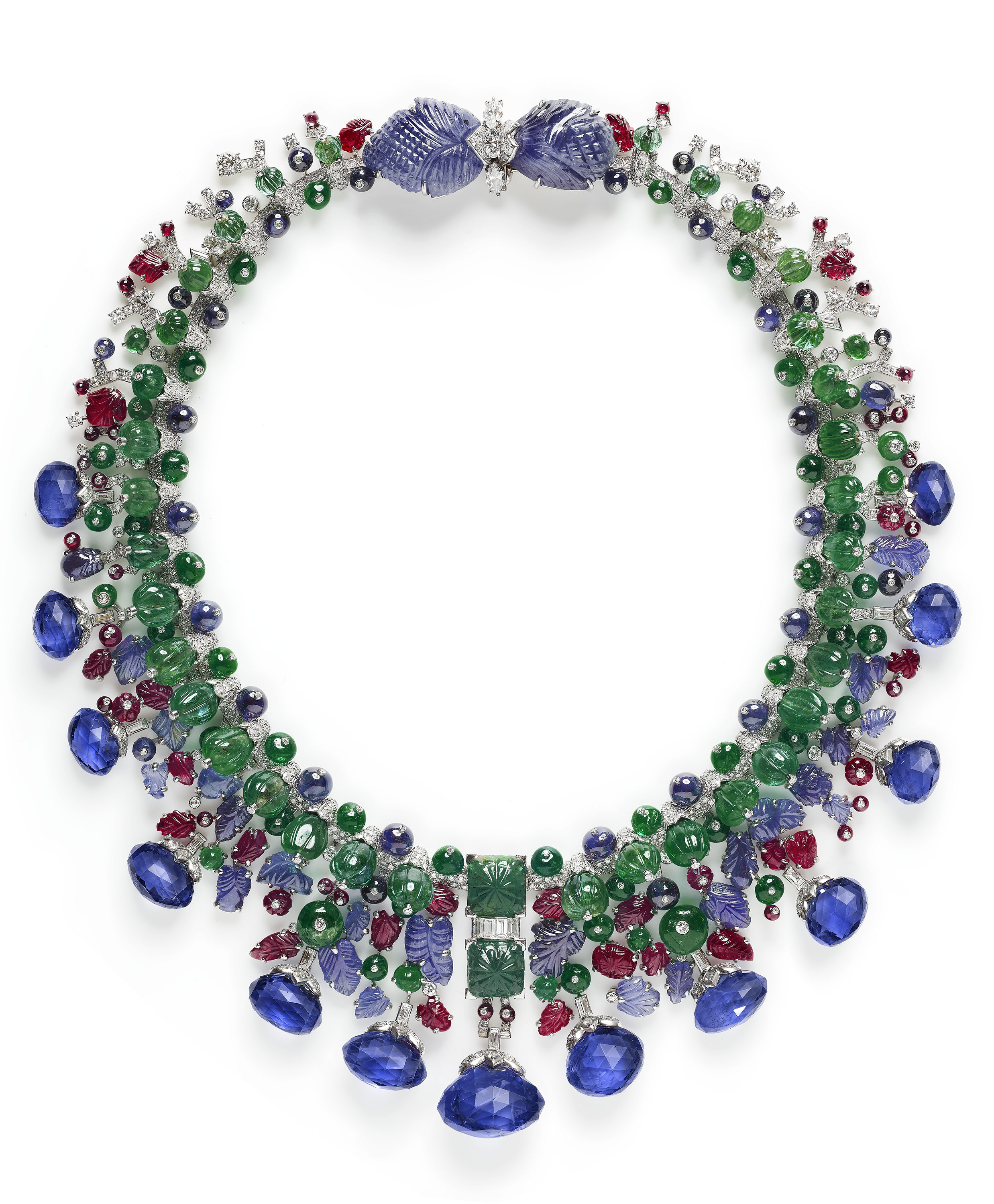
It faithfully reproduced traditional Hindu ceremonial parures in a design with a long cord hanging low on the bosom. Daisy Fellowes’ fondness for this necklace is evident in many of her portraits. She liked to wear it to grand balls, such as the one hosted in Venice by Charles de Beistegui in 1951. Her eldest daughter, the Countess of Castéja, had Cartier modify the necklace into a choker in 1963.
Other pieces illustrated her taste for carved stones. In 1945, Fellowes had Cartier London reset two engraved emeralds together with diamond-paved beads to adorn the clasp of a natural pearl necklace.
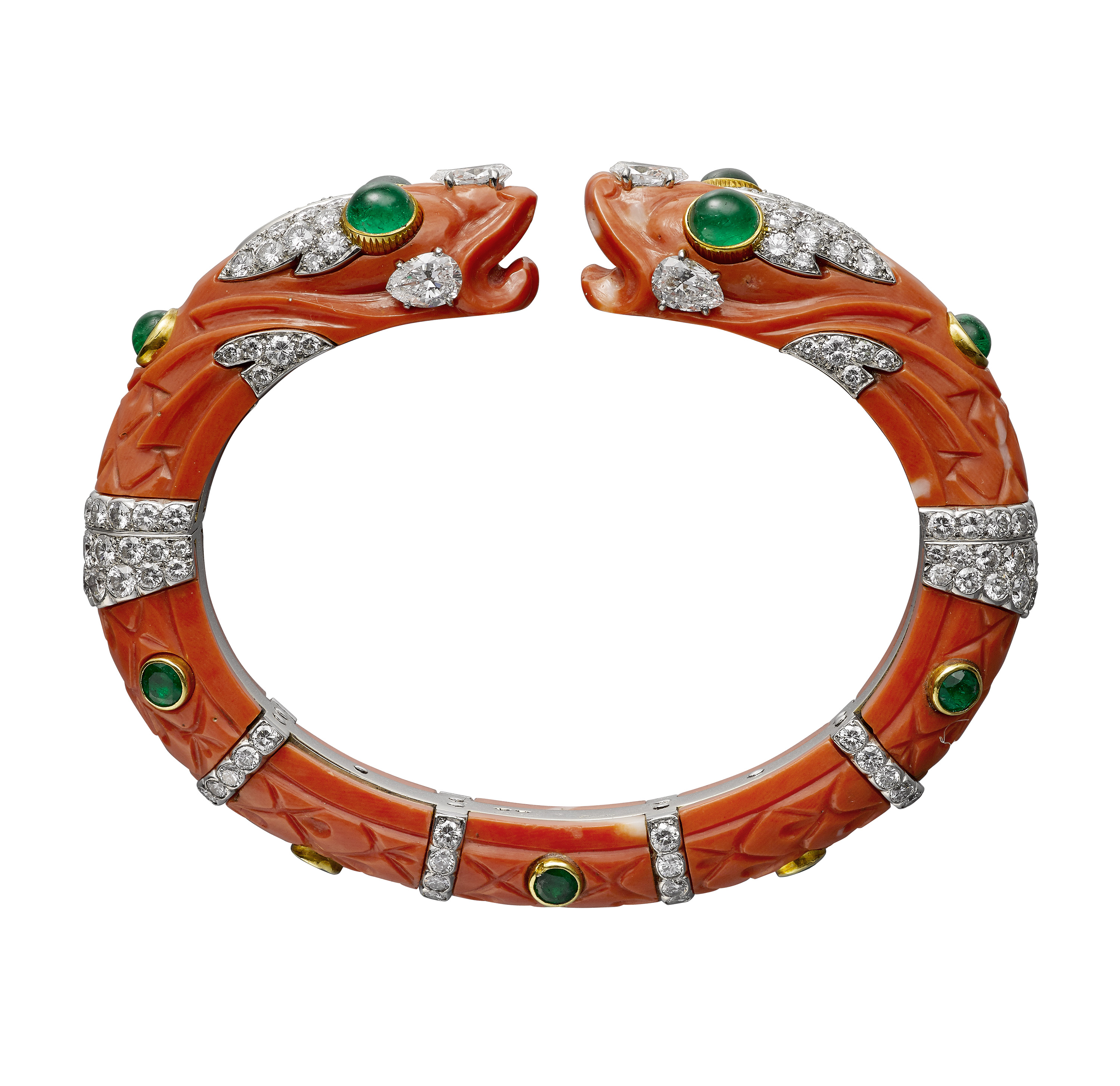
Daisy Fellowes also looked to the Cartier bestiary, adopting the chimera, as exemplified by a coral bracelet she acquired in 1961. She was also quite taken by the panther, whose pelt is represented on a necklace and two bracelets created in 1930 and 1931.
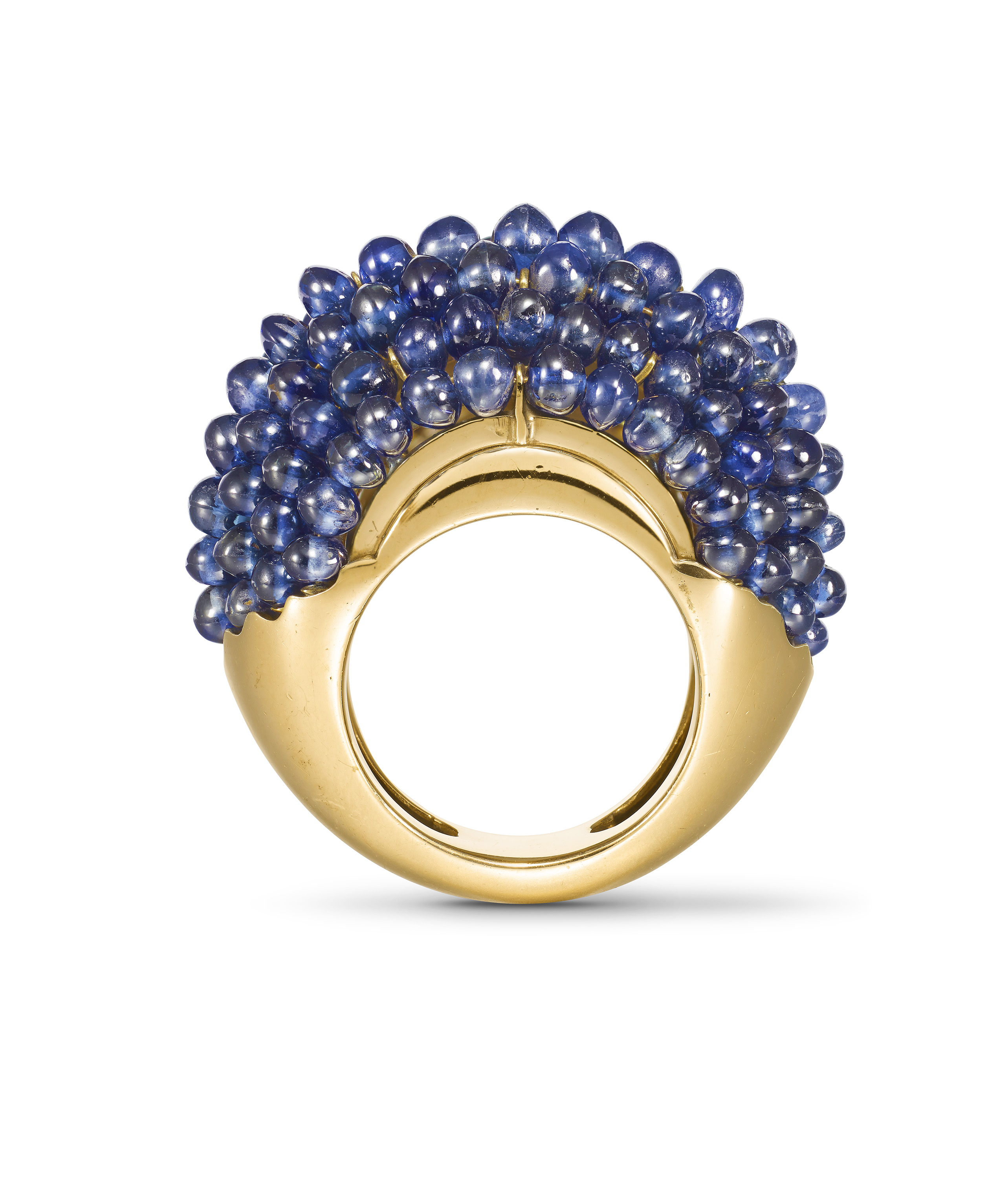
With Jeanne Toussaint, Cartier Creative Director from 1933, she shared a taste for volume effects, goldwork, and the intermixing of gemstones. Among the most emblematic pieces in her collection is an impressive necklace in braided yellow gold adorned with 42 faceted amethyst beads and cabochon-cut turquoise. This syncretism is also seen in two gold rings purchased by the heiress in 1949, adorned, respectively, with a multitude of sapphire and ruby beads.
More than a taste for the audacious, “the world’s most elegant woman” and Cartier shared a similar vision of style.