
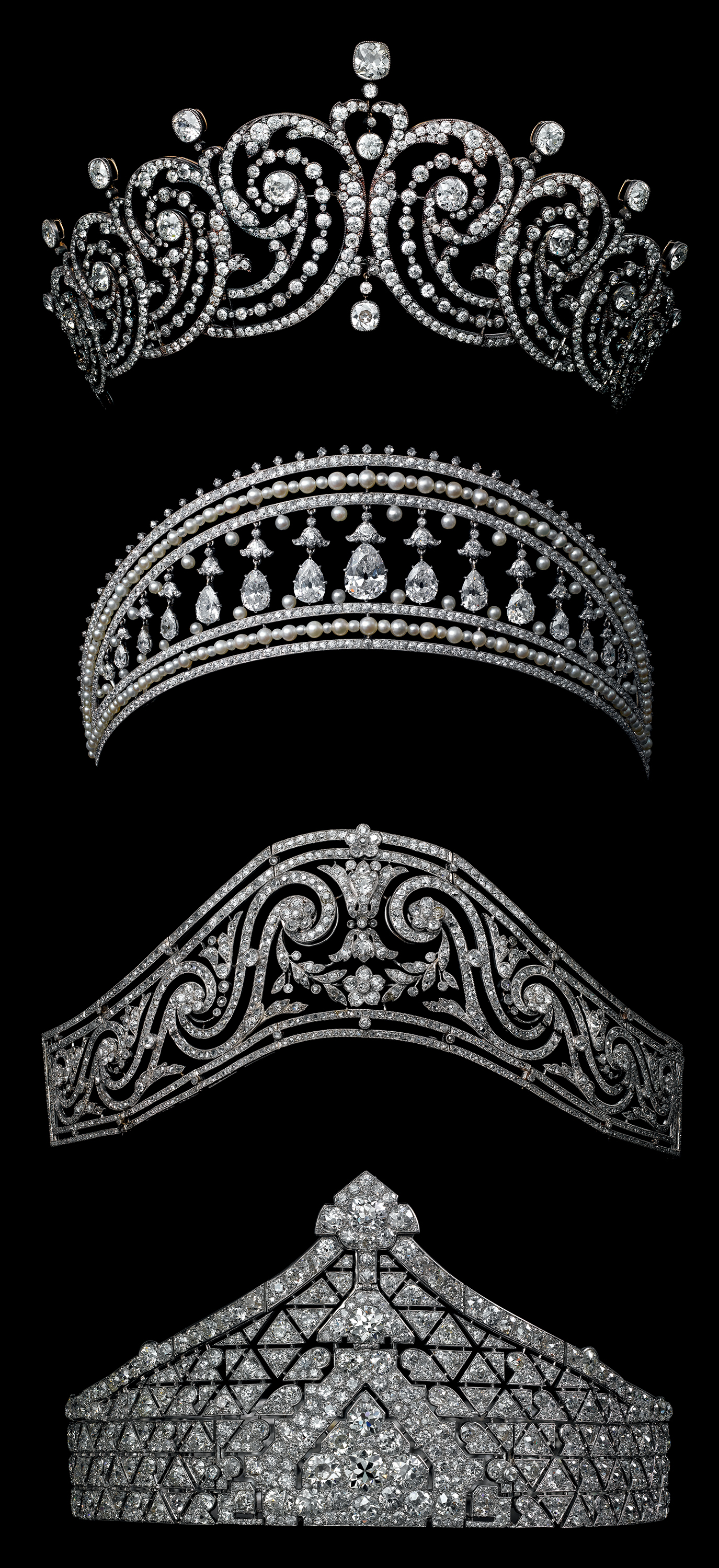
The tiara, a bandeau-like head ornament traditionally worn by the nobility, is one of Cartier’s emblematic pieces of jewelry. For over a century Cartier’s tiaras have graced numerous crowned heads from the Belgian queen to the princess of Wales.
Tiaras are a key symbol of Cartier artistry, for they are a highly emblematic source of marvels. At an early date Cartier forged its winning approach by striking a balance between elegance and pure lines, traditional forms and a bold aesthetic.
At the dawn of the twentieth century Cartier jewelry favored the garland style, inspired by the Louis-XVI repertoire. Cartier combined this neo-classical aesthetic with a pioneering use of platinum. Scrolling or interlacing foliate forms could be fashioned with unparalleled finesse in the new metal, thus imparting striking effects of light to Cartier designs. Tiaras made in this way were highly appreciated by a clientele as demanding as it was illustrious, including not just grand aristocrats and the new American and European social elites, but also members of royalty such as Elisabeth, Queen of the Belgians, who in 1912 bought a scrollwork tiara made two years earlier.
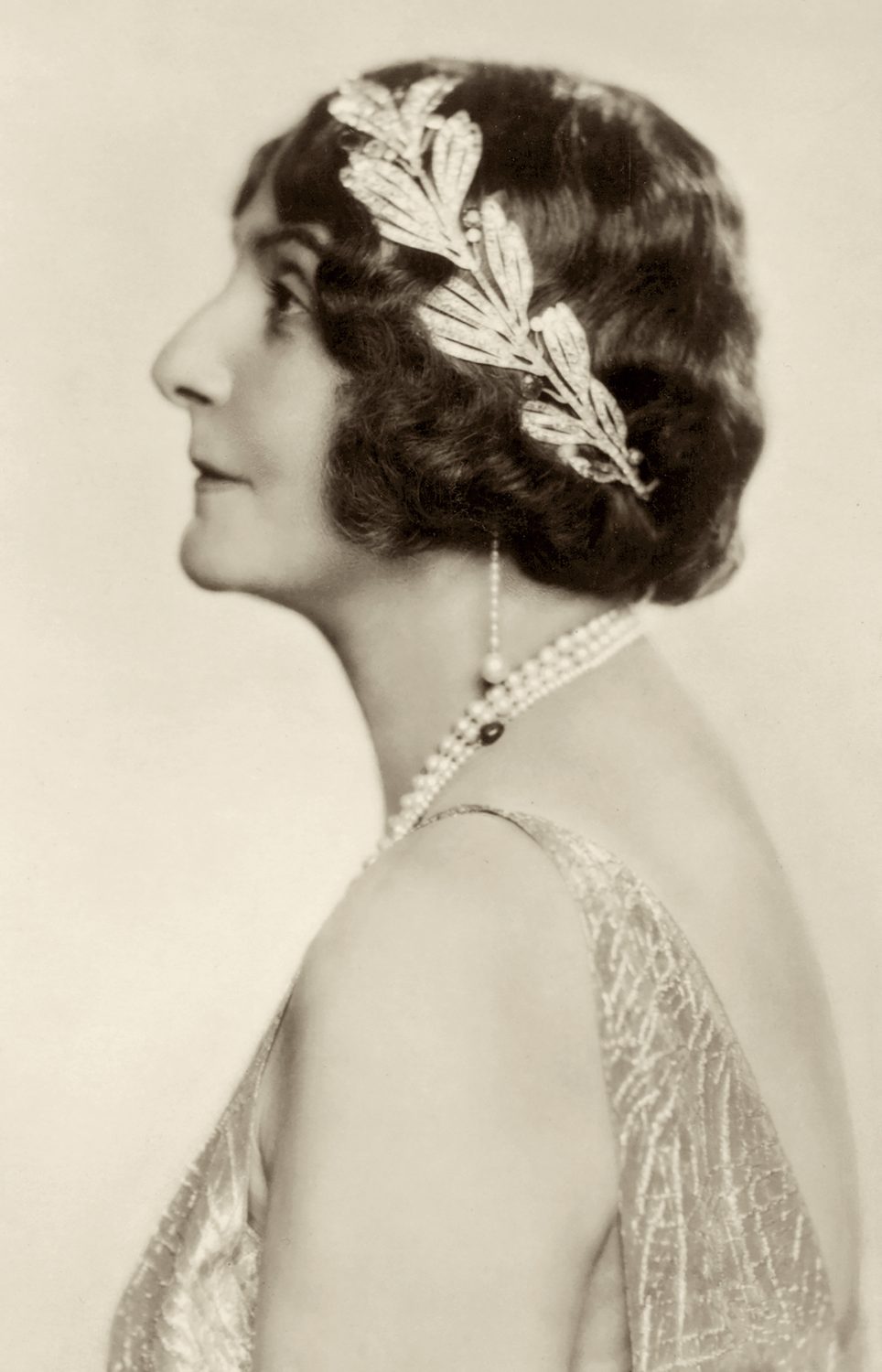
At the same time, Cartier explored other artistic styles, such as the kokoshnik tiaras inspired by traditional Russian headwear of that name, typically a crescent-shaped band that pointed forward. Kokoshniks were originally large, but Cartier lightened them into supple tiaras with clean lines from which dangled delicate drop pendants of diamonds and natural pearls. Cartier also crafted less stylized designs, such as a 1907 olive-leaf tiara that was given as a wedding gift to Princess Marie Bonaparte.

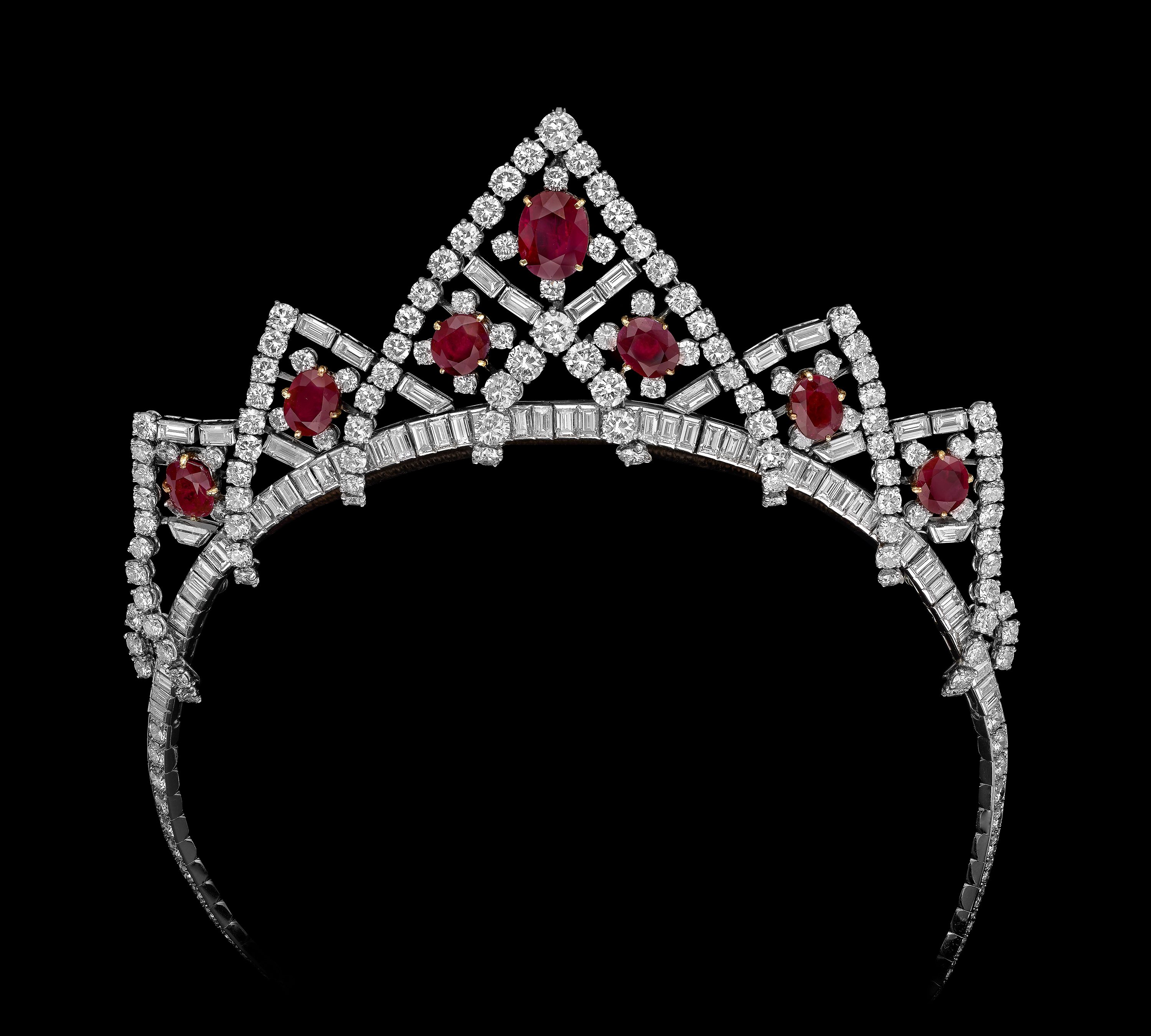
The garland style, which basically prevailed from 1899 to 1914 (or even later, due to special orders), was followed by the modern style, which combined abstract shapes with striking colors. This strong aesthetic is wonderfully illustrated by a 1914 tiara that contrasted blackened steel with the shimmering white of pear-shaped diamonds and the bright red of caliber-cut rubies.
The post-World War I period did not turn its back on tiaras, even though it shunned the jewelry of the Belle Époque. Tiaras nevertheless lost ground to bandeaus, the headbands made popular during the Roaring Twenties, that decade famous for its joie de vivre. Geometric patterns henceforth tended to replace swirling neo-classical ones.
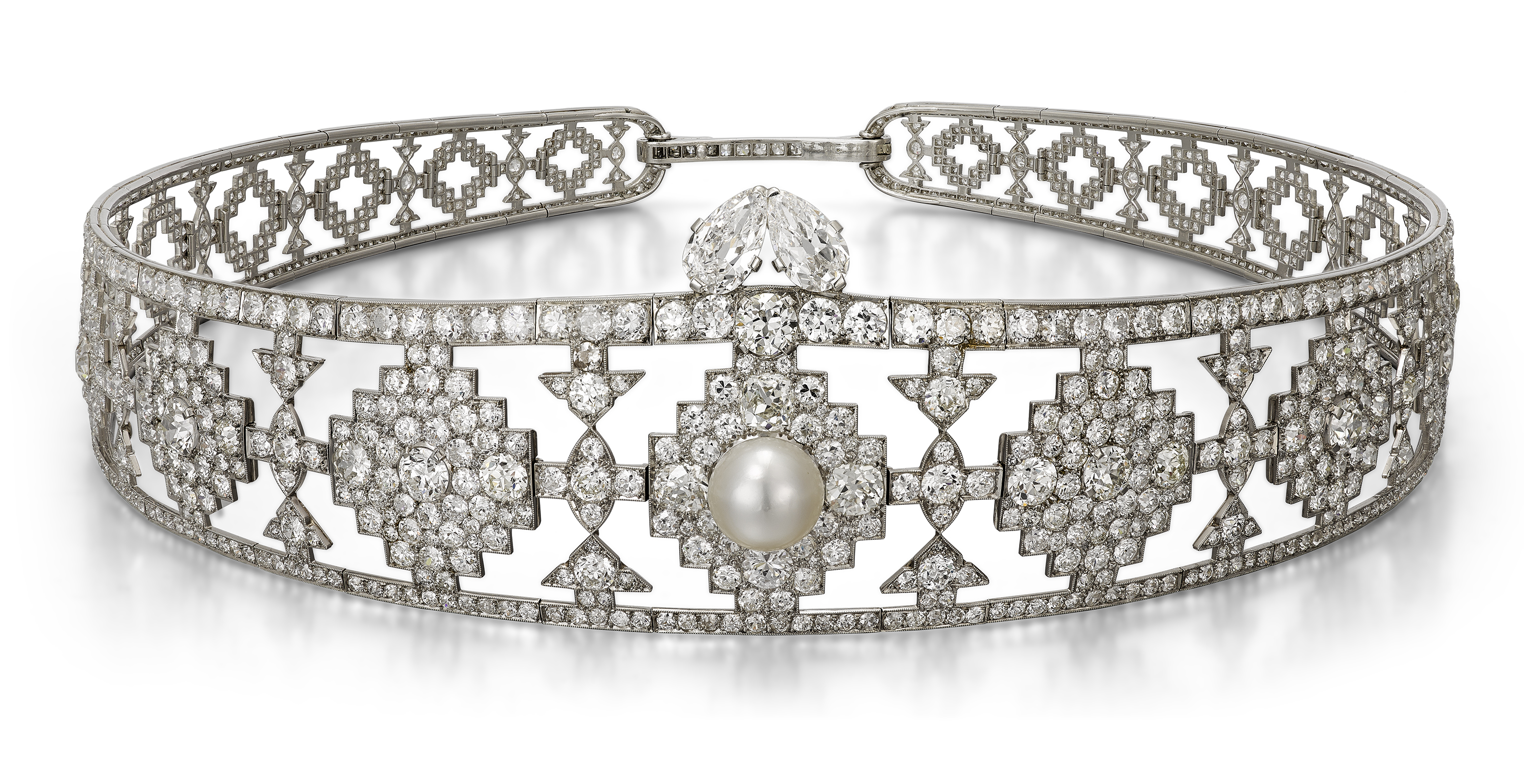
In the following decade, despite the Great Depression, Cartier innovated in tiara design for a number of special occasions. For example, in anticipation of the coronation of King George VI in London in 1937, several guests commissioned tiaras from Cartier London. Some of these tiaras, primarily composed of semi-precious stones, combined geometric boldness with a modular design, which meant that the main decorative motifs could be detached and worn as brooches.
Modular design became inherent to head ornaments, which could thus be worn in different ways. Such was the case with a 1951 ruby necklace, which Michael Todd gave to American actress Elizabeth Taylor in 1957, that could be converted into a tiara.
Cartier continues to make tiaras today, combining traditional skills with modern designs. They are made to order or as part of High Jewelry collections. In 2014, a key piece in the Cartier Royal collection as a tiara that could be converted into a necklace, featuring an outstanding natural pearl that once belonged to Queen Mary, wife of King George V of Great Britain.
The appeal of such exceptional items of jewelry is as strong as ever. On April 29, 2011, when Catherine Middleton married Prince William she wowed the public and reporters alike with the splendor of her attire. The journalists immediately noted that the brand-new princess was wearing a Cartier tiara loaned to her by Queen Elizabeth II, whose mother had originally received it as a gift from her husband in 1936. This anecdote underscores the heritage value inextricably linked to such a glamorous item of jewelry.
