
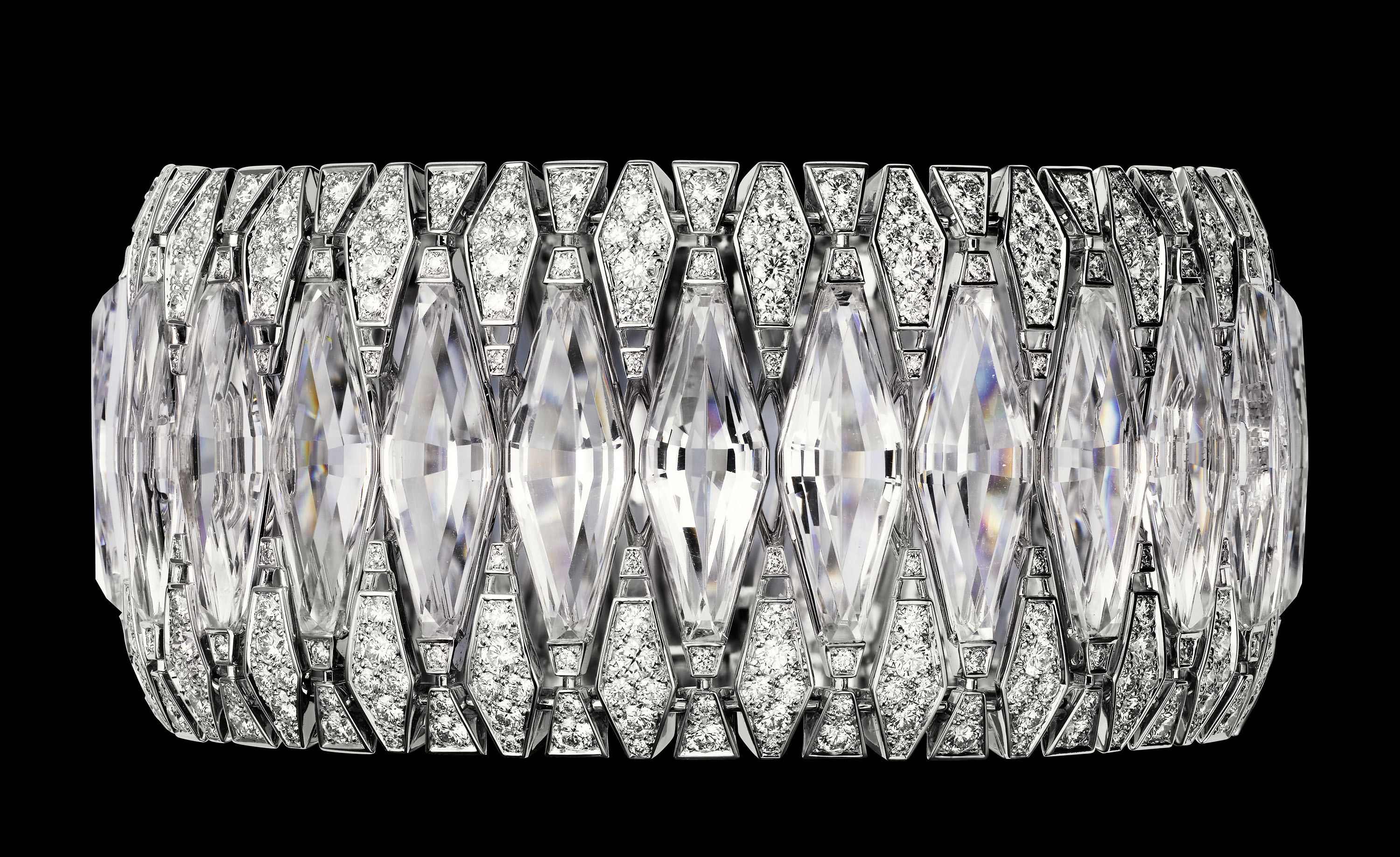
Rock crystal is a colorless, translucent variety of quartz whose use in jewelry was reintroduced by Cartier in the twentieth century. Today it is notably employed in Cartier’s creative jewelry and clock designs.
- Mineral family: quartz
- Color: transparent
- Hardness: 7
- Density: 2.65
- Sources: Brazil, Madagascar, Africa, Korea, Russia
A colorless quartz with a multi-millennial history
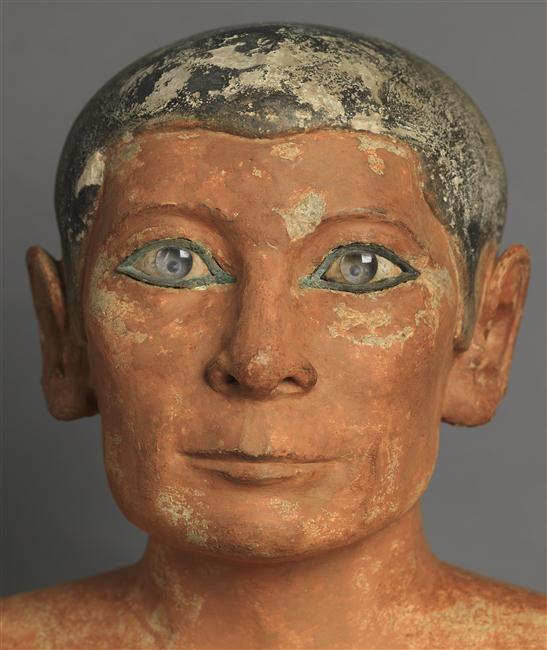
Rock crystal is a colorless quartz appreciated for its elegant transparency. Its name comes from the Greek krustallos, meaning “ice.” Known in Antiquity, rock crystal has been used by most civilizations, East and West. The Egyptians were already using it several millennia ago to impart life to their statues, as demonstrated by a famous Seated Scribe now in the Louvre. In Europe, rock crystal was particularly appreciated in the sixteenth and seventeenth centuries.
It was then considered a gemstone, worthy of decorating the finest works of art. It was sculpted, carved and engraved in leading workshops in Milan, Augsburg, Nuremburg and Paris, the gem of countless majestic goblets, princely ewers and royal caskets now on show in many museums. It subsequently fell out of use, only to be rediscovered in the early twentieth century thanks to the curiosity and unique artistry of one man: Louis Cartier.
Cartier, a pioneering artist of rock crystal
Around 1910 Louis Cartier sought to enrich the play of transparency associated with the garland style. As a cultivated man, he knew that rock crystal had been extensively used in jewelry during the Renaissance. So he decided to adopt it for his own designs, even as he innovated in the way it was used: he boldly had the surface frosted, imparting softness and delicacy to the stone. The resulting satiny effect went wonderfully with the sparkle of diamonds and the whiteness of platinum, sometimes in contrast to a colored stone.
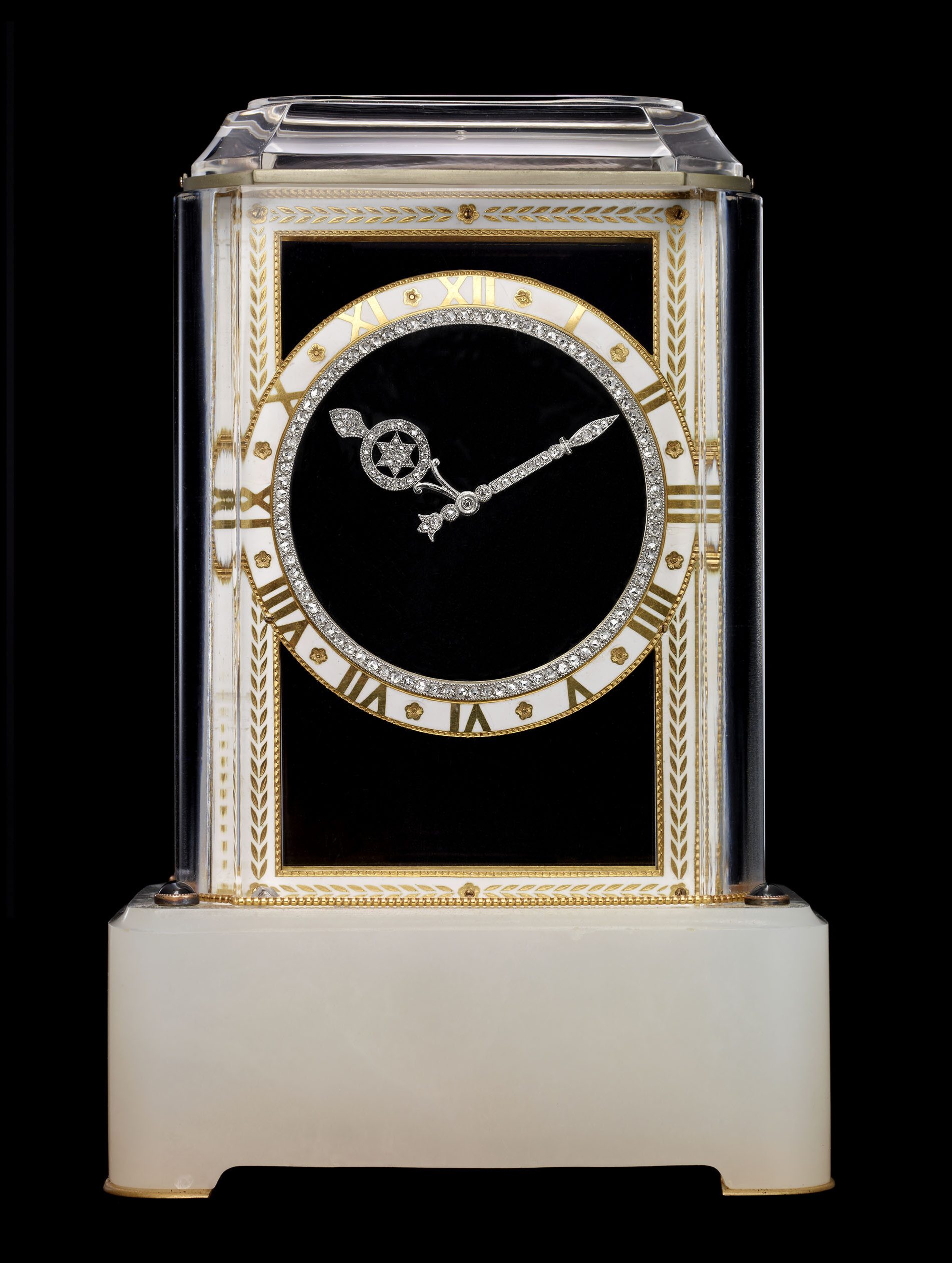
During that same period Cartier launched a series of dream-like clocks that prompted meditation on the enigma of time. Those wonderful timepieces, called mystery clocks, were made of a finely decorated block of rock crystal whose transparency ingeniously seems to show that nothing connected the hands to any kind of clock movement. In a perfect illusion, the hands seem to float in space, weightless.
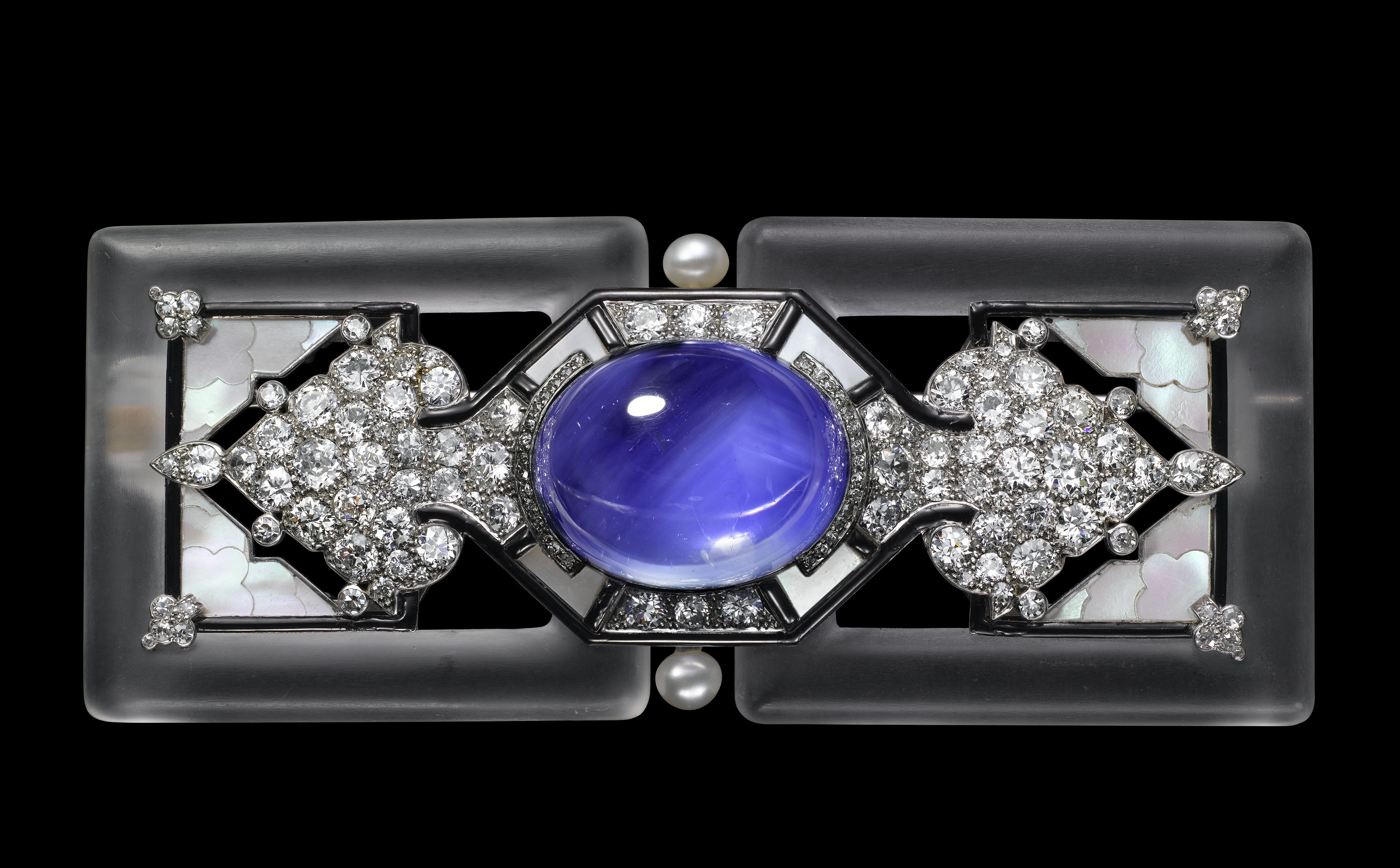
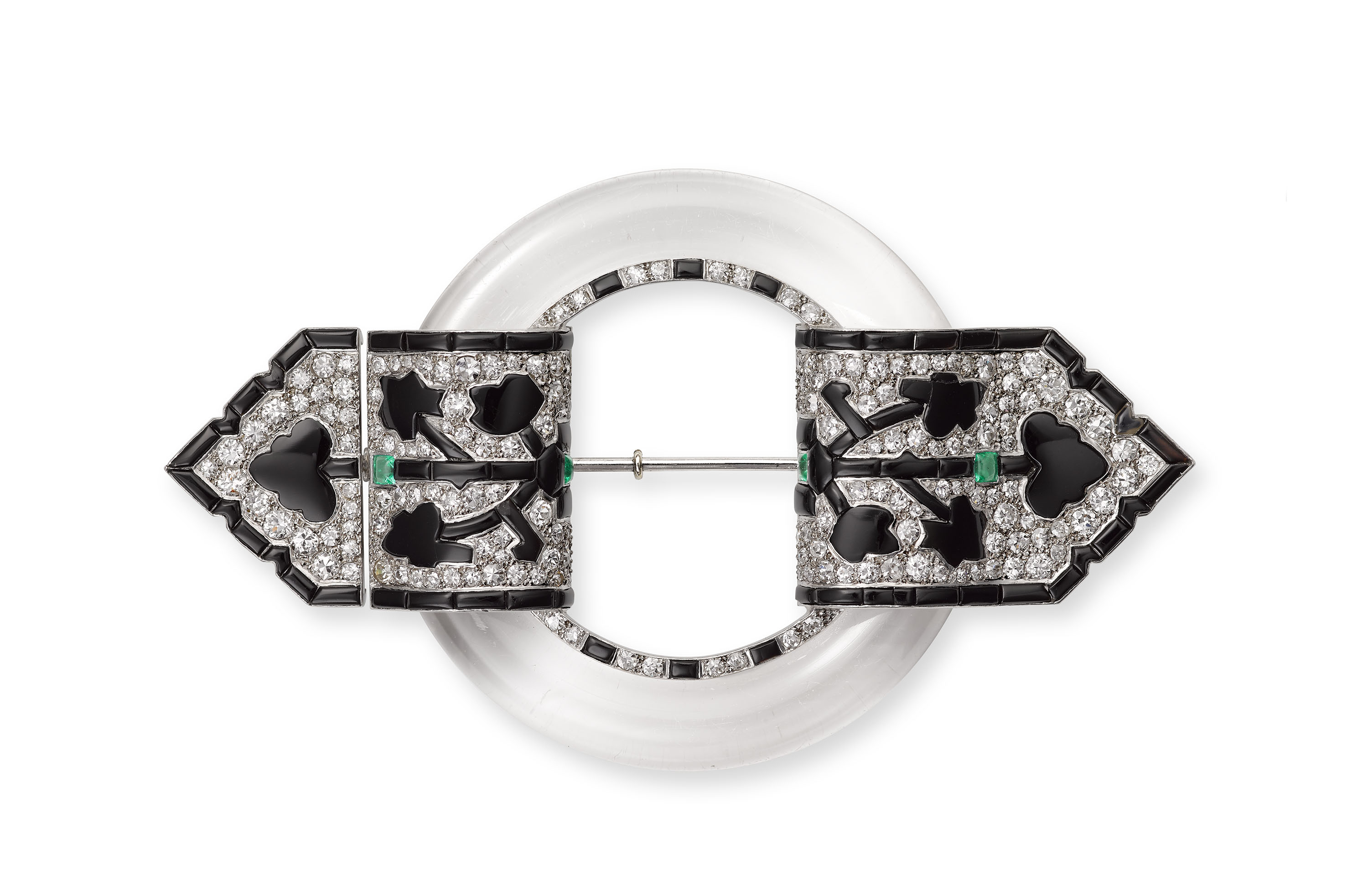
In the 1920s, rock crystal was handled in yet another manner by Cartier. The arts were changing along with social customs and a new silhouette for women—henceforth streamlined. Jewelry had to move with the times. The purity of rock crystal suited clean designs that played essentially on shapes, an art in which Cartier excelled. The company devised brooches and belt buckles with extremely modern geometric patterns, often rings or rectangles of crystal decorated with palmettes or motifs freely inspired from Chinese and Persian art. The clarity of the colorless mineral matched the dazzle of diamonds, often subtly set off by touches of onyx or black enamel in order to avoid the pitfall of an overly monochromatic effect.
In addition to these creations, rock crystal was used during the 1910s for naturalistic items. Although relatively limited in number, they could be touchingly graceful, as exemplified by a vase-shaped pendant in which two birds dip their beaks in order to drink.
Rock crystal and the play of volumes
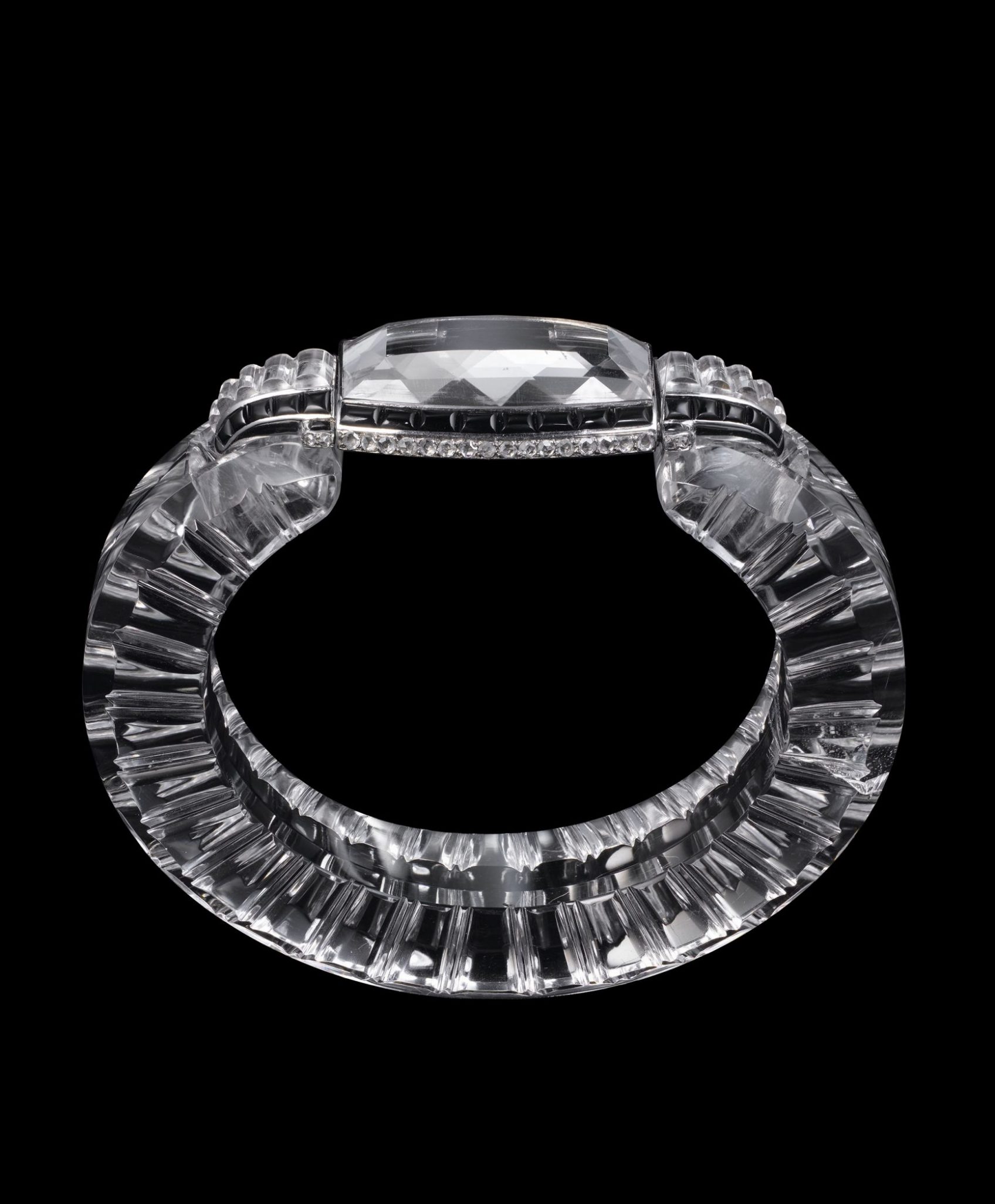
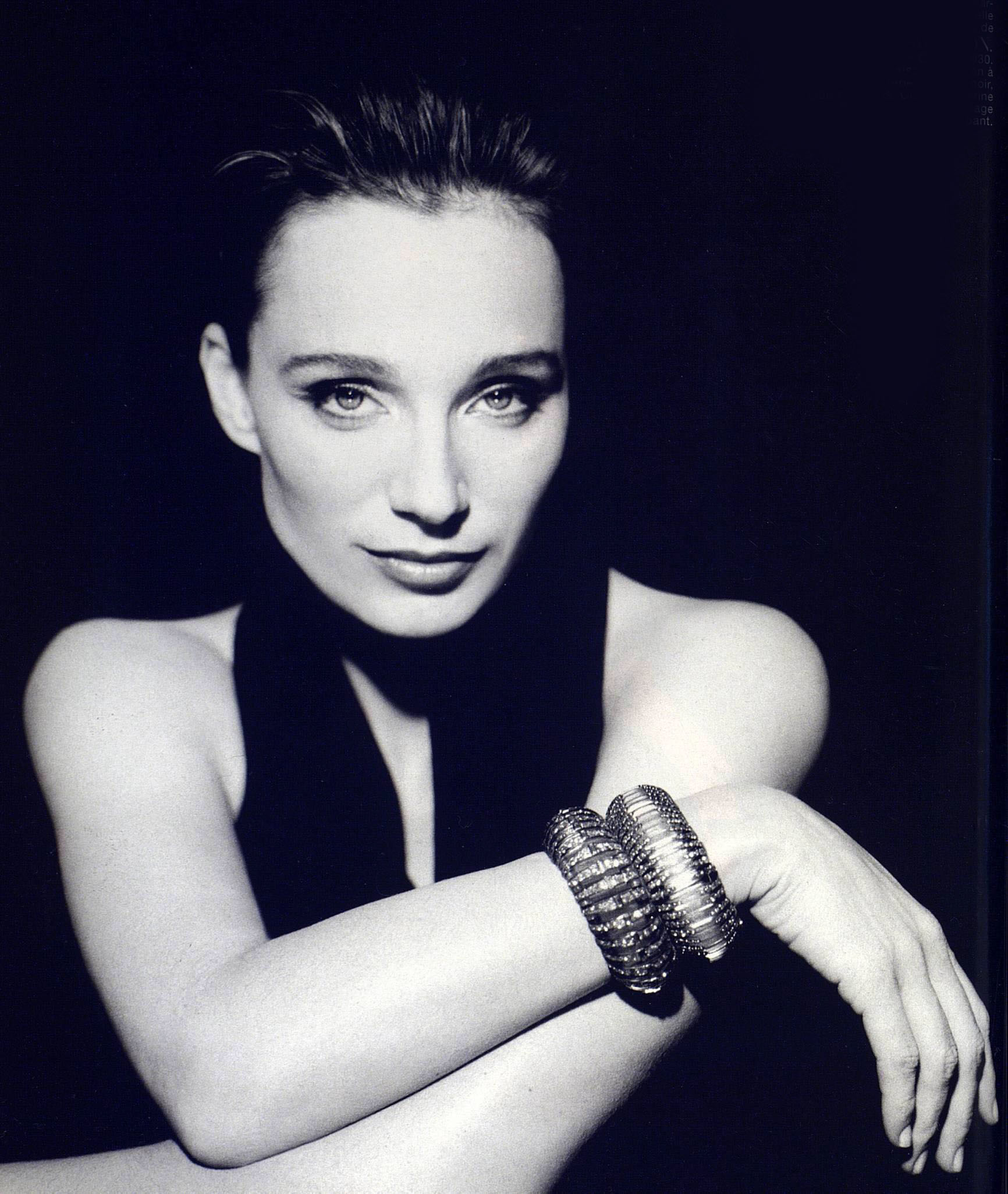
The pioneering jewelry of the 1920s heralded the pursuit, at a very high level, of the artistic and technical possibilities of rock crystal, which paid off in the following decade. In the 1930s, volume clearly counted. The flat surfaces of the early decades of the century gave way to full, curving shapes. As stressed by Roger Nalys in his 1935 article on “Today’s Jewelry,” published in L’Officiel de la couture et de la mode, “in these times of intense life and increasing movement, blandness no longer makes an effect. We like things that are solidly built, we want to see things intensely, in space…. Modern jewelry comes across as a work of architecture, visible in space from every angle, no longer in just two dimensions, as previously.” Rock crystal, refined by Cartier, played a key role in that jewelry revolution, especially since the late Art Deco period saw a revival of the use of whiteness. The solidity and clarity of colorless quartz was suited to the design of voluminous, sparkling pieces, veritable sculptures of light. Outstanding examples include two bracelets, made for stock in 1930 and purchased by American actress Gloria Swanson in 1932. Composed of half-disks of rock crystal that make the void visible—an integral part of the design—they have an airy effect. No clasp was necessary, for these expanding bracelets could be pulled over the wrist.
Since 2012: rock crystal with an urban spin
Tirelessly pursuing its exploration of volumes, since 2012 Cartier has used rock crystal in bold designs inspired by urban lifestyles and architecture. Their geometry reflects the lines of the city. Various shapes and cuts of diamonds, combined with rock crystal and onyx or black lacquer, evoke urban edifices and speed, conveying the energy of the megalopolis.
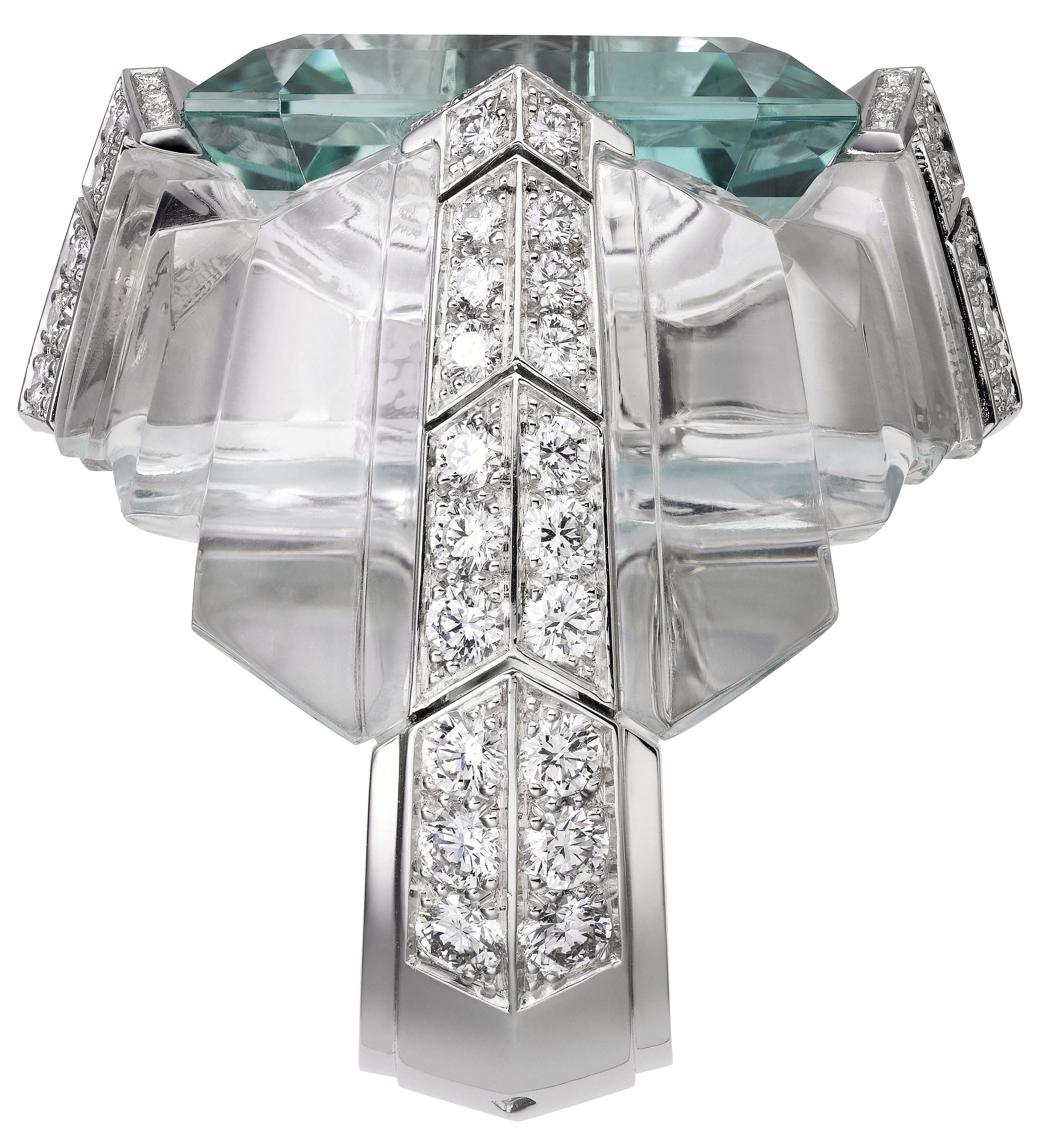
Striking contrasts of shadow and light are spun into kinetic sequences that create an impression of movement and swiftness.
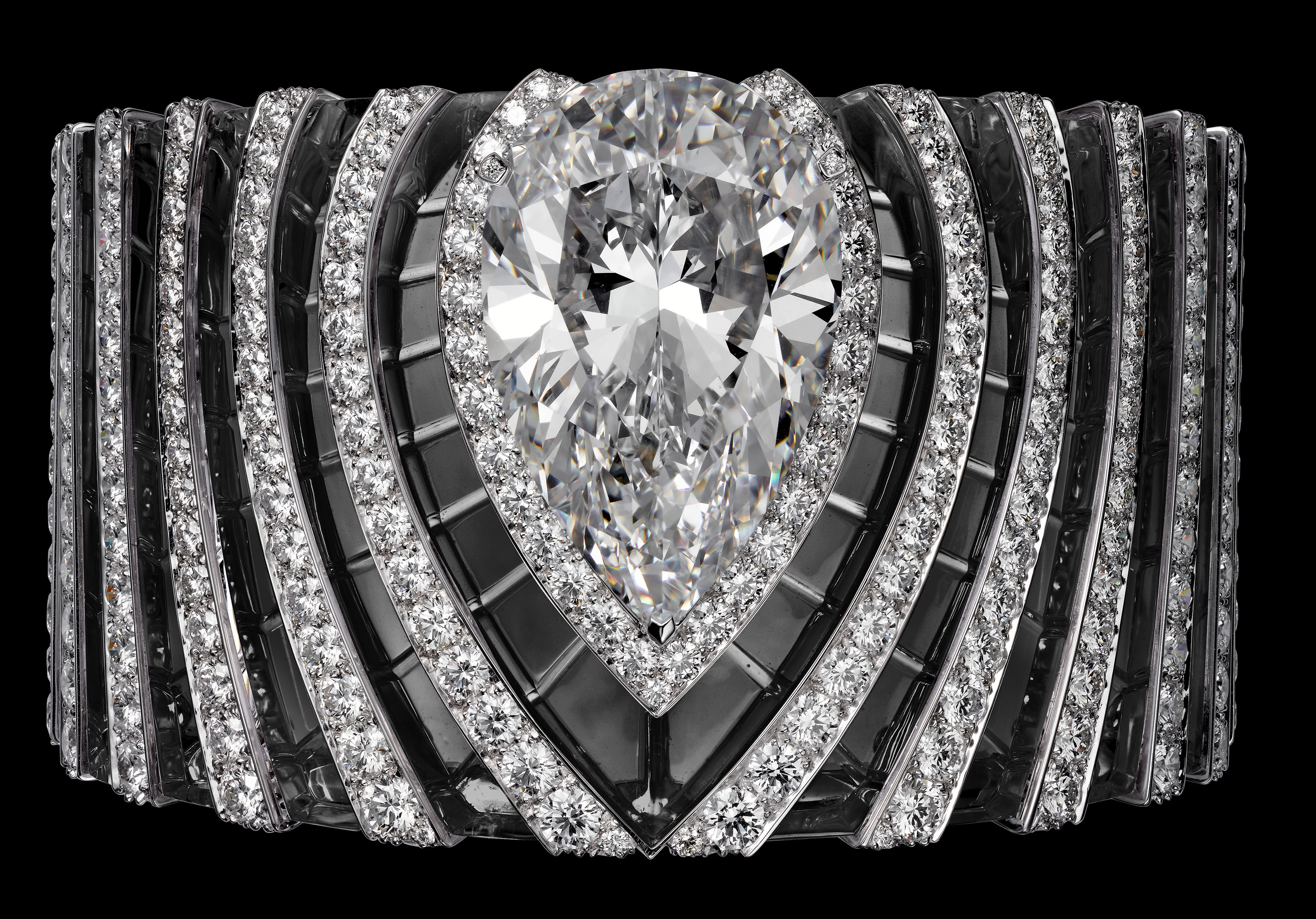
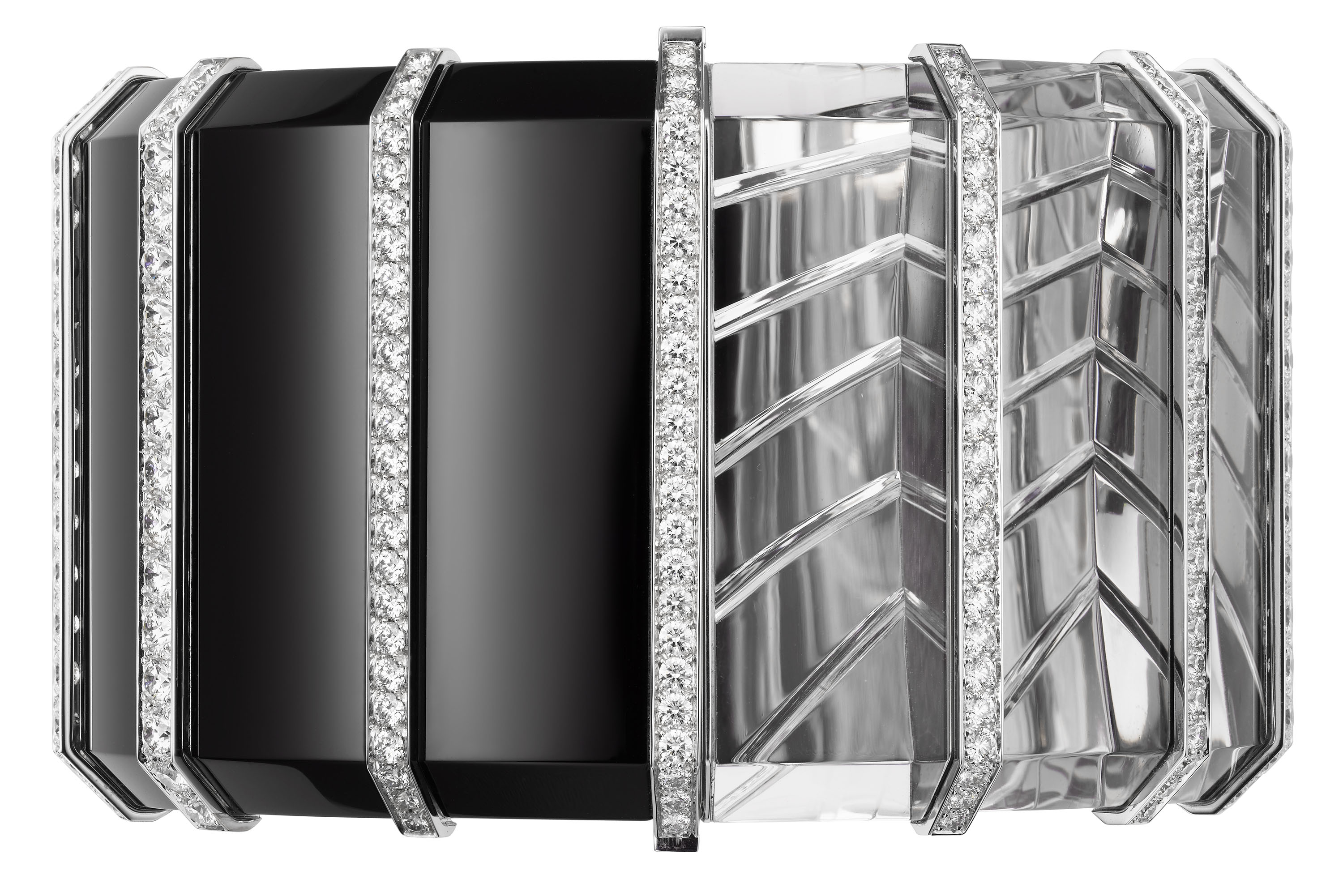
Frenetic, staccato patterns of rock crystal generate their own dynamic: an impressive pear-shaped diamond in the middle of a bracelet radiates rich bursts of light that, in a play of solids and voids, bounce off colorless quartz. More sparkling proof of the timeless modernity of Cartier’s use of rock crystal.