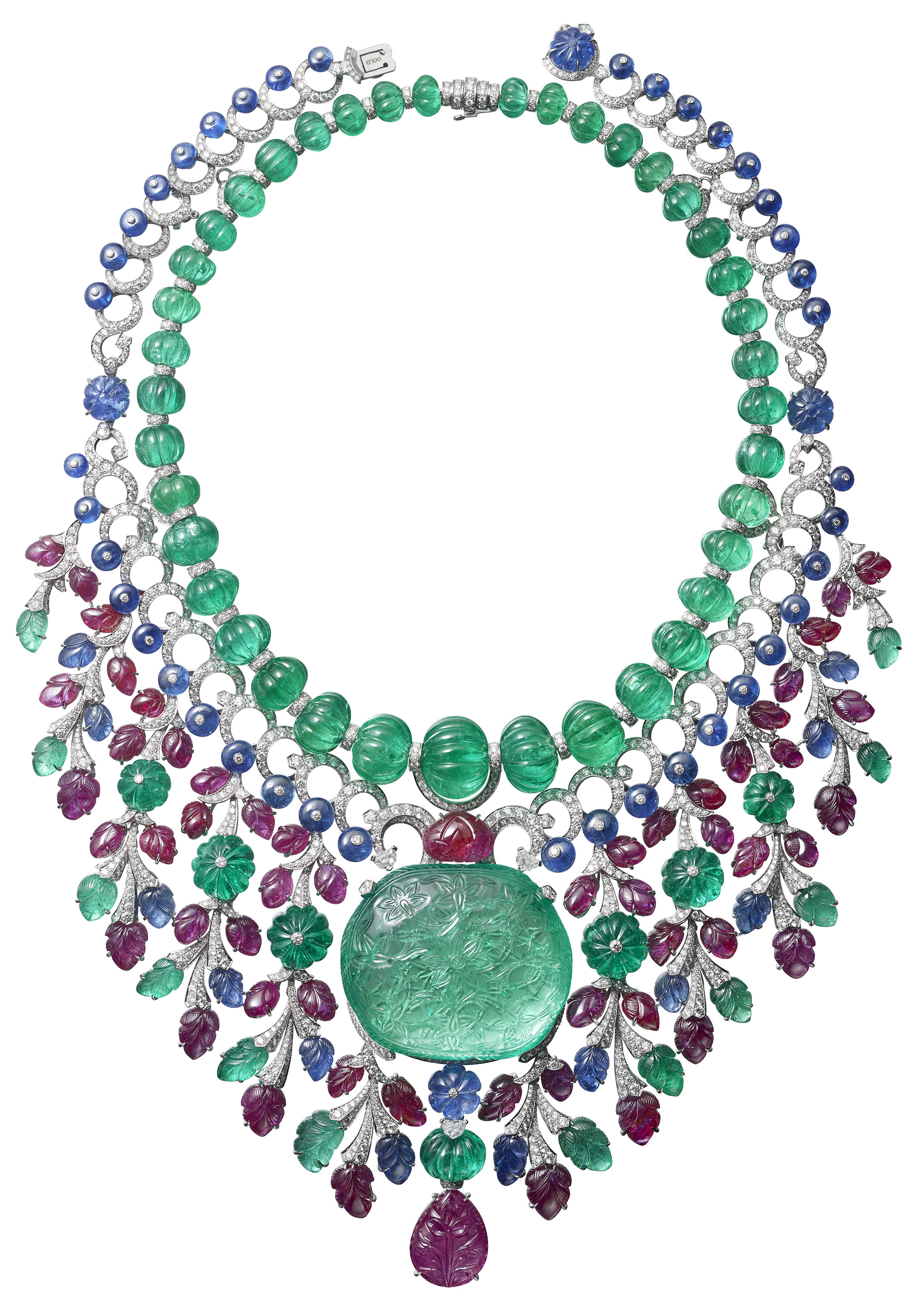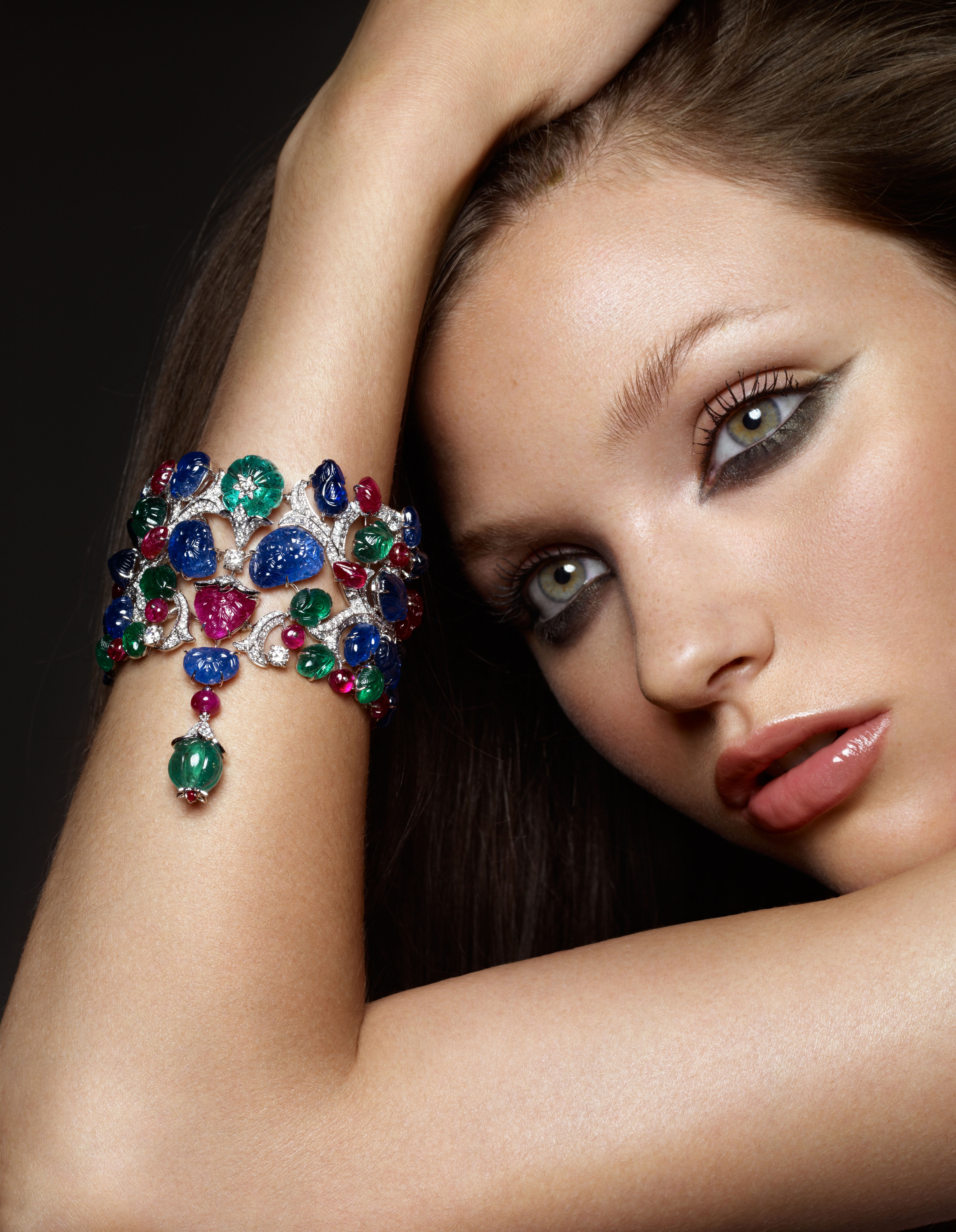
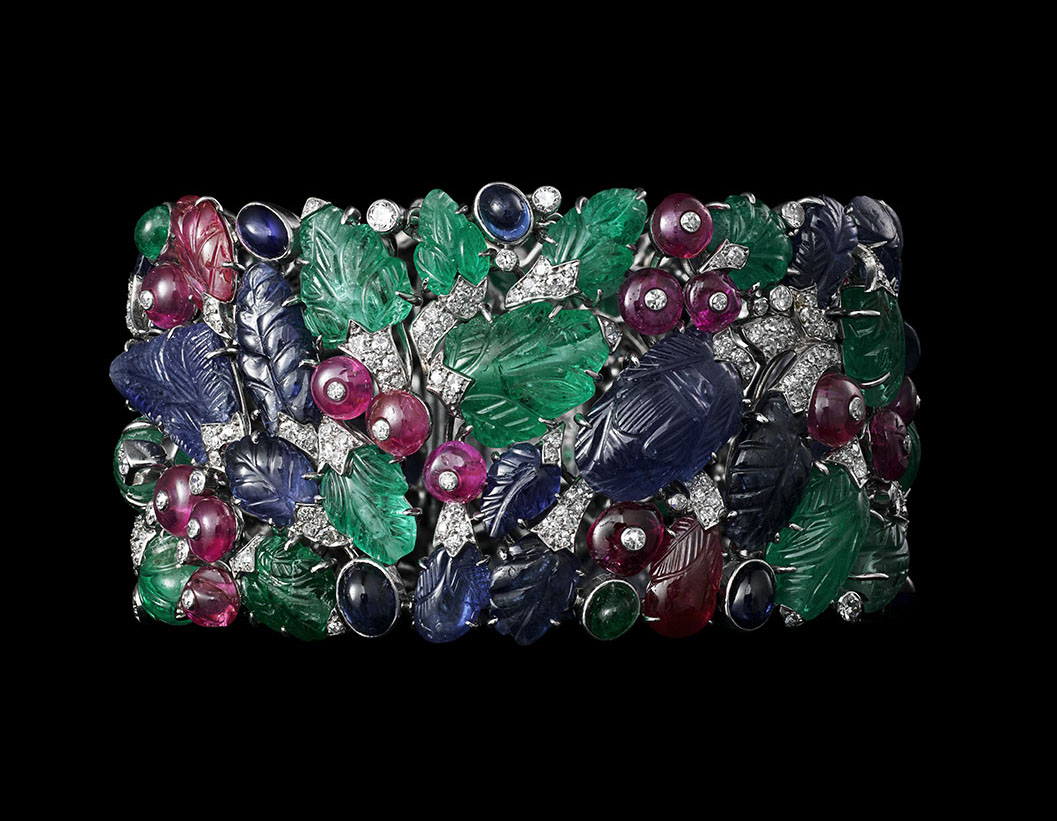
Ever since the 1920s Cartier has been devising lavish foliate jewelry composed of carved and shaped rubies, emeralds and sapphires. Dubbed “Tutti Frutti” in the 1970s, this highly evocative style is now emblematic of the Maison.
From India to Paris
Jacques Cartier, the director of the London branch, started going to India in search of precious stones in the early 1910s. There he established contact with suppliers of unique gemstones carved with subtlety and realism, perpetuating a great Mughal tradition dating back to the seventeenth century.
Rubies, emeralds and sapphires would be carved and shaped into leaves, flowers, buds or smooth berries, which Cartier combined in the 1920s to create a new style featuring “foliage”—as the Cartier archives put it—that sprouted from platinum branches. These pieces of jewelry were unusual not only in design but also in their strong combination of colors. The juxtaposition of red, green, and blue represented a bold new palette for Western jewelry, probably inspired at the time by the “Oriental” aesthetic of the Ballets Russes, which took the Paris theatrical scene by storm from 1909 onward, and whose colorful sets and costumes made a big impression on Cartier designers.
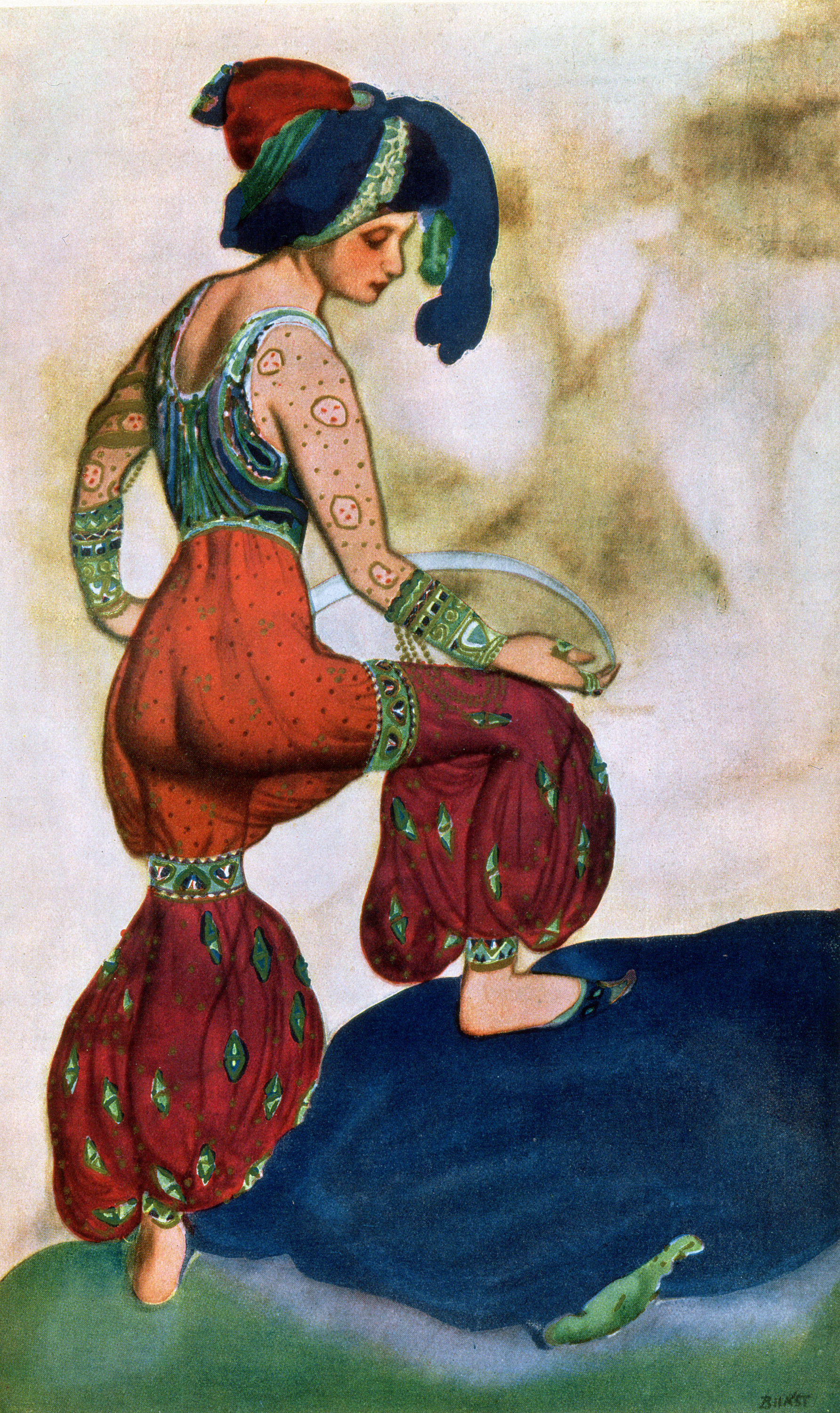
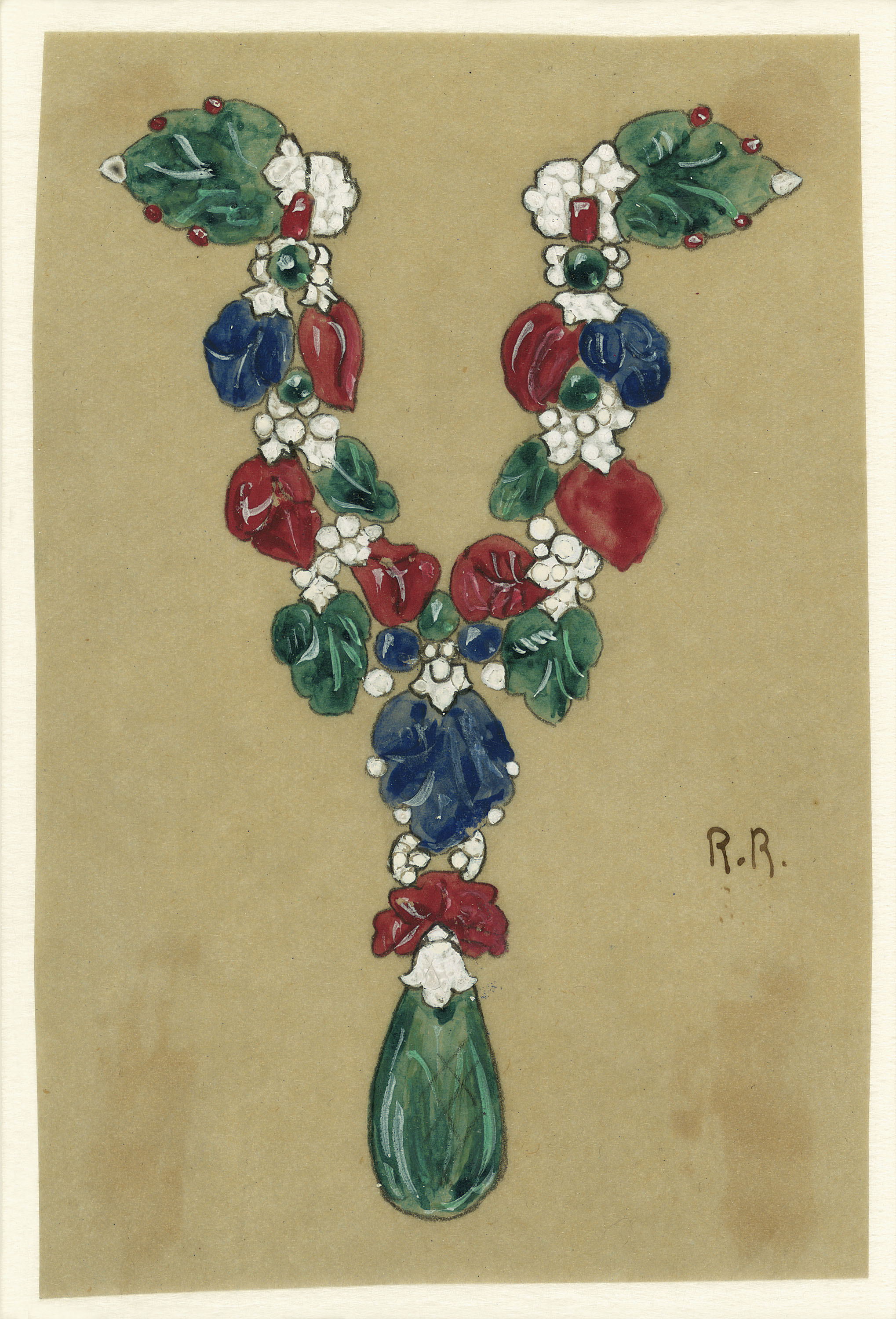
Fun yet lavish Tutti Frutti—as it was later named—made a break with the strict Art Deco style then in vogue. It also prefigured a discreet return to a naturalist aesthetic.
Major clients enamored with Tutti Frutti
By the second half of the 1920s, this highly original jewelry began to appeal to a clientele as demanding as it was famous, headed notably by the wife of American composer Cole Porter, née Linda Lee Thomas. She acquired an initial bracelet in 1926, joined by a second, almost identical one, four years later. In 1935 Linda Porter also placed a special order with Cartier for two brooches to match the bracelets. She would wear these four pieces of jewelry all her life.
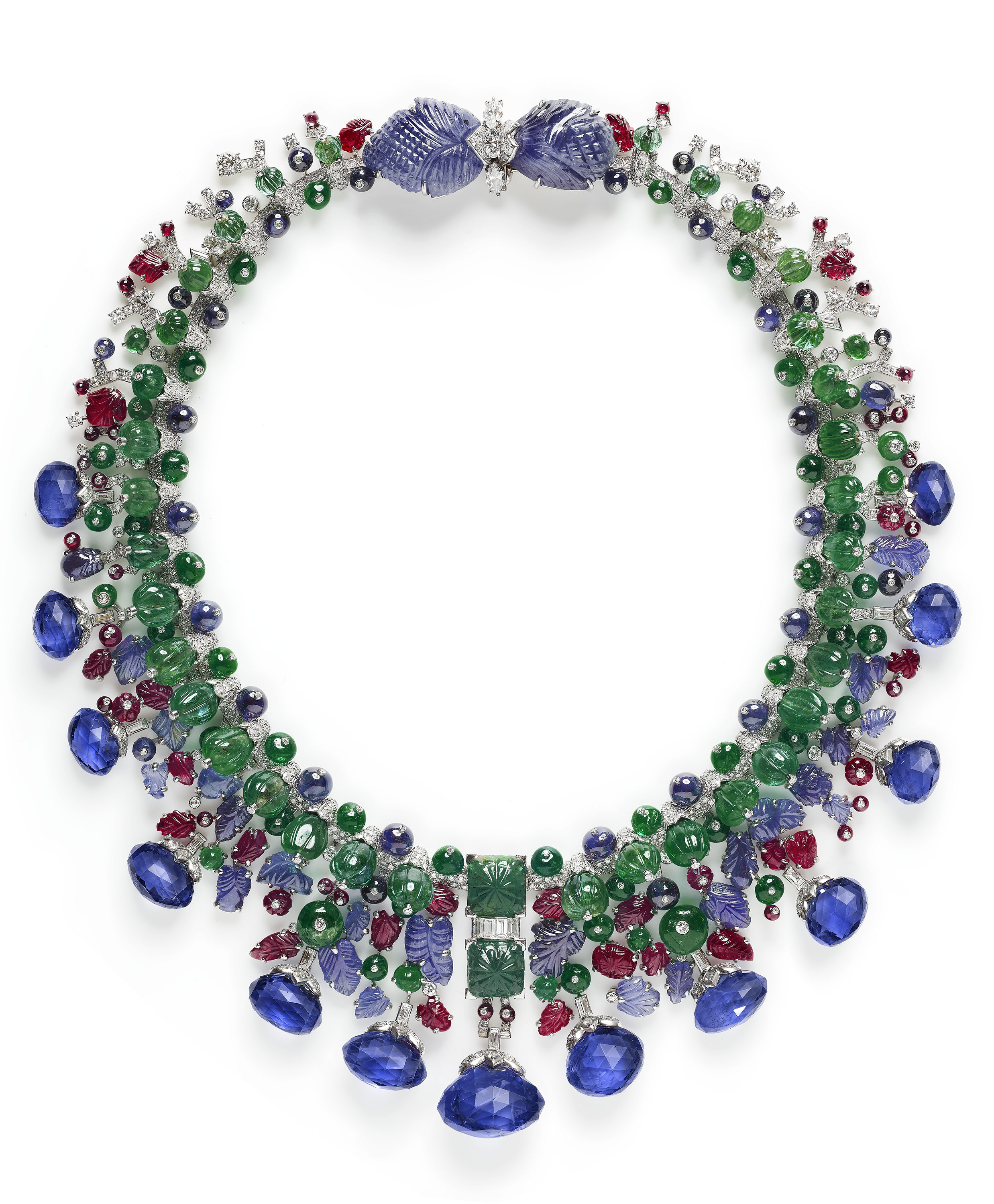
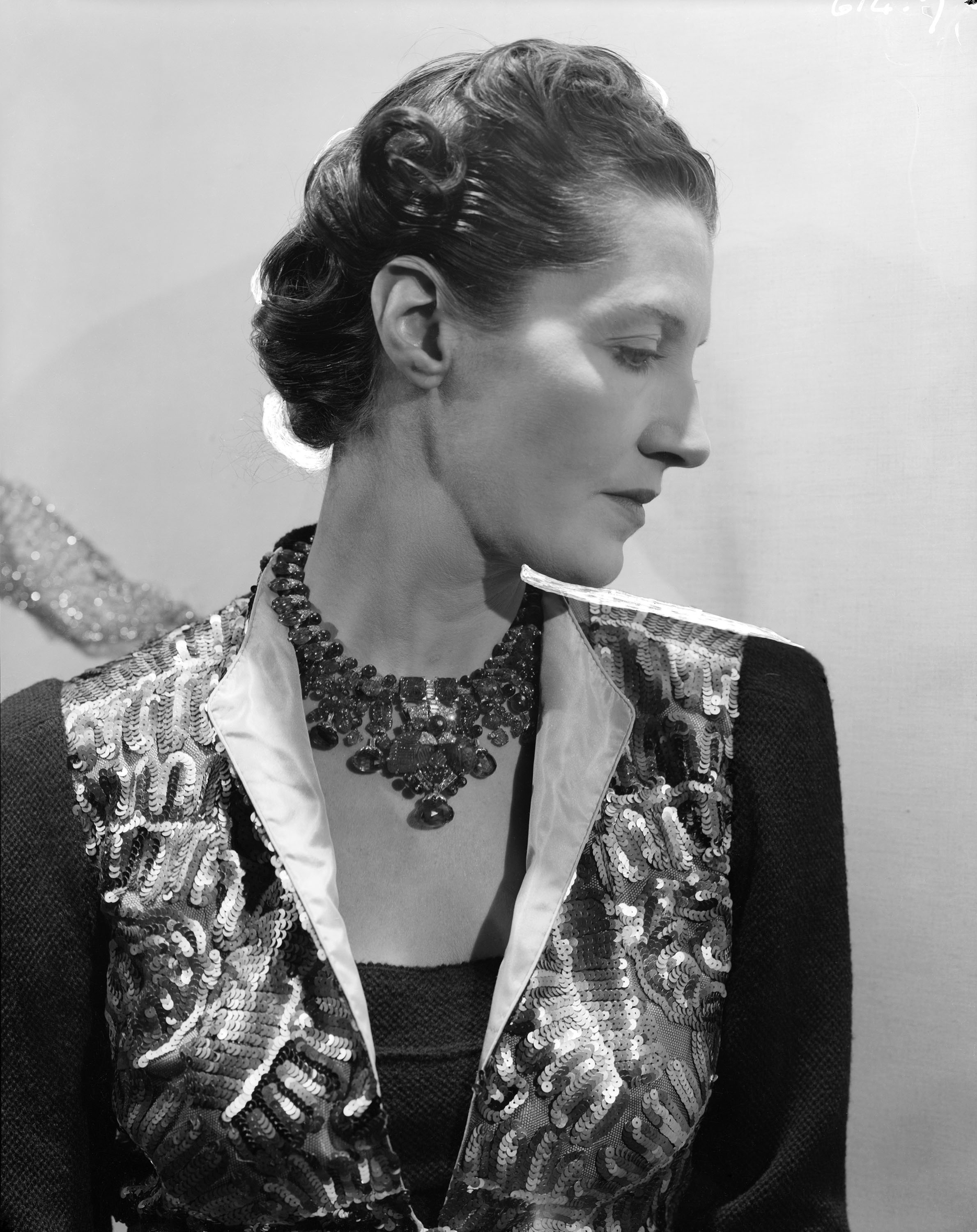
Whereas Linda Porter was sometimes thought to be the most beautiful woman of her day, Daisy Fellowes was said to be the most elegant. The heiress and socialite was a modern, active woman who reigned over Café Society. Hers was the last word in refinement, and she often dressed in extravagant outfits adorned with jewelry she bought from Cartier. Fellowes was notably enamored with carved gemstones, which she bought in India herself, then took to Paris to have them set. In the 1930s she gave Cartier designers three pieces of jewelry—two of which she had bought from Cartier in the late 1920s—to be remodeled into a “Hindu” necklace.
Up to that point, Tutti Frutti designs had focused more on the origin of the stones than on their style or design. The Fellowes necklace thus represented a new stage. Cartier drew direct inspiration from traditional, ceremonial Indian jewelry: the necklace hung from a cord and was worn low on the chest. Furthermore, its articulated platinum structure meant that the central section could be detached and worn as a brooch, which included two carved sapphires, weighing 50.80 and 42.45 carats respectively, in the form of buds of a flower or leaf.
Fellowes’ eldest daughter, the countess de Castéja, had Cartier alter the necklace in 1963, turning it into a choker. The two sapphires on the brooch thereafter graced the clasp.
Timelessly popular
In the 1970s, jewelry experts and journalists applied the label “Tutti Frutti” to this style invented by Cartier. The name was so linked to Cartier’s own artistry that the Maison registered the trade mark in 1989.

Love for these designs has not faded over the decades. The style remains fresh even as it seeks new artistic expression, playing on volume. Although traditionally dense, it can be pruned into more lighthearted pieces. For example, a sautoir designed in 2015 combines clean lines with an innovative modularity—the long necklace can be knotted easily, hence can be worn tied or open, long or short, in front or down the back. Other pieces are more spectacular: in 2016 Cartier unveiled an amazing necklace named Rajasthan in honor of the origin of the carved stones inextricably associated with Tutti Frutti.