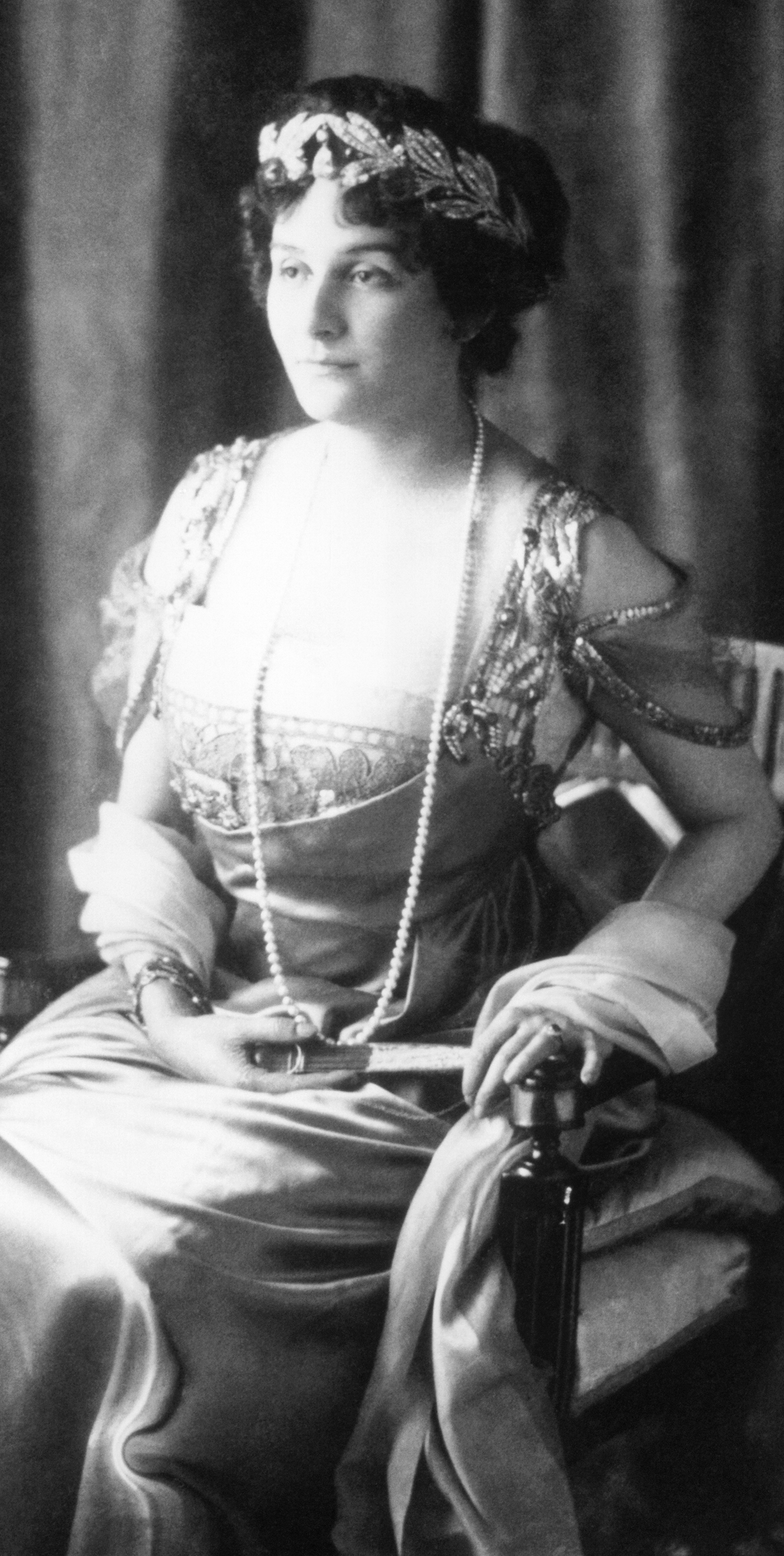
A member of the illustrious Bonaparte lineage, Princess Marie Bonaparte (1882–1962) married Prince George of Greece in 1907. Cartier produced a magnificent wedding trousseau for that occasion.
The last Bonaparte
Marie Bonaparte was born on July 2, 1882. She was the daughter of Marie-Félix Blanc and Prince Roland Bonaparte, whose grandfather was Lucien Bonaparte, brother of French emperor Napoleon I. This famous lineage was emphasized by Princess Marie, who called herself “the last Bonaparte.”
Her mother, who was heir to the founder of the casino at Monte Carlo, died just a few weeks after Marie was born. The young princess was raised by her maternal grandmother and was given a strict upbringing, which she softened through literature.
Marie’s society début in 1905 did not go unnoticed. Her famous name and the inheritance of her mother’s substantial fortune attracted some of Europe’s best matches, including Prince George, second son of King George I of Greece. Their engagement was announced in 1906.
A lavish wedding

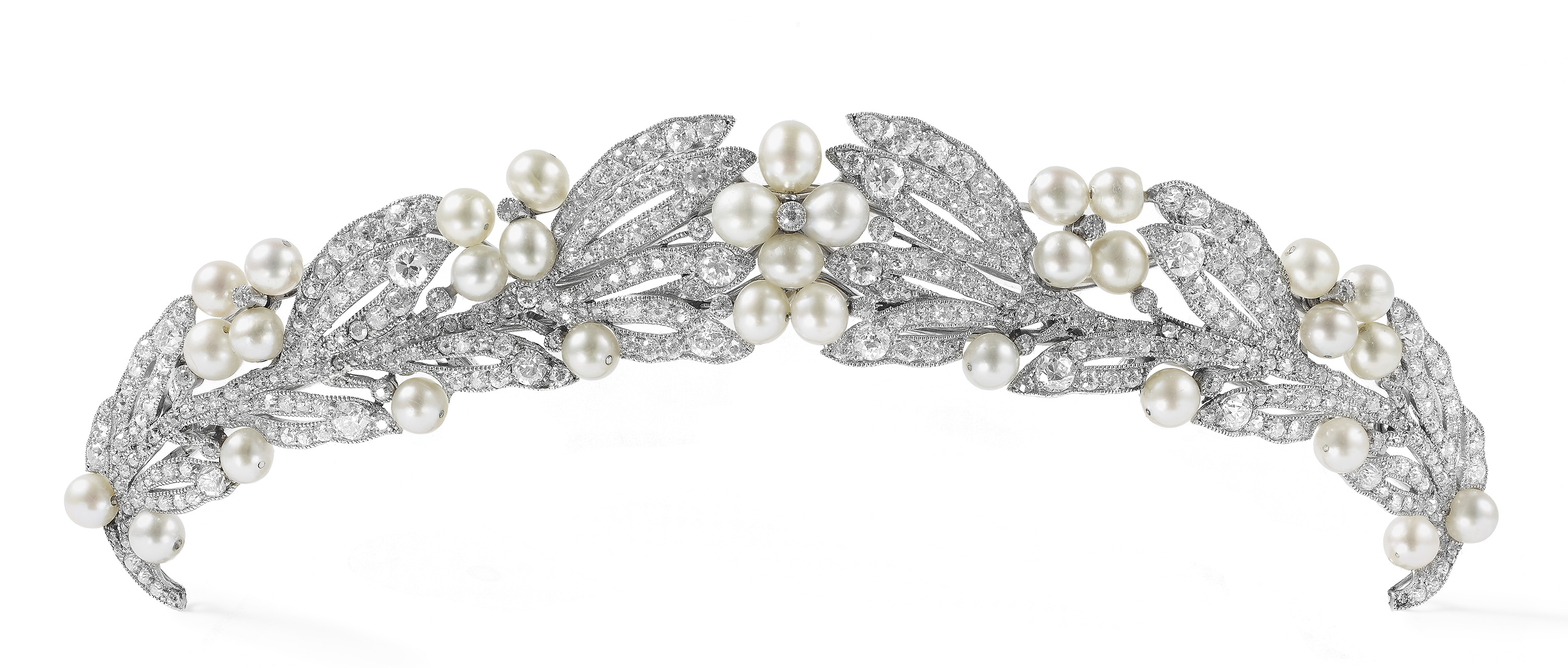
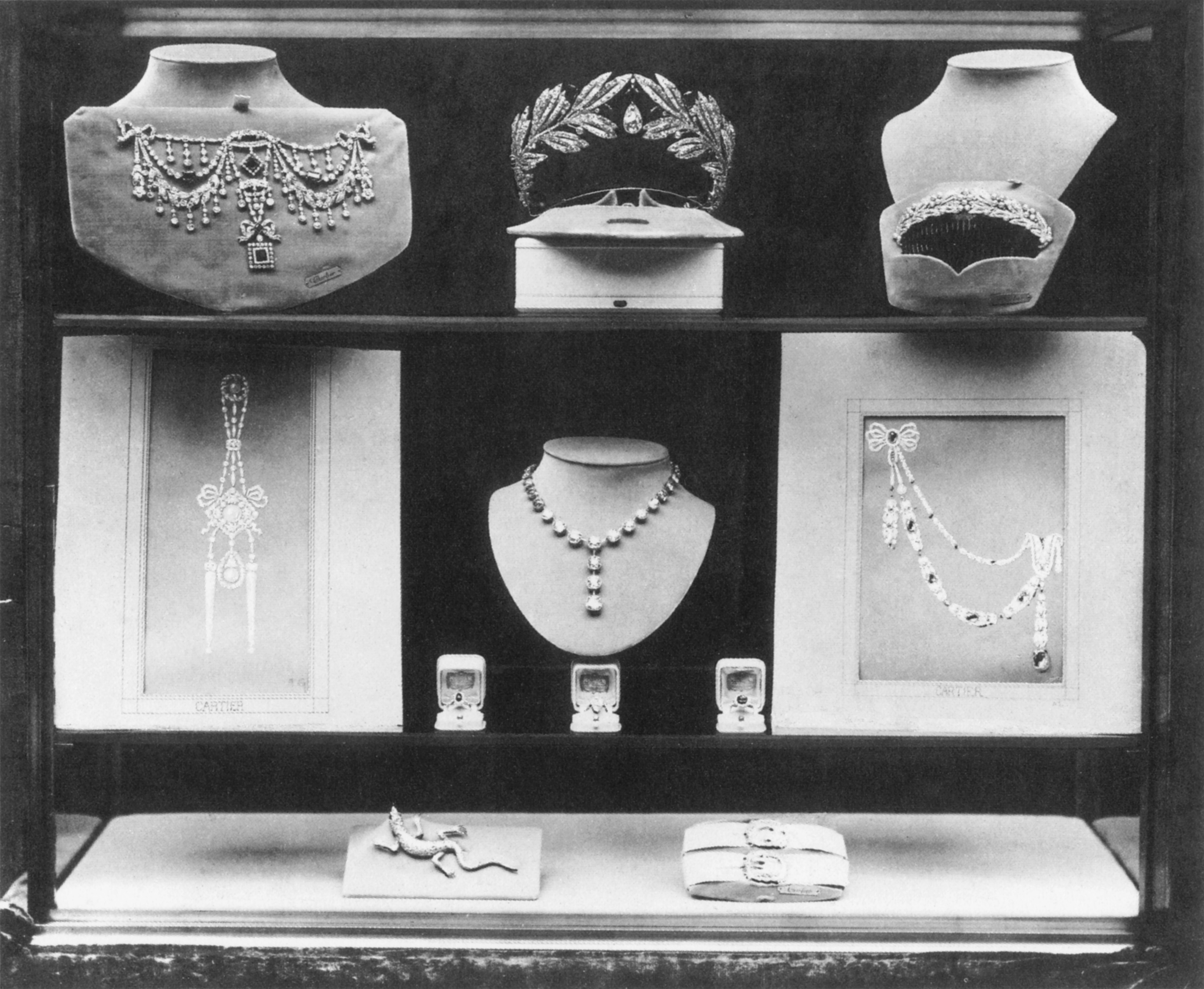
A civil ceremony was held in Paris in November 1907, followed the next month by a lavish wedding in Athens. Cartier was commissioned to provide the groom’s wedding gifts to the bride, which featured many jewels in the neo-classical garland style, which was highly fashionable in European courts. The gifts included corsage ornaments, a shoulder brooch and two tiaras. The first, larger one, featuring platinum olive leaves, was originally adorned with emeralds and diamonds, the nine emerald settings being interchangeable with nine diamond settings. The second tiara – initially a neck comb – was similarly patterned with natural pearls in a highly refined composition. The set of jewelry also included a more surprising, indeed bold, piece—a brooch depicting a lizard in diamonds.
As per tradition, Cartier displayed all of the wedding gifts in the windows of its Paris premises, to the great delight of passersby. A similar display of clothing was held at the Hôtel des Modes, prompting Vogue magazine’s reporter to stress that Marie Bonaparte personified the Louis XVI and Empire styles. Her refined, sophisticated look was perfectly reflected in Cartier’s trousseau of gifts, and can also be seen on two pendants purchased by the princess in 1913, in the form of two articulated pine cones on a lavaliere necklace.
A campaigning, philanthropic princess
In the 1920s Marie Bonaparte came across Sigmund Freud’s pioneering work in the brand new field of psychoanalysis. Enthusiastic about the Viennese doctor’s new theories, she supported him financially, translated his works into French, helped to found the Société Psychanalytique de Paris and launched a specialized periodical.
Following World War II, Marie Bonaparte became less active in the psychoanalytic movement and spent the final years of her life campaigning for the abolition of the death penalty.
She passed away in 1962.