
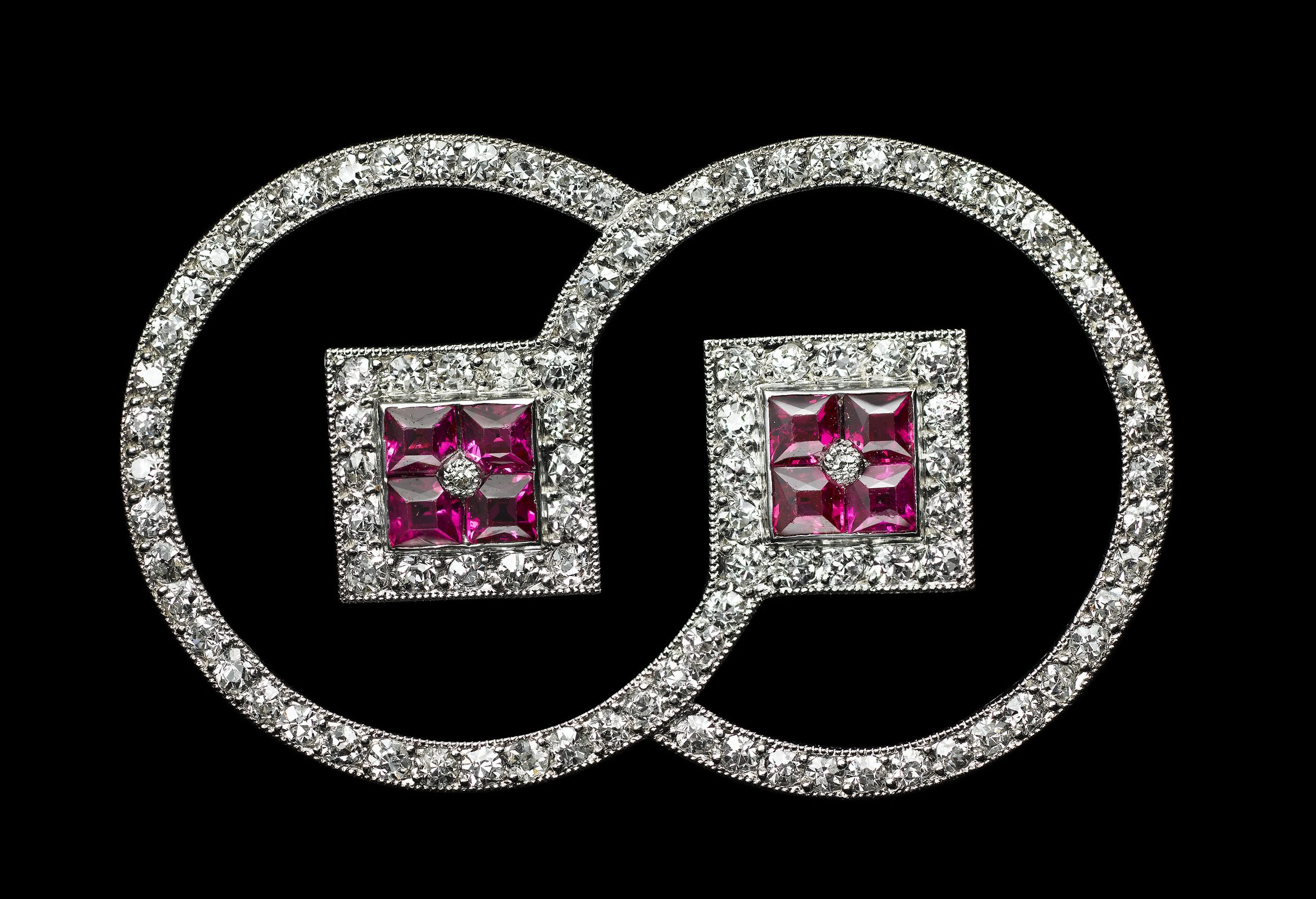
The “modern style” was invented by Cartier around 1904, for designs that were distinctive for jewelry of the day. This bold approach combined abstract, geometric shapes and unusual combinations of colors. This signature style became emblematic of Cartier and heralded Art Deco.
The early twentieth century announced the dawn of a new era. In a matter of years, the customs of the previous century went out the window. Art lovers were confronted with canvases emboldened by the Fauvists’ gaudy colors and the Cubists’ radical shapes. The cultural capitals of Europe became infatuated with the orientalizing aesthetics of the Ballets Russes. The entire world marveled at technological advances, from the commercial sale of automobiles to the first technical trials of aircraft. The globe was shrinking.
Louis Cartier (1875–1942) was quick to perceive the revolution that the new era was triggering. Even though Cartier’s neo-classical garland style was still in full swing, Louis explored a new aesthetics, one that combined abstract shapes with bold chromatic pairings. Geometry, with its clean, striking lines, was cloaked in bright colors through cubes, polygons, and lozenges of caliber-cut precious stones.
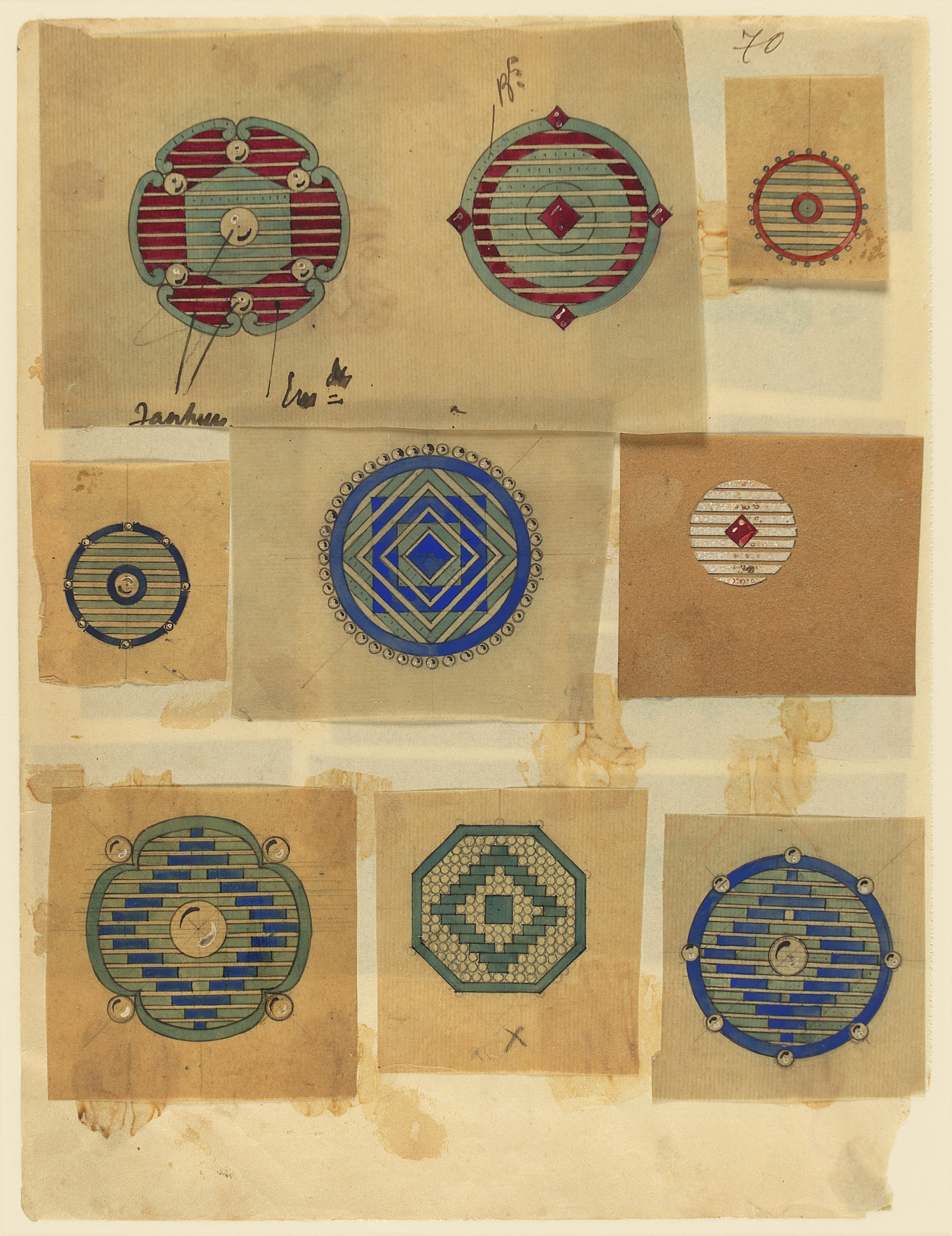

As early as 1904 Cartier produced a brooch in the shape of a long lozenge, set with diamonds and rubies. It was followed, two years later, by another brooch —of sapphires and diamonds—whose design was structured around a double curve and two squares freely inspired by foliate patterns. In 1909 all representation vanished to the sole benefit of design, with a brooch whose square motif was set in a circle. Yet not all representational allusions were banned, although they would be more or less abstract or stylized: thus a brooch of 1910, influenced by Japanese art, undulated with shimmering lines evocative of moving water.

These new designs were the earliest expressions of a innovative type of jewelry and artistic idiom characteristic of Cartier: the modern style. This pioneering approach heralded the Art Deco movement, which came to the fore at the international fair held in Paris in 1925, known as the Exposition Internationale des Art Décoratifs et Industriels Modernes.