
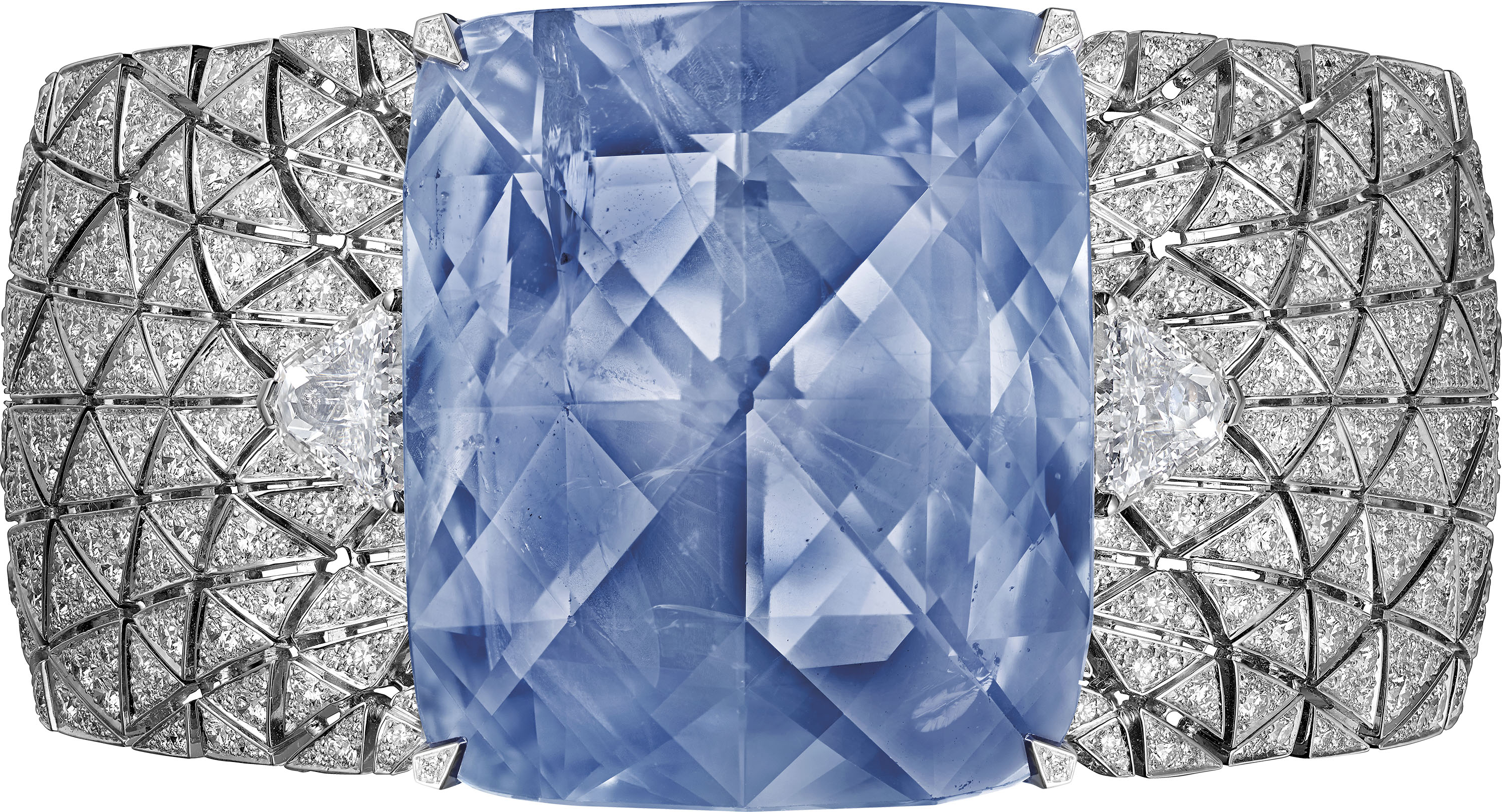
This 197.80-carat sapphire from Ceylon was owned by the Romanovs and has had an intriguing past: it was smuggled out of a revolutionary Russia, and in 1928 showed up at Cartier, where it was bought by singer Ganna Walska. She kept it until 1971, when the sapphire was put up for auction. In 2014 it found its way back to Cartier’s workshops, where it was enthroned on a bracelet presented the following year.
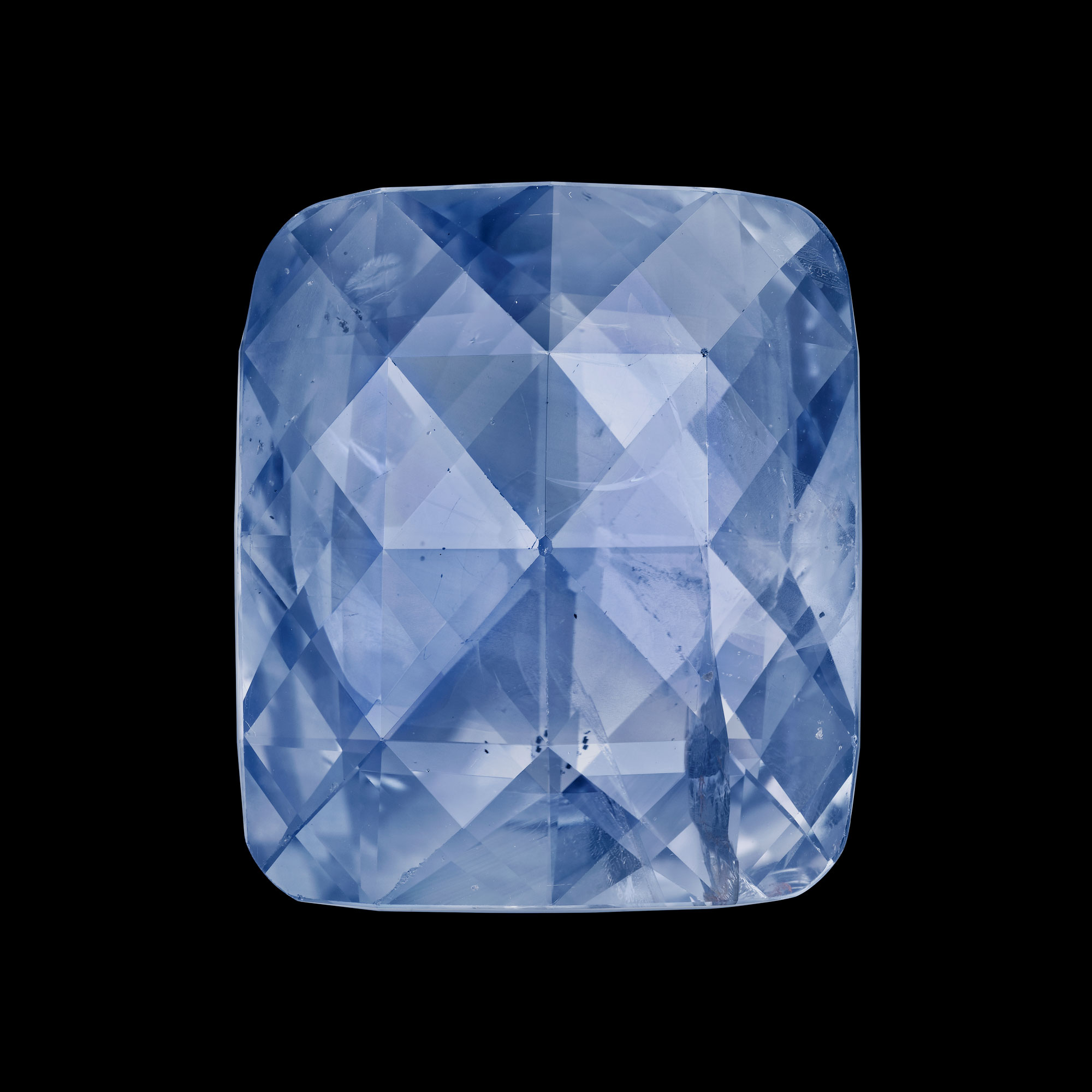
In 2015, Cartier presented the majestic Romanov sapphire in the context of its Étourdissant Cartier High Jewelry collection. The stone is majestic for its spectacular weight—197.80 carats—and equally majestic for its entirely faceted surface and vivid color, lit by a delicately pink note. Finally, it boasts a majestic past: an authentic relic of the Romanovs, it was originally owned by Czarina Maria Feodorovna.
Born Princess Dagmar of Denmark, Maria Feodorovna (1847–1928) was the second daughter of Danish king Christian IX. Whereas her older sister Alexandra married the future Edward VII of Great Britain, in 1866 she married Grand Duke Alexander Alexandrovich of Russia, who became Czar Alexander III in 1881. The couple had six children, the eldest of whom, the future Czar Nicholas II, would watch helplessly as the Romanov dynasty was overthrown.
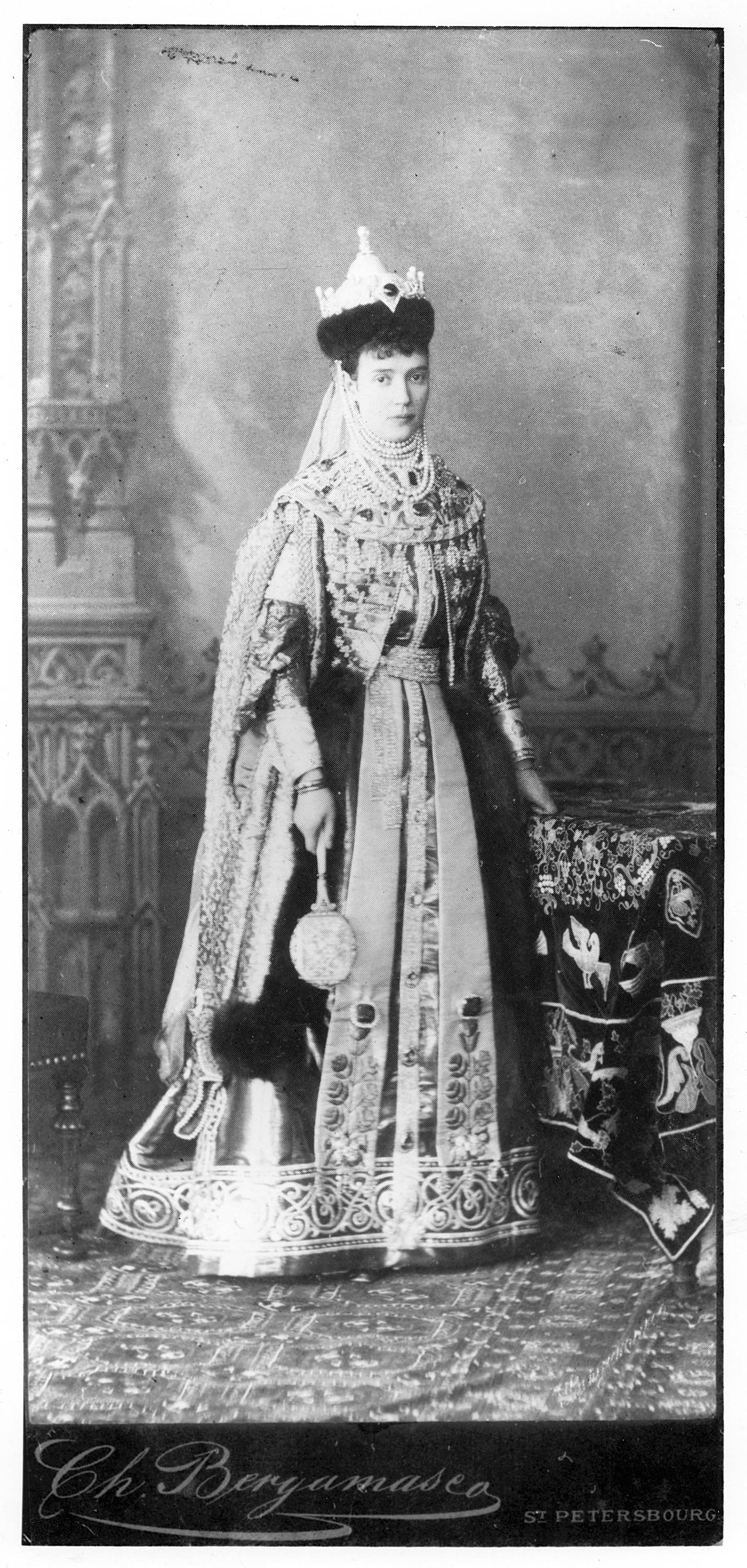
Maria Feodorovna was an illustrious figure in Russian history, bequeathing the image of a grand lady who was always elegant and who loved jewelry. Many portraits and photographs show her adorned with jewels. Among the most precious was this sapphire, which Maria Feodorovna had set on a brooch surrounded by twenty-six brilliants. That is how she wore it—according to a legend later confirmed by a photograph—to the lavish costume ball given by Grand Duke Vladimir in his palace on January 25, 1883.
After the revolution broke out, Maria Feodorovna managed to flee Russia, seeking refuge first in England and then in her home country of Denmark. Most of her jewelry remained in Russia, and was seized by the Bolshevik government, which had an inventory drawn up by mineralogist Alexander Yevgenyevich Fersman. His report was published in 1925–26 as Russia’s Treasure of Diamonds and Precious Stones, a French copy of which is found in the Cartier archives. Item number 161 is the faceted sapphire, described as having belonged to “the czarina, mother of Nicholas II.”
The sapphire left Russia mysteriously. Late in 1928 it surfaced, recut and therefore lighter by a few carats, in the workshop of Cartier New York, where the jewelers deployed all their skills to fashion it into the pendant of a lavish necklace. The necklace was bought by Polish diva Ganna Walska (1887–1984) in January 1929.
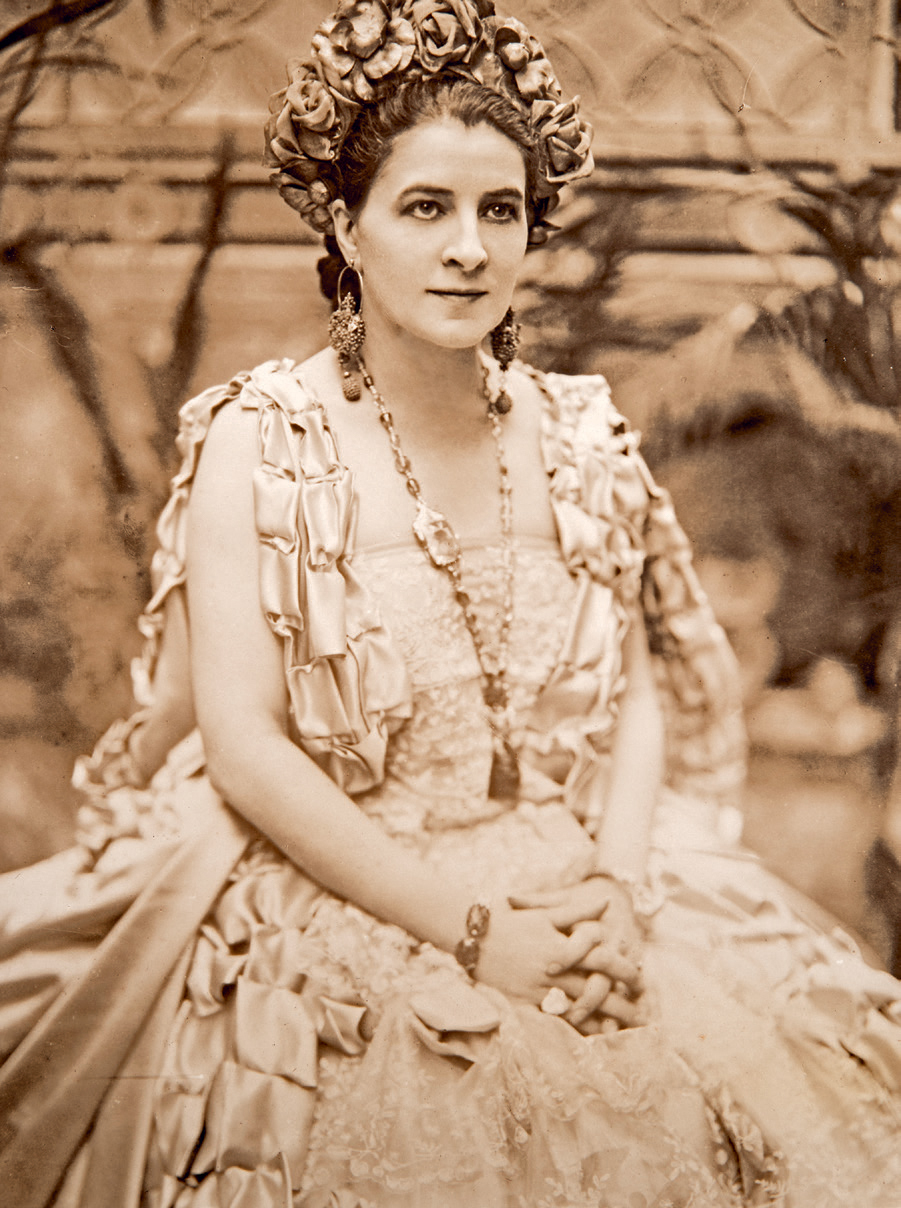
Not long afterward—that same year—the singer asked that the sapphire be set in another necklace, which she had previously purchased from Cartier. The new piece underwent several modifications in the following months, all executed by the “king of jewelers.” This quest for perfection reflected Walska’s attachment to the unique gemstone.
In 2014 the gem finally found its way back to Cartier, where it was set in a bracelet designed in a geometric spirit, composed of intersecting curves in an openwork pattern forming triangles that evoke the facets on the sapphire. The gem is removable, and can be replaced by a rock crystal with linear carving that harmonizes perfectly with the design of the bracelet.