

Universal symbol of fiançailles, the solitaire is an emblematic Cartier design.
A solitaire traditionally refers to a ring set with a single stone, often a diamond, given when two people become engaged.
At the end of the nineteenth century, Cartier generalized the innovative use of platinum in its creations, making it possible to create thinner and lighter settings. The first mention of a solitaire crafted using this precious metal is found in the Maison’s registers of 1895, where it is soberly described as “one brilliant, platinum wire setting.” Thanks to their unprecedented mastery of this metal, the Maison artisans were able to devise a mount so thin that it would free the diamond’s brilliance and highlight its majesty. This laid the groundwork for the Cartier solitaire, whose tradition of excellence has been perpetuated for more than a century.
Cartier solitaires have sealed countless engagements, including that of Grace Kelly to Prince Rainier III of Monaco in December 1955. Loyal Cartier clients, the princely couple selected a platinum ring with a 10.48-carat emerald-cut diamond. The clean-lined setting highlighted the stone, impressive for its weight, while two baguette-cut diamonds set on each side enhanced its brilliance.

A symbol of timeless elegance, the Cartier solitaire is distinguished by its refined sophistication and harmonious proportions. Between tradition and modernity, the Maison revisits this jewelry classic in numerous designs, such as the diamond halo setting in the Cartier Destinée ring in 2013, or the subtle pavé-set in the Étincelle de Cartier ring of 2016.
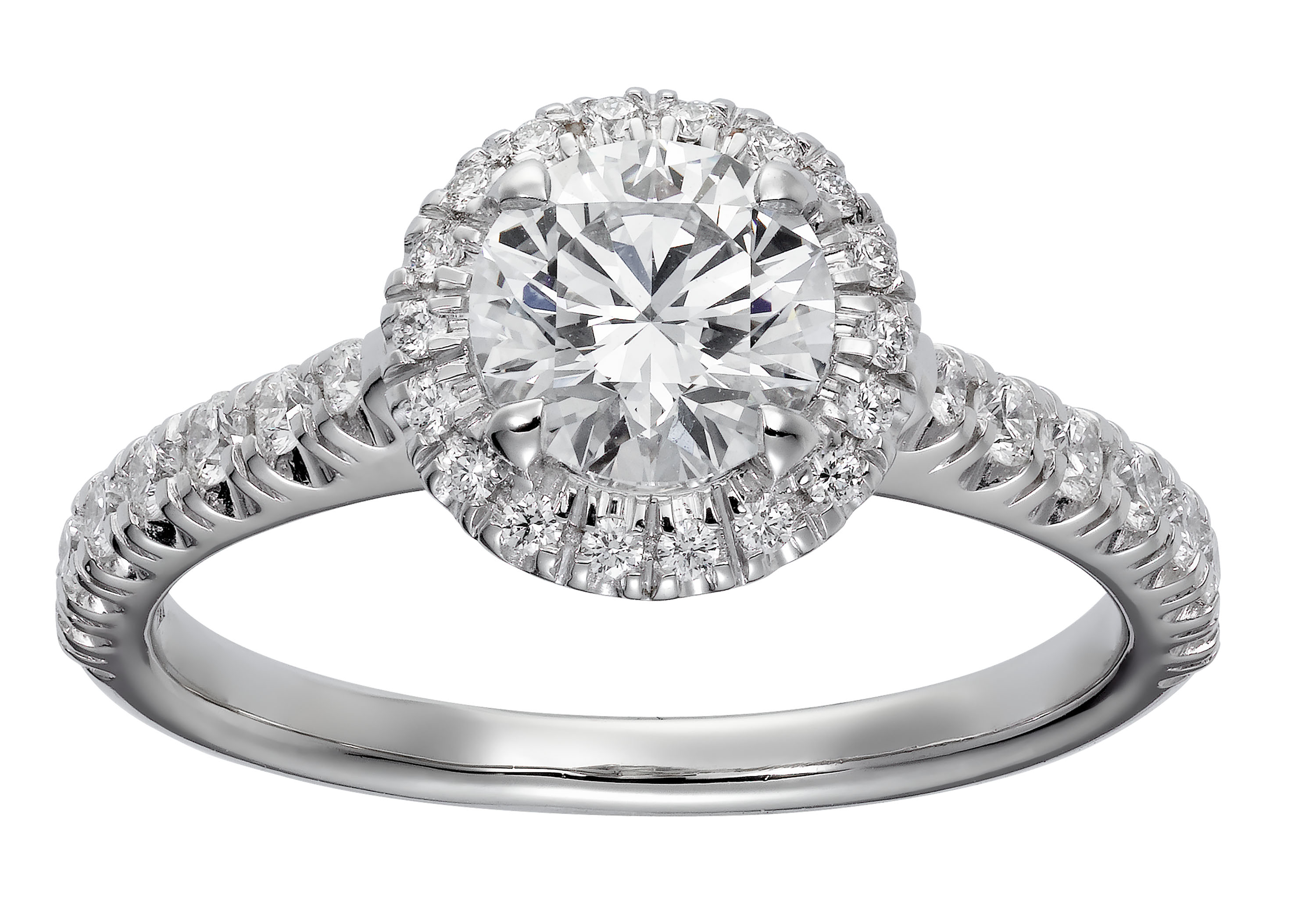

Elegance, harmony, brilliance… Three keywords for the Cartier solitaire.