
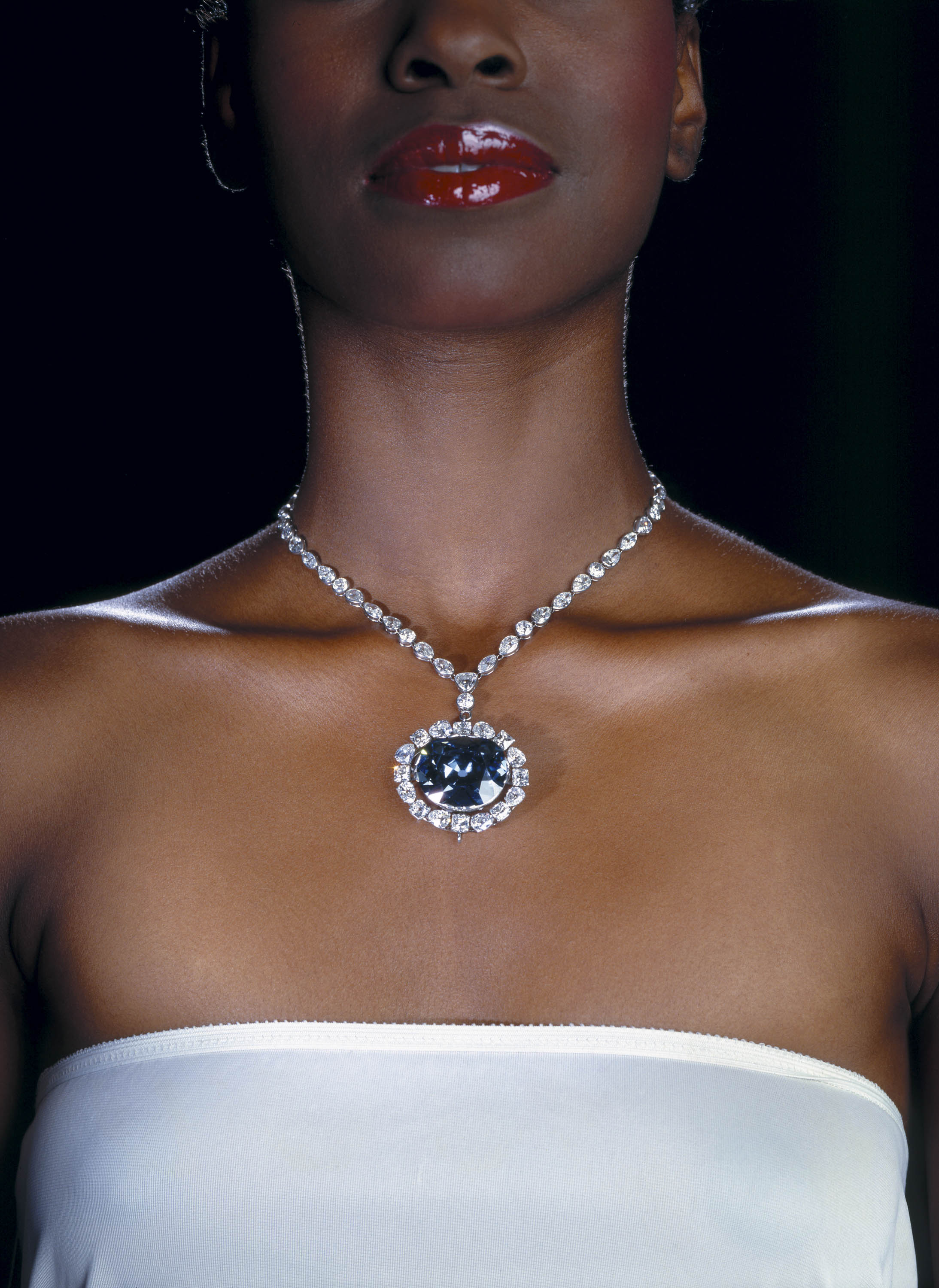
The Hope, a cushion-shaped blue diamond weighing 45.52 carats, is today one of the most famous gems in the world. Once part of the French crown jewels, it disappeared during the revolution only to reappear in England in the early nineteenth century. Cartier bought it in 1910 and sold the gem to Evalyn Walsh McLean. Today it is on display in the Smithsonian Institution in Washington, D.C.
The origin of this type IIb blue diamond is shrouded in mystery. One theory traditionally held by experts is that it came from the Kollur mines near Golconda, India, in the late seventeenth century. That it where the great French traveler Jean-Baptiste Tavernier acquired the rough stone, weighing 115.16 carats, during his sixth and last voyage to the East.
On returning to France in 1668, Tavernier sold the gem to King Louis XIV, an avid diamond collector. A few years later, the “Blue Diamond of the Crown” (or “French Blue” diamond) was reshaped by royal stonecutter Jean Pitau into a 69-carat heart-shaped gem, enhancing its brilliance. Louis XIV wore it this way, either set on a brooch or hanging from a ribbon around his neck. His successor, Louis XV, had the diamond adorn his insignia of the Order of the Golden Fleece in 1749.
The Constituent Assembly that was held after the French Revolution of 1789 ordered that an inventory be made of the crown jewels. The “French Blue” diamond, valued at three million francs, was stored in the National Furniture Repository, from where it was stolen on the night of September 16–17, 1792.
In all likelihood, the diamond was shipped to England, where it resurfaced in 1812, in the hands of a stonecutter—but henceforth of different weight and cut. The diamond was then sold to banker Henry Philip Hope, after whom it is now named. Hope’s nephew and heir, Henry Thomas Hope, exhibited it on several occasions, notably in the Crystal Palace at London’s Great Exhibition of 1851, and in the 1855 Universal Exposition in Paris, where Emperor Napoleon III admired it.
The blue diamond remained in the Hope family until 1902, then was sold to meet financial obligations. Four owners later, Cartier bought it in 1910 and set it as a pendant. Louis Cartier conducted research into the history of the French crown jewels, and confirmed its royal origins. In 1911, Pierre Cartier showed it to the rich American heiress Evalyn Walsh McLean at the Hotel Bristol in Paris, during her brief stay in town. She was not immediately won over, but the shrewd jeweler offered to leave it with her for an entire weekend, after which McLean never managed to part with it.
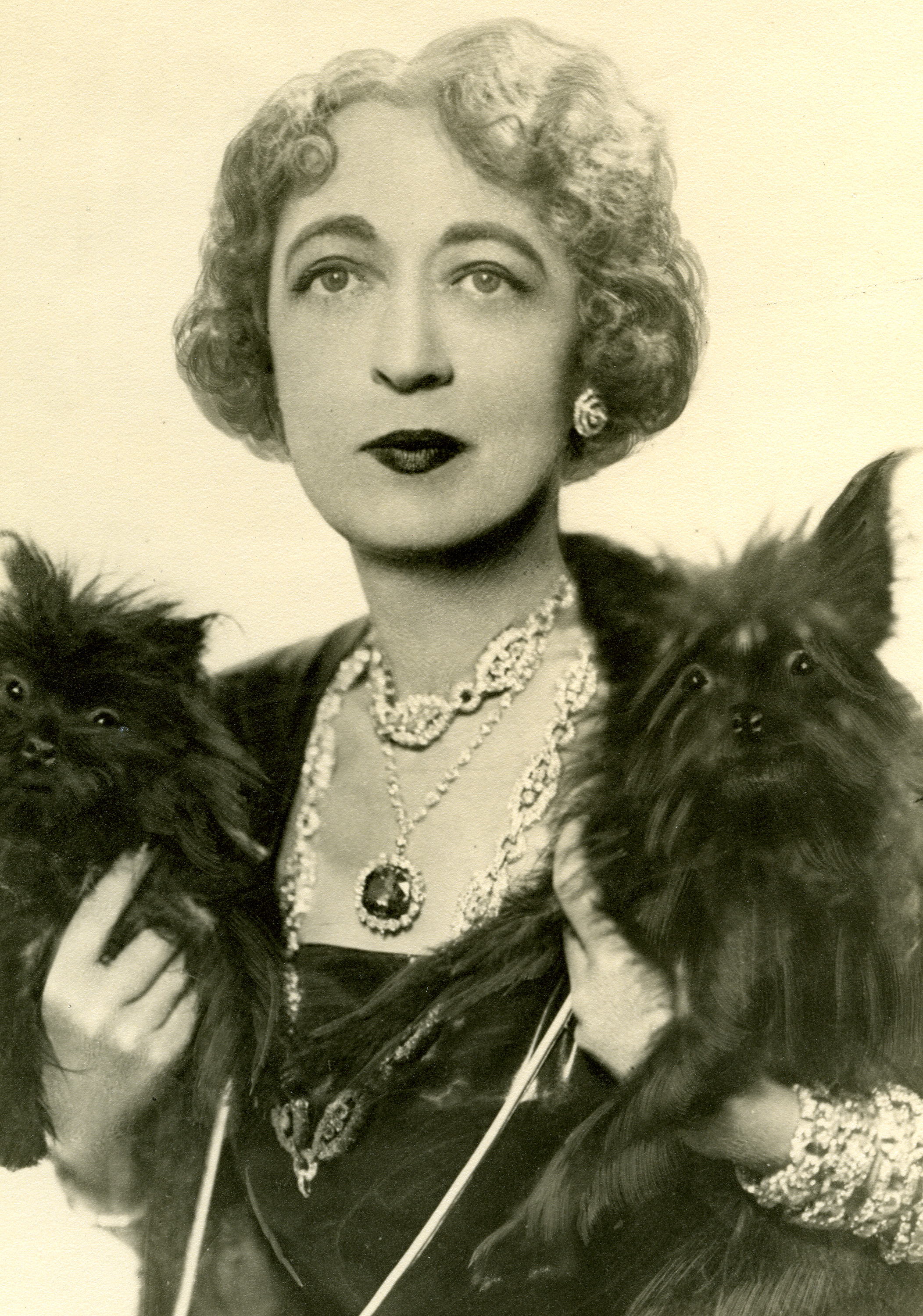
Two years after she died in 1949, a New York jeweler bought her entire collection of jewelry, including the Hope diamond, which was finally donated to the Smithsonian Institution in Washington, D.C., where it has been on public display since 1958.