
Throughout her colorful lifetime, Ganna Walska (1887–1984), a singer originally from Poland, acquired a large collection of jewelry, which included numerous pieces made by Cartier.
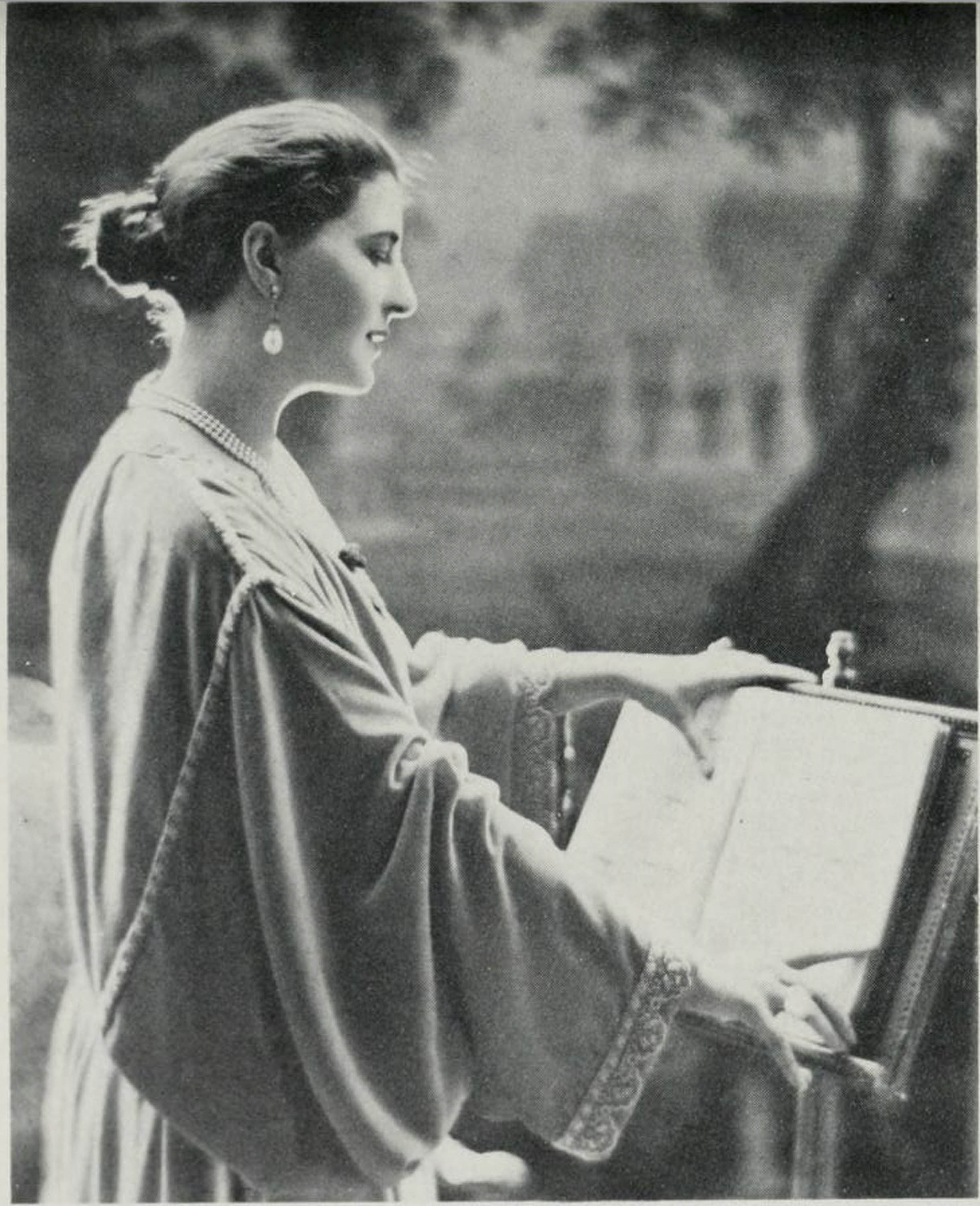
Slavic youth
Ganna Walska was born Hanna Puacz, probably in Brest-Litvosk in 1887, although nothing is certain. In her autobiography she claimed to have grown up in Poland, where at age seventeen she married a Russian baron, Arcadie d’Eingorne. They moved to Saint Petersburg, where they attended the many balls and operas held in the capital of the czars. Perhaps that is where Ganna’s ambition to be a singer was born. But while her love of bel canto was certainly sincere, her vocal abilities were not fully up to the task, according to several contemporaries.
Matrimonial opera
After a brief stay in Switzerland, where the baron tried to recover from tuberculosis—which finally cost him his life—Ganna moved to Paris around 1910 in order to take singing lessons. She was soon performing in various music halls. The concert programs did not list her real name, but a stage name: Ganna Walska.
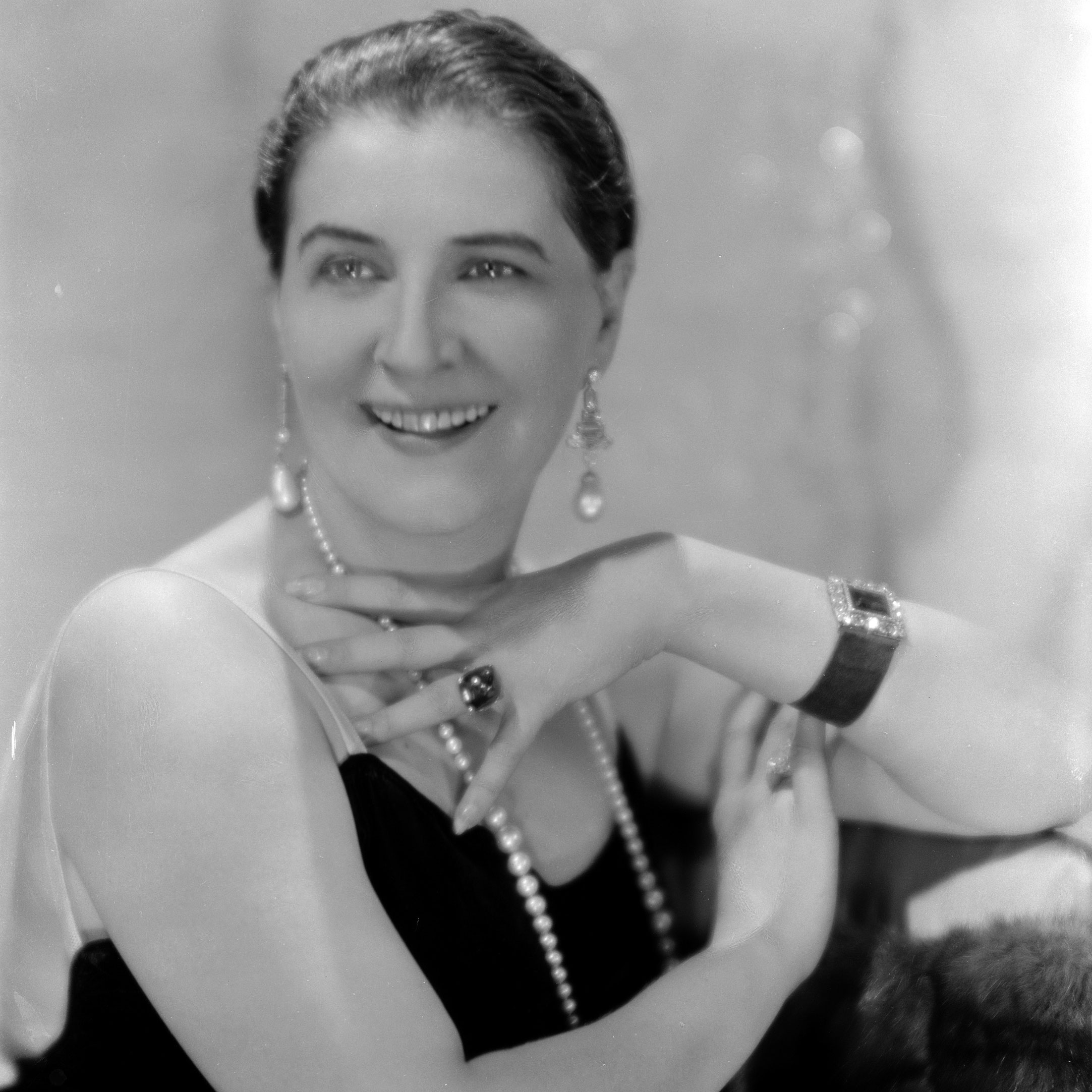
A youthful recollection inspired that choice of name, she declared. “Like all Poles, I loved to dance, especially to waltz. So, suddenly I said: Waltz, Valse, Walska.”
In 1915 she sailed for America in order to advance her career. There she met her second husband, Joseph Fraenkel, a laryngologist in New York whom she went to see for a sore throat. Ten days later, the couple wed. The marriage was short-lived, however, since the doctor died in 1920, bequeathing his wife a comfortable fortune.
The young widow then met Harold Fowler McCormick, a rich industrialist from Chicago who was also a generous patron of that city’s opera house. He managed to get Walska a contract there. The only obstacle to the couple’s happiness was the fact that McCormick was already married to Edith Rockefeller, daughter of the patriarch of the famous American dynasty.
While waiting for his divorce to come through, McCormick introduced Walska to one of his friends during a trans-Atlantic crossing. Alexander Smith Cochran, dubbed “America’s richest bachelor” by the press, fell under Walska’s charm, and immediately proposed to her. They were married in Paris in September 1920. As a wedding gift, Cochran invited his bride to choose what she wanted from Cartier.
On returning to New York, however, the couple’s relationship soured. Walska wanted above all to pursue her singing career, while Cochran didn’t like her to appear on stage, and he complained about her frequent absences. Walska obtained a divorce in 1922 and moved to Paris, where she bought the Théâtre des Champs-Elysées, a famous venue cherished by music lovers.
Meanwhile, McCormick persuaded Edith Rockefeller to agree to a divorce. He and Walska were married in Paris in the summer of 1922, just before they moved back to the United States.
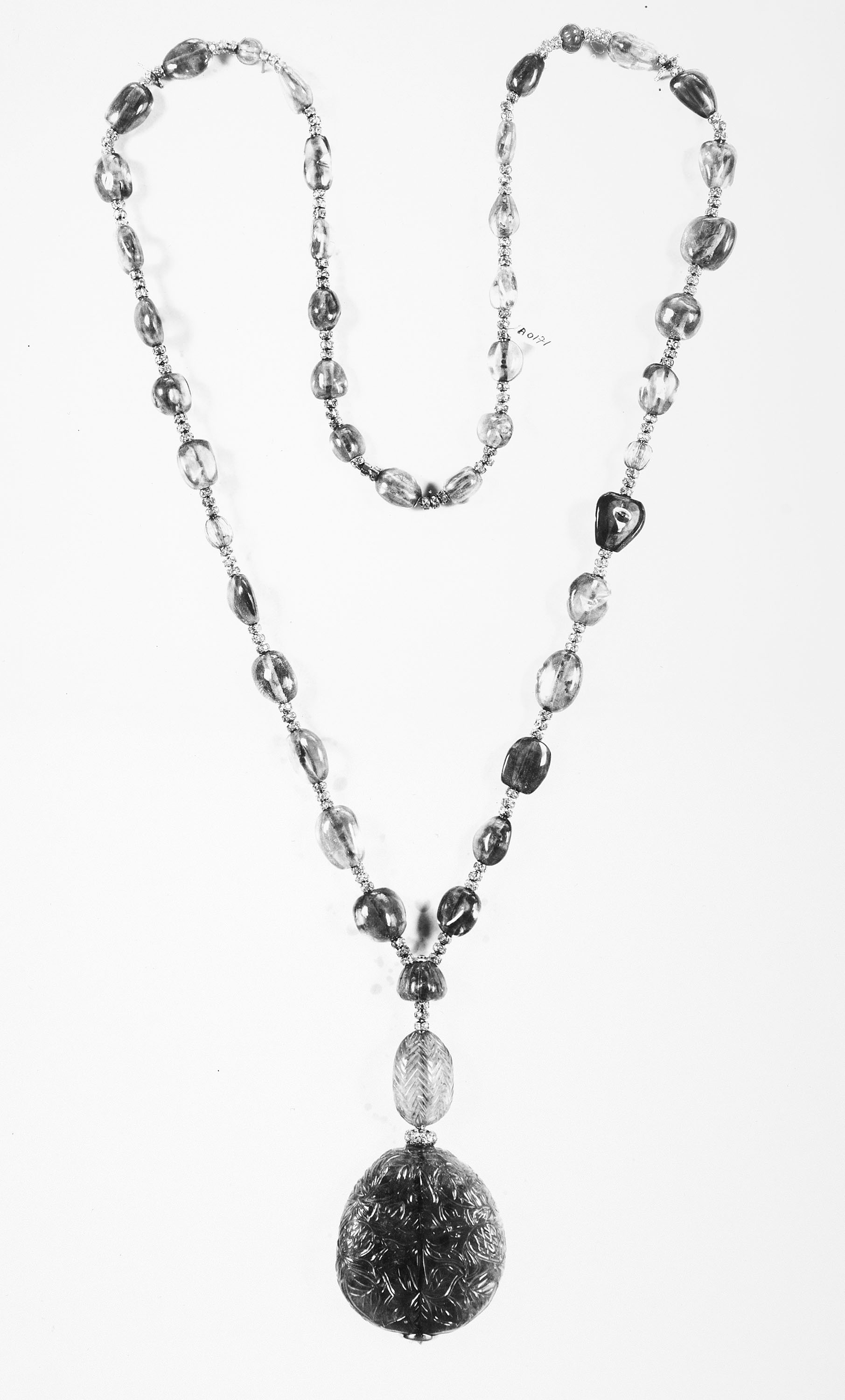
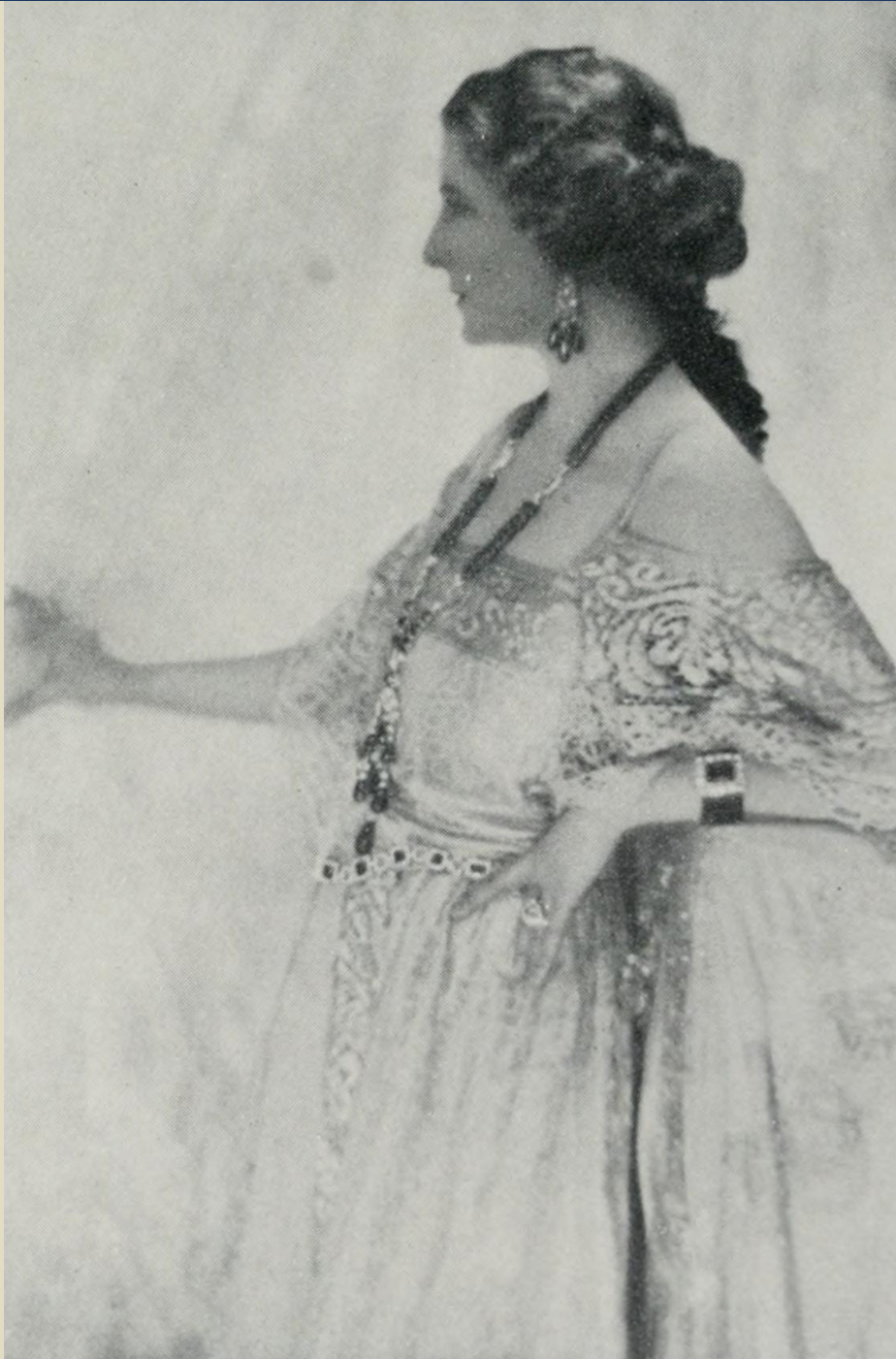
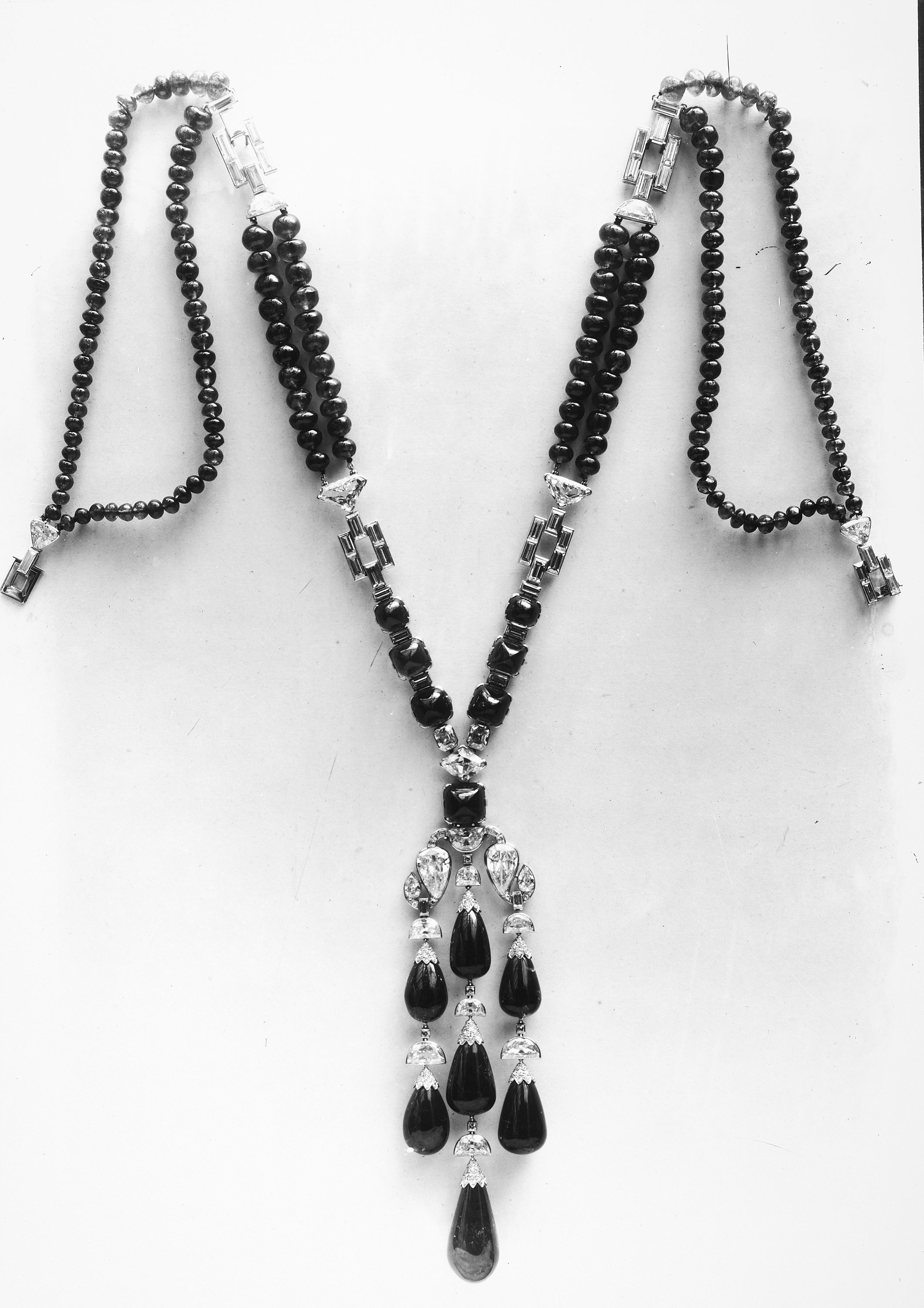
In 1923, Walska bought two remarkable necklaces from Cartier. The first, adorned with seven emerald drops totaling over 160 carats, was a majestic piece of jewelry which the Polish diva wore for several portrait photographs. The second necklace was a string of sapphire and emerald beads with, as pendant, an imposing 256.60-carat emerald carved with foliate patterns. The latter necklace later underwent several transformations.
The Romanov sapphire
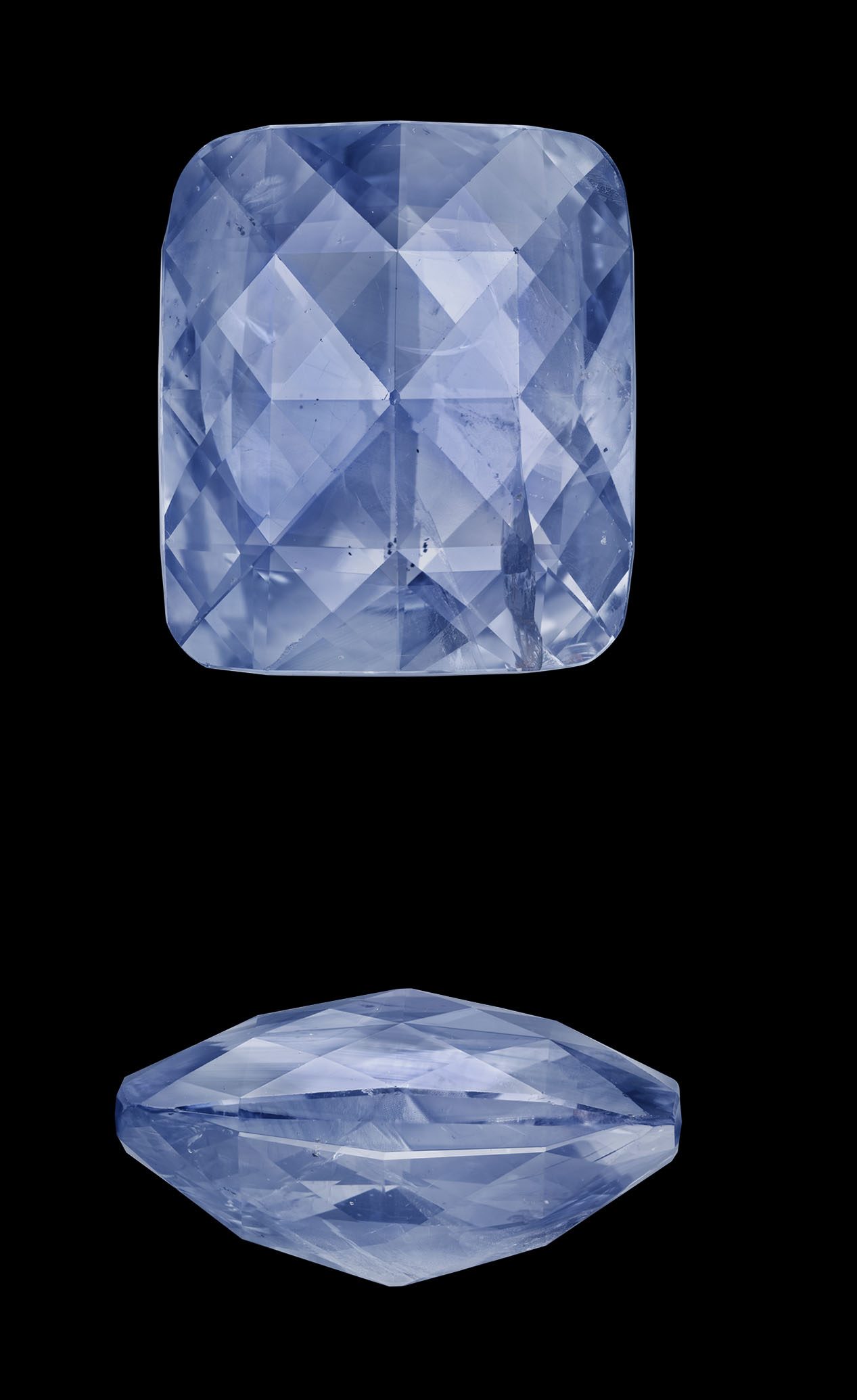
In 1929, Ganna Walska bought an entirely faceted, 197.80-carat sapphire from Cartier New York. This historic gem had belonged to the recently toppled Romanov dynasty. Walska had the sapphire set in various incarnations, based on the second of the 1923 necklaces mentioned above. Initially she had the sapphire set on one of its sides, as seen in a rare photograph. Then a few months later, in December 1929, she asked Cartier to set it as a pendant above the 256.60-carat emerald.
A collection with an Oriental flair
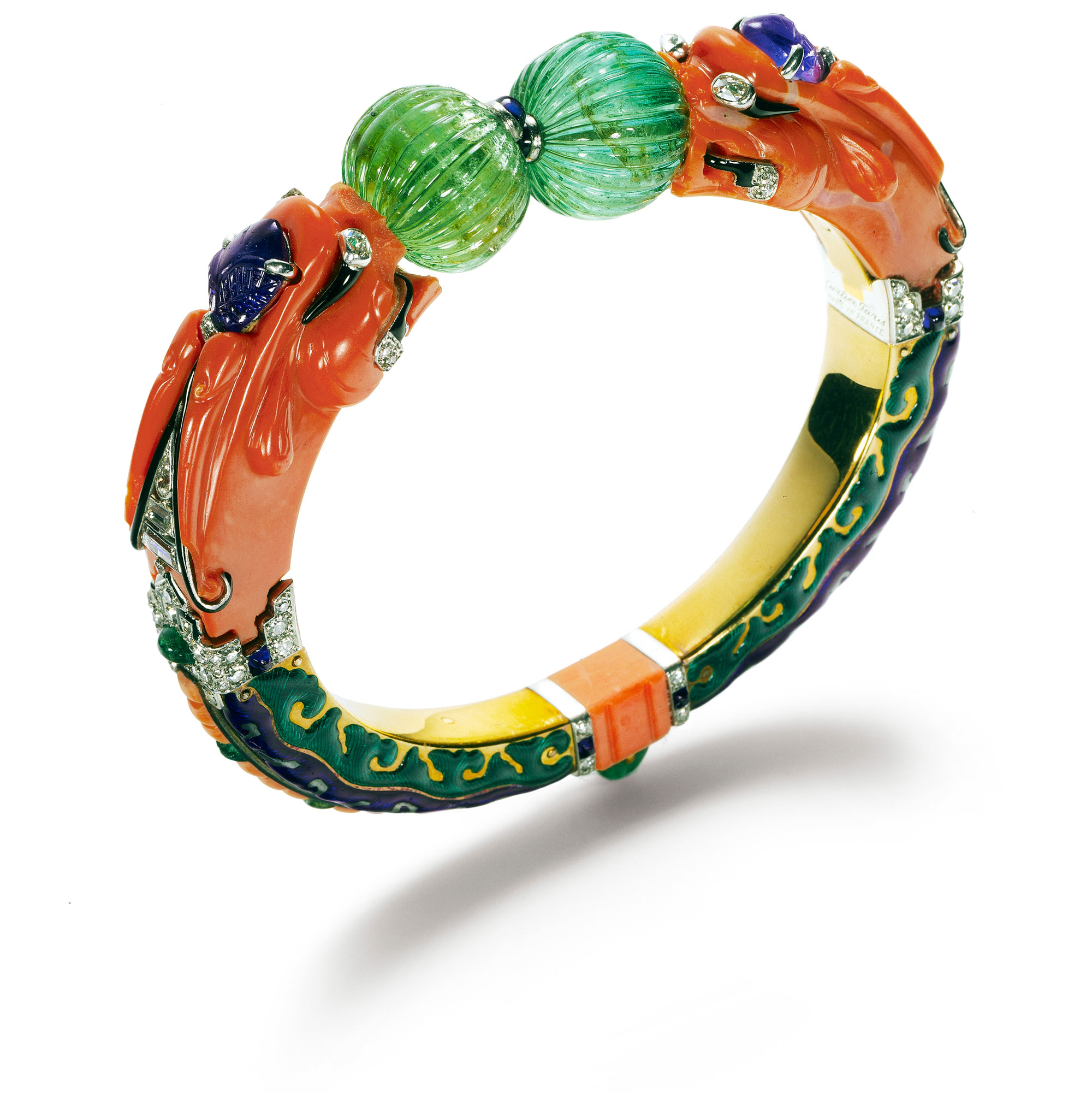
That same year, Walska’s nascent collection of jewelry grew to include a bracelet with chimera heads of carved coral. Capped by sapphires, the two mythological creatures with diamond eyes held ribbed emeralds between their teeth. Colored enamel decoration snaked freely all along the bracelet, underscoring the Eastern inspiration behind the piece.
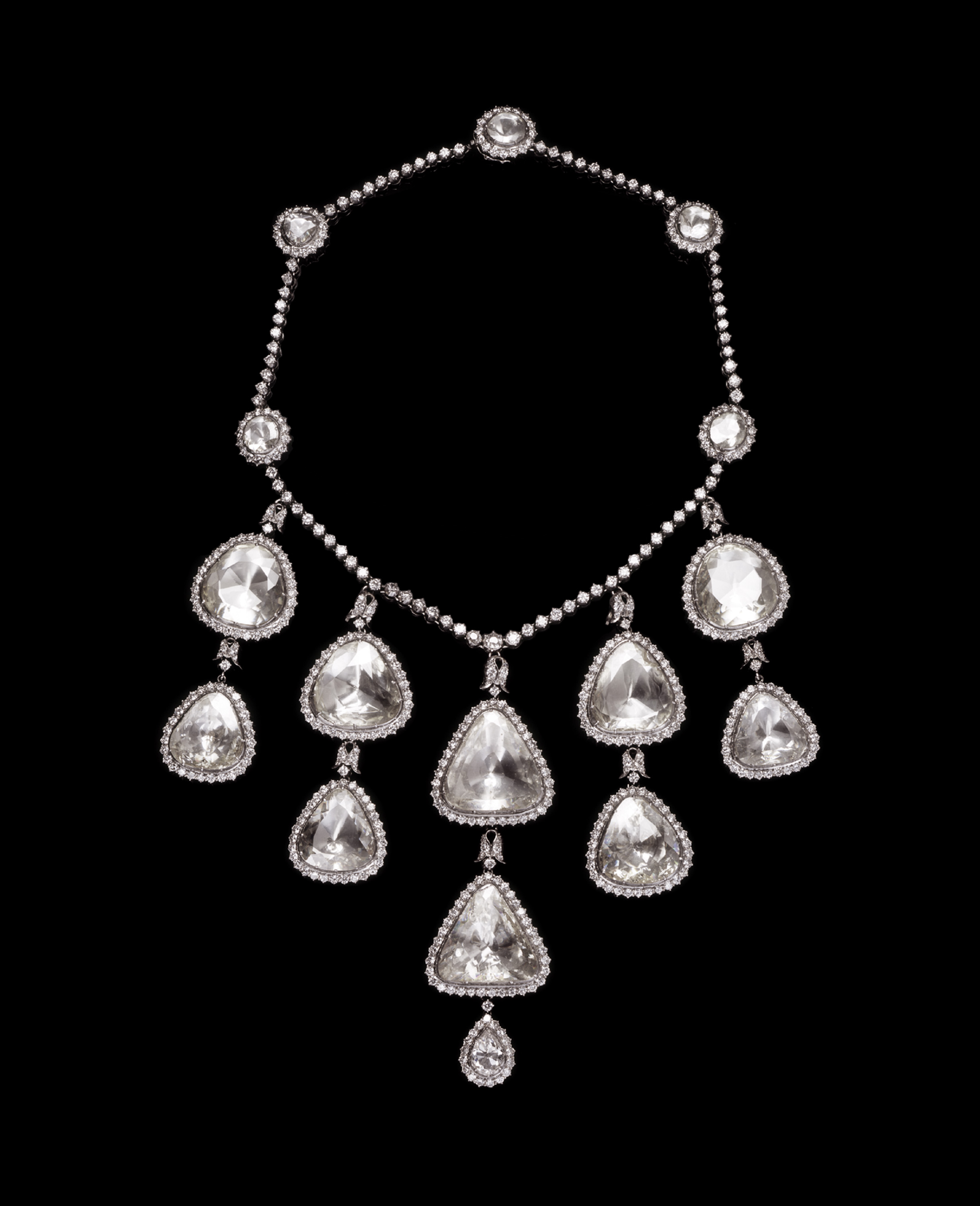
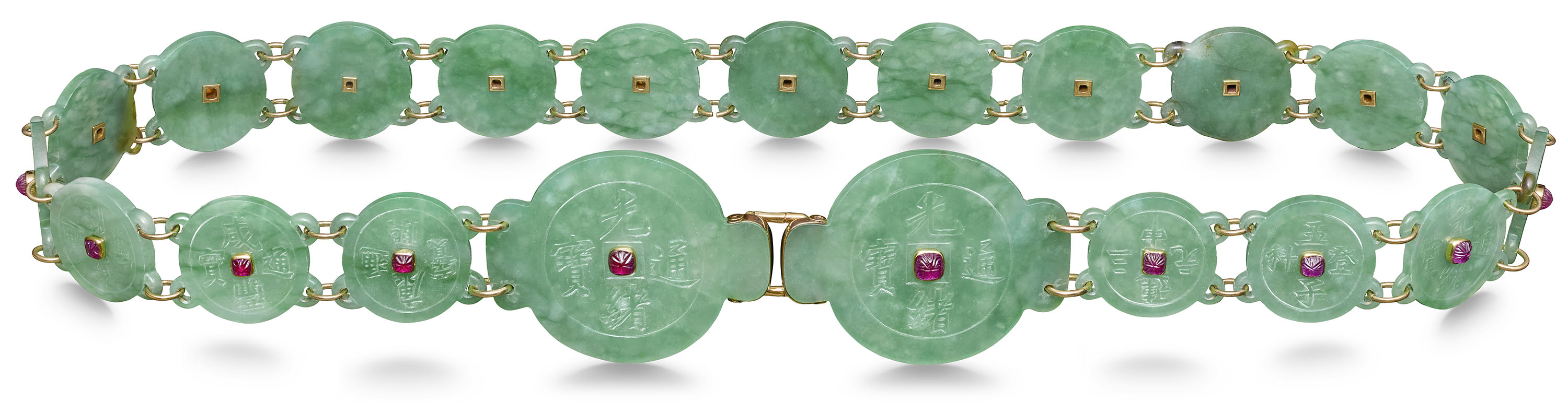
The Orient would become one of the major themes of Walska’s jewelry collection. Stretching from Persia to China via India., it was a fabulous area, rich in marvelous tales and ancestral traditions. It was also a realm of precious things, of finely carved gems and rare materials such as jade. For that matter, Walska owned a belt made by Cartier in 1930 from twenty-one disks of renowned green jade, decorated with Eastern designs and set with rubies in the middle. Other items worth mentioning are two “Chinese” clocks bought in 1923 and 1929, as well as an “Indian” necklace boasting ten impressive triangular-shaped diamonds, made by Cartier Paris in 1935.
Alongside her penchant for faraway inspiration elegantly shaped by Cartier’s artistry, Walska also bought some resolutely innovative jewelry in 1929. Notably worth mentioning here is a tubular bracelet made of half-disks of rock crystal (not unlike the ones bought by actress Gloria Swanson in 1932), since its substantial volume constituted a revolution in a jewelry world more accustomed to flat surfaces.
A historic sale
The Walska-McCormick couple separated in 1931. Walska moved back to Paris, where she devoted herself to her theatrical and social lives.
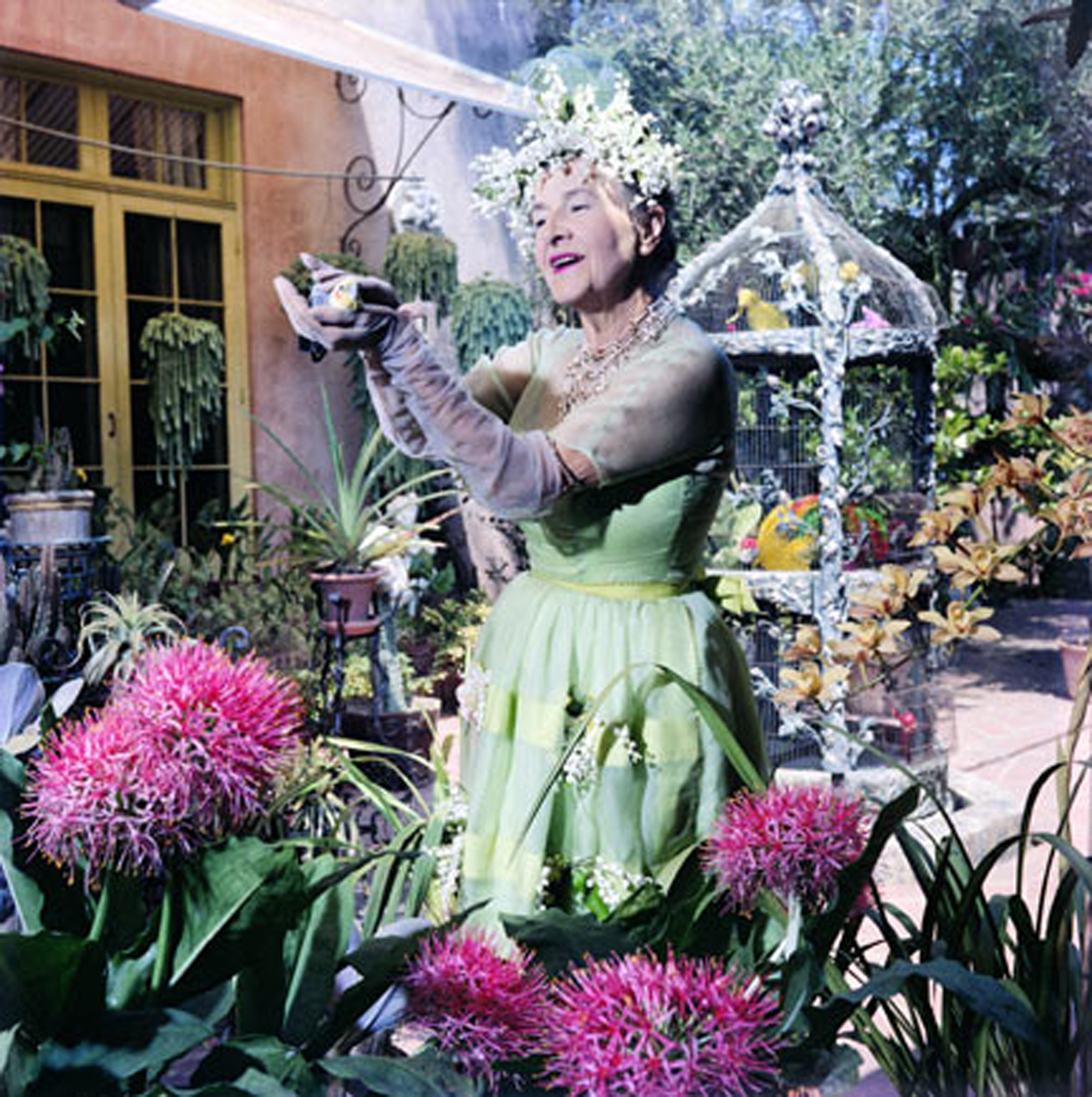
Once again a widow, Walska returned to the U.S., where she married her last husband—Theos Bernard, a yoga teacher who preached material austerity. He introduced Walska to Tibetan spirituality and managed to convince her to buy a thirty-seven-acre property in Montecito, south of Santa Barbara, California, to be turned into a monastery. The project never came to fruition, and the couple divorced in 1946.
On her vast California estate—which she renamed Lotusland—the retired singer created one of the finest botanical gardens in the world. She spent a considerable fortune on it, blithely selling the Théâtre des Champs-Elysées in 1970 to finance further embellishment of it. The next year, she auctioned off her jewelry collection. The enthusiastic press described her jewelry as “exotic and wonderfully designed.” Total sales figures more than doubled the original estimates.
Ganna Walska died just over a decade later, on March 2, 1984.