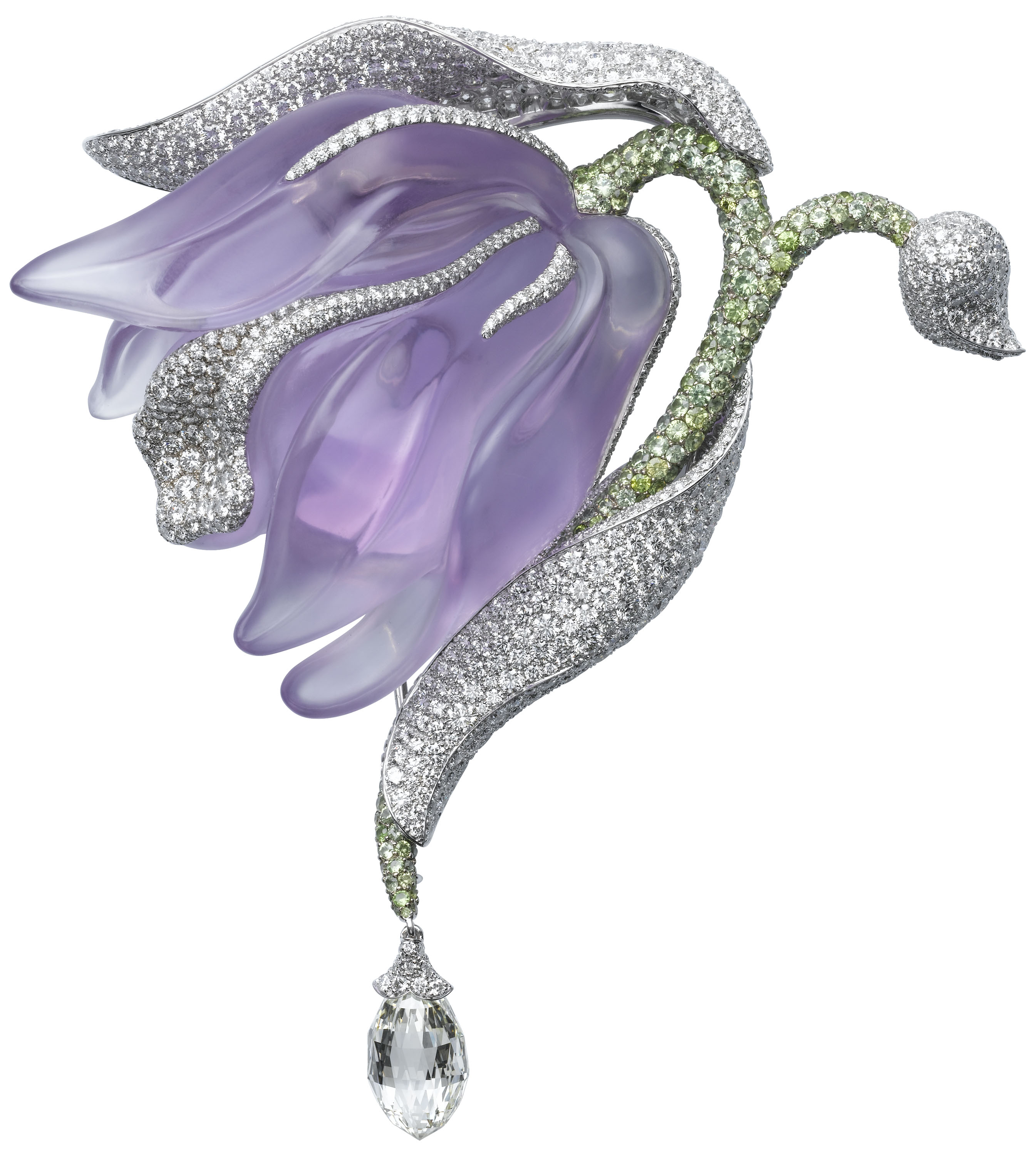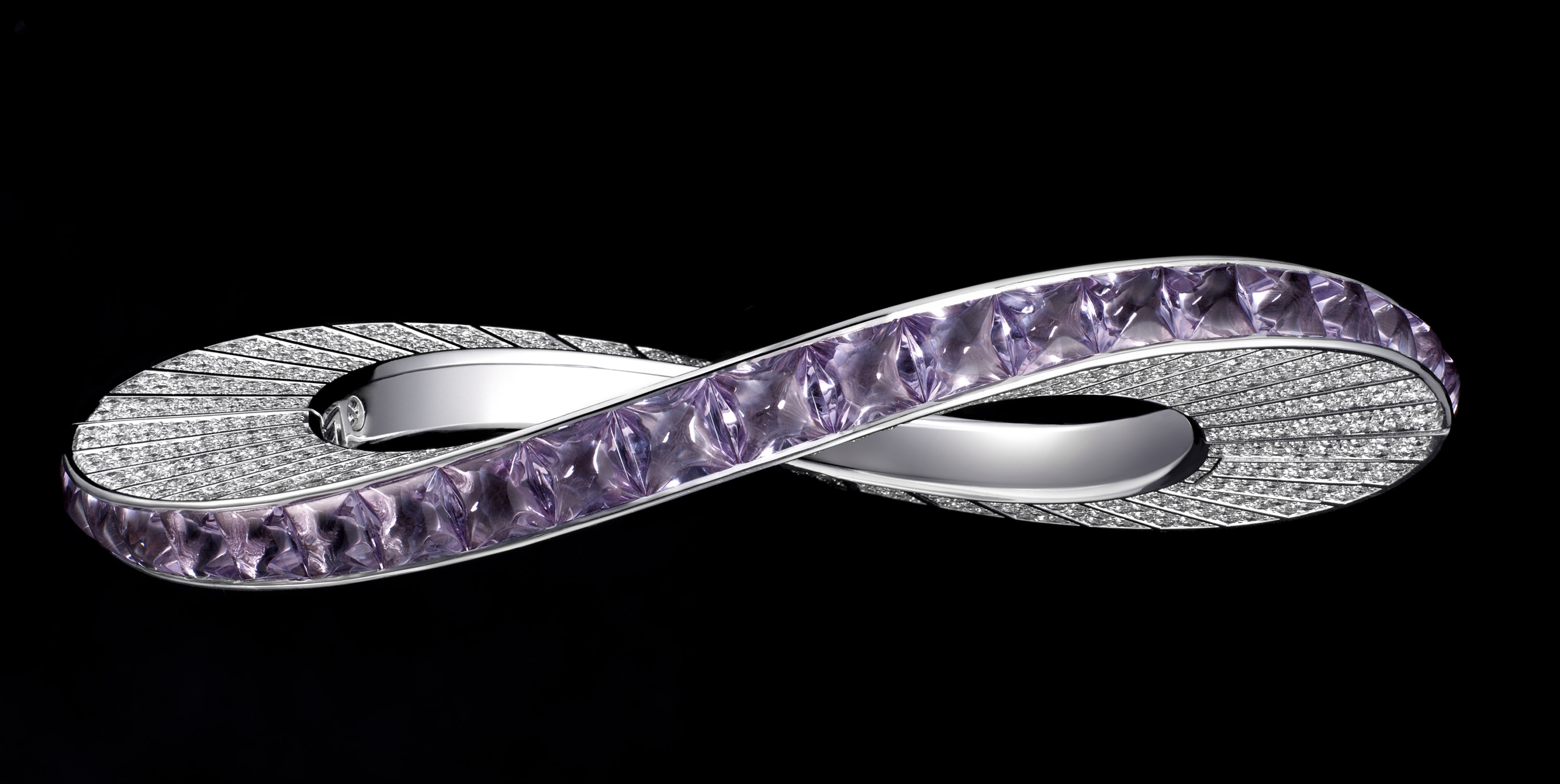
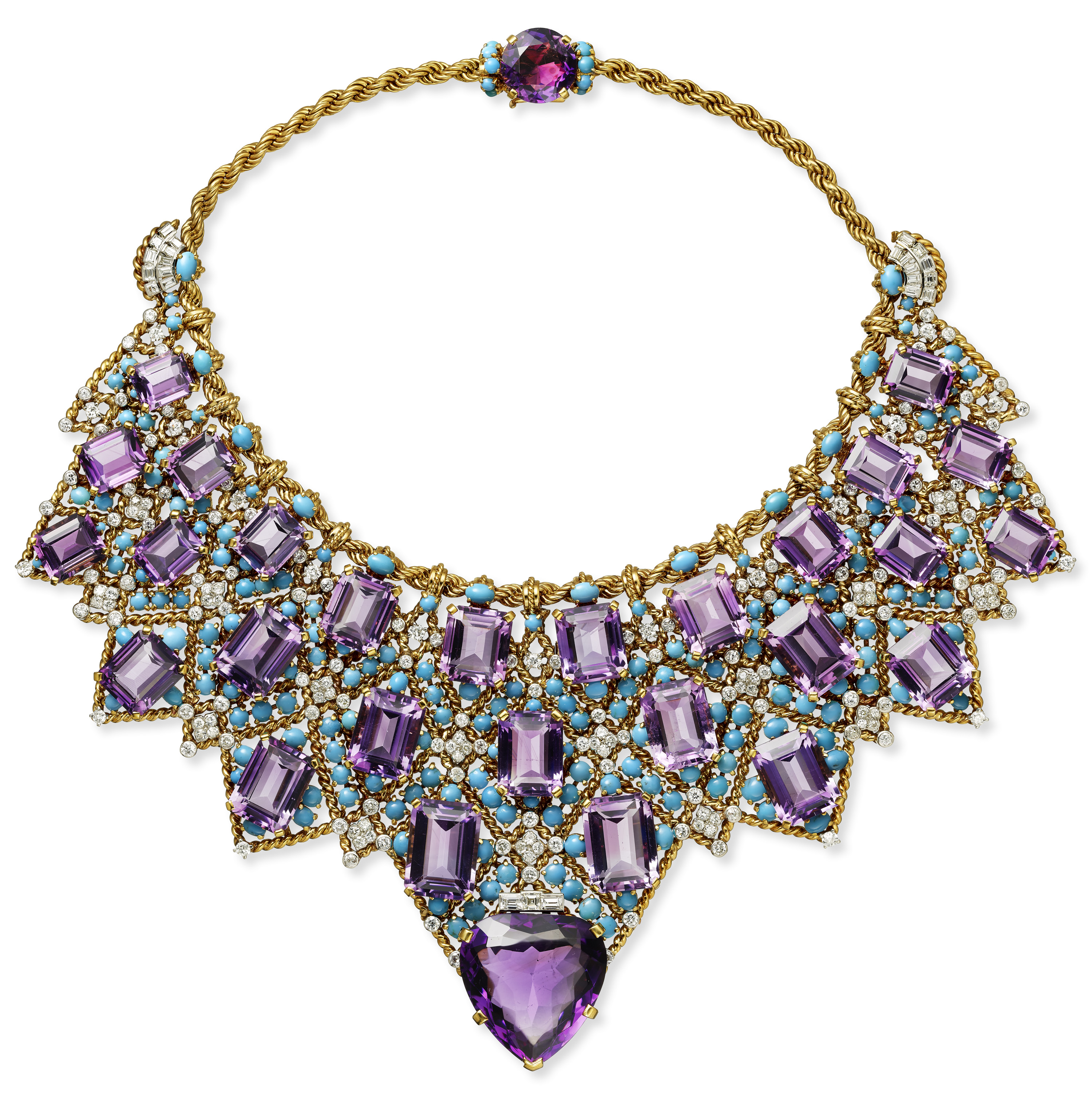
Cartier has always used amethyst, a purple variety of quartz. Among the Maison’s most emblematic designs is a necklace made for the duchess of Windsor in 1947.
- Group: quartz
- Color: violet to red purple
- Hardness: 7 on the Mohs scale
- Density: 2.65
- Renowned sources: Brazil and Madagascar
Stone of gods, talisman of kings
Amethyst, a specific variety of quartz, has always enchanted people for its multiple hues, produced by the presence of iron. Its color ranges from pale violet, indeed lilac, to reddish purple.
Redolent with myth and symbolism, the stone is named after a young nymph whom the goddess Diana turned into pure, clear crystal in order to save her from the advances of Bacchus. The enraged god of drunkenness then threw the wine in his goblet at the stony Amethyst, which explains her characteristic color.
Amethysts thus became associated with temperance, allegedly protecting people from the intoxication of the senses as well as of the mind. It also became known as a powerful talisman, warding off illness and bad luck, attracting wealth and happiness. Convinced of its protective powers, the kings of France set amethysts on the scabbard of the so-called Sword of Charlemagne, one of the main items of regalia used during coronations, now in the Louvre Museum in Paris.
According to tradition, amethysts also symbolize humility and wisdom. That is why, since medieval days, it has adorned bishop’s rings in the Catholic Church.
Cartier and amethysts
Cartier has consistently employed amethysts in its designs.
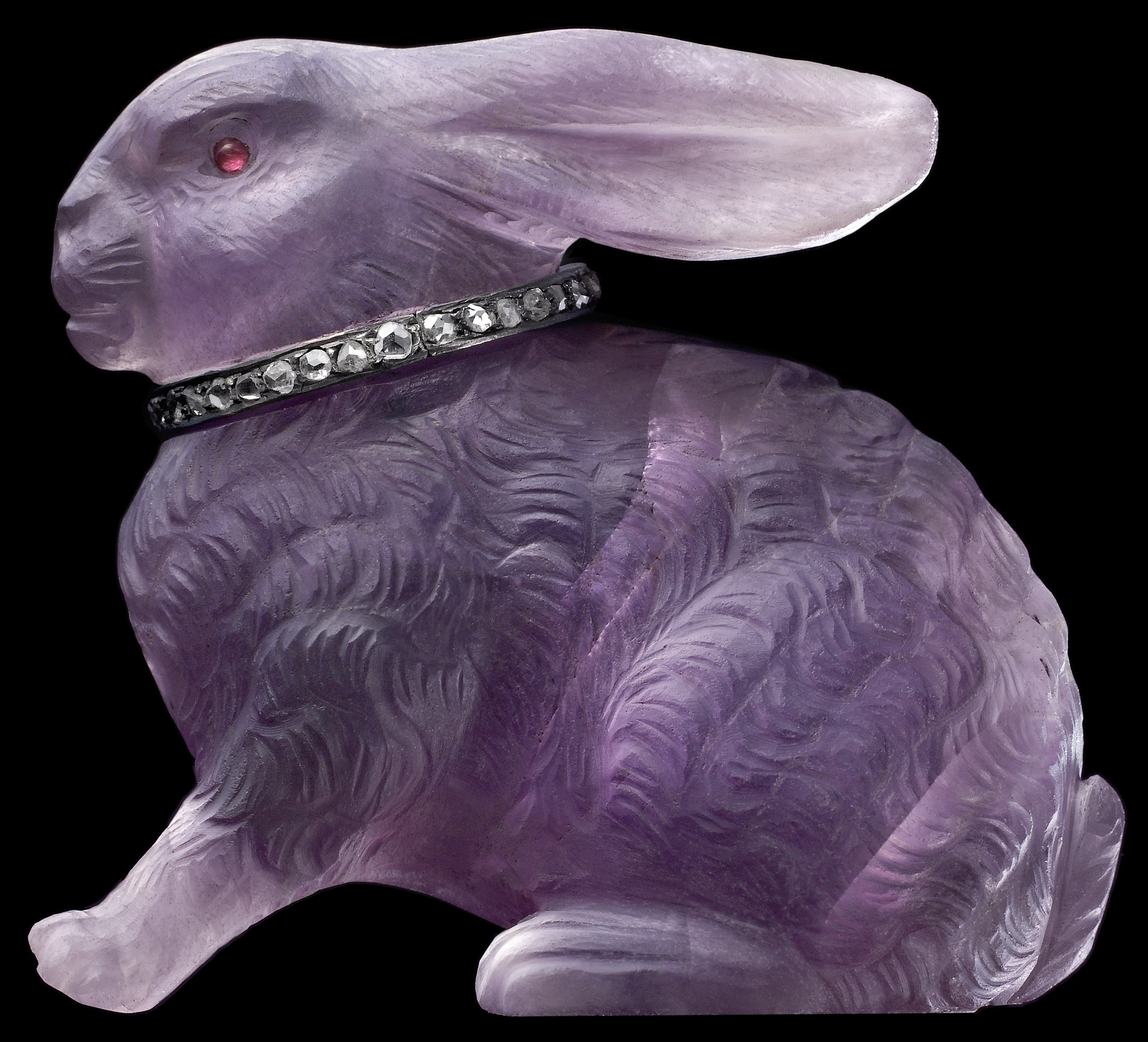
In the 1850s already, Louis-François Cartier sold a set of jewelry (now in the Cartier Collection) that featured impressive faceted amethysts of oval and pear shapes. In subsequent decades the stones were used in delicate touches on jewelry and other precious items such as a carved rabbit with ruby eyes made around 1904.
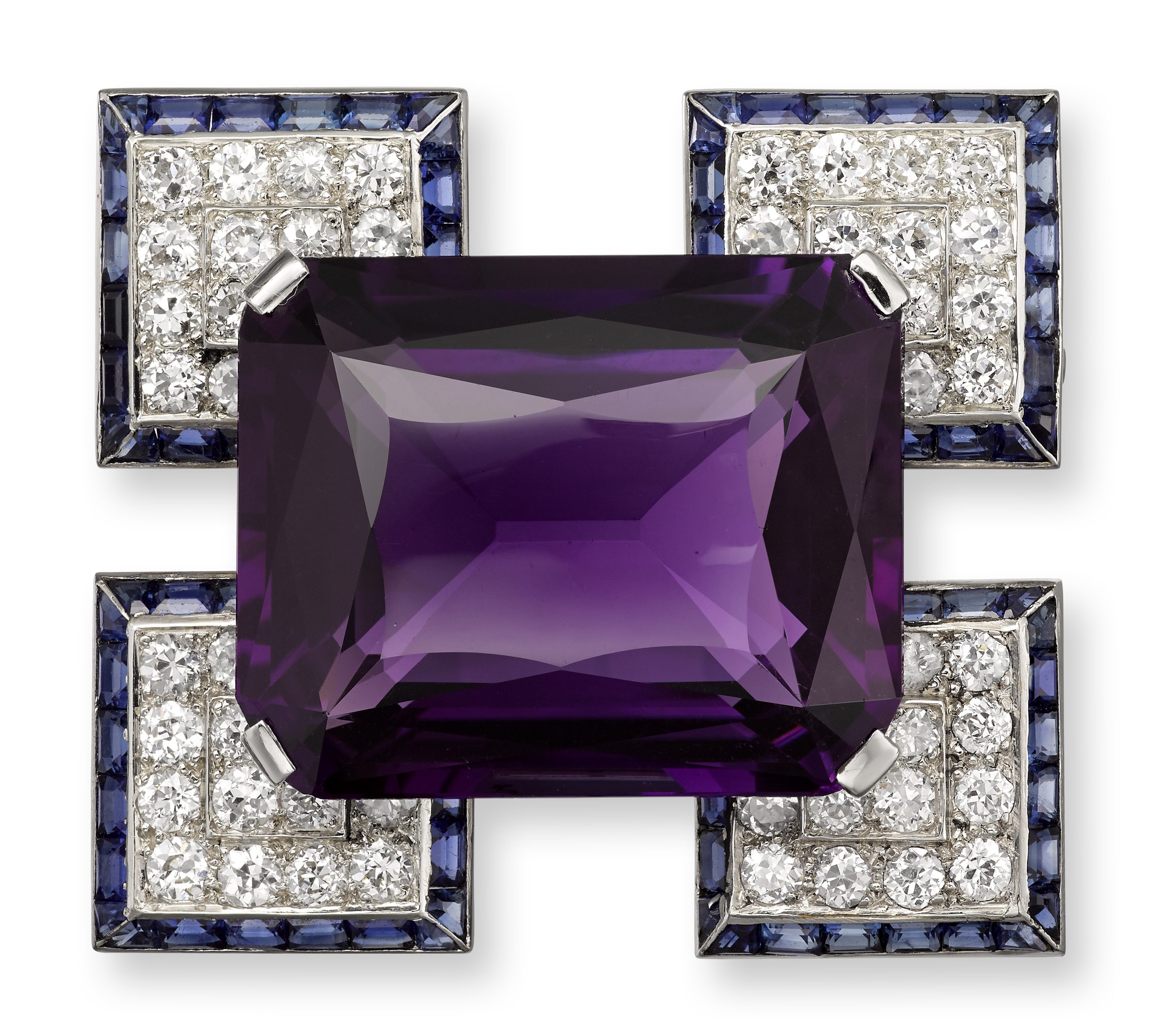
Amethyst was the birthstone of Jacques Cartier’s wife, Nelly Harjes. One was placed in the center of a brooch with personal significance that he acquired in 1933—this piece, displaying great chromatic skill, is adorned with four square pavé-set diamond motifs symbolizing Jacques’ children, while its sapphire borders allude to him.
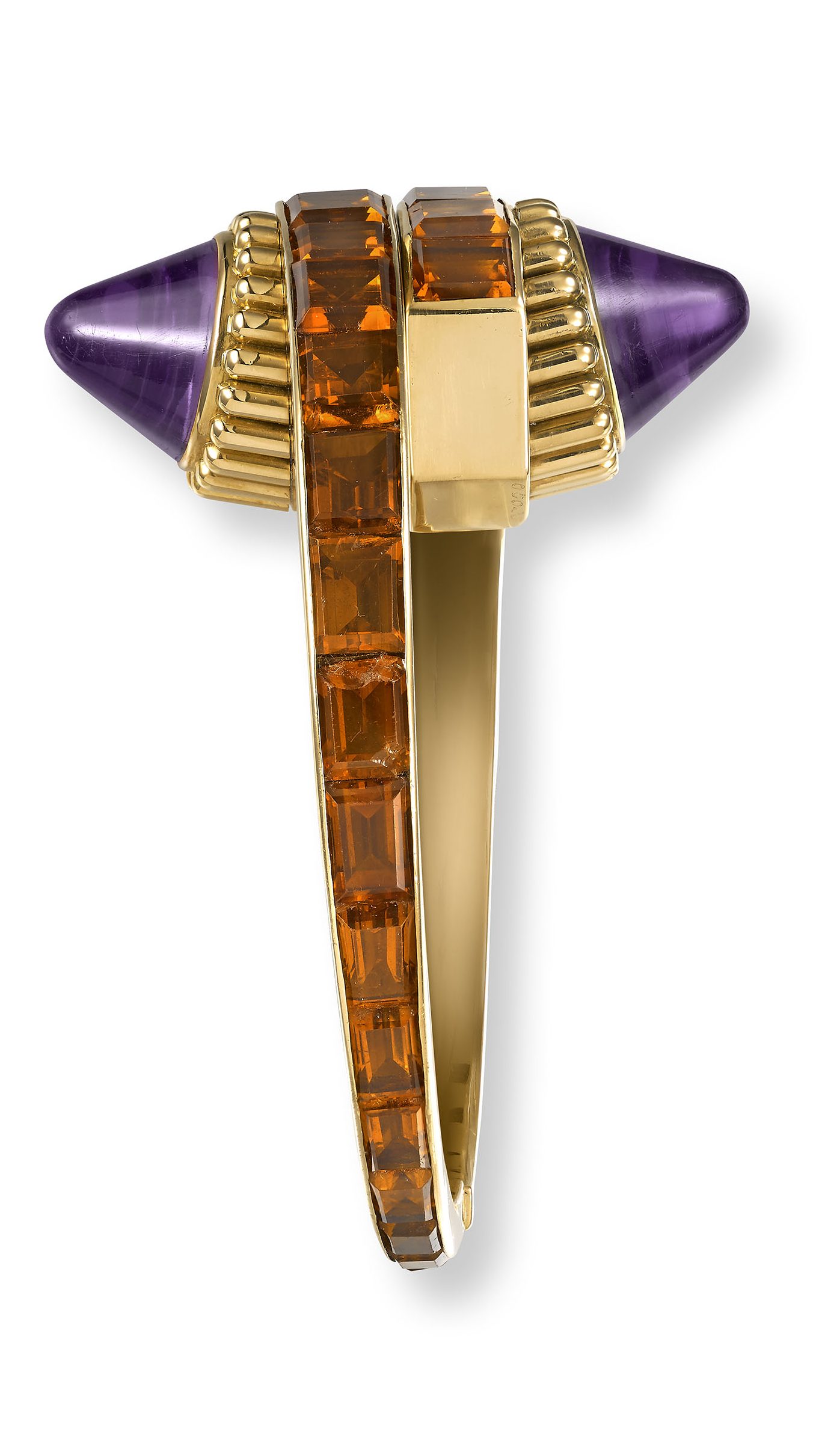
Amethysts assumed new scope with the arrival of Jeanne Toussaint. She reinvigorated the Cartier palette by exploring new color combinations, employing a range of semi-precious stones that become highly precious jewels once sublimated by Cartier artistry. Cecil Beaton, an apostle of refinement in his day, wrote in his book The Glass of Fashion that, “Madame Toussaint … is more interested in working with … yellow sapphires, tourmalines, amethysts, coral and aquamarines, [with which she] creates color combinations that have hitherto existed only in the jewels from India.” One of the finest examples of such creativity, among others, is a 1939 cuff bracelet edged in citrines and studded with amethysts.
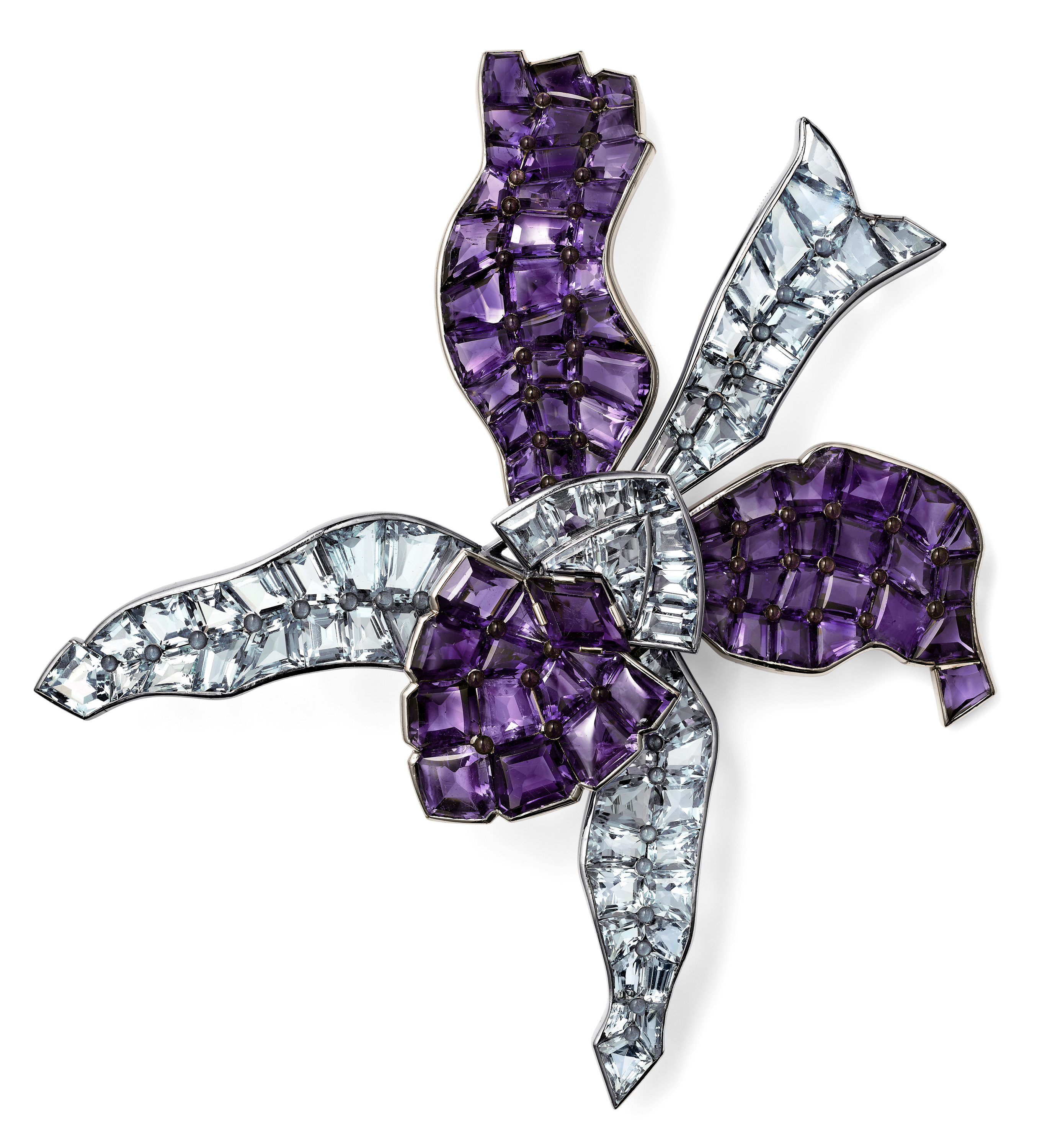
During that same period, as a creator of bejeweled fauna and flora, Cartier designed floral pieces such as a whimsical orchid brooch with petals set with amethysts and aquamarines in a harmonious association of colors. At the same time, amethysts joined Cartier’s aviary, incarnating the body of a yellow-gold bird with a turquoise head.
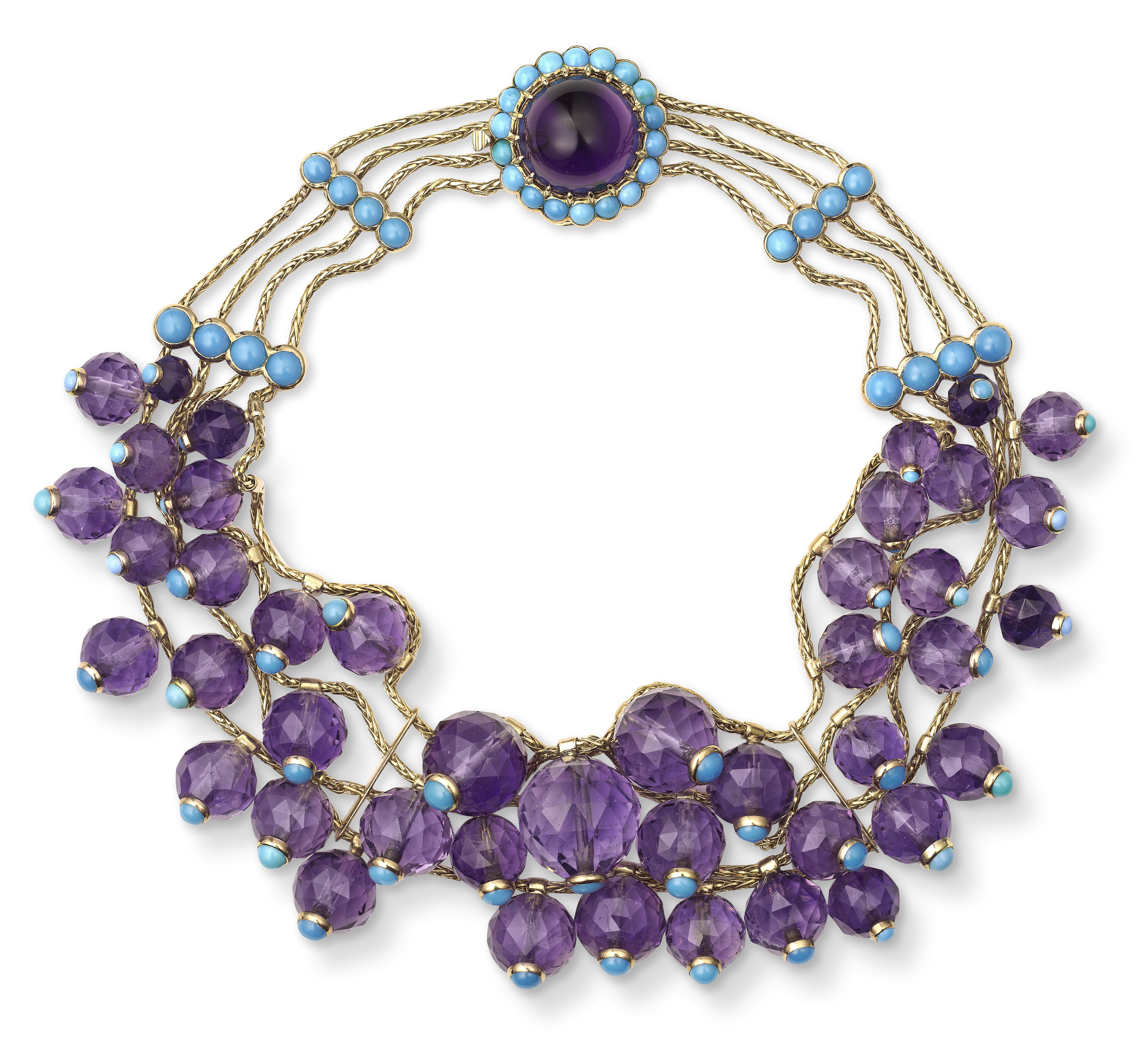
In the years following the Second World War jewelry became exuberant, as though shrugging off the mood of hard times. Amethysts were particularly suited to represent this new sense of joy and thus appealed to the most elegant of women. A necklace ordered by the duchess of Windsor in 1947 is a good example of this cheerful jewelry, as is another one sold six years later to Daisy Fellowes, made of braided gold enhanced by forty-two amethyst beads set off by turquoise cabochons. Amethyst and turquoise was a combination of semi-precious stones of such explosive boldness that it continued to be used into the 1970s without losing any of its freshness.
Since then, Cartier has never shunned this famous purple variety of quartz—amethysts have continued to enhance contemporary lines of jewelry. They are found on Love bracelets and Trinity rings. And since 2010 amethysts have acquired a new expressiveness, magnified by an expert in the art of glyptics (stone carving), who skillfully turns them into orchid petals set on a ring with swirling motifs crowned by an imposing cabochon, or on a sautoir featuring a myriad of chalcedony and amethyst beads in a tone-on-tone rhapsody.