
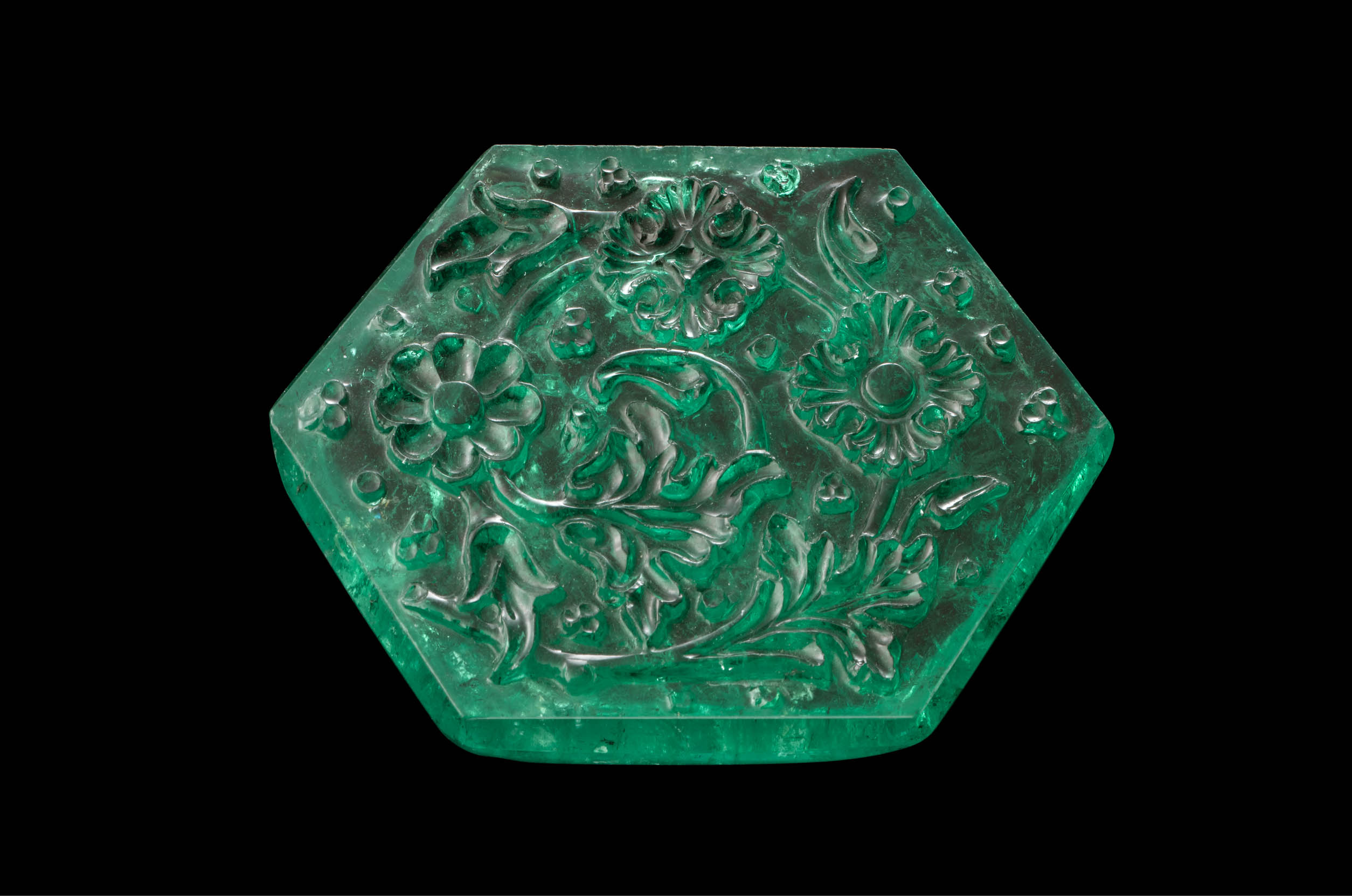
The Bérénice emerald—a historic stone mined in Colombia and taken in the seventeenth century to India, where it was carved in the Mughal style—is hexagonal in shape and weighs 141.13 carats. It has been part of the Cartier story since the 1920s.
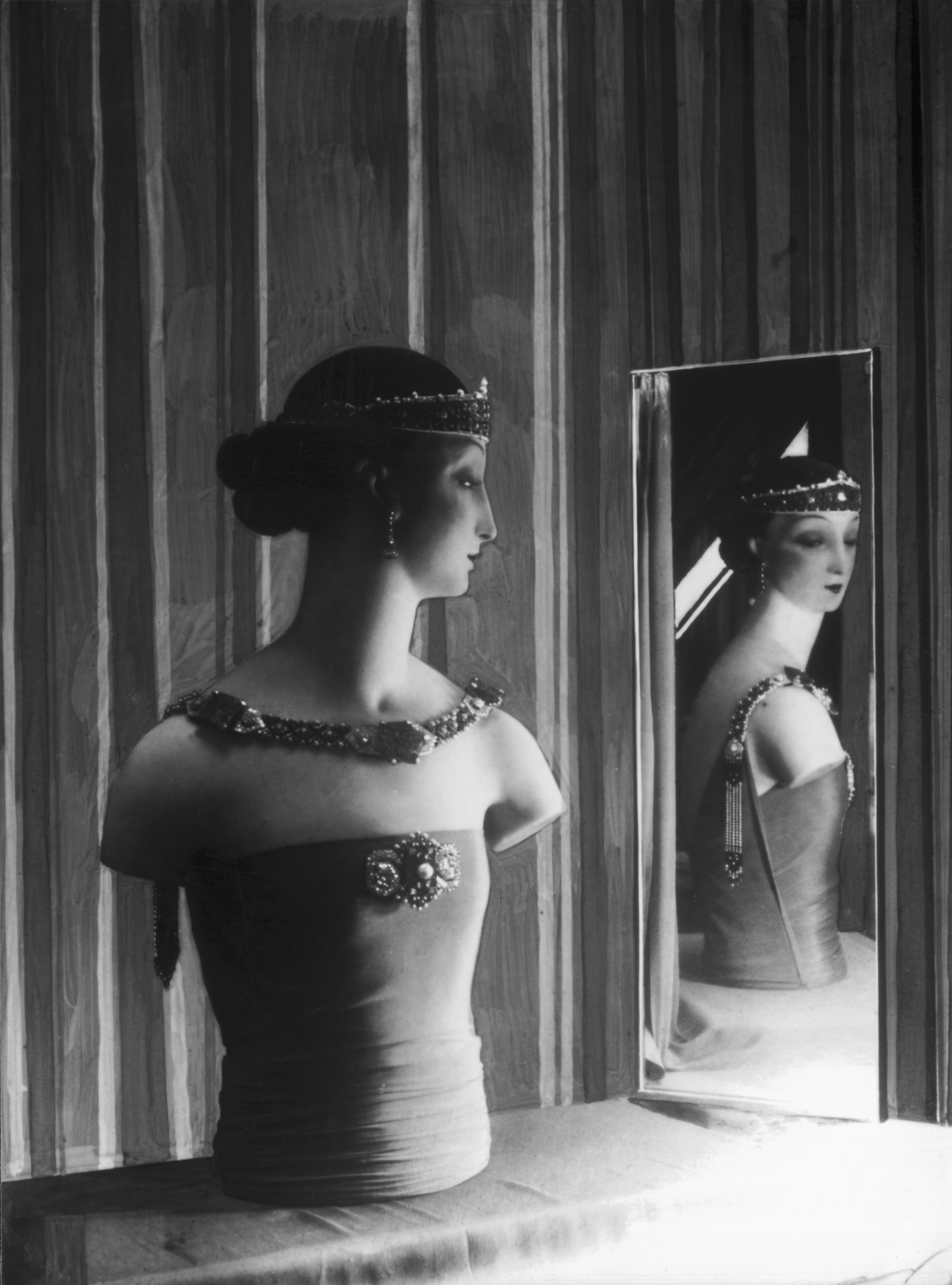
In the famous 1925 Art Deco show in Paris—in full, the Exposition des Art Décoratifs and Industriels Modernes—Cartier exhibited jewelry and timepieces amounting to 150 items. Among them was an extraordinary set of jewelry: a tiara, a brooch set with diamonds and emeralds, and a necklace worn in an unusual way. The three pieces were displayed on a wax dummy named “Bérénice” by the Gazette du Bon Ton.
The necklace, in fact, was a shoulder ornament composed of a strap of platinum nearly two feet long, decorated with black enamel, natural pearls and diamonds, divided into several hinged sections that draped over the shoulder, requiring neither clasp or pin. The ornament featured three amazing old emeralds carved in the traditional Mughal style.
One of the stones, hexagonal in shape and weighing 141.13 carats, drew particular attention. Imported into India from Colombia in the seventeenth century, it was carved with lotus flowers, poppies, and acanthus and amaranth leaves between 1628 and 1658, during the reign of Mughal emperor Shah Jahan (1592–1666).
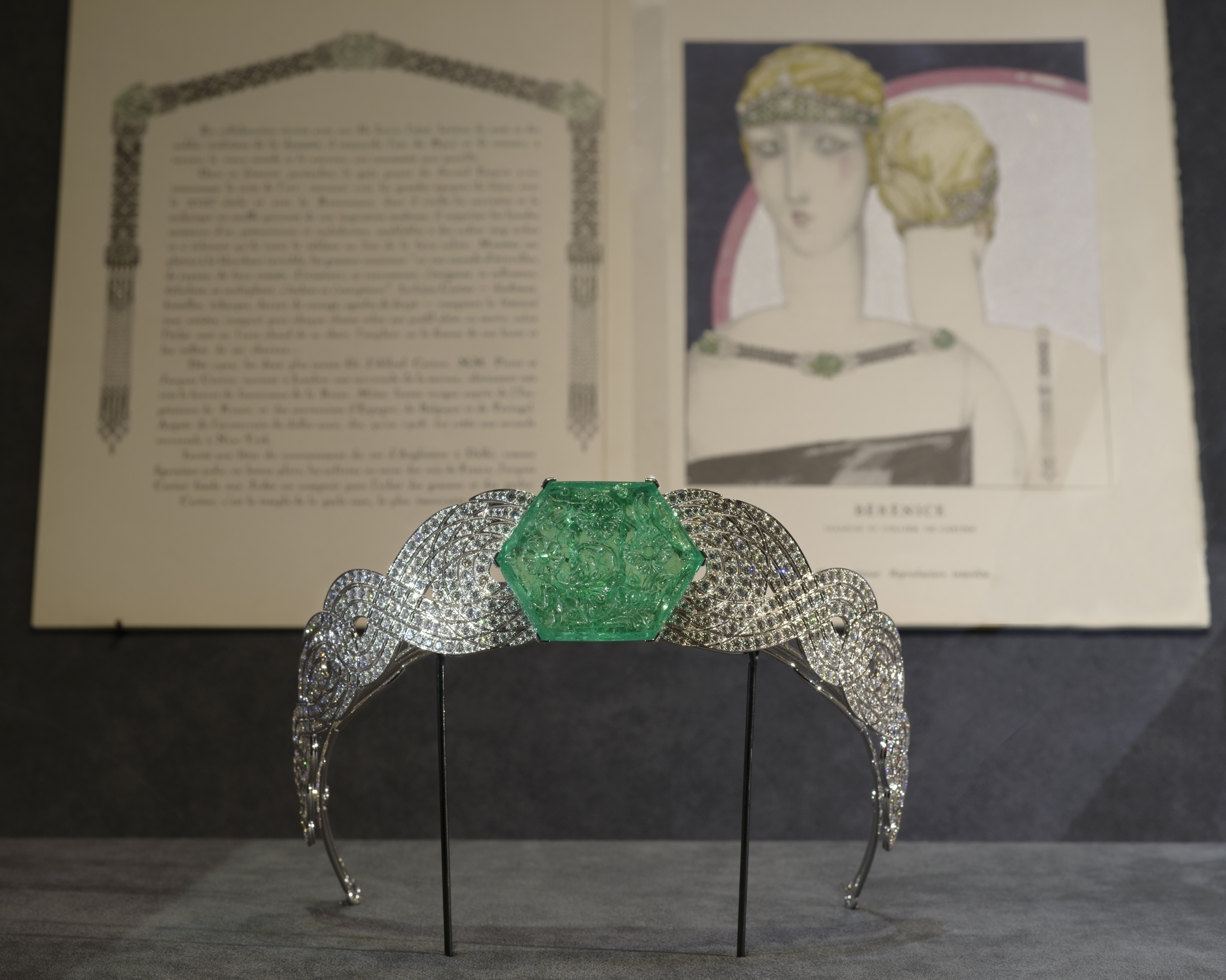
In 1926, that central emerald—dubbed Bérénice by Cartier—was removed from the shoulder ornament and set first in one brooch, then in another in 1927. In 2010 Cartier managed to buy back the emerald, displaying it at the Biennale des Antiquaires in Paris, accompanied by three potential designs for a setting. Sold to a private collector, the emerald was then set by Cartier’s Paris workshop in one of the proposed designs. In late 2013, having become the central gem of a tiara (from which it could be detached and worn as a brooch), the Bérénice emerald was loaned by its new owner to an exhibition at the Grand Palais in Paris devoted to Cartier: Style and History. It was later displayed at the Victoria & Albert Museum in London as part of a retrospective on Indian jewelry, from November 2015 to April 2016.