
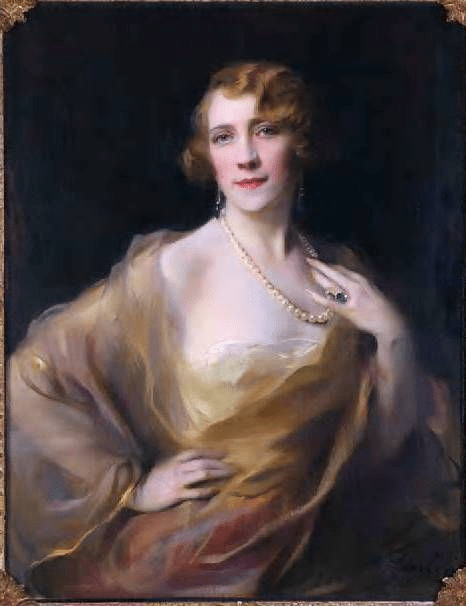
Although perhaps less well-known than contemporaries such as the Duchess of Windsor and Countess Mona von Bismarck, Lady Lydia Deterding was no less a socialite and important Cartier client over a period of several decades.
From Russian Empire to Great Britain
Although a certain mystery still prevails over her roots and date of birth, we known that Lydia Pavlovna Koudoyarov was born and raised in Tashkent, then the capital of Turkestan (now Uzbekistan). The daughter of one of the czar’s generals, she was only sixteen when she married a colleague of her father, also a general—and thirty years older. Lydia followed her husband to Saint Petersburg, where she met members of the Russian imperial family. When the general accepted a diplomatic assignment as an attaché to the embassy in Paris, Lydia was able to discover France. Some years later, she met Sir Henri Deterding, who fell in love with her. The much older Deterding, who came from the Netherlands, had made a fortune in the oil industry, and was named a knight commander of the Order of the British Empire in 1920. Lydia divorced the general and married the oil magnate in London in 1924. They moved to Buckhurst Park in Winkfield, Berkshire, and had two daughters, Lilly and Olga.
Coral and Tutti Frutti
Lydia Deterding was a lively, determined woman whose natural elegance blossomed when graced by the creative efforts of the greatest fashion designers and jewelers. Cartier was one of those jewelers. In 1929 Lydia bought a brooch featuring two swallows whose feathers were pavé-set with diamonds. She later fell for the rage for coral, buying several items that combined coral with onyx, diamonds and natural pearls.
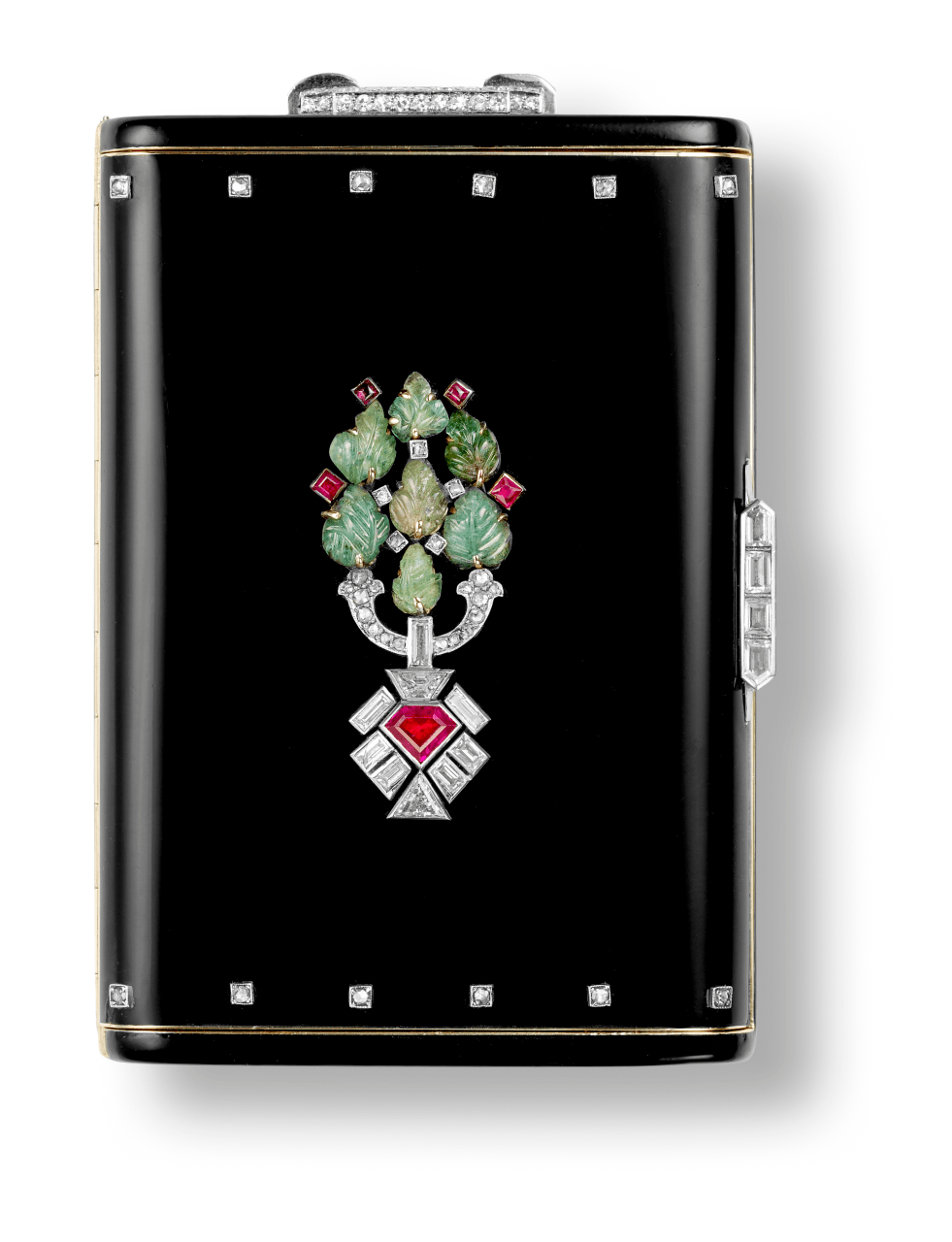
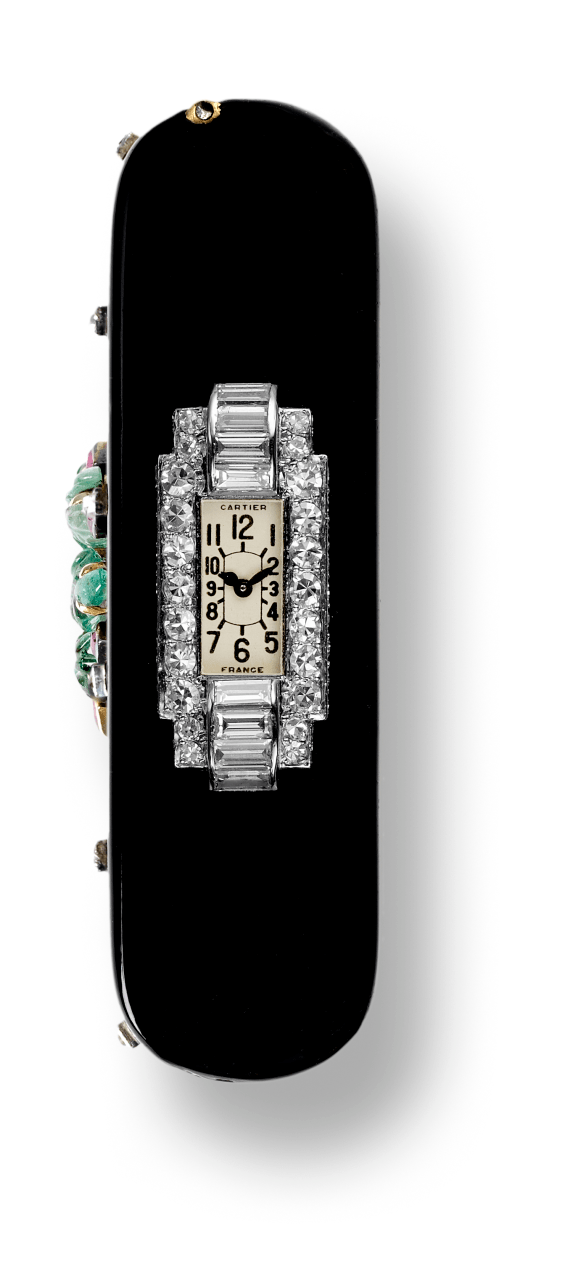
The Tutti Frutti style was also popular during that period, and in 1931 Lydia bought a pair of clip-brooches made in 1930, each adorned with a carved emerald leaf ringed with diamonds and ruby beads; she also bought a vanity case of black enamel set with the same carved emerald leaves, diamonds and a pentagonal ruby.
Imperial jewelry and Art Deco
Some of the Russian aristocrats who escaped the Bolshevik revolution financed their exile by steadily selling their gemstones. Such was the case with Prince Felix Yusupov, who lived in Paris and owned a historic diamond known as the Polar Star. After he entrusted it to Pierre Cartier, the stone was transferred to the London branch, then sold to Lydia Deterding in 1928 as part of a diamond and emerald necklace. The diamond remained in her possession until her death in 1980; detached from the necklace, it was later auctioned along with several other outstanding pieces of her jewelry, most of them made by Cartier.
In the 1930s, other items of jewelry, in the Art Deco style, enriched Lydia Deterding’s already substantial collection. They included a pair of diamond earrings, each holding a drop sapphire, and a bracelet composed of two strands of diamonds dotted with three Kashmir sapphires totaling 19 carats. A major change in Lady Deterding’s personal life occurred in the middle of that decade. Her husband had met another woman, whom he wished to marry. He therefore divorced Lydia in 1936 and left for Germany with his new conquest, dying in Switzerland in 1939. Lydia, still comfortably wealthy, moved to Neuilly-sur-Seine, outside Paris, and later into a home on Avenue Foch in the center of the French capital.
Burmese rubies and yellow diamonds
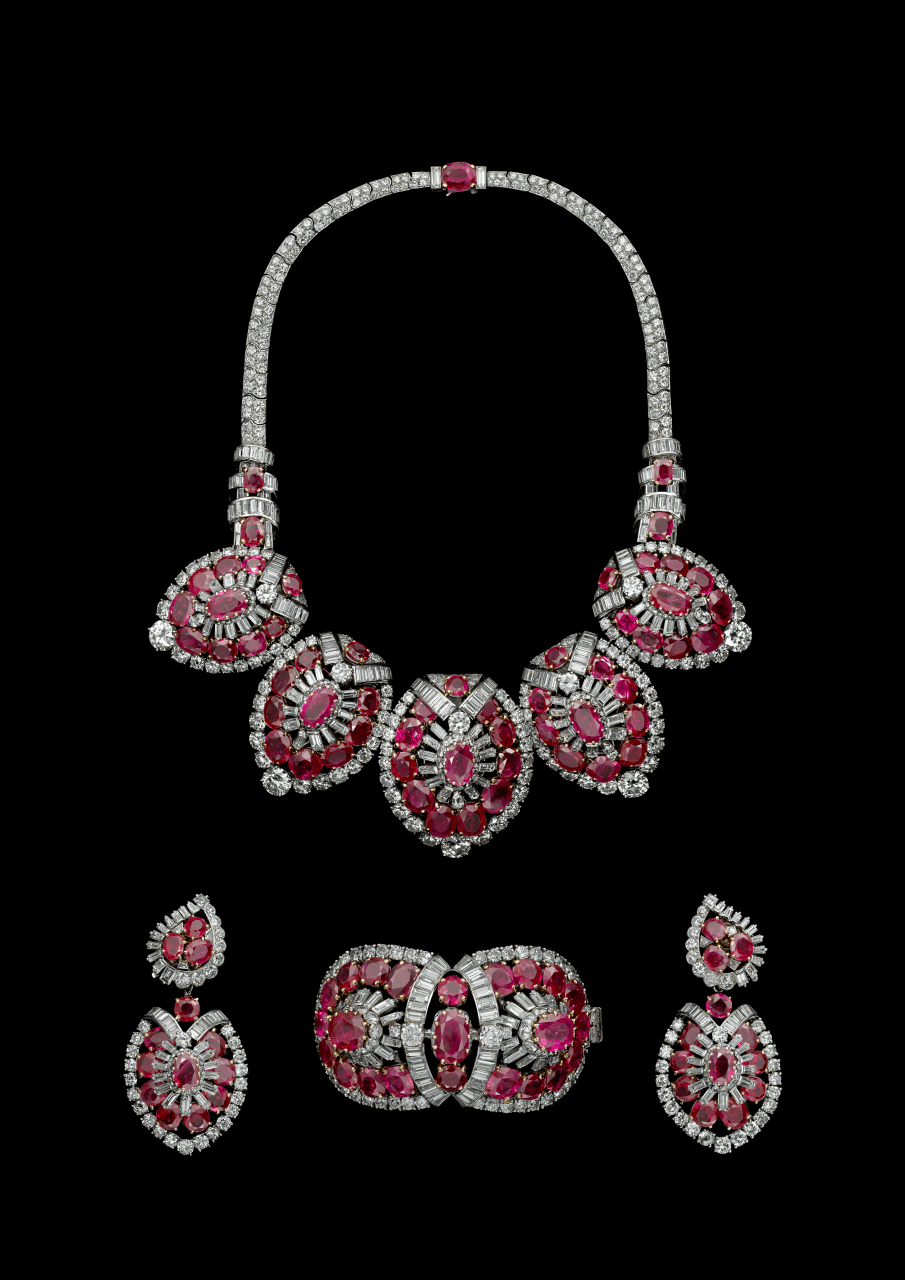
In the 1950s, Lady Deterding’s name appeared regularly in Cartier ledgers, notably when she bought a pair of gold and diamond bracelets each with a central section of invisibly set stones—ruby in one case, sapphire in the other. In 1951 Cartier delivered a Burmese ruby and diamond jewelry set of extraordinary quality; the set was composed of a bracelet, pendant earrings and a necklace with five removable palmettes. It would later be included in the 1980 sale of Deterding’s jewelry organized by a major auction house in Geneva; today it is part of the Cartier Collection. Also in the collection is a 1958 egg-shaped vanity case in gold, bearing her first initial in diamonds, which Lydia bought in 1960.
In 1964 she ordered a pair of flower pendant earrings, which she notably wore on the day in February 1973 when she was inducted into the French Légion d’Honneur in recognition of her donation of major artworks to the Louvre and of her work toward bettering relations between France and the United States.
Shortly before her death, Lydia Deterding fell under the charm of an ambitious young artist, who even considered marrying her. That twenty-eight-year-old was named Andy Warhol.