
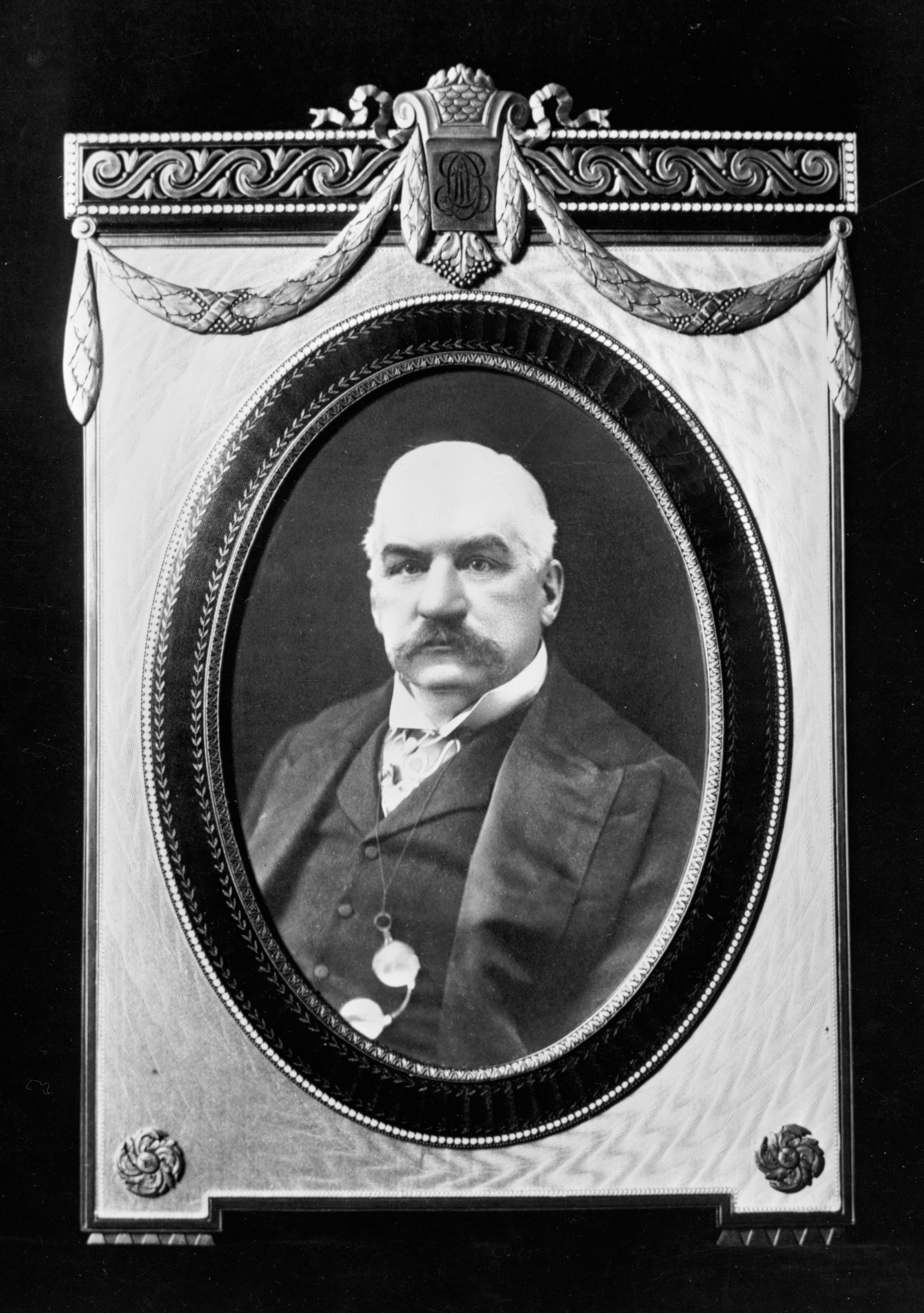
John Pierpont Morgan (1837–1913) was an American businessman who made a fortune mainly in the spheres of finance, energy, and transportation. He became a philanthropist and art patron as well as a famous collector.
Born in Connecticut in 1837, J. P. Morgan studied in Europe before entering the New York financial scene in the 1850s. Early in the following decade, he joined his father’s bank. Upon the latter’s death in 1890, Morgan pushed the family business into new markets. He invested in railroads, in the steel industry, and also financed Thomas Edison’s research into electricity. In 1892 Morgan founded General Electric, one of the most influential American conglomerates of the day.
In the sphere of transportation, Morgan extended his business into the maritime industries, buying up several cargo shipping firms as well as ocean liners, which he consolidated into the International Navigation Company. In 1902 the corporation expanded to include Leyland Line and the White Star Line, which several years later owned the Titanic.
As an eminent member of New York’s high society, in 1891 Morgan founded the prestigious Metropolitan Club, serving as its president until 1900. Members of this highly exclusive club, located on the corner of Fifth Avenue and 60th Street, included the Vanderbilts and Roosevelts, two other major American dynasties.
Morgan was not only a financier, entrepreneur, visionary and socialite, but also an aesthete known for his sure sense of taste and broad learning. As an enlightened art lover, he collected Old Master paintings, Renaissance enamels and eighteenth-century furniture, today on show in the Metropolitan Museum of Art in New York. As a keen book lover, he was also highly interested in old manuscripts and prints. He notably owned extremely rare copies of the Bible printed by Gutenberg in the fifteenth century, plus other first editions, drawings by Rembrandt and manuscript music scores by the likes of Mozart and Beethoven. His collection is now conserved in the Morgan Library & Museum, founded in 1924 by John Pierpont Morgan, Jr., in memory of his father.
Morgan was also interested in gemstones, assembling a large collection of stones and minerals that he bequeathed to the American Museum of Natural History in New York. His contribution to gemology is recognized by the profession—morganite, discovered in 1910, was named in his honor.
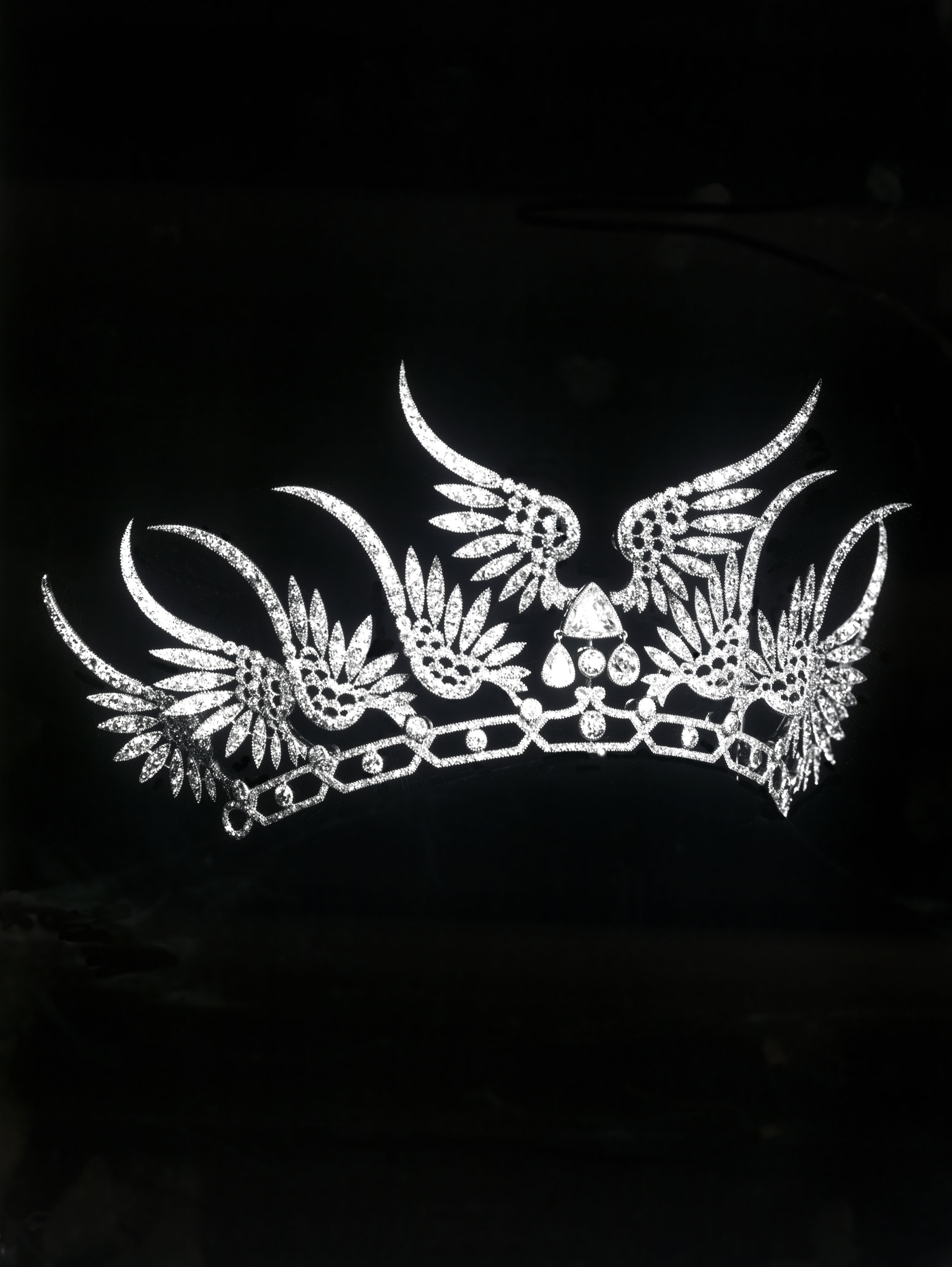
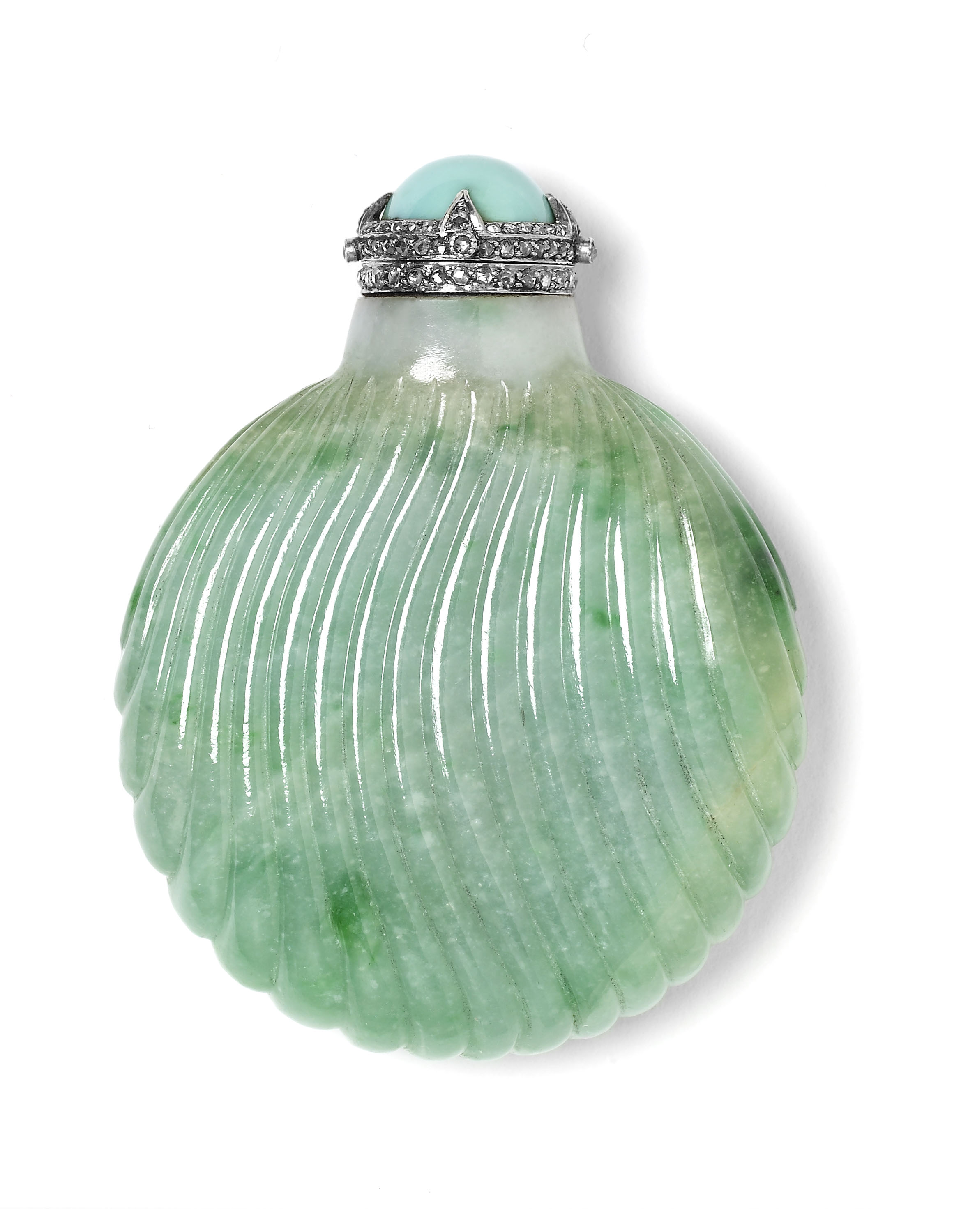
His enthusiasm for gems and fine objects led him to Cartier’s Paris boutique. He was just one of the leading American industrialists and financiers to shop there, alongside the likes of the Vanderbilts, Astors and Whitneys. His early purchases included, among other items, a spectacular diamond-and-platinum “valkyrie” tiara, specially ordered from Cartier Paris in the summer of 1901, as well as a carved jade smelling-salts bottle bought in 1904. Meanwhile, in 1899 his sharp eye for innovative timepieces had prompted the acquisition of a heart-shaped pendant watch of platinum.
J. P. Morgan died in Rome in 1913, and would be remembered as one of the most famous celebrities of his day.