

A designer for Cartier New York from 1969 to 1974, Aldo Cipullo (1935–1984) is notably credited with two iconic designs: the Love bracelet and the Nail bracelet. His jewelry played on the tension between industrial inspiration and romantic symbolism, reflecting the dynamic heyday of the 1970s.
Aldo Cipullo was born in Naples in 1935. After spending his youth in Rome, where his father ran a costume-jewelry business, he studied design in Florence. At age twenty-three he left Italy and moved to New York, where he earned a degree from the School of Visual Arts and became a jewelry designer, working for a number of jewelers. In 1969 he came to Cartier, signing an exclusive contract, and remained there for five years.
His first design for Cartier was one of his most iconic: the Love bracelet. A flat gold bangle dotted with screws, it came with a silver-gilt screwdriver. This simple, powerfully visual jewel carried an equally powerful meaning: “I was searching for a permanent symbol of love,” stated Cipullo. Indeed, the screwdriver was used to attach the bracelet to the lover’s wrist in a gesture that literally sealed their union.
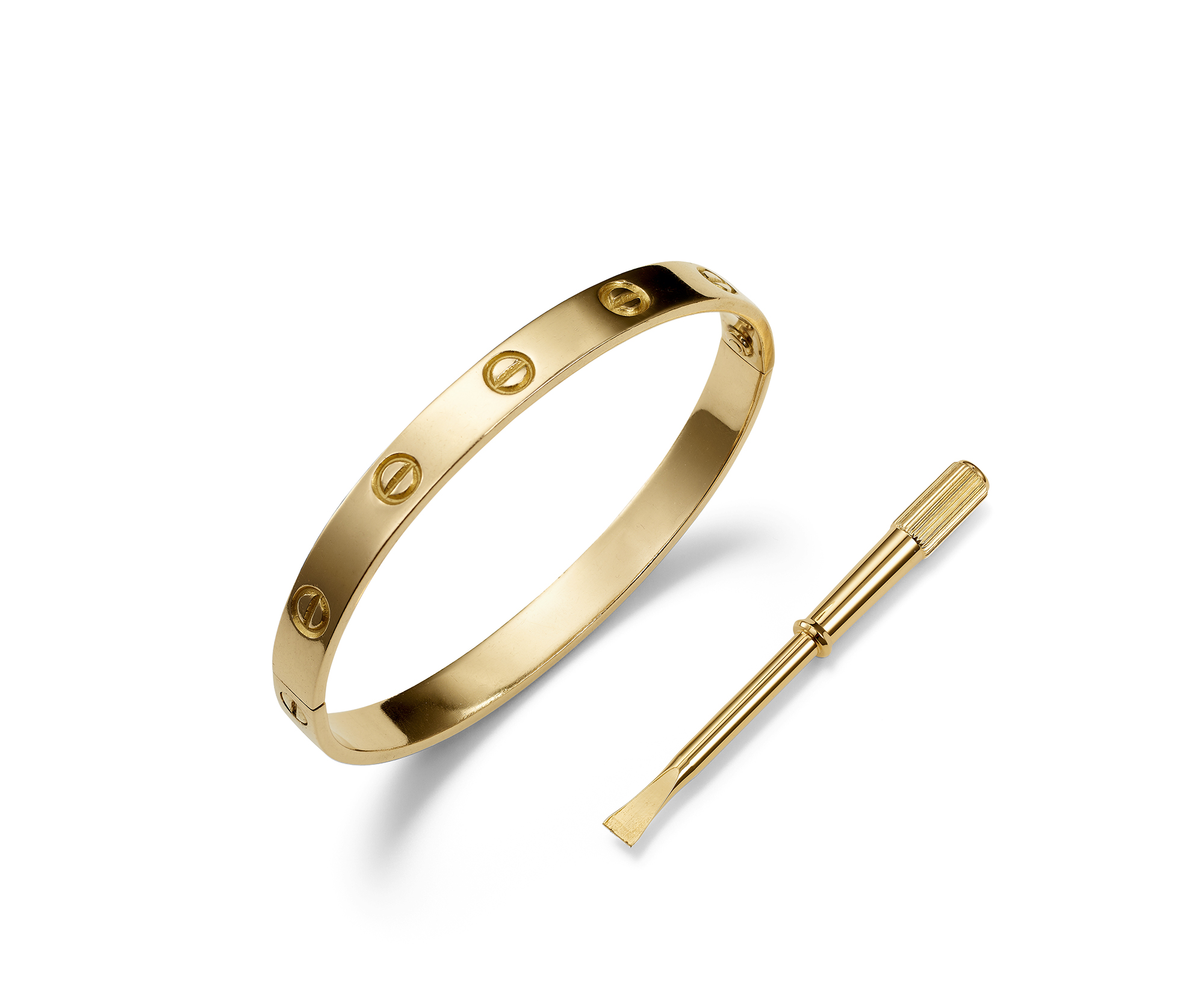
Echoing the attitude of the times, the Love bracelet embodied a fundamental shift, one encouraged by Cartier. “It was the marking of a transition from elaborate jewelry to something totally different, which nobody was doing at the time,” noted Cipullo. “Dressing was changing—mentalities, economics, politics, so on. So you know you have to simplify everything because every day in life we are full with cluttered things and that’s why jewelry for me has become absolutely simple and tailored.”
In an artistic approach indissociable from the Cartier style, Cipullo subverted everyday objects. In 1971 he came up with a bracelet in the form of a nail wrapped around the wrist. It was the start of an entire line inspired by tools, which also included bolt cufflinks, a wrench pendant, and pill boxes in the form of screws. “I’m becoming well acquainted with nuts, bolts and screws,” joked the Italian designer, who added that he had two homes—“my second home is the hardware store.” The world of industrial design—already part of the Maison’s repertoire—became a realm of creativity for Cipullo. His boldness was recognized by the jury of the Coty Award, which honored him for “launch[ing] a fashion for precious jewelry inspired by modern machines and their parts.”
In 1972, Cipullo designed the Circles Collection for Cartier. Women’s Wear Daily stressed its “brilliant technical execution. Each circular stone necklace and bracelet has a fluid relationship with the gold links and discs backing it, causing the piece to move with its wearer”—almost an echo of Jeanne Toussaint.
Jewelry can also be talismanic, as exemplified by the Hand of the Heart pendant worn by Ellen Burstyn in the film The Exorcist, and also a line of jewelry based on the signs of the zodiac, reflecting the fascination with esotericism at the time.
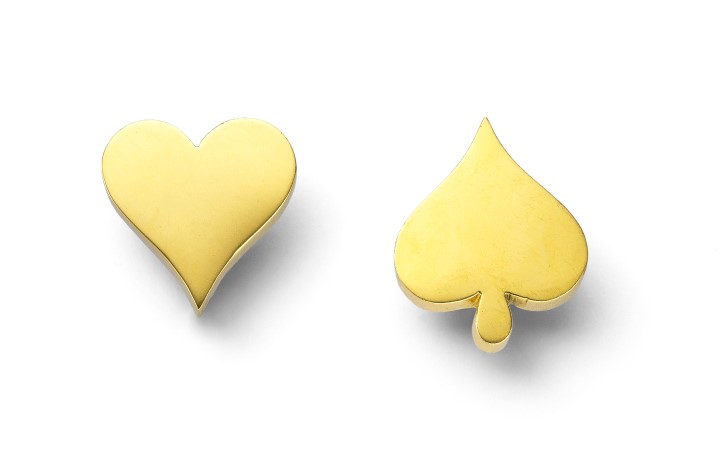
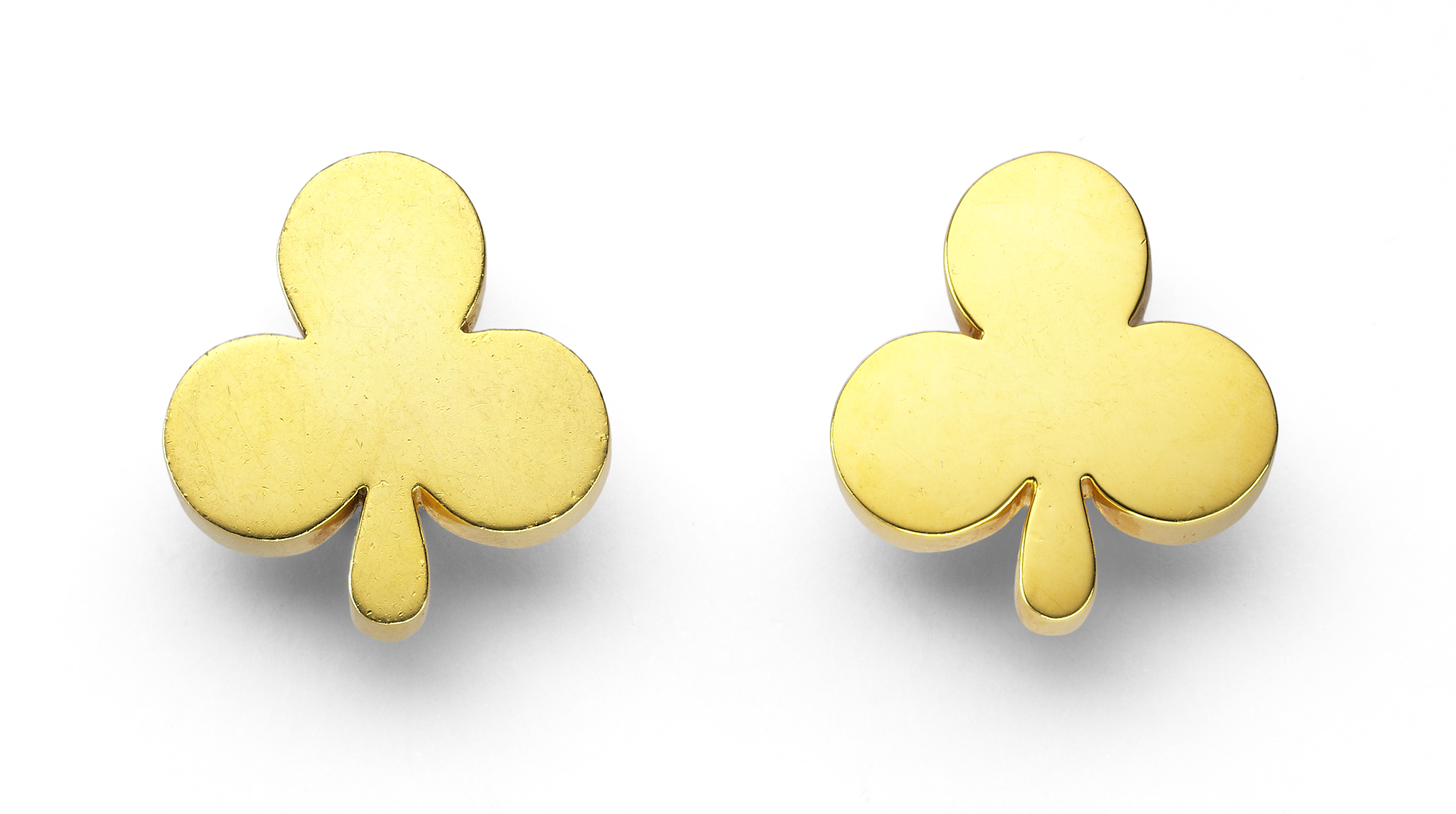
Cipullo always returned to the theme of love with allegories as original as they were modern, as witnessed by jewelry inspired by the world of gaming including playing cards and backgammon he designed for Cartier in 1973. “Of course it's symbolic,” he admitted. “When you’re in love you can win or lose. It’s a game.”
This was the vision of a man who was simultaneously aesthete, dandy and socialite. An emblematic New York figure in the 1970s, Cipullo liked to go to fashionable restaurants and nightclubs, accompanied by friends who included Margaux Hemingway, Jacqueline Bisset, Liza Minnelli, Andy Warhol, George Hamilton, Tony Bennett, and numerous rock musicians.
Cipullo set up his own business when he left Cartier in 1974. He died ten years later, aged forty-eight.