Tough and stainless, platinum is a precious metal that has become essential to fine jewelry, for it makes possible incomparably fine settings that enhance the sparkle of diamonds. Cartier pioneered this now widespread innovation at the turn of the nineteenth and twentieth centuries.
The most expensive of rare metals
Although its name might not suggest as much, platinum—from the Spanish word platina, literally meaning “little silver”—is the most expensive rare metal. Tougher than gold and—unlike silver—stainless, platinum is mined as raw ore in deposits in American, Africa and Russia. Nearly ten tons of ore yield just one troy ounce (31 grams) of platinum, after being smelted and boiled at temperatures higher than 3,000° F (1,700° C).
The history of platinum goes back several millennia. A few isolated traces of it have been found in ancient Egypt and, many centuries later, when Spanish conquistadors discovered the shiny metal among the Inca. Mainly in search of gold, however, they paid it little attention. Its color reminded them of silver, which they thought was far more valuable. That is why they dubbed it with the pejorative nickname of platina, “little (or lesser) silver.”
Platinum was only really mastered in the latter half of the eighteenth century, thanks notably to the development of new chemical processes and to the invention of the modern blowtorch. And it was not until the nineteenth century, marked by the discovery of major platinum-bearing deposits in the Ural in 1825, followed by the czar’s freeing of the platinum trade in 1846, that jewelers—led by Cartier—began introducing it into their workshops.
Cartier, pioneer of platinum
Boldly recognizing its terrific creative and artisanal potential, Cartier adopted platinum at a very early date. The archives show that by 1853 Cartier was selling a set of shirt buttons made of platinum.
Use of the metal was intermittent at the time, given inadequate supplies and technical resources. It was only at the end of the nineteenth century, subsequent to discoveries by German chemist Wilhelm Carl Heraeus, who developed a smelting process making it easier to obtain pure platinum, that it finally became possible to procure the metal in satisfactory quantity and quality.
Louis Cartier, ever alert to progress, and clearly paying close attention to developments in mastery of platinum, grasped the possibilities presented by the German chemist’s work. Cartier pioneered the generalized use of platinum in jewelry as early as 1899.
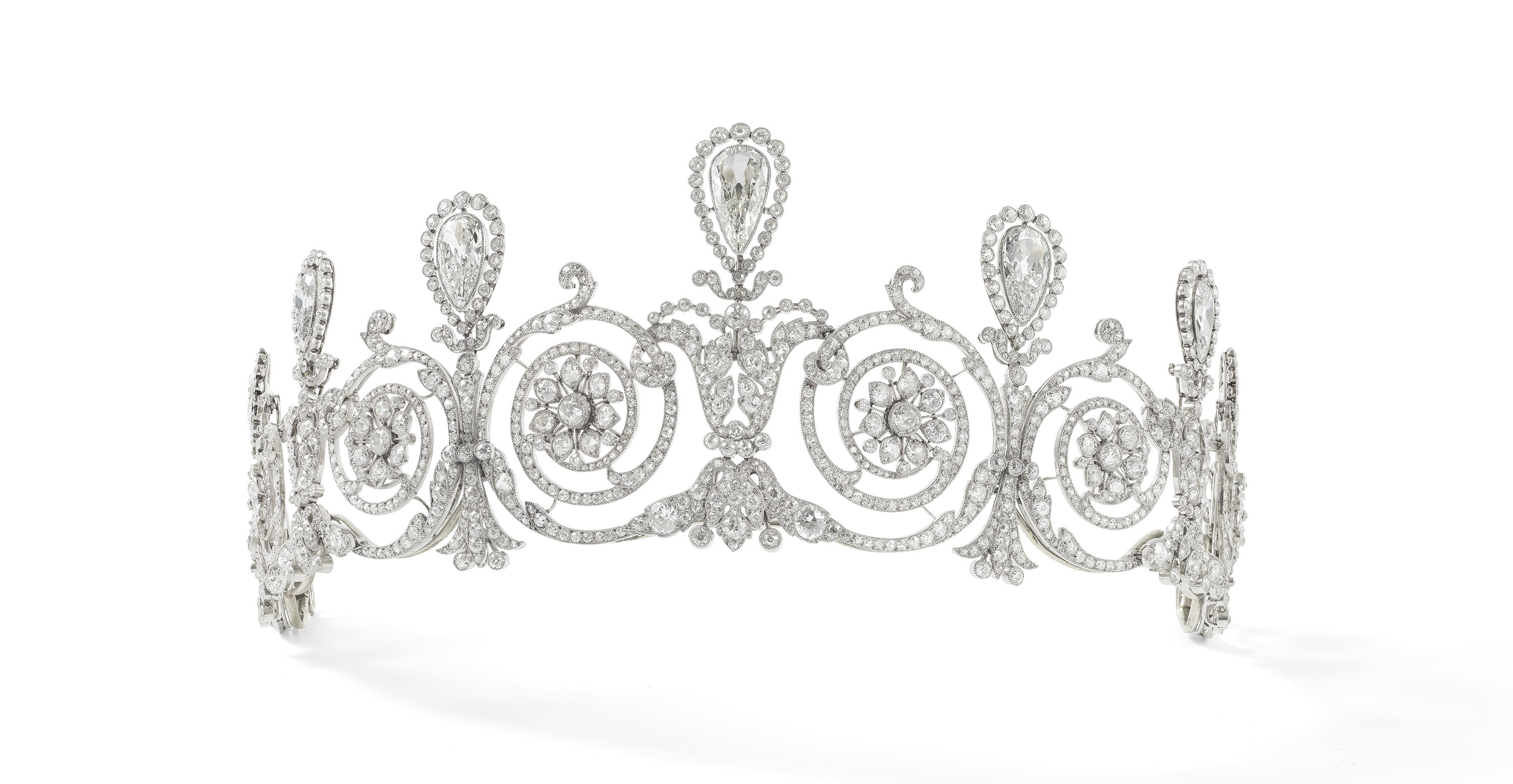
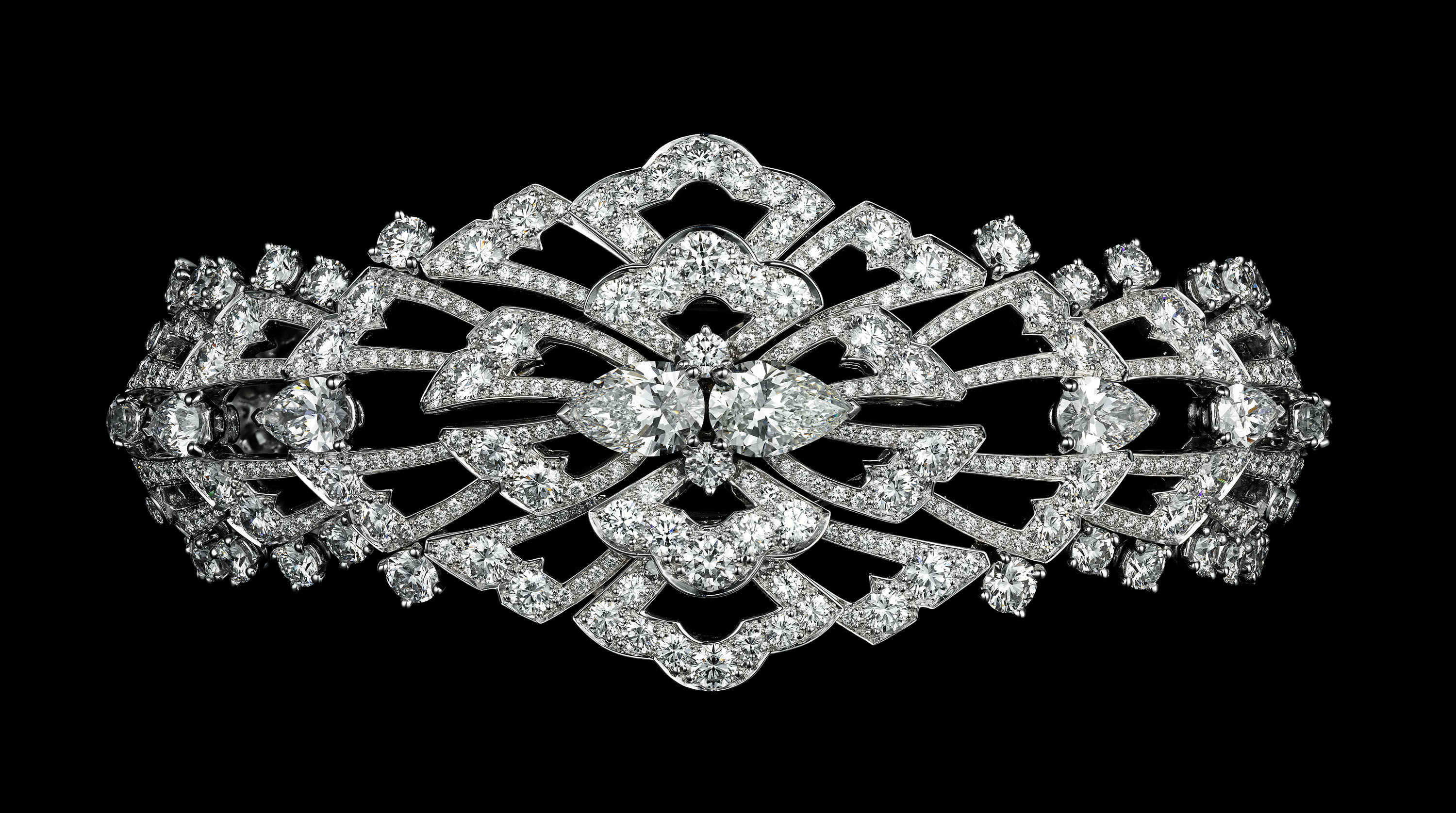
In order to appreciate the revolution launched by Louis Cartier, it is important to realize that fashion at the time called for “white” jewelry, jointly dominated by diamonds and silver. Silver, however, had two major drawbacks: its extreme malleability had to be compensated by thicker settings, considerably increasing the weight of jewelry; and silver blackened quickly due to oxidation. The heaviness and opacity of silver thus unfortunately dulled the sparkling splendor of diamonds. By systematically replacing silver with platinum, Cartier exploited the strength of the latter metal by designing less imposing settings, freeing diamonds from overly visible settings and enhancing their sparkle more than ever.
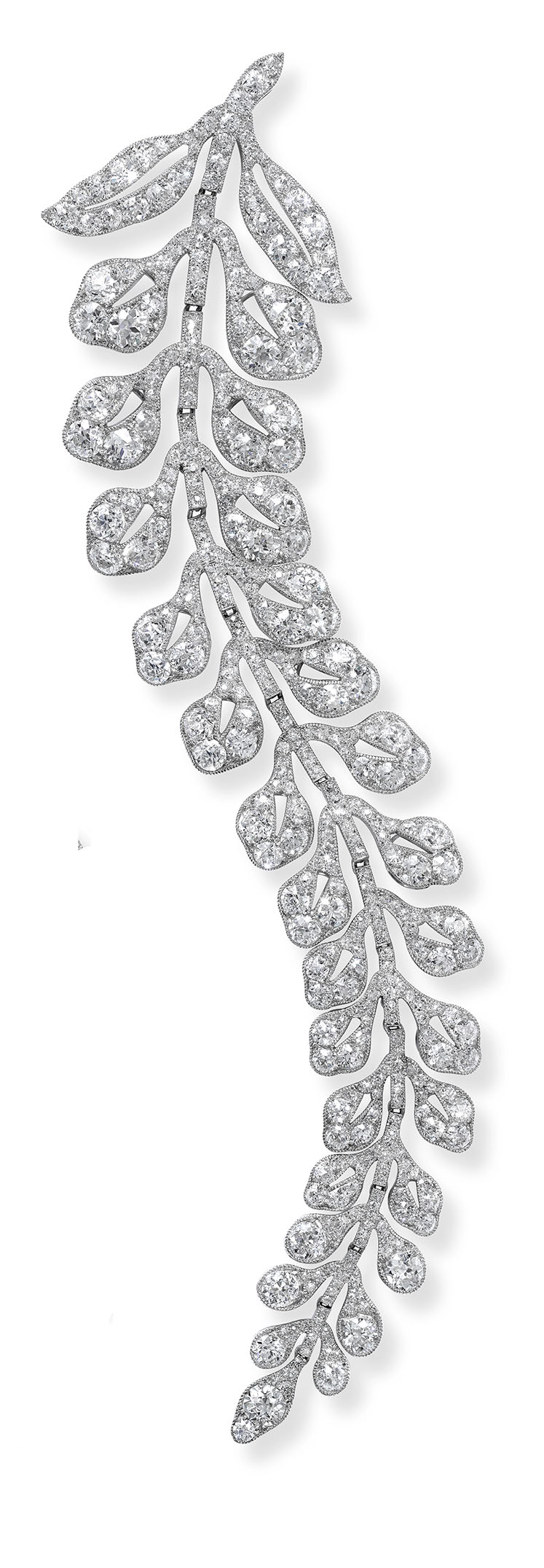
Taking maximum advantage of platinum’s properties—notably its strength and delicacy (which he called “embroidery”)—Louis Cartier came up with airy designs of peerless finesse, whose clean lines and swirls were inspired by French neo-classicism. The marriage of the Louis-XVI style with platinum gave birth to an aesthetic that would mark the start of Cartier’s international fame: the garland style. Some of the style’s most eloquent examples are the splendid, swirling, pavé-set tiaras of the early twentieth century, or a pair of fern-leaf brooches that could be converted into a tiara, made in 1903, or a lily corsage ornament of 1906, not forgetting a bow brooch—also made in 1906—with platinum work of remarkable meticulousness.
Ever since that time, platinum has remained the preferred metal for exclusive luxury jewelry.