
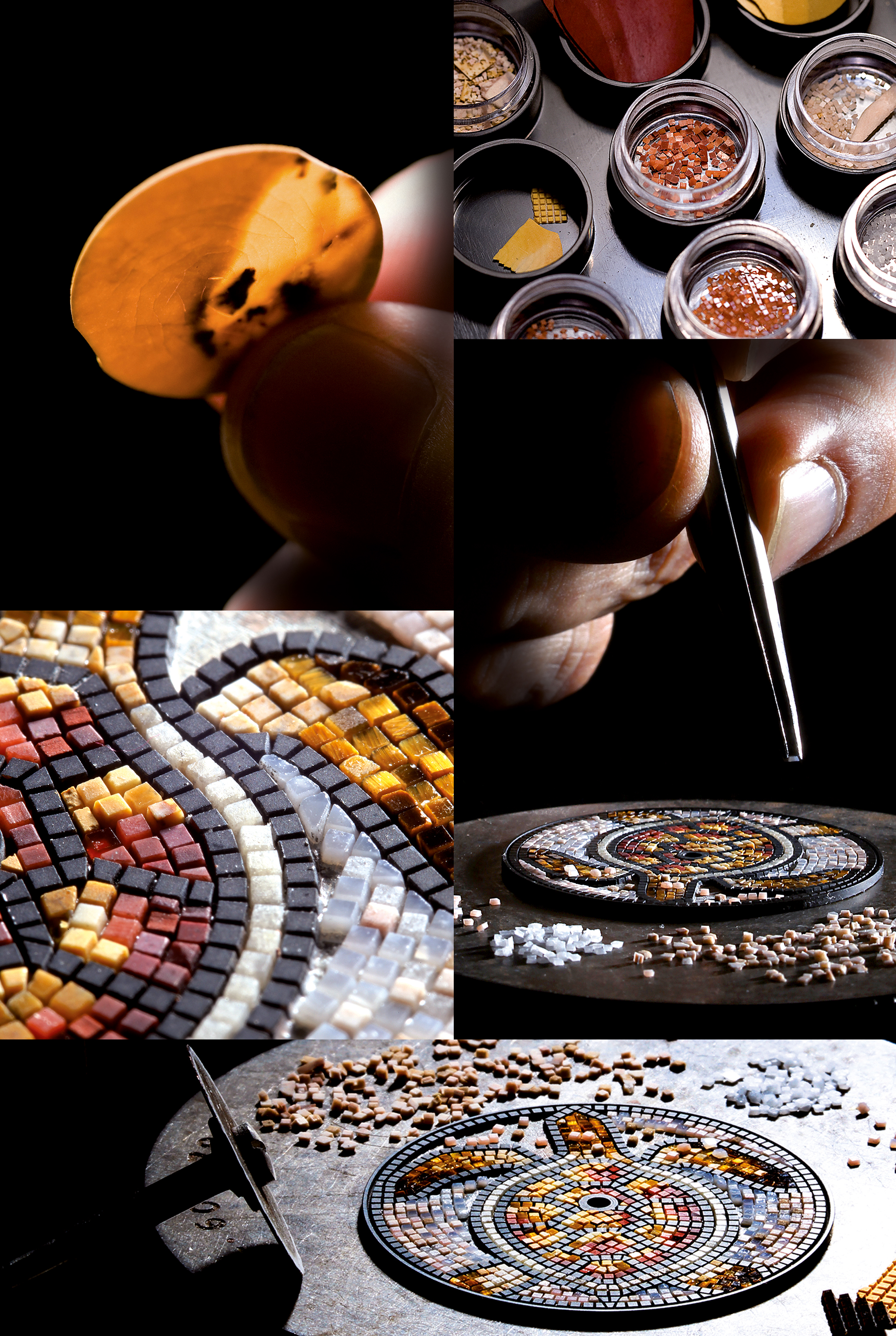
Mosaic is one of the oldest decorative arts, originally used in Antiquity to adorn temples and private homes. Cartier adopted the technique in 2010.
Mosaic is an art that involves assembling little pieces of stone, marble or fired clay—known as tesserae—into a pattern held together by mortar. Initially used to decorate the floors, walls and ceilings of buildings, it appeared in Asia Minor in the eighth century BCE, spreading more widely through Greece in the sixth to first centuries BCE, then throughout the Roman world up to the fifth century CE.
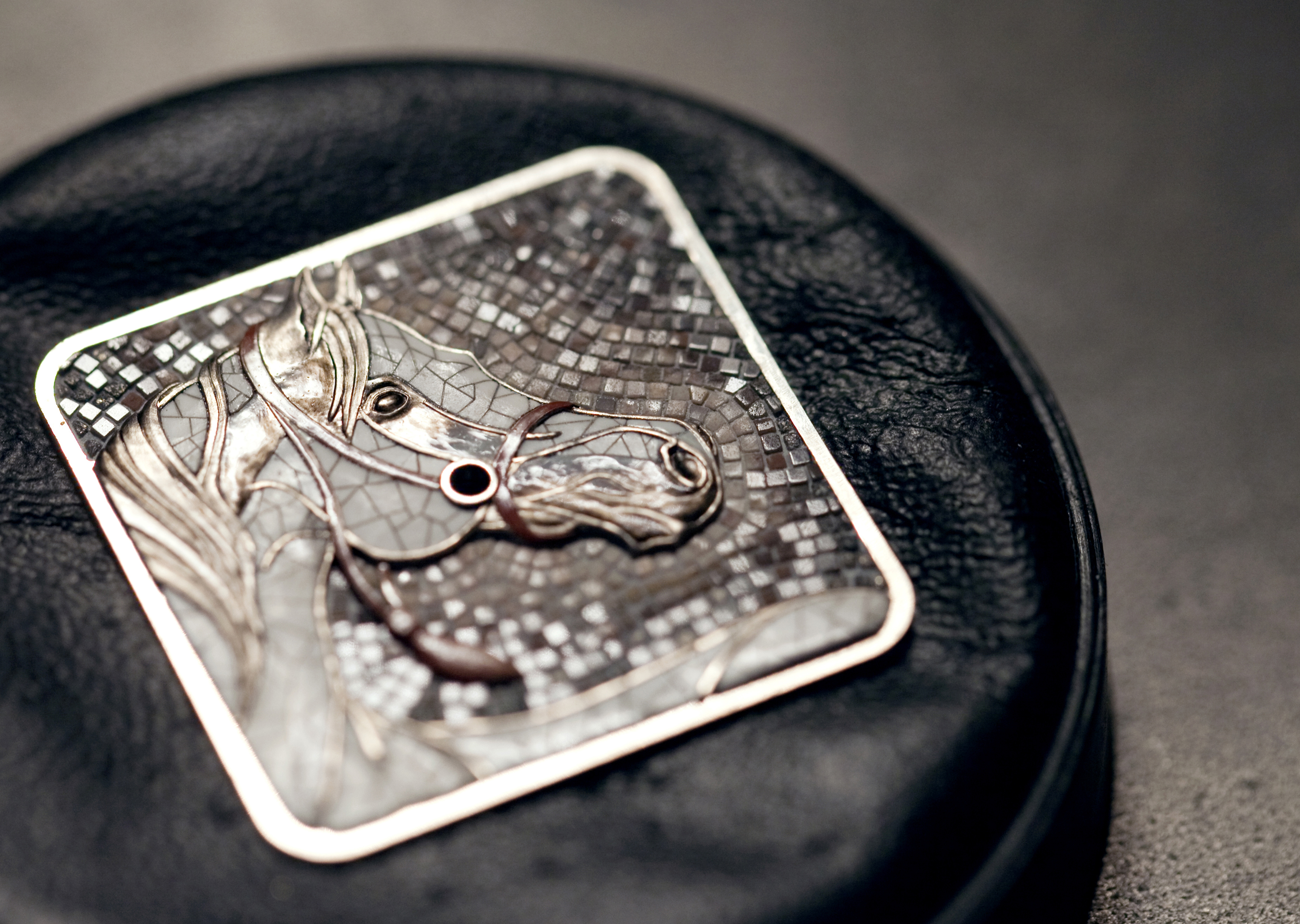

This decorative art halfway between fresco and sculpture was introduced into Cartier’s watchmaking workshops in 2010. The scale has obviously changed: mosaic henceforth adorns miniature items. In fact, Cartier decided to use it for the dials of its watches, employing tiny cubes for the background and irregularly shaped fragments for exacting designs. The palette of colors, meanwhile, features a range of subtle shades: picture jasper, Kalahari jasper, gray Madagascar jasper, chocolate-brown obsidian, pink opal. Depending on the composition, up to 400 tesserae are required for each dial.
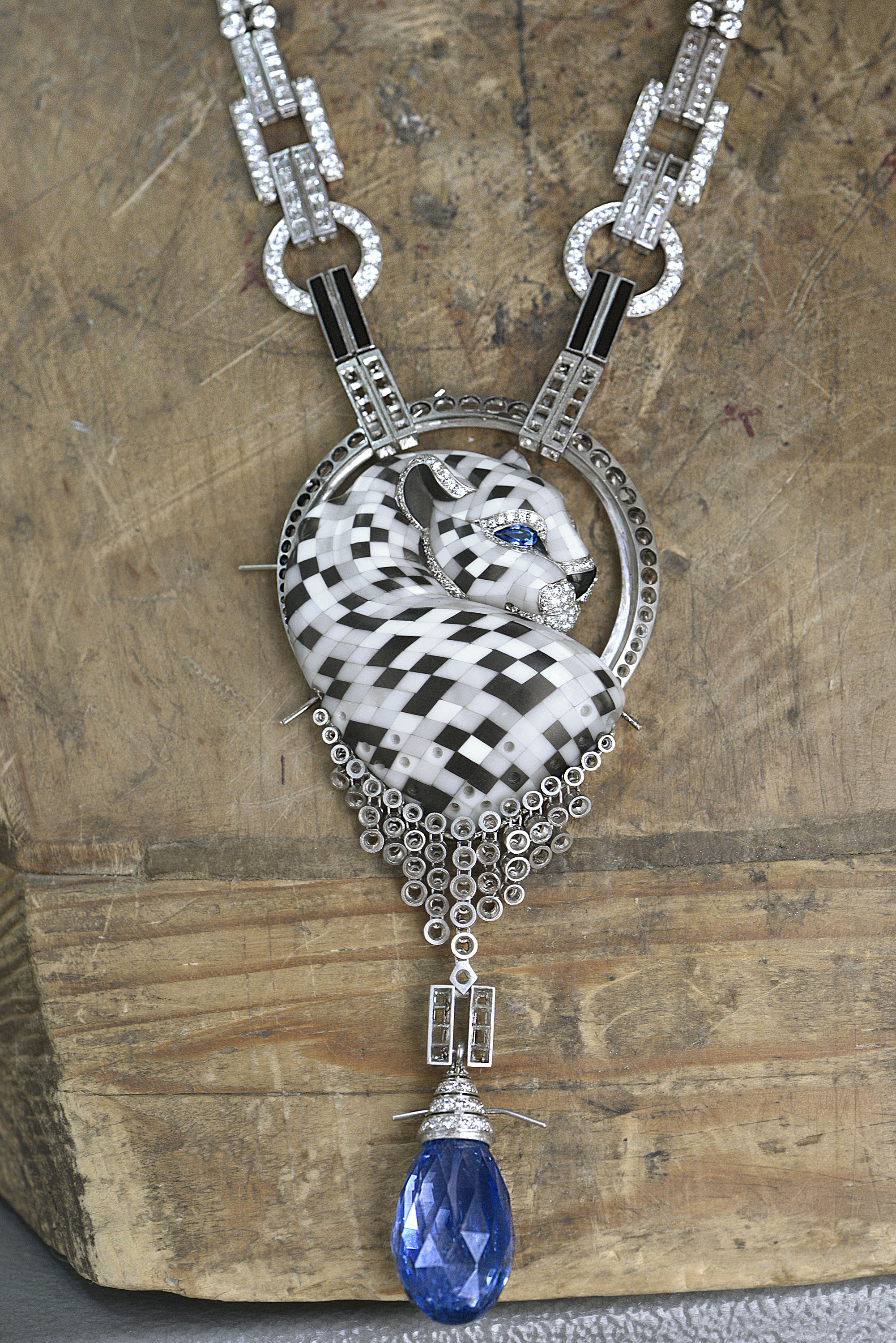

This same technique was used in 2014 for a necklace made in Cartier’s glyptics workshop. The design employed a mosaic of agate and onyx to imitate the spotted coat of a panther on a precious medallion from which hangs a briolette-cut sapphire weighing 35.80 carats.