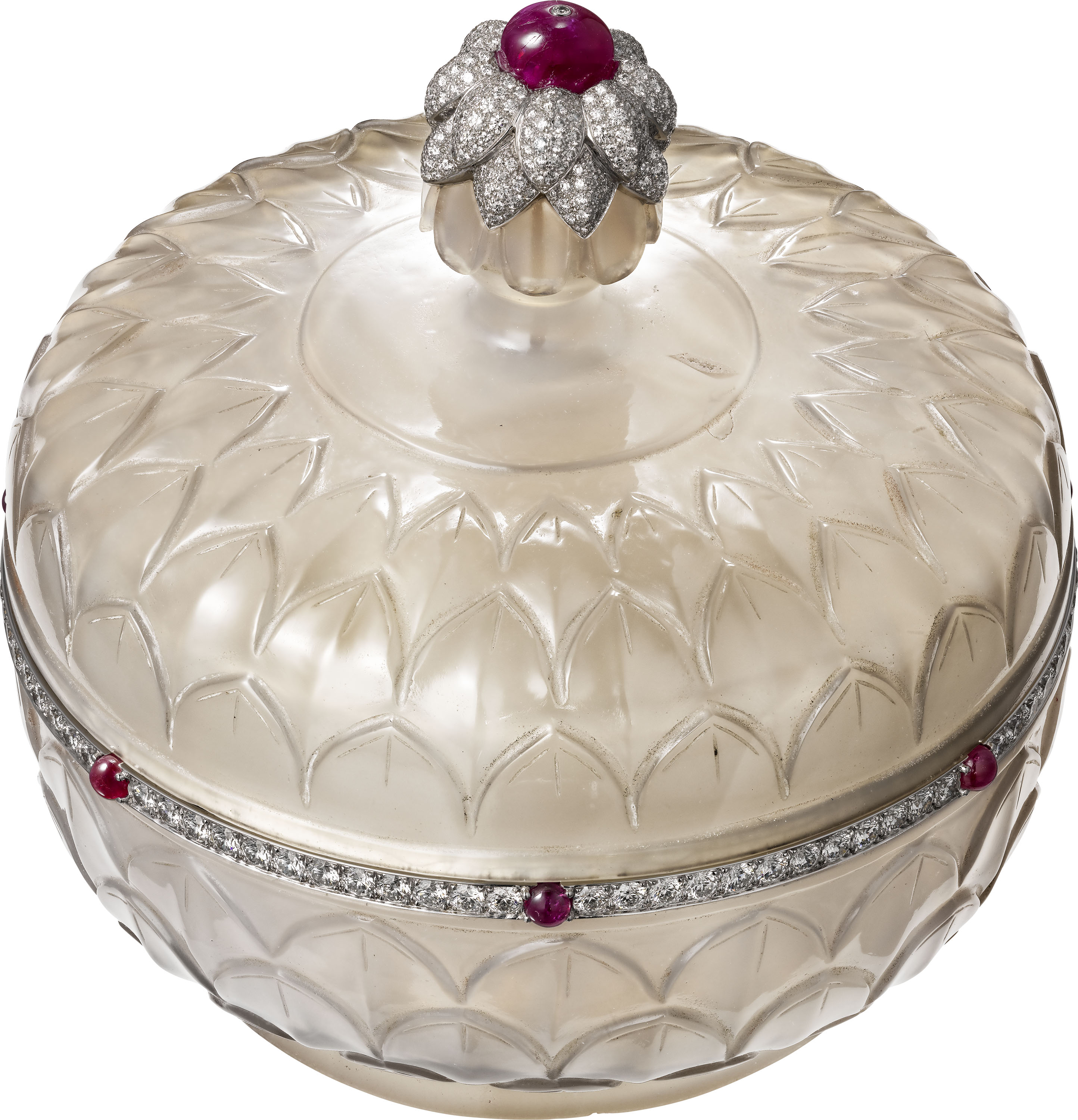
Old decorative items that have been previously worked—often carved or engraved, for example—are known at Cartier as apprêts that can be incorporated into new designs. Such stock notably includes fragments of objects from Antiquity.
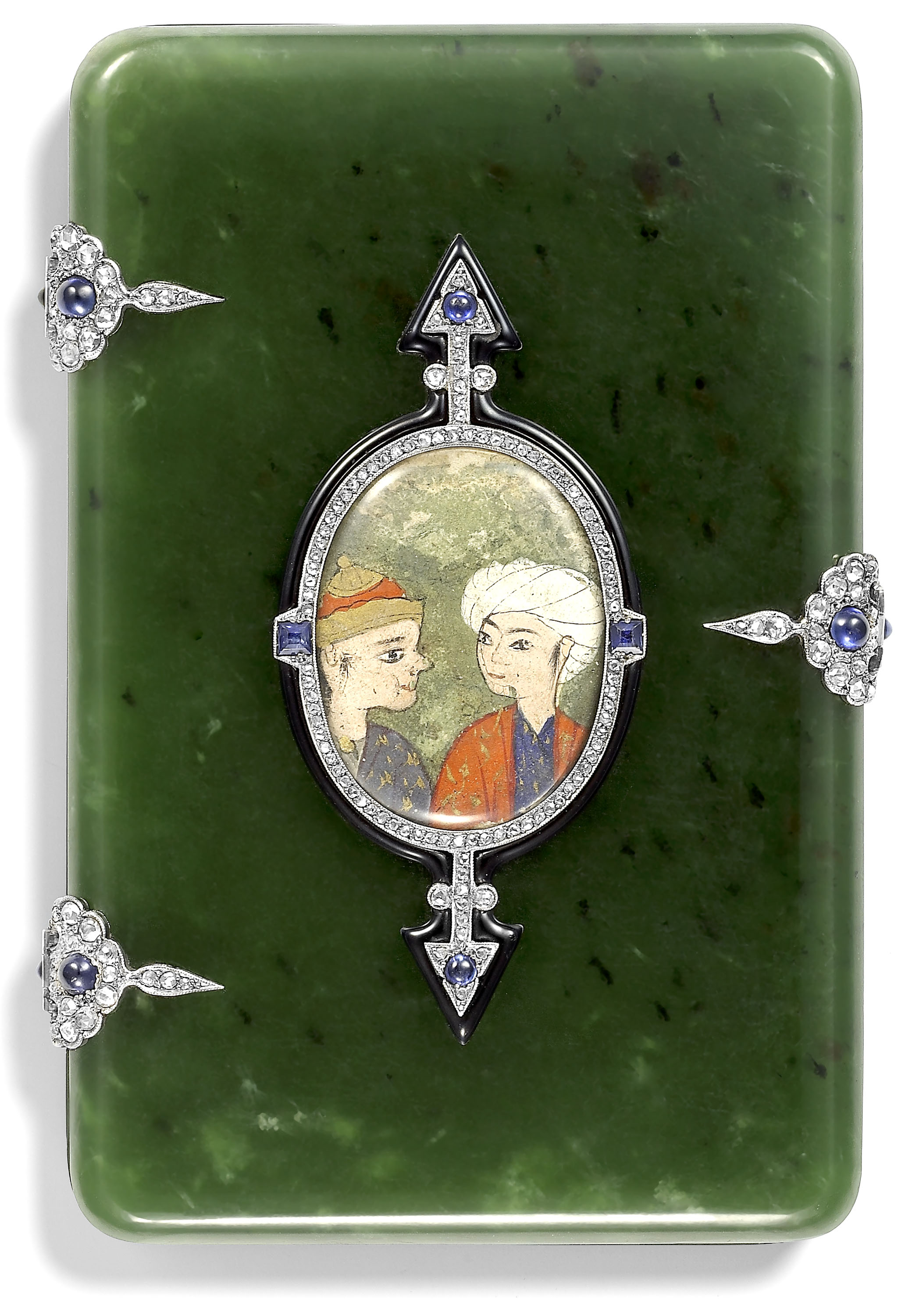
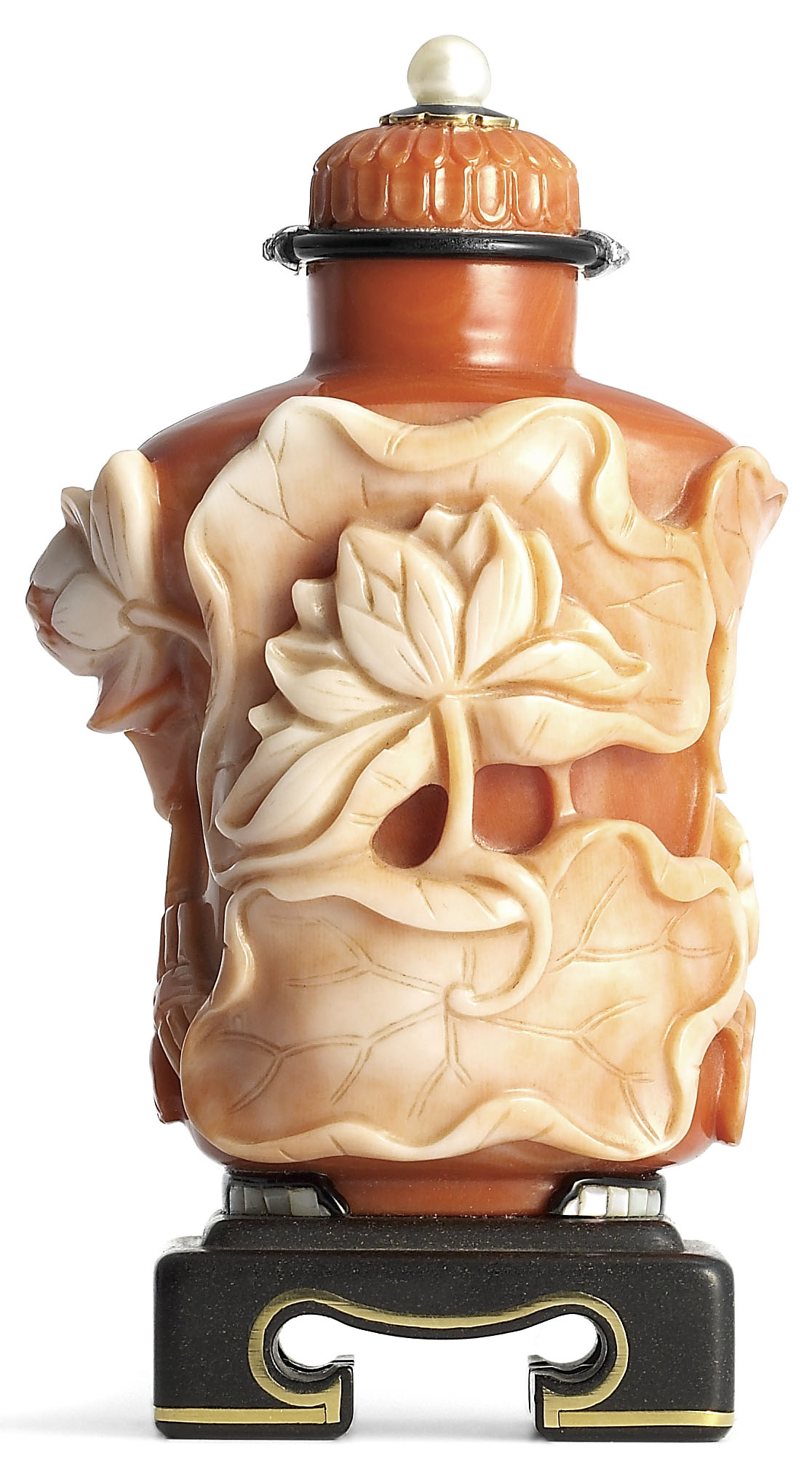
As a shrewd collector and open-minded aesthete, Louis Cartier (1875–1942) scoured antique dealers in search of wonderful surprises. Archaeological finds and pieces of ancient art from Egypt, Persia, India, China and Japan were added to what he called his stock of apprêts, made available to house designers as inspiration for contemporary creations. Miniatures, lacquerware, pieces of coral and jade carved with traditional or animal motifs would then find their way onto the cover of an accessory (cigarette case, powder compact, vanity case, perfume bottle, etc.), thereby retranscribing the aesthetic codes of the culture in which they arose.
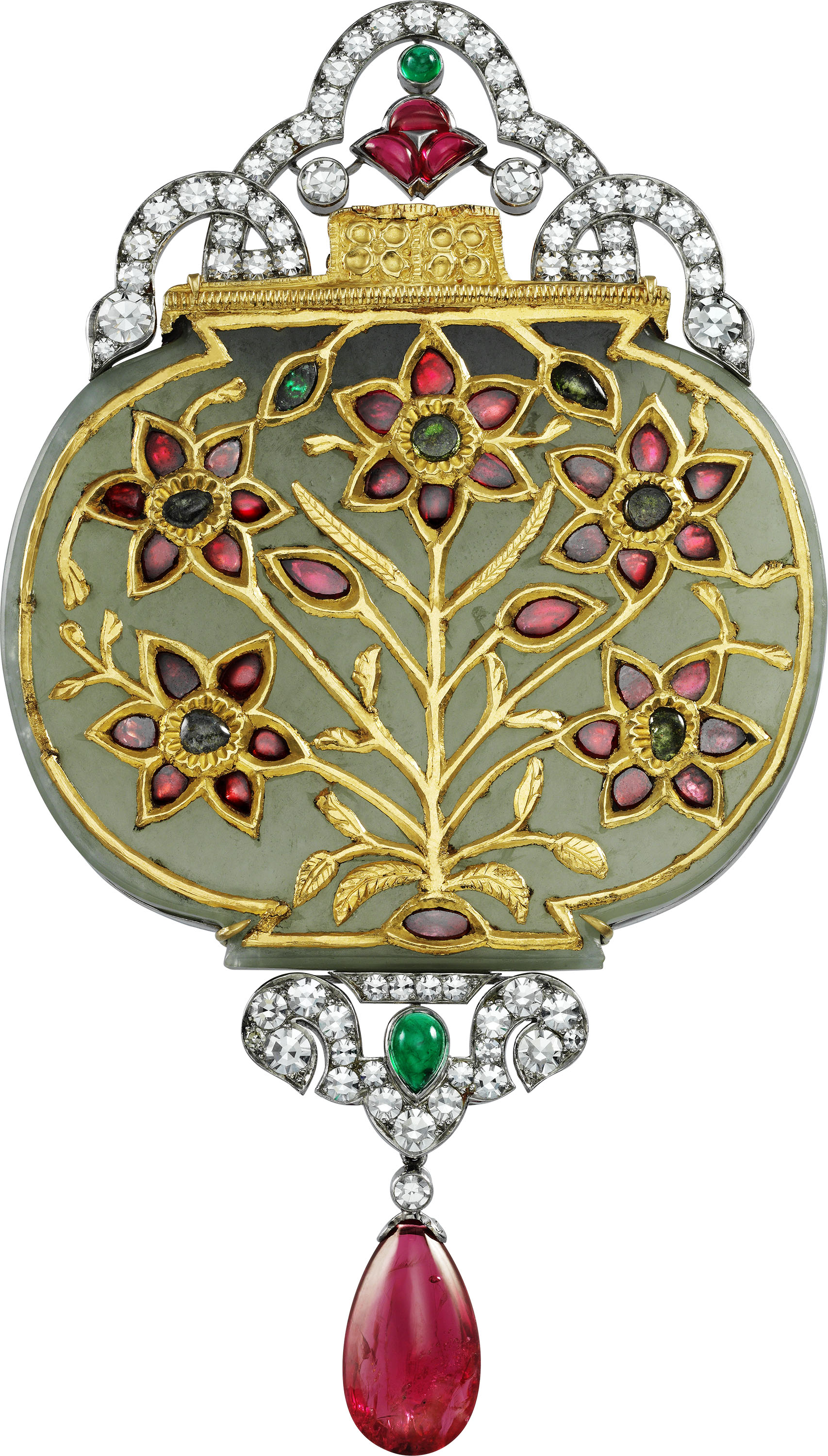
Jewelry might also host apprêts: in 1928 Cartier received a special order for an Indian-style necklace of enamel and pearls adorned with a pendant made from a plaque of ruby flowers and emerald leaves representing, according to the archives, “the Grand Mughal’s coat of arms.”
In other instances, the original object might provide the basis for a more complex item, such as a 1931 mystery clock featuring a Chinese statuette of white jade, apparently representing the goddess Kuan Yin (or Guanyin).
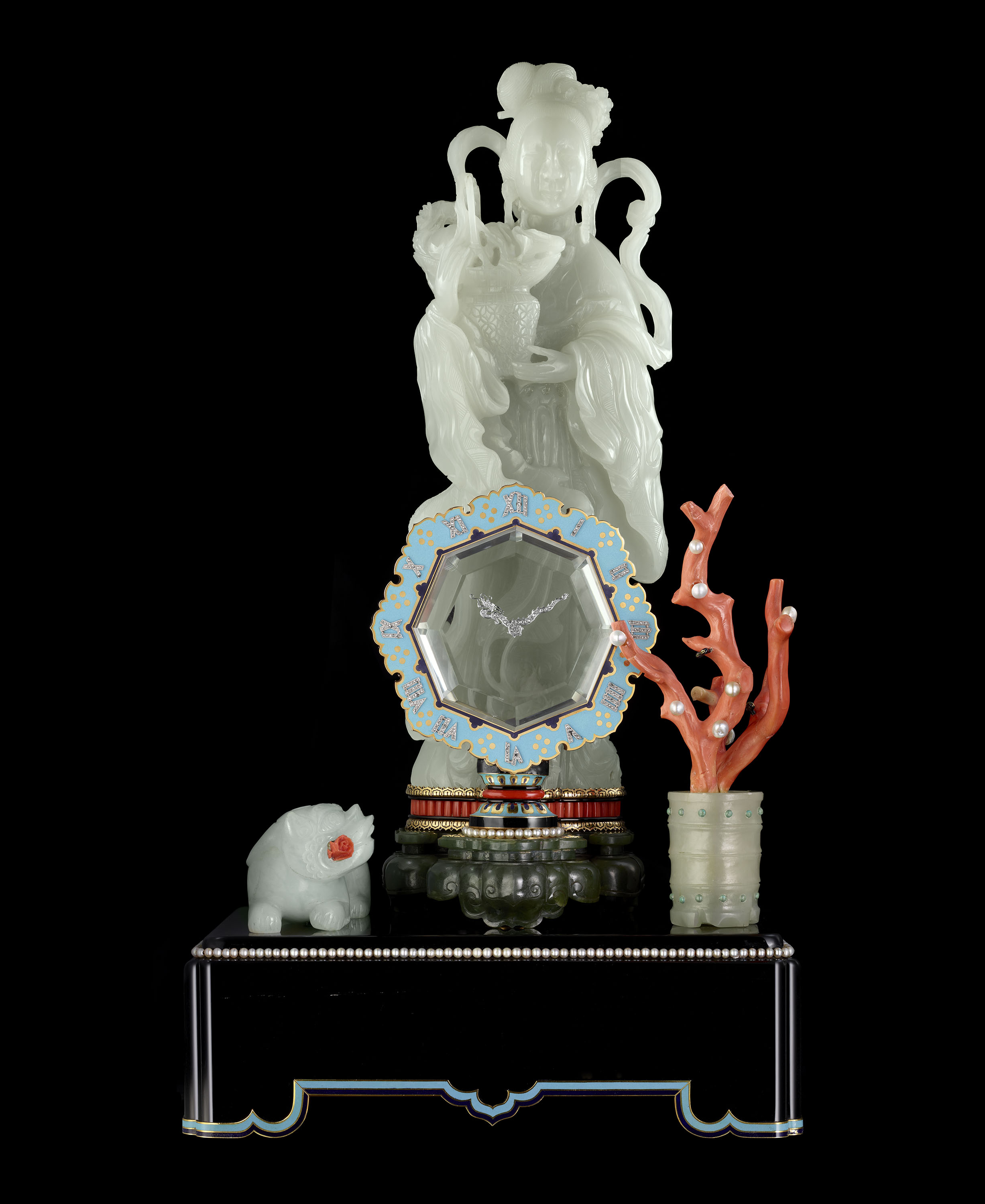
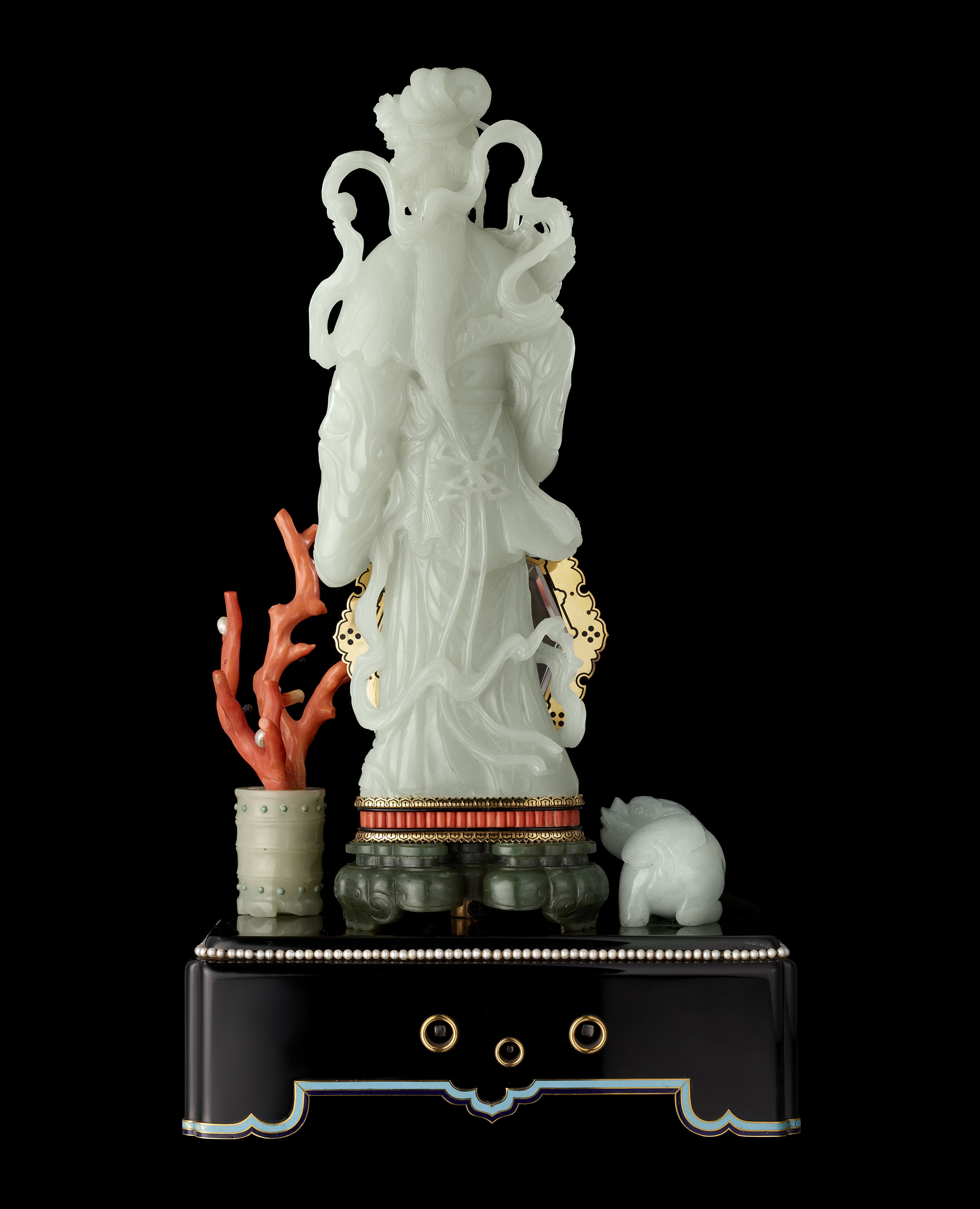
Even today Cartier incorporates antiquities into unique, startling designs. For example, in 2015 a Mughal plaque set with rubies and emeralds, featuring the Indian kundan technique, was transformed into a brooch. The following year, Cartier added eight rubies to a finely carved chalcedony box dating from the Qianlong period, thereby enhancing its original Asian feel.