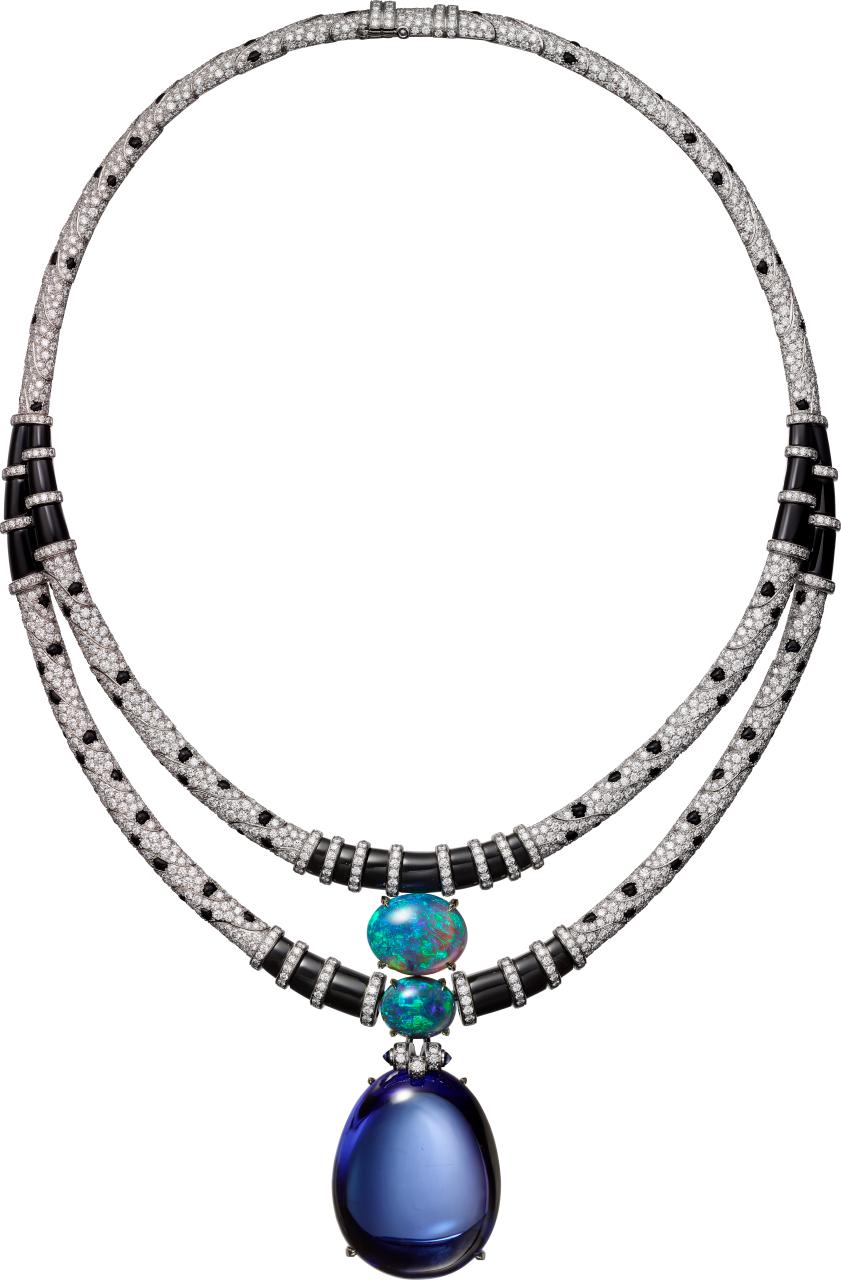
Discovered in the 1960s, tanzanite is characterized by its subtle shade of blue.
- Group: variety of zoisite, silicate class
- Color: light to deep blue, with shades of violet or bronze
- Hardness: 6 to 7 on the Mohs scale
- Source: Tanzania, Africa
Legend has it that one day a Masai herdsman accompanying his flock in a fertile valley not far from Mount Kilimanjaro noticed a bluish stone on the ground. Intrigued by its unusual hue—blue being a sacred color according to tribal tradition—he picked it up and kept it safe like some talismanic treasure. He had unwittingly discovered a previously unknown gem: tanzanite. It has since been mined at the very spot its story began, in the heart of the Merelani Hills in the northern Arusha region of Tanzania, the country the gem was named after.
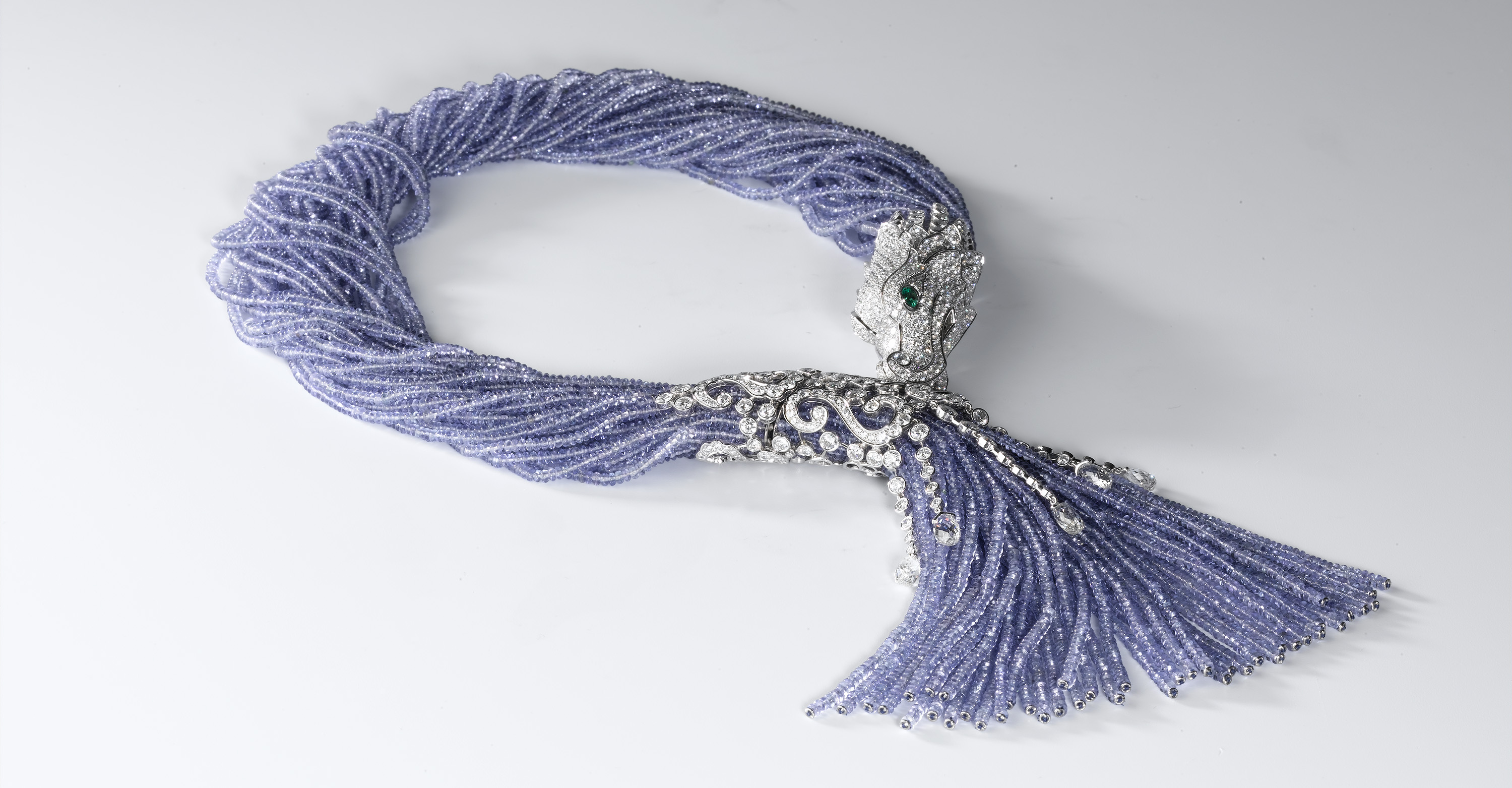
A specific variety of zoisite from the silicate class of minerals, tanzanite is an allochromatic stone, which means its color depends on elements external to its structure. The color will differ depending on the angle of vision, going from pale blue to shades of violet or bronze.
The most colorful specimens owe their blue hue to the presence of substantial amounts of vanadium, and it is precisely the deepest blue tanzanites that are the most highly appreciated. They can sometimes reveal a violet highlight which does not reduce their value if it remains discreet.
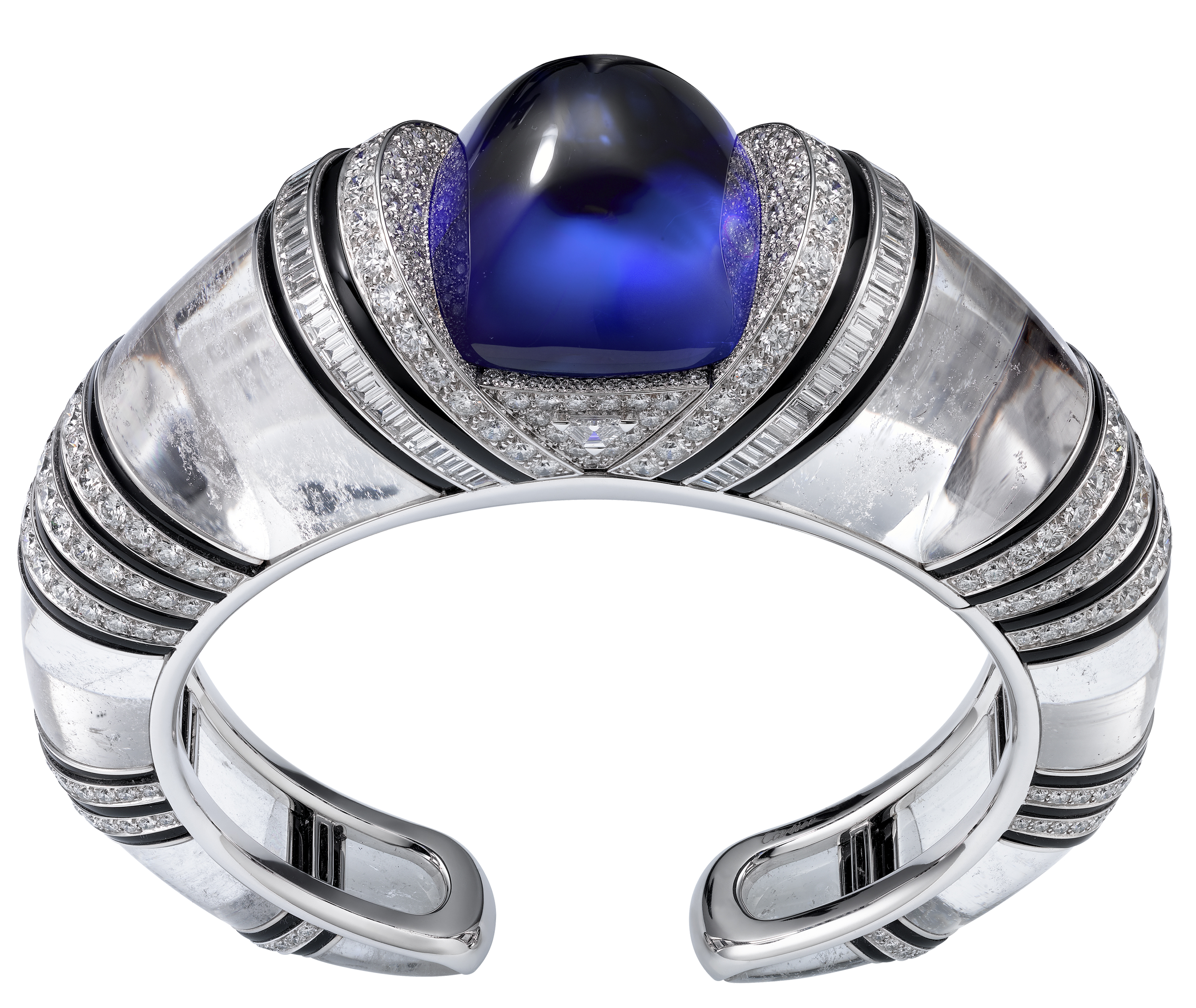
Tanzanite’s evocative powers have inspired Cartier’s designers. In 2014 the workshop devised a chunky bracelet with an imposing 79.52-carat tanzanite at its center. The design of the bracelet is a tribute to Tanzania’s mountainous landscape.
Because it is sensitive to knocks, tanzanite must be handled and worn with care.