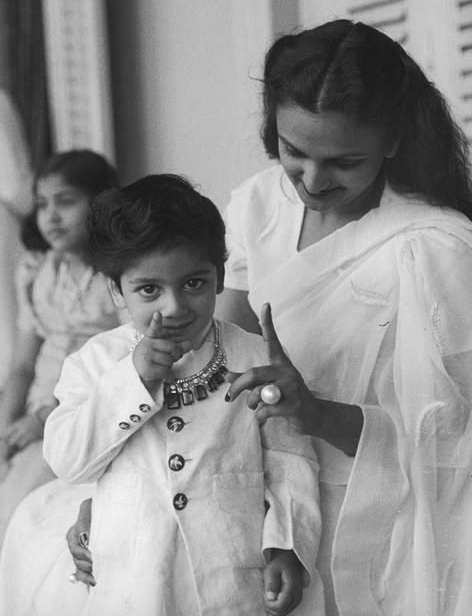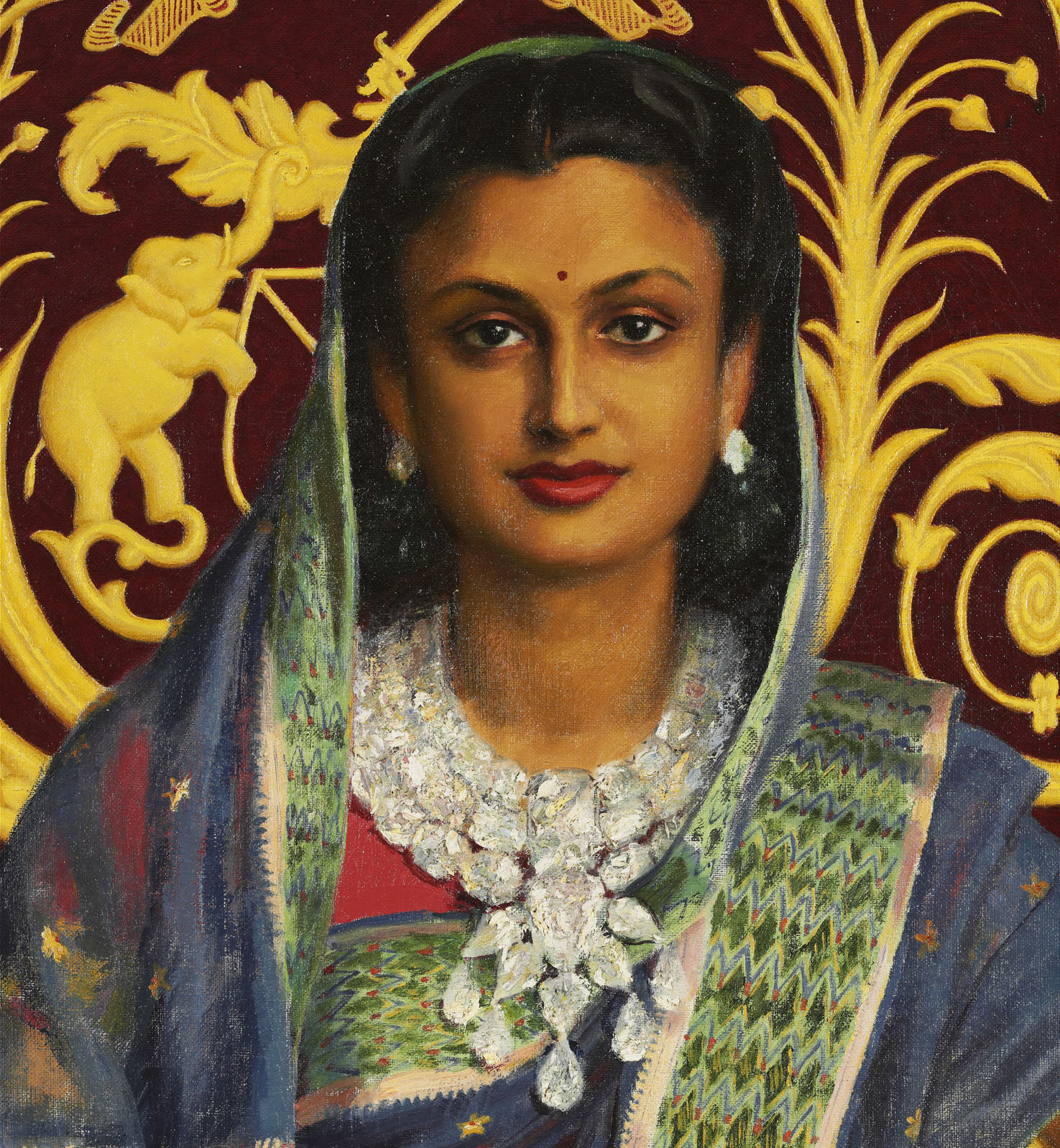
A key figure in modern India and a member of the international jet set, the Maharani of Baroda (1917–1989) is remembered for being as extravagant as she was elegant, with an insatiable passion for jewelry. Her collection included no less than 300 pieces, many of them crafted by Cartier.
Sita Devi was born in 1917 in Madras, India. As the Maharajah of Pithapuram’s daughter, she enjoyed a privileged childhood in her large family. Following the tradition, she was married at a young age to rising star Meka Rangaiah Appa Rao, who went on to have a brilliant political career.
Her charming personality and colorful style already marked Sita out whenever she attended gatherings of India’s high society. At one of Madras’s very fashionable horse races, she met Pratap Singh Gaekwad, the Maharajah of Baroda. He was won over by Sita’s charm, and his handsome presence had the same effect on her. Since both of them were already married, there was a lengthy legal procedure to complete before they could marry. The Maharajah's lawyers finally found a legal loophole and the couple were able to wed in 1943. They would have three children together.
With this second marriage, the new Maharani was elevated to one of India’s foremost dynasties. The contemporary press held the Maharajah to be India’s second-richest man, and eighth richest in the world. It’s true that the Barodas owned a colossal treasure – including several hundred jewels such as the Star of the South diamond – which they had assembled over multiple generations, with the oldest pieces dating back to the Mughal era. Sita Devi regularly adorned herself with these magnificent jewels, but also had some stones taken out of their original settings and remounted in contemporary designs.
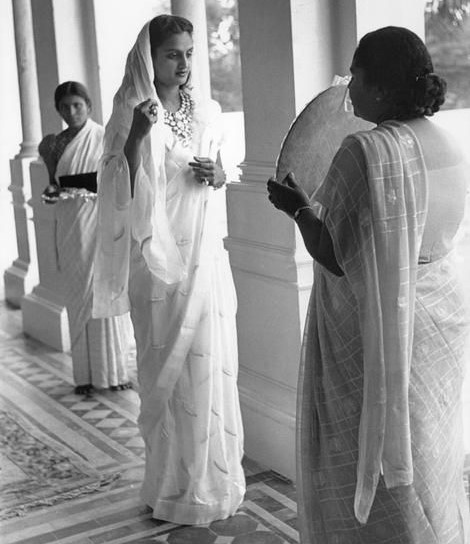
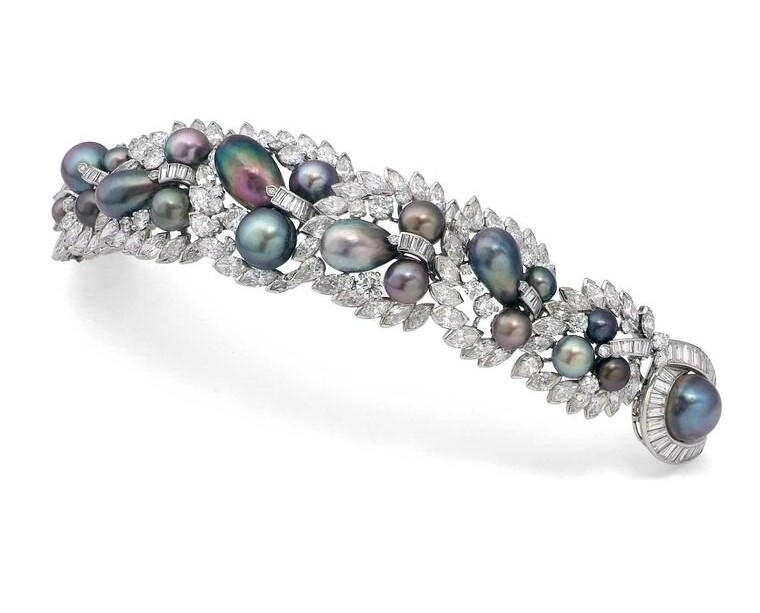
She tended to favor emeralds, rubies, and especially pearls, as seen in the pair of pendant earrings that combine all three gems, crafted by Cartier New York in 1951. In 1953 the Maharani also commissioned a very original bracelet from the Maison’s London branch, made of gray pearls with shifting colors in a design that plays on the pearls’ organic shapes. She matched this piece with a necklace and another bracelet, also in pearl.
The Maharani of Baroda's boundless love for jewelry earned her the nickname “the Indian Wallis Simpson,” referencing another great jewelry collector, the wife of former King Edward VIII of the United Kingdom. The parallels don’t stop there. Like the Duchess of Windsor, Sita Devi was a leading light of Café Society, that elite circle of the “happy few” whose tastes dictated the latest fashions. Wearing traditional Indian finery and bedecked in her jewels, Sita was a dazzling presence at the high-profile social events she attended all over the world. She and her husband regularly traveled to the United States and to Europe, especially the French Riviera, spending time in Monaco where they had a residence.
The political situation in India was highly unstable and in 1951, following the turmoil of Independence, the Maharajah was deposed from his throne. His wife didn’t give up her glittering social life, however, and would often step out escorted by her son Sayaji Rao Gaekwad, known as Princie.
Sita Devi separated from her Maharajah husband in 1956. She subsequently divided her time between London, Monaco, and Paris, where she eventually settled permanently in a flat furnished in Louis XVI style. Facing financial difficulties, she had to dispose of some of her jewelry, which was discreetly auctioned off in 1974 – including the magnificent Cartier pearl bracelet.