
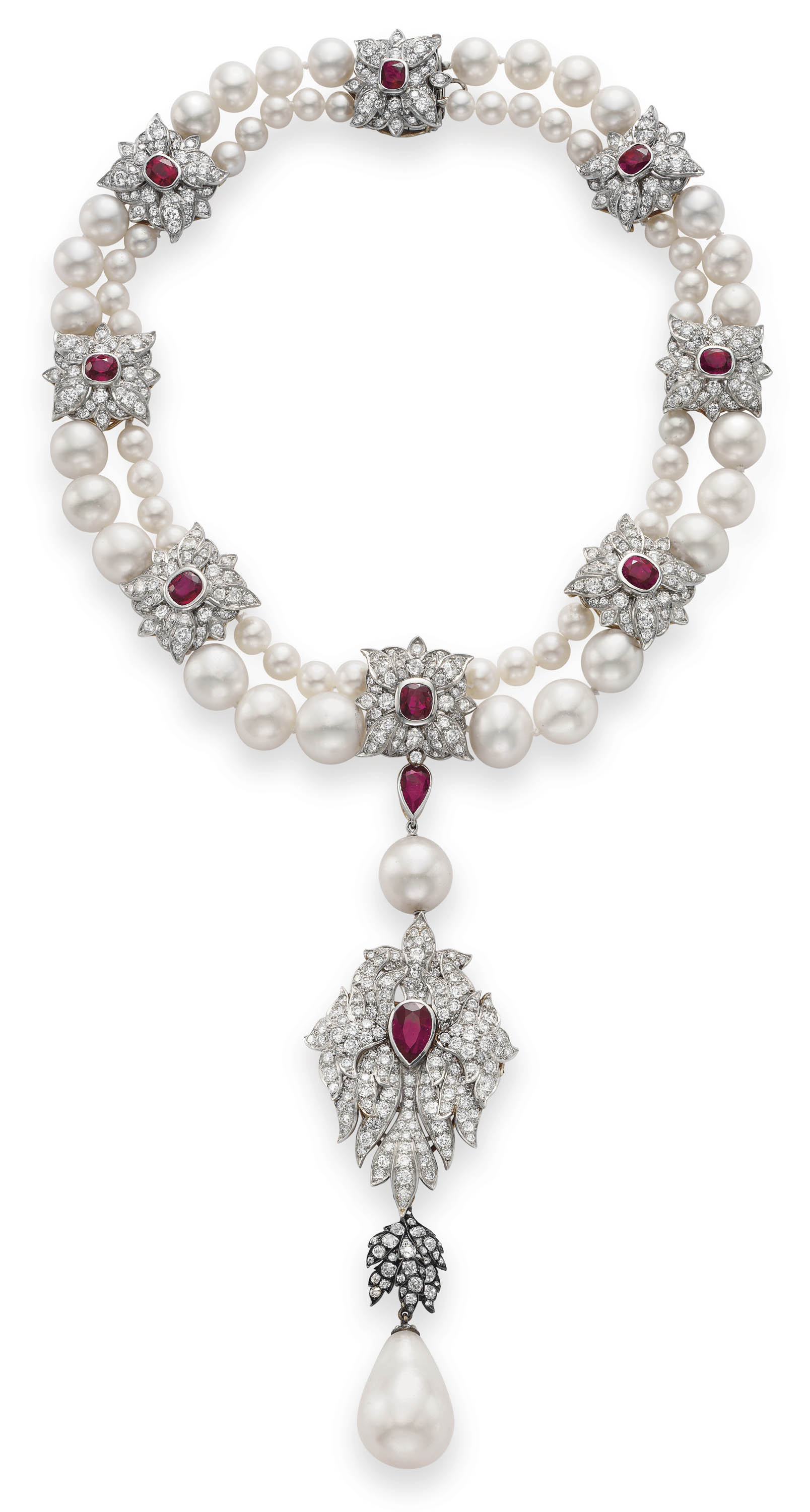
A legendary natural pearl, the Peregrina—meaning “stunning” in Spanish—was discovered in Panama around the 1570s. It was acquired by the Spanish royal family, where it remained for generations, until the Bonapartes got hold of it in the nineteenth century. In 1969 a pearl said to be the Peregrina came up for auction and was bought by actor Richard Burton. He gave it to his wife, Elizabeth Taylor, who had Cartier set it as a pendant on a necklace.
In Panama sometime around 1570, a slave discovered a handsomely pear-shaped natural pearl in a shell so small it didn’t seem it could contain anything. The pearl was immediately sold to a Portuguese merchant who took it to Seville, then the center of trade in precious gems. Holy Roman Emperor Rudolf II, intrigued by the weight of the nacreous wonder, allegedly dispatched an emissary to buy it—but was beaten to the punch by King Philip II of Spain.
The Peregrina remained in the Spanish crown jewels for centuries, worn by successive queens and princesses. In the nineteenth century it fell into the hands of Joseph Bonaparte (1768–1844), Napoleon’s brother and himself briefly the king of Spain. At Joseph’s death, his nephew Louis Napoleon (1808–1873, the future Emperor Napoleon III of France), sold it to a Briton, James Hamilton.
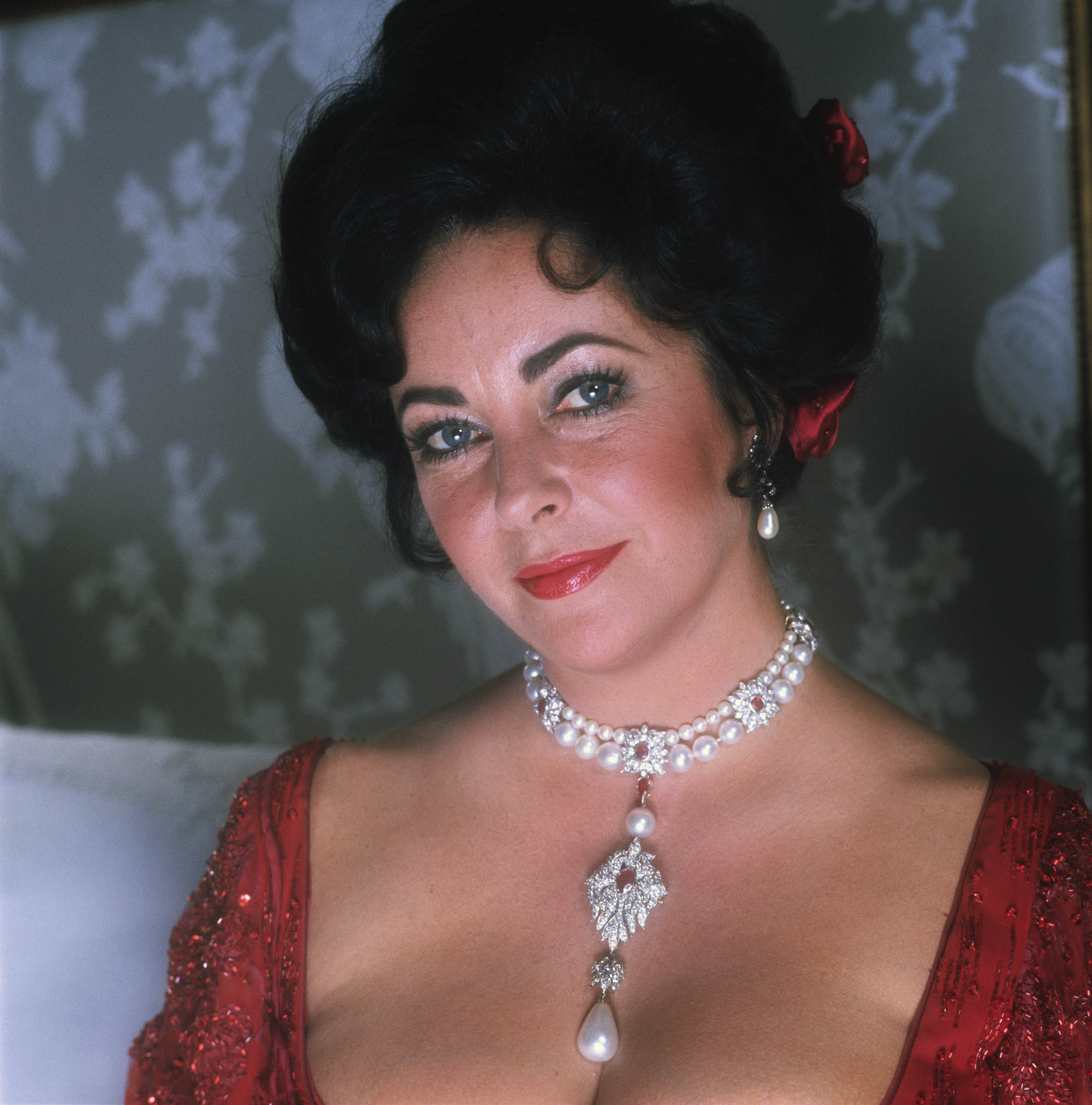
In 1969 a London auction house put up for sale a pear-shaped natural pearl weighing 204 grains, attesting it to be the famous Peregrina. Bidding was feverish, and was finally won by Richard Burton, who gave the pearl to Elizabeth Taylor on Valentine’s Day. In her memoirs, Taylor recounted that unforgettable evening, with her joy upon seeing the iridescent Peregrina on its necklace, and then suddenly her anguish: “At one point I reached down to touch the pearl—and it wasn’t there! … I went into the bedroom and threw myself onto the bed, buried my head into the pillow, and screamed. Very slowly and carefully, I retraced all my steps in the bedroom. I took my slippers off, took my socks off, and got down on my hands and knees, looking everywhere for the pearl. Nothing.… [Then] I saw one [of our Pekingese dogs] chewing on a bone…. I thought. ‘Wait a minute. We don’t give our dogs, especially the puppies, bones! What is he chewing on?’ … I just casually opened the puppy’s mouth, and inside its mouth was the most perfect pearl in the world.”
In 1972 Taylor consigned the pearl to Cartier, who designed a necklace inspired by a portrait of Queen Mary Tudor to whom—according to an erroneous legend—King Philip II allegedly gave the pearl as an engagement present.
Taylor kept that necklace until she died. In accordance with her wishes, it was sold at auction in 2011, along with many other items of jewelry from her collection, part of the proceeds going to the organization she had founded to fight AIDS, the American Foundation for AIDS Research (amfAR).