
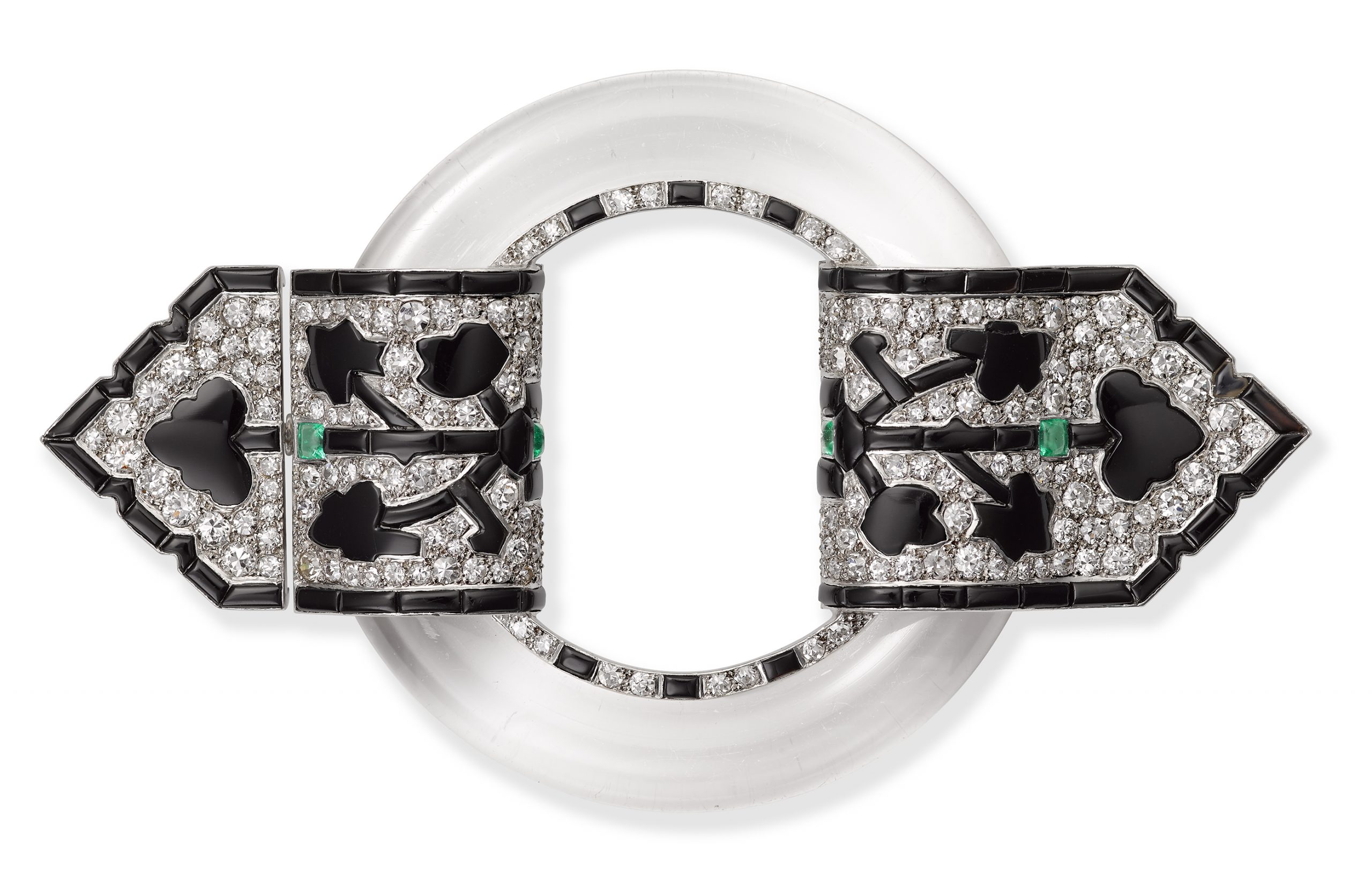
A prized stone since Antiquity, especially for crafting cameos and intaglios, onyx in its solid-black variety holds a special place in contemporary jewelry.
- Mineral group: chalcedony
- Chemical composition: silicon dioxide
- Colors: black in its most common form, but many polychromatic variants exist
- Transparency: opaque
- Hardness: 7 (Mohs scale)
- Main sources of provenance: Brazil, India, Madagascar
Etymology, history and legends
The word onyx comes from the Greek onuks, meaning “fingernail,” probably in reference to the raw material’s translucency or to the legend surrounding its origin. According to Greek mythology, Cupid, son of Venus, the goddess of love, came and cut his mother’s fingernails using the iron tip of one of his arrows while she was fast asleep next to a river. The nail clippings fell into the sand on the riverbank and were transformed by the Fates, the goddesses of destiny, into a mineral called “onyx.”
Onyx is also mentioned several times in the Bible. It is one of the gemstones featured on the breastplate of Aaron, a gigantic pendant worn by the High Priest and described in the Book of Exodus. The Apocalypse of John depicts the Heavenly Jerusalem, a city of pure gold surrounded by a great, high wall whose twelve foundations (symbolizing the twelve tribes of Israel) are “adorned with all sorts of gems.” The sixth foundation is composed of sardius, an orangish-brown chalcedony, and the fifth is made of sardonyx which, as the name implies, is a combination of sardius and onyx.
In Antiquity, it was customary to seal official documents and contracts using seals or stamps made of onyx. The Egyptians, Greeks and Romans also produced a considerable number of exquisite onyx cameos and intaglios designed to decorate vases, rings, bracelets and sometimes even furniture.
In the Middle Ages, the stone continued to be widely used, particularly for religious goldsmithery such as reliquaries, vases and chalices. Rare and coveted, people collected these objects like gems.
From time immemorial, carved onyx has been an ornament of choice, beautifully transformed into lucky charms, amulets or talismans.
Varieties of onyx
This rock comes in two varieties: banded or monochromatic. Today, the term “onyx” usually refers to the solid-black variety.
The other types include banded chalcedonies, either composed of two regular, flat layers in which contrasting colors alternate (one black, the other white or bluish in hue), or featuring three layers (black, reddish-brown and white).
Color and use
In Ancient times, people knew how to dye ordinary chalcedonies using a sugar solution, then sulfuric acid. The practice is so old that it has remained widely acceptable to this day. Most of the onyx used by Cartier is dyed.
Onyx is one of the raw materials used in glyptics, the art of carving fine stones, owing to its natural polychromy and the regularity of the flat bands of color that often confer a unique aspect to the stone.
For example, cameos are generally figurative depictions where an image is carved in relief utilizing the alternating layers of contrasting colors (called camaïeu in French), to highlight each color, from the light-colored layer to the dark background.
On intaglios (from the Italian intagliare, to “engrave”), the image is carved into the top layer of the stone. Intaglios feature either a scene or an inscription, coat of arms or mono engraving, as they were often mounted onto rings to be used as a seal or stamp.
Nowadays, cameos and intaglios are less frequently used in jewelry. However, the technique remains unchanged and requires extreme dexterity on the part of the stonecutter, who is often specialized.
Formation of the stone
Like agate, onyx is formed at low temperatures in volcanic rock where it settles and forms a deposit over the rock cavities thanks to the flow of mineral-laden water. It can be found in the form of rounded nodules or on the sides of the veins.
Origins
The oldest mines in the Middle East, Egypt and Europe, including those in Sicily and Idar-Oberstein (Germany), are now depleted or close to depletion. They have been replaced by mines in Brazil and, to a lesser extent, India, Mexico and Madagascar.
Certification
Onyx is not subject to certification.
Care recommendations
Onyx is vulnerable to scratches and impacts.
Cartier and onyx
Onyx is an emblematic material in Cartier’s repertoire.
The Maison has pioneered the use of onyx since the early 1910s. At the time, people appreciated the combination of black and white for its sobriety and elegance, particularly with the rising popularity of mourning jewelry after the Titanic sank in 1912. Cartier seized the tremendous graphic potential and modernity offered by onyx, which until then had been seldom used in jewelry. Small touches of black were often combined with the sparkle of diamonds, the transparency of rock crystal or a mix of the two, as illustrated by many brooches dating from the 1910s and 1920s, several of which are preserved today in the Cartier Collection.
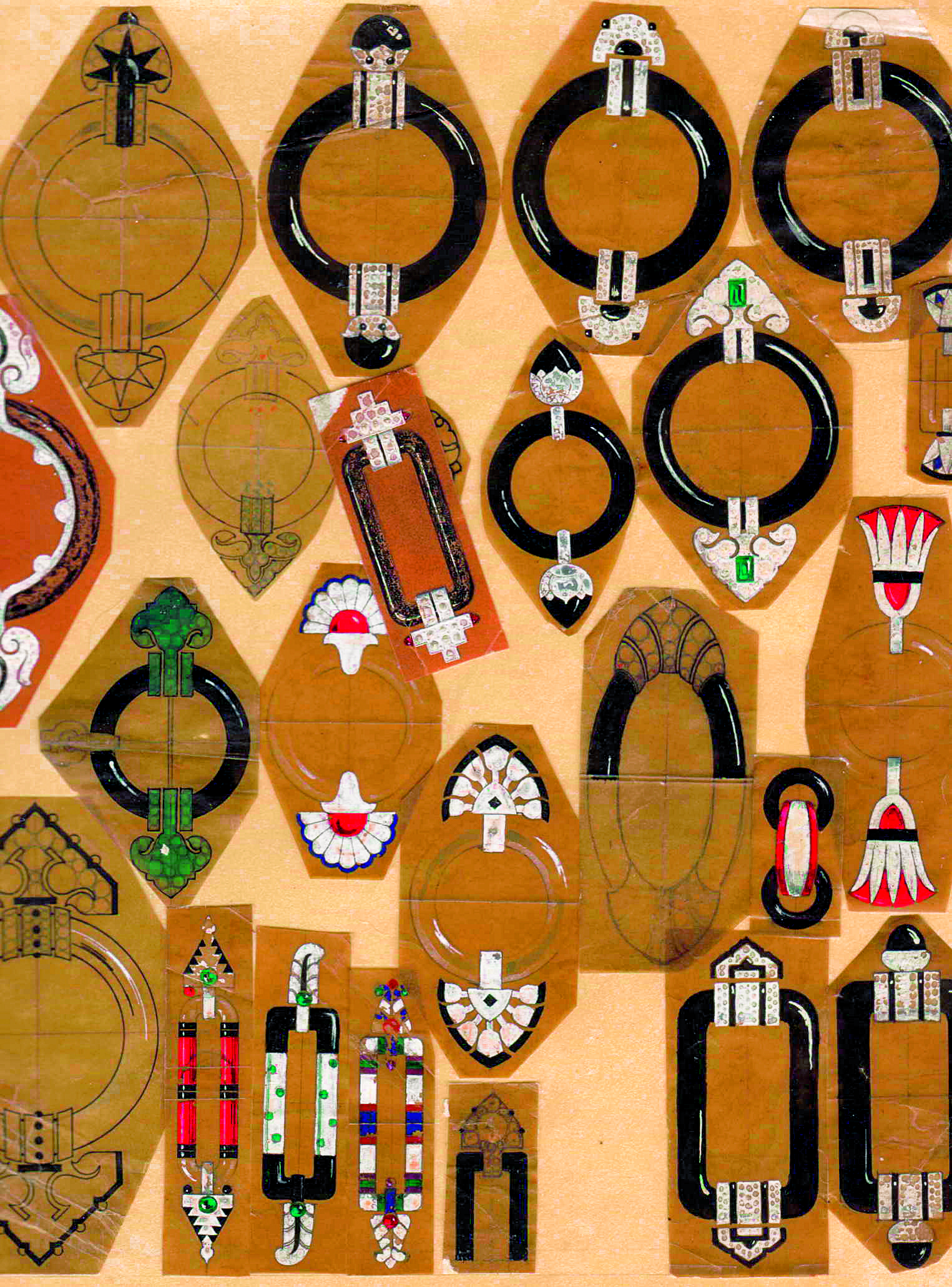
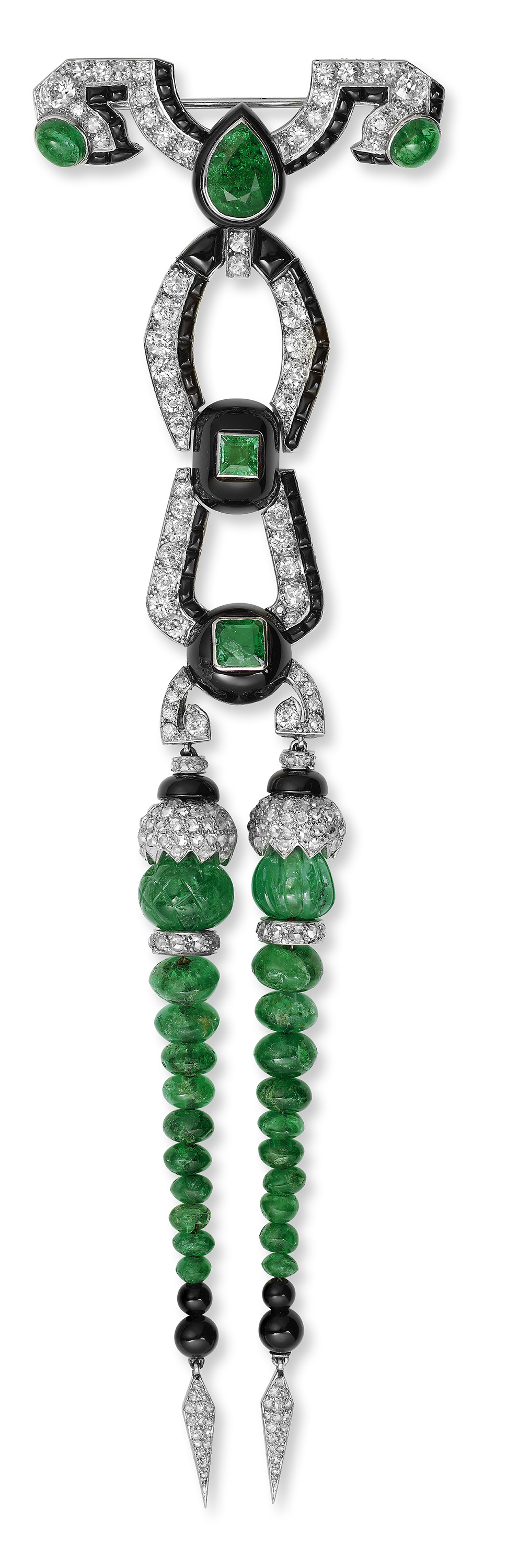
Playing on the contrast between shadow and light, onyx embodies the Maison’s attraction to clean lines and the art of refined simplicity. The stone adds depth while highlighting the geometrical effects of abstract designs, which exemplified the Modern Style and were precursors of the Art Deco era.
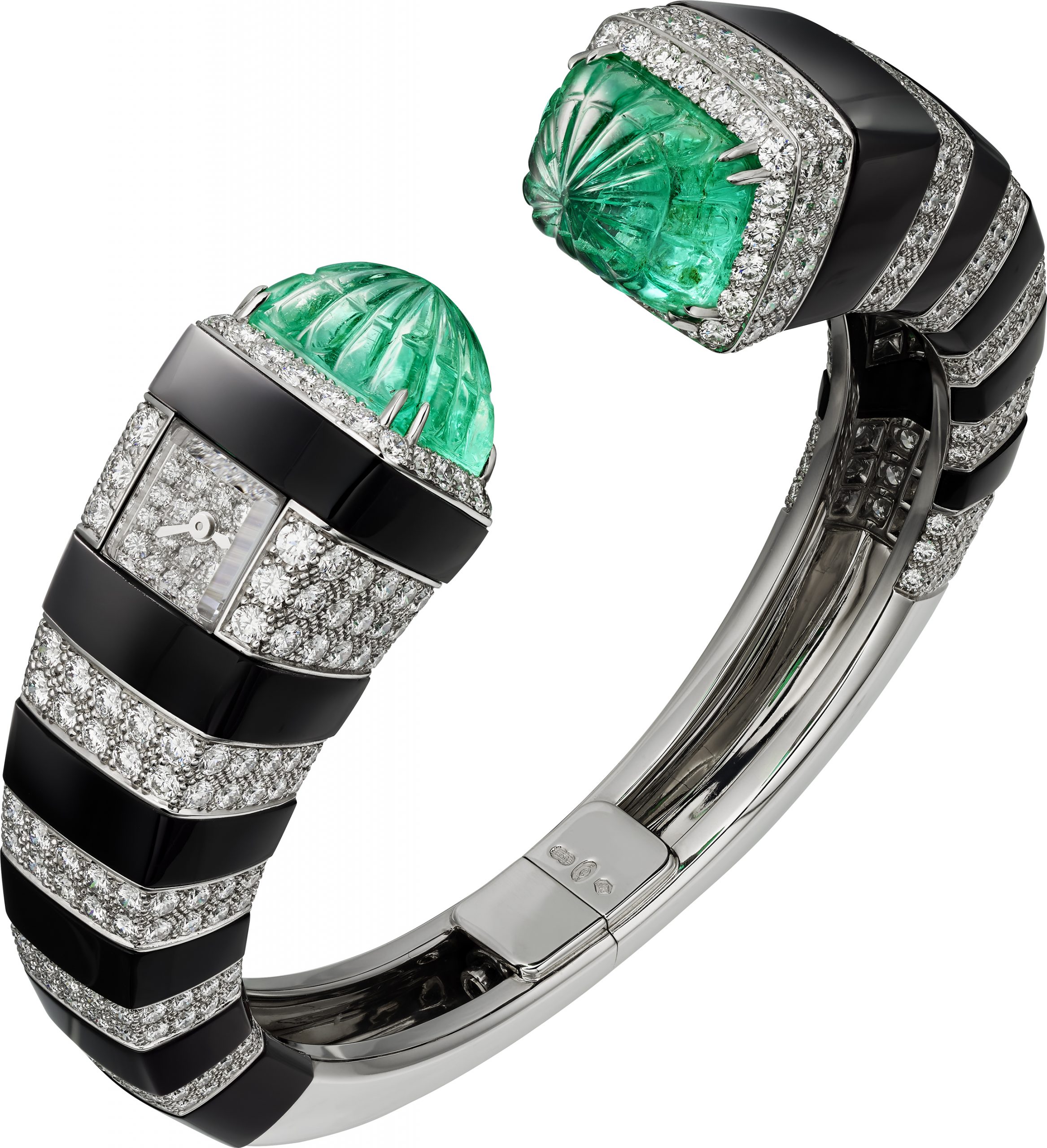
During this same period, Cartier also explored unprecedented color contrasts. Because it strengthens nuances and magnifies the presence of other stones, onyx is a material of choice. Cartier experimented by blending black with the warm red hue of coral or the intense green of emeralds. In addition to these palette effects, onyx, like a shadow, underscores shapes and separates color, adding depth to the design.
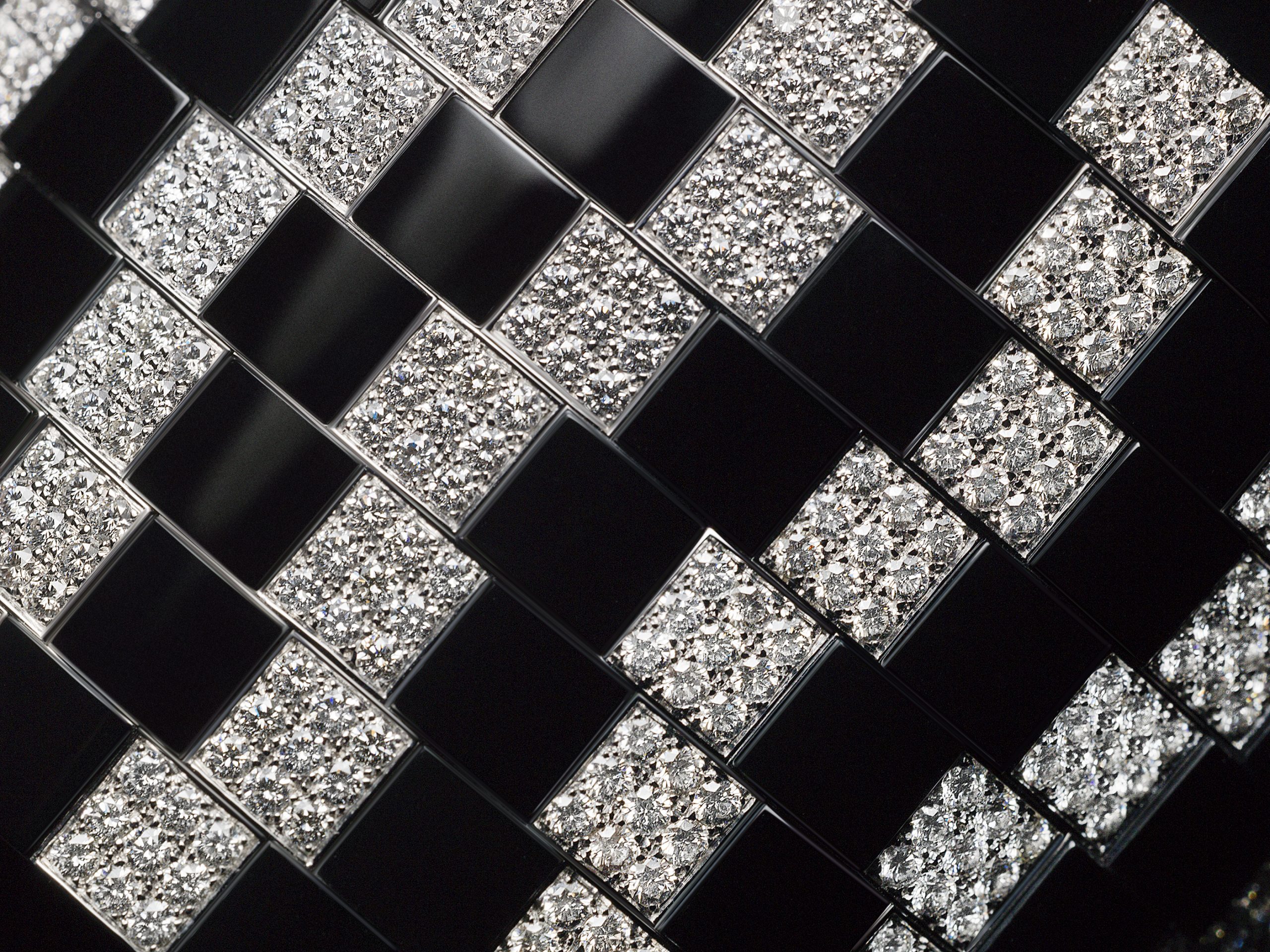
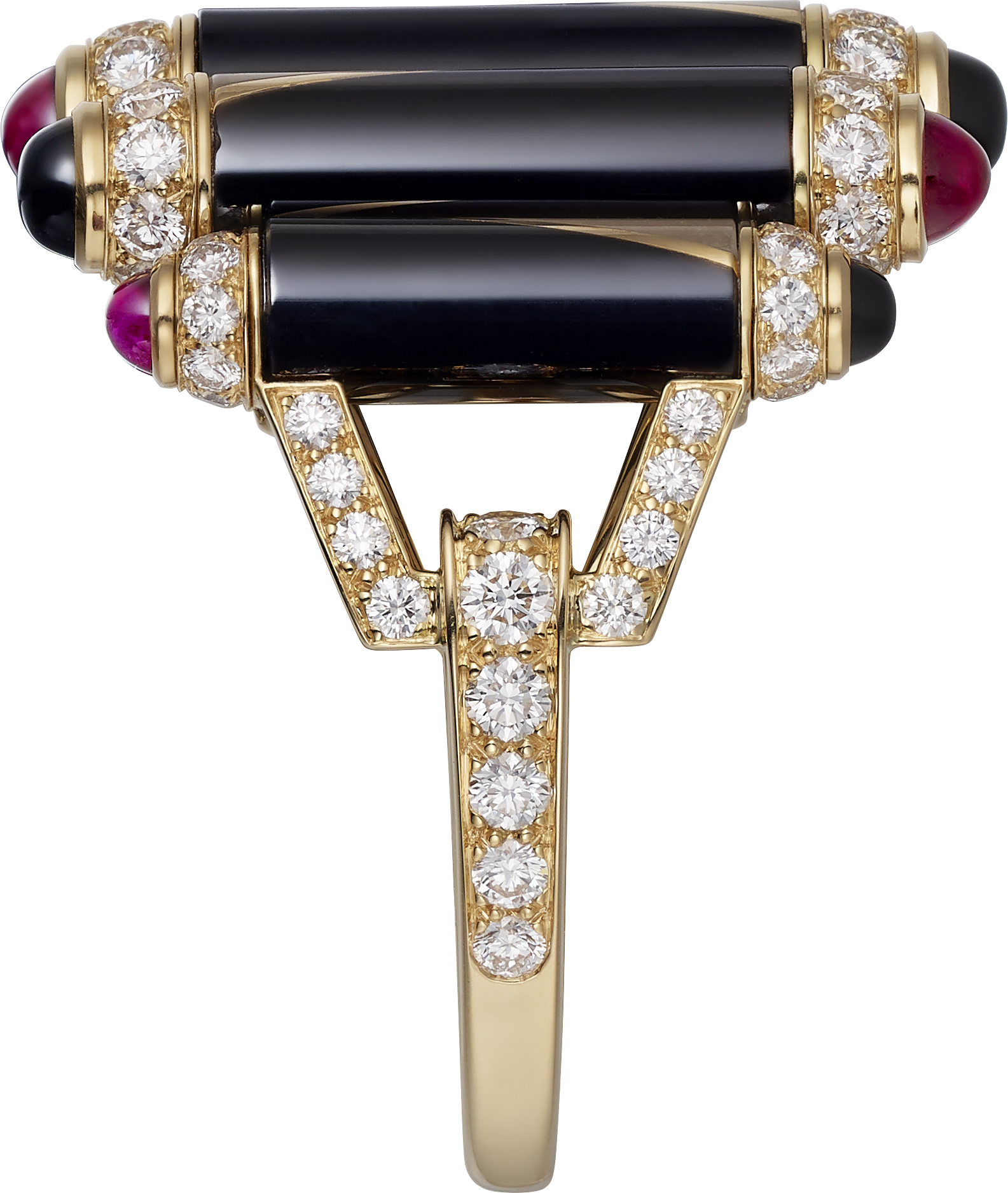
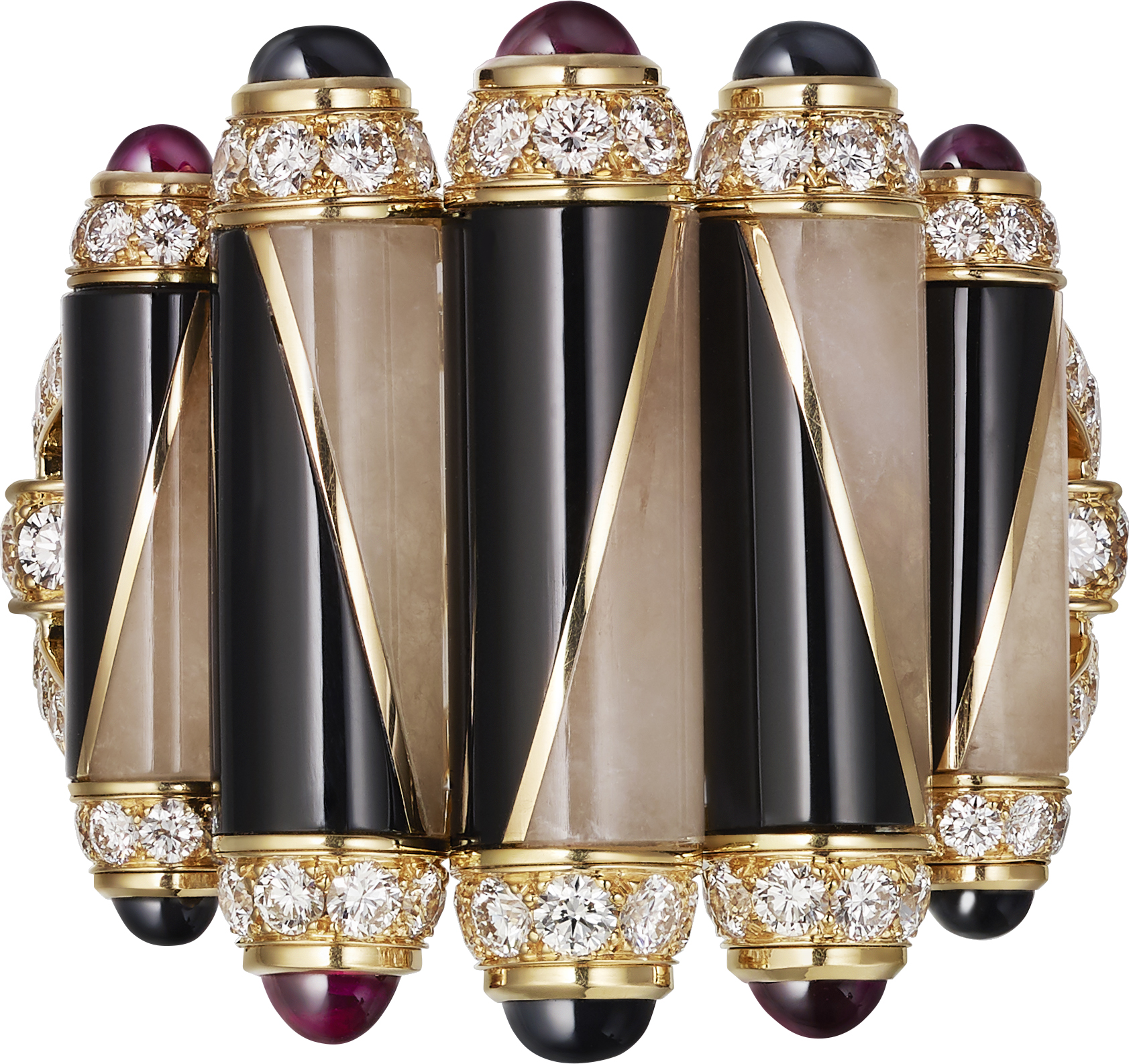
Ever modern, onyx has been showcased since the early 2010s in bold creations which explore the optical effects and codes of kinetic art. The contrast between black and white in particular highlights the tension between graphic lines and echoing effects in a design. Fine lines of onyx outline a play on perspective, injecting energy and even a sense of motion. Almost confusing the eye, these pieces incessantly reveal new facets.