
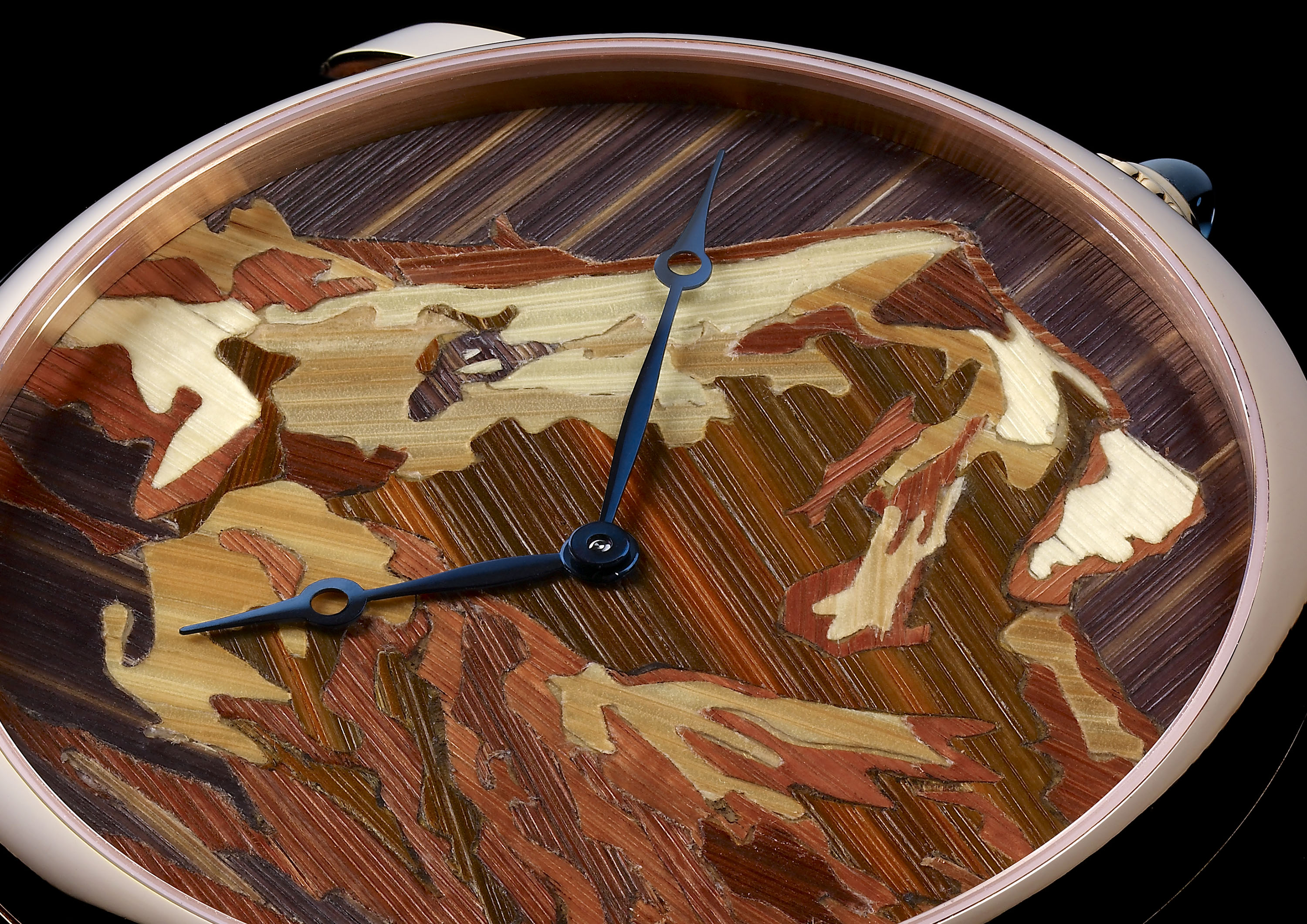
A Far-Eastern craft imported into Europe in the seventeenth century, straw marquetry is an ornamental technique similar to wood marquetry. In recent years Cartier has added it to the precious materials adorning Cartier d’Art watches or glamorous accessories.
Straw marquetry was originally a decorative technique that entailed cutting, dyeing and gluing dry stalks of rye to the flat surfaces of boxes, furniture, screens and decorative panels. In the seventeenth century it was imported from the Far East into Europe—notably England and France—and enjoyed its heyday in the eighteenth century, later going out of fashion for a while. It reappeared in the 1920s when used by French interior decorators André Groult (1884–1966) and Jean-Michel Frank (1895–1941).
More recently, Cartier has employed straw marquetry to adorn watch dials, watch case lids or exceptional clocks.
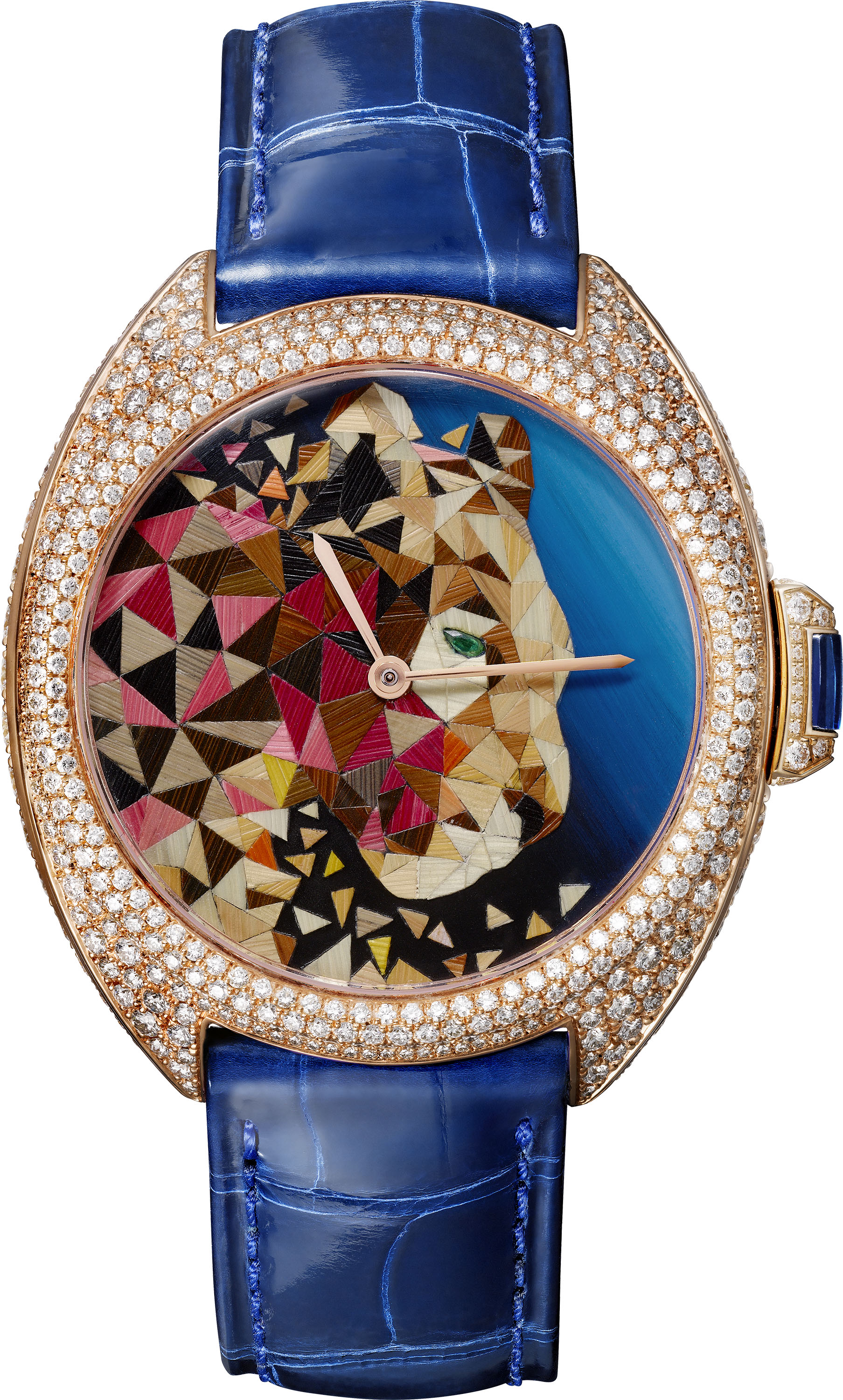
Straw, in its natural state or already dyed, is first of all chosen for its quality, sturdiness and sheen. Split stalk by stalk, it is flattened with a pestle made of bone, then cut with a marquetry saw, and finally assembled in the desired design. Effects of volume and depth are created by meticulously juxtaposing stalks of straw of different sizes and colors.