
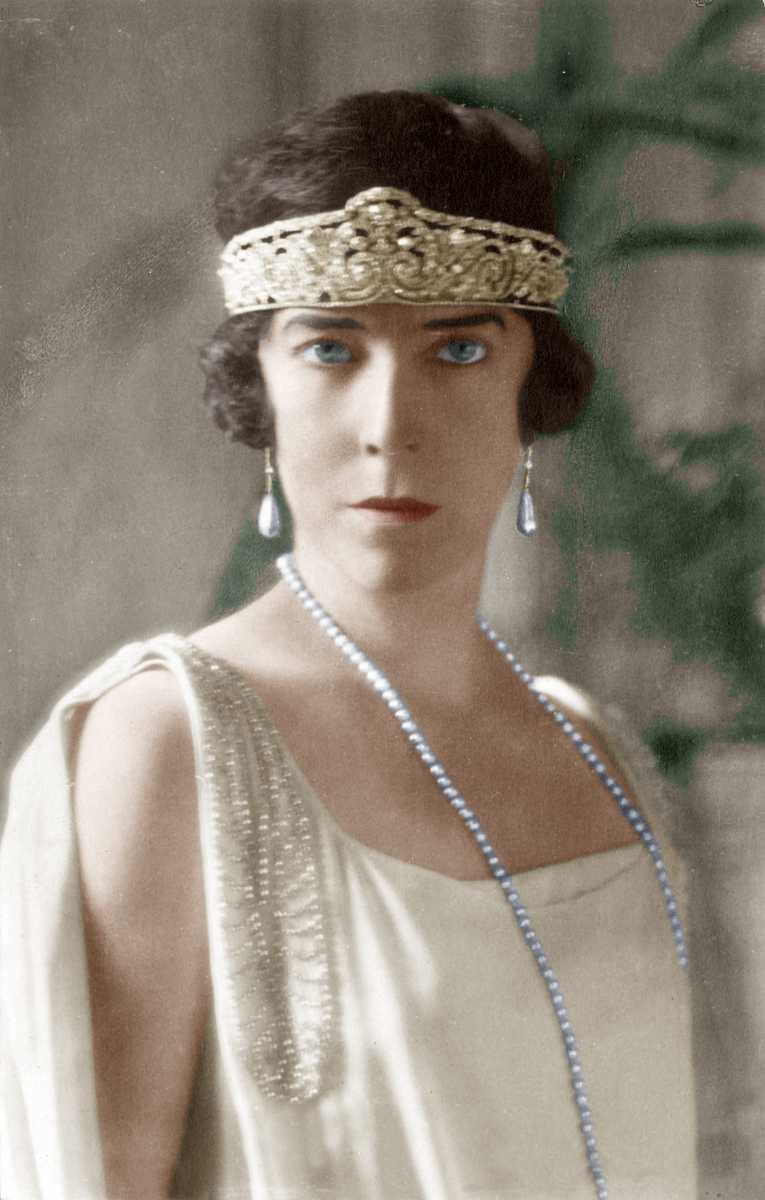
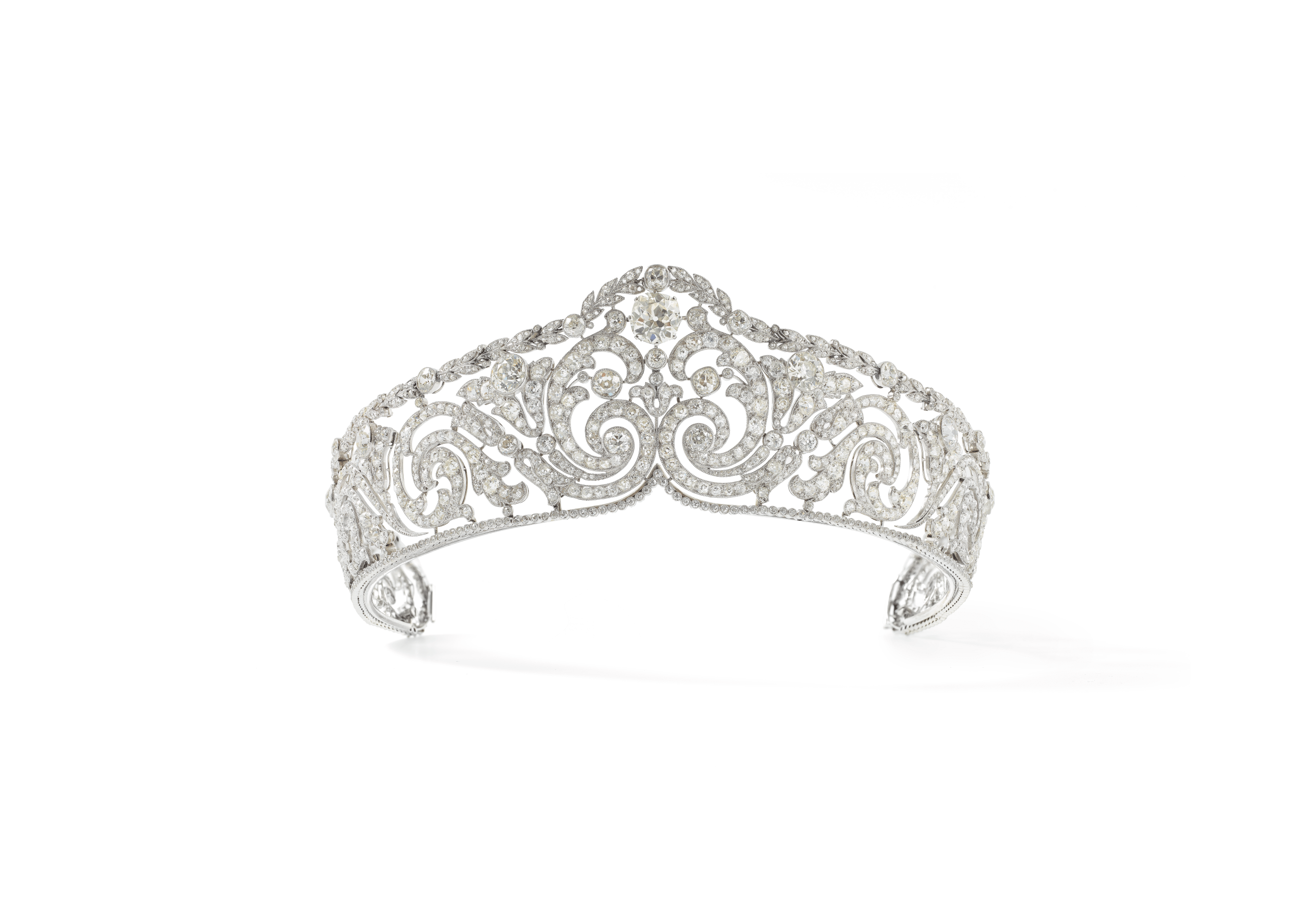
Born duchess in Bavaria, Elisabeth married the heir to the Belgian throne on October 2, 1900. She already had a good deal of jewelry when her husband became king in 1909, but the increasing number of official trips and state visits prompted the purchase of a bandeau and a tiara from Cartier in July 1912. In 1987 the latter was bought for Cartier’s collection of historic pieces.
The youthful years of a future queen
Elisabeth, niece of Austrian Emperor Franz Joseph and his famous wife Sisi (also Elisabeth’s godmother), was born in July 25, 1876 in Possenhofen, on the shore of Lake Starnberg, Bavaria. She was the daughter of Maria José of Braganza, infanta of Portugal (1857–1943) and Duke Karl Theodor of Bavaria (1839–1909). At the funeral of another aunt, the Duchess of Alençon (who died in a fire at the Bazar de La Charité in Paris), Elisabeth met Prince Albert of Belgium, whom she married in Munich three years later. Although the marriage was apparently arranged by the two families, the engaged couple exchanged passionate letters that anticipated a close relationship. Elisabeth moved to Brussels and devoted herself to her adopted country, fulfilling the role assigned to her by the court of her uncle-in-law, King Leopold II.
The couple had three children: Prince Leopold (born 1901), Prince Charles (born 1903), and Princess Marie-José (born 1906).
A royal collection
On becoming queen in 1909, Elisabeth added to the luster of the Belgian court thanks to her taste for the fashions and jewelry of the day.
In 1912 Cartier displayed its jewelry in Brussels. The Queen bought a watch made inside a gold 100-franc coin with a portrait of King Albert, an elegant bandeau featuring nine platinum-set turquoises on a diamond-shape ground, and a garland-style scrollwork tiara of platinum acanthus leaves with, in the center, a 5.84-carat cushion-shaped diamond.
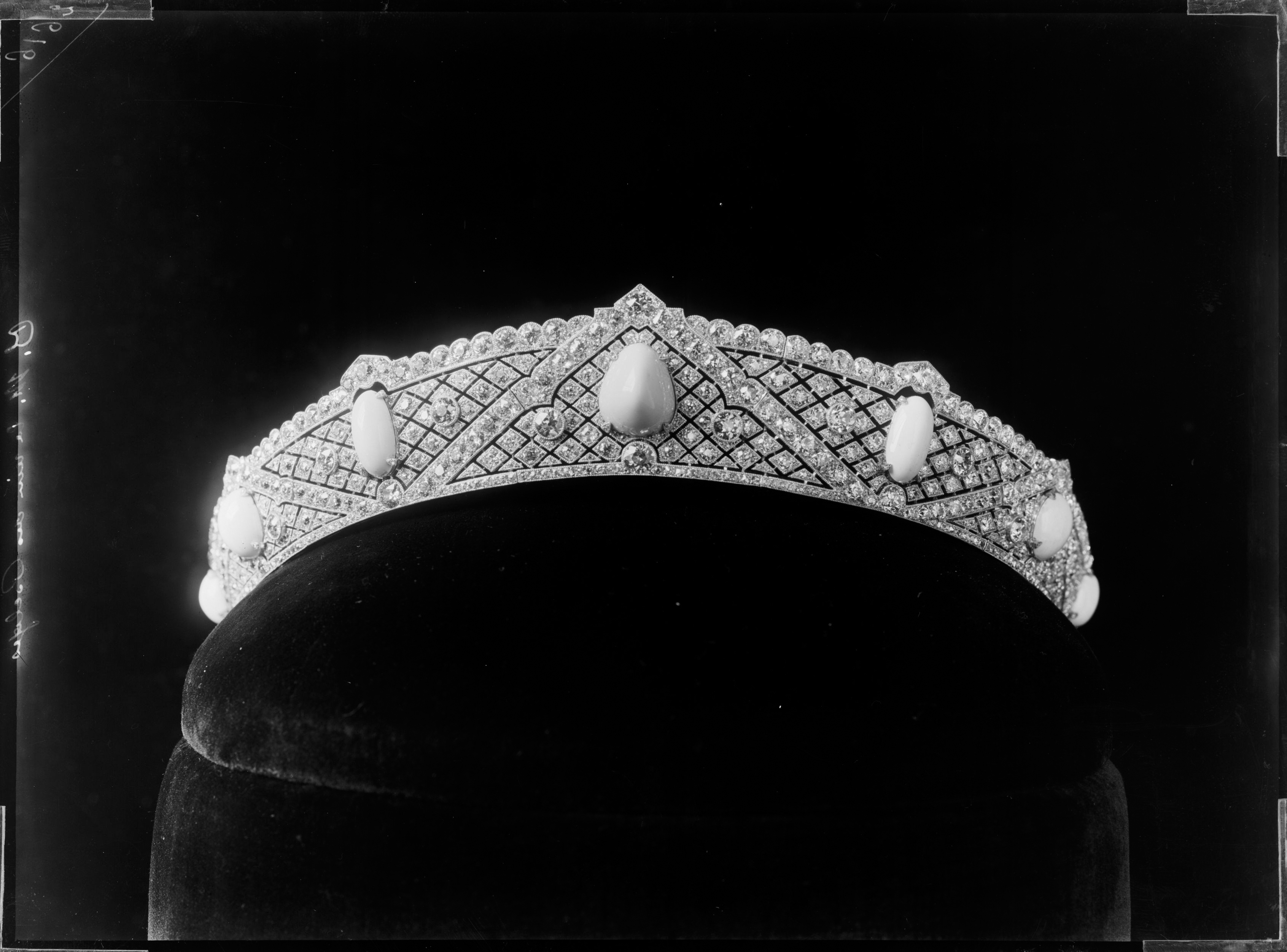
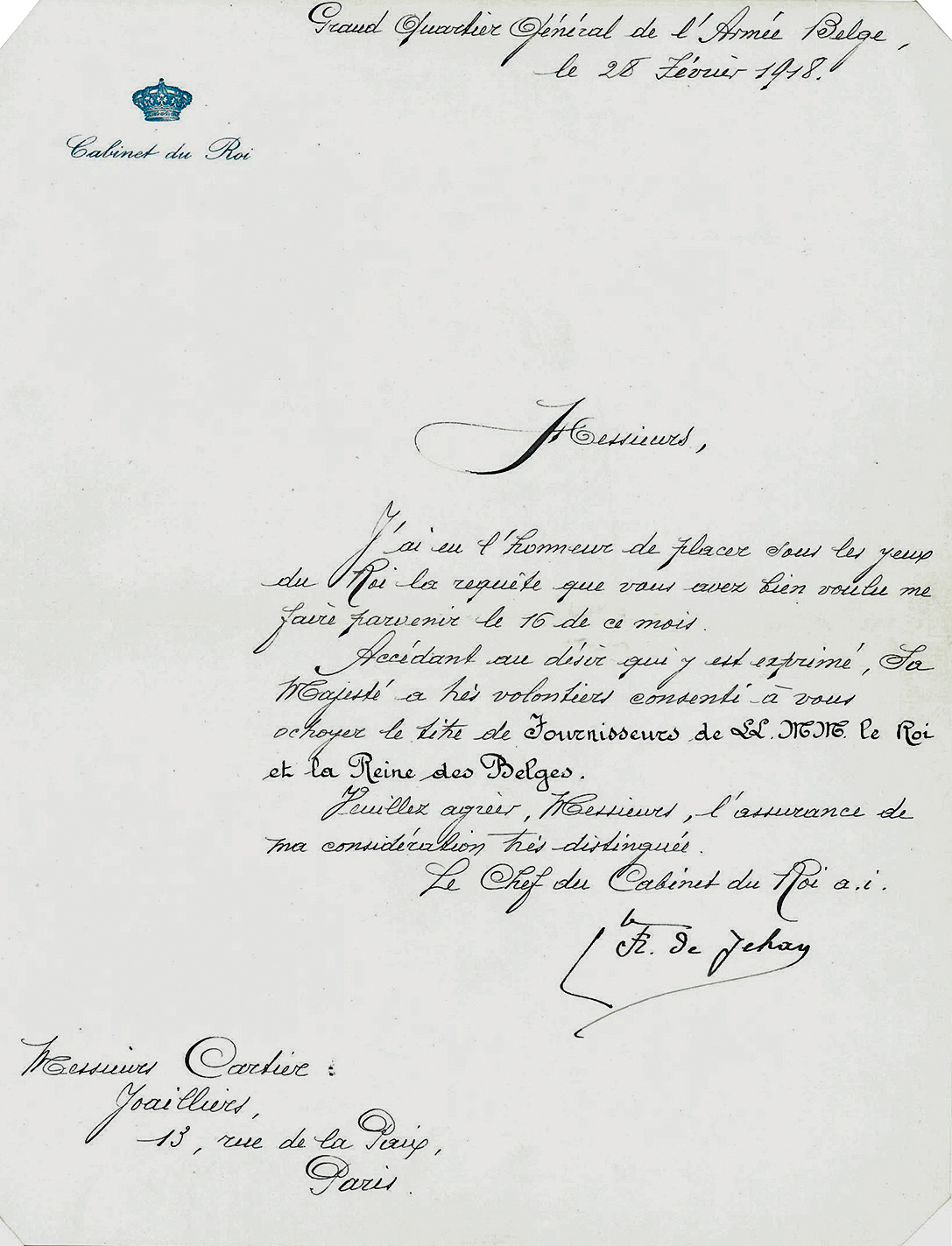
Although the bandeau was worn only once—for a visit by the King and Queen of Italy in 1919—the tiara was often seen at official receptions as late as 1960. The royal couple granted a warrant of official supplier to Cartier in 1919.
A woman of commitment and cultivation
When World War I broke out, German-born Elisabeth unequivocally chose the Belgian side. Not only did she refuse to go into exile, but she decided to stand by her husband in opposing the Germans, thereby embodying resistance to the enemy in deed as well as in the public mind for many years afterward. She was involved in founding hospitals, spurring the legend of the nurse-queen. At the end of the war the king and queen were wreathed in glory and celebrated throughout the world.

Elisabeth had many interests and cultivated her passion for music. For that matter, along with Belgian violinist Eugène Ysaÿe, she helped to found the famous international music contest now called the Queen Elisabeth Competition. She also showed a keen interest in medicine, scientific progress, archaeology, and history in general. She was thus the first celebrity to go to Egypt to see the tomb of Tutankhamen, which head just been opened in November 1922. On returning to Belgium, she supported the establishment of a foundation of Egyptology that still exists today under the name of the Association Égyptologique Reine Élisabeth.
Unusually for her day, the Queen sculpted, painted, skated, skied, climbed and swam in the lakes of the grounds of the royal palace of Laeken, when she wasn’t learning to pilot an airplane. Her acquaintances notably included aviator Amelia Earhart, doctor Albert Schweitzer, scientist Albert Einstein, Princess Marie Bonaparte, artist Jean Cocteau and musician Yehudi Menuhin.
Widowed in 1934, Elisabeth did not flee the German invader during World War II, and she even managed to save Jewish children and families, for which she was named one of the Righteous Among Nations on May 18, 1965.
As she grew older, Elisabeth thumbed her nose at the political world by traveling to China, Poland and the Soviet Union during the cold war, earning this non-conformist royal the nickname of the “red Queen.”
Queen Elisabeth died on November 23, 1965.