

Digvijaysinhji (1895–1966) succeeded his uncle Ranjitsinhji to the throne of the Indian state of Nawanagar, and like his uncle, he commissioned some spectacular pieces of jewelry from Cartier, which rank among the most famous in history.
Digvijaysinhji was born on September 18, 1895. After a childhood in India, he was sent to England, like many of his peers, to finish his education and learn the ways of the Western world. First he attended Malvern College, and then the prestigious University College London. After graduating in 1919, Digvijaysinhji joined the British army, where he spent over a decade, serving in the Egyptian Expeditionary Force before being promoted to lieutenant in 1921 and eventually reaching the rank of captain in 1929.
In 1933 Digvijaysinhji succeeded his uncle, Ranjitsinhji, as Maharaja of Nawanagar, a wealthy state in the western part of the Indian subcontinent. He pursued the same liberal policies as his predecessor. After India’s independence in 1947, the Maharaja signed the Instrument of Accession to the new Dominions (autonomous states belonging to the British Empire) and agreed to merge the state of Nawanagar with the state of Kathiawar, where he was Governor until 1956.
Digvijaysinhji was a loyal patron of Cartier, as his uncle had been before him. In 1933 he commissioned Cartier to carry out an inventory of Nawanagar’s treasury. A friendship quickly sprang up between him and Jacques Cartier, director of the London branch, and the Maharaja regularly invited Jacques to vacation at his residence in Ireland. In return, the jeweler hosted Digvijaysinhji at home in Dorking, Surrey, on his visit to Britain for King George VI’s coronation in 1937.
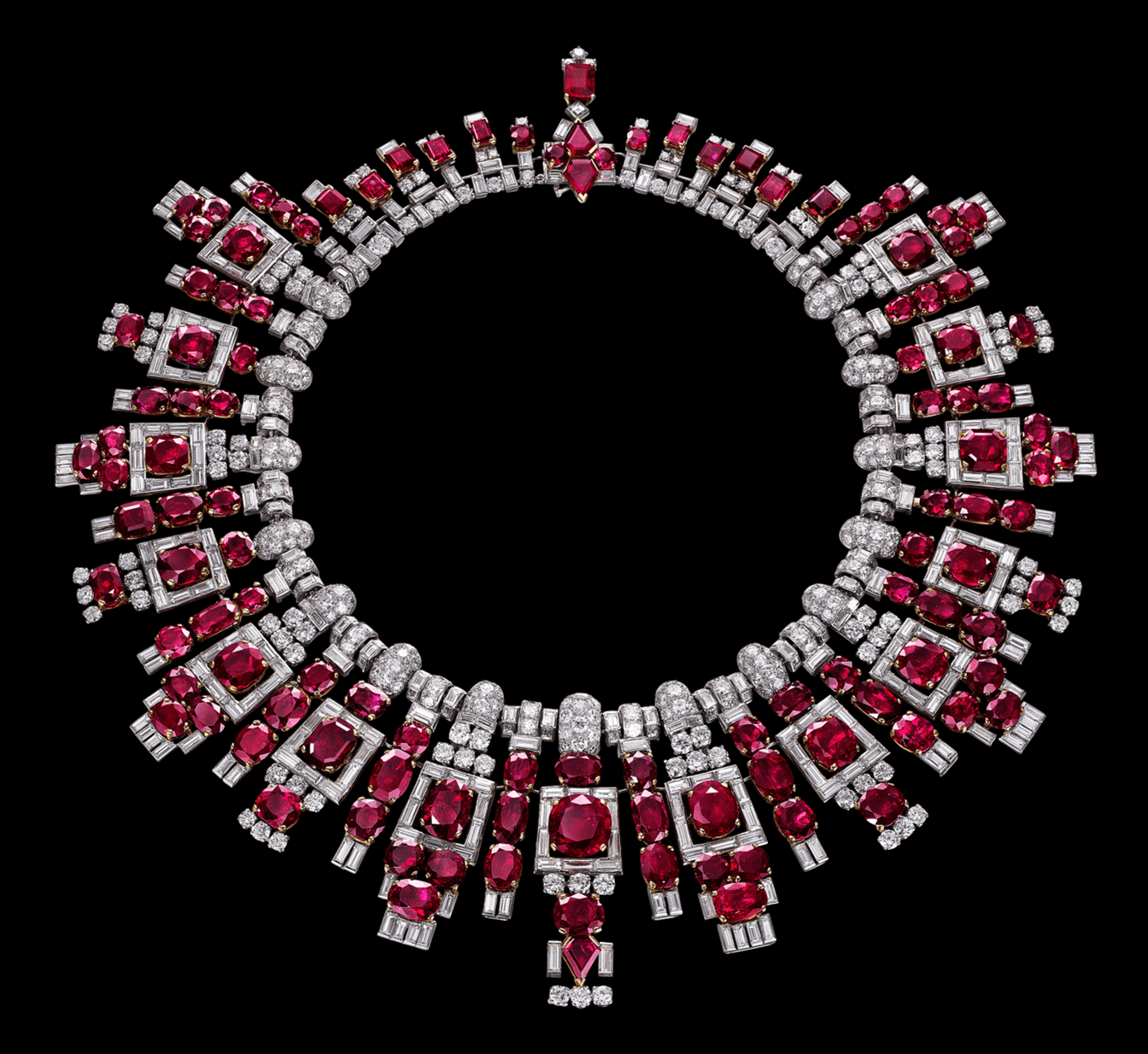
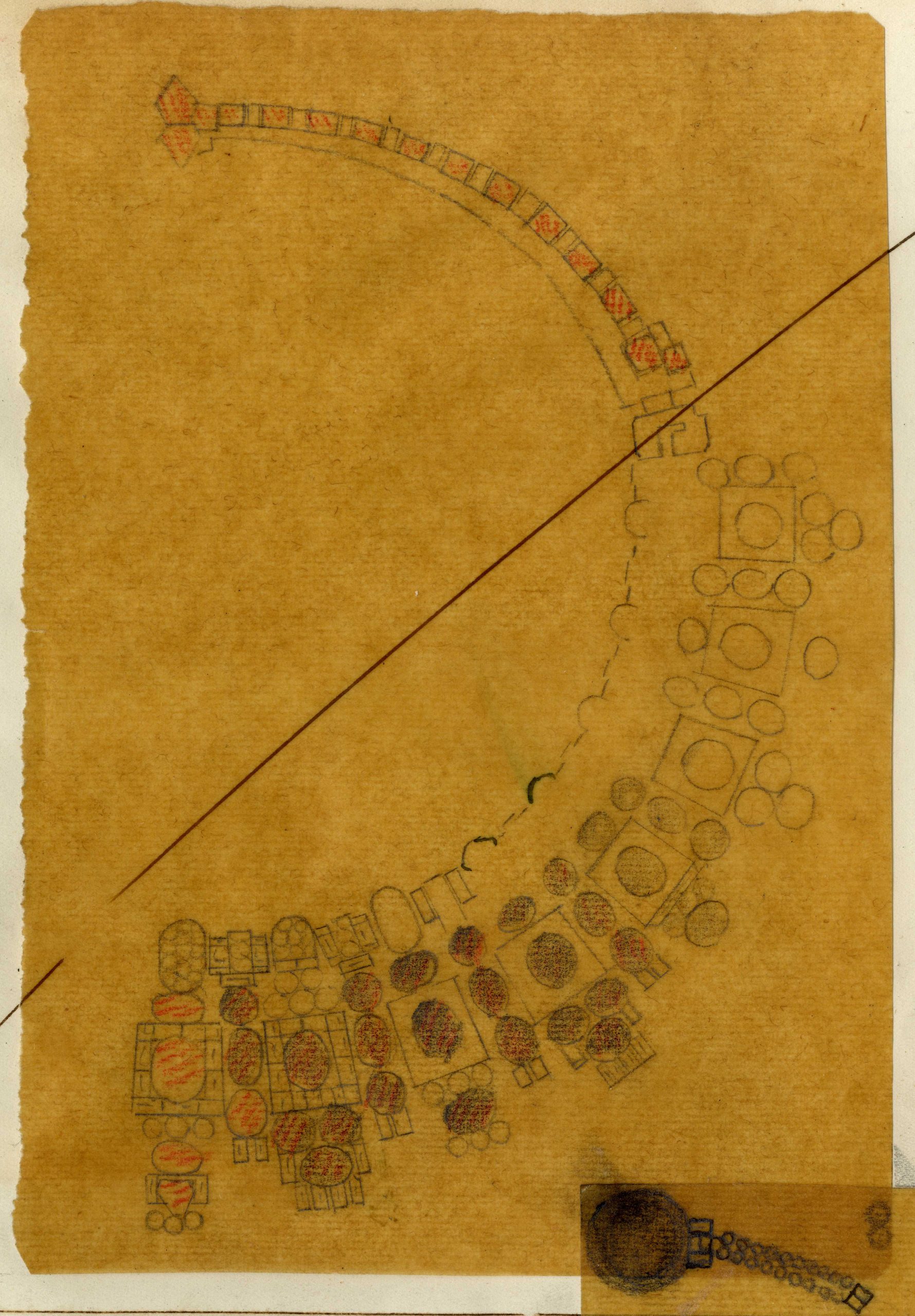
The Maharaja commissioned a series of lavish jewels from Cartier, which rank among the finest in the annals of high jewelry. In 1937 Cartier created a platinum and diamond necklace made to order for him, showcasing an exceptional group of rubies from Burma held in the Nawanagar treasury. This dazzling piece perfectly illustrates the stylistic encounter between Cartier and India: while its opulence is true to traditional Indian jewelry, it adopts the geometrical lines so characteristic of Art Deco design.
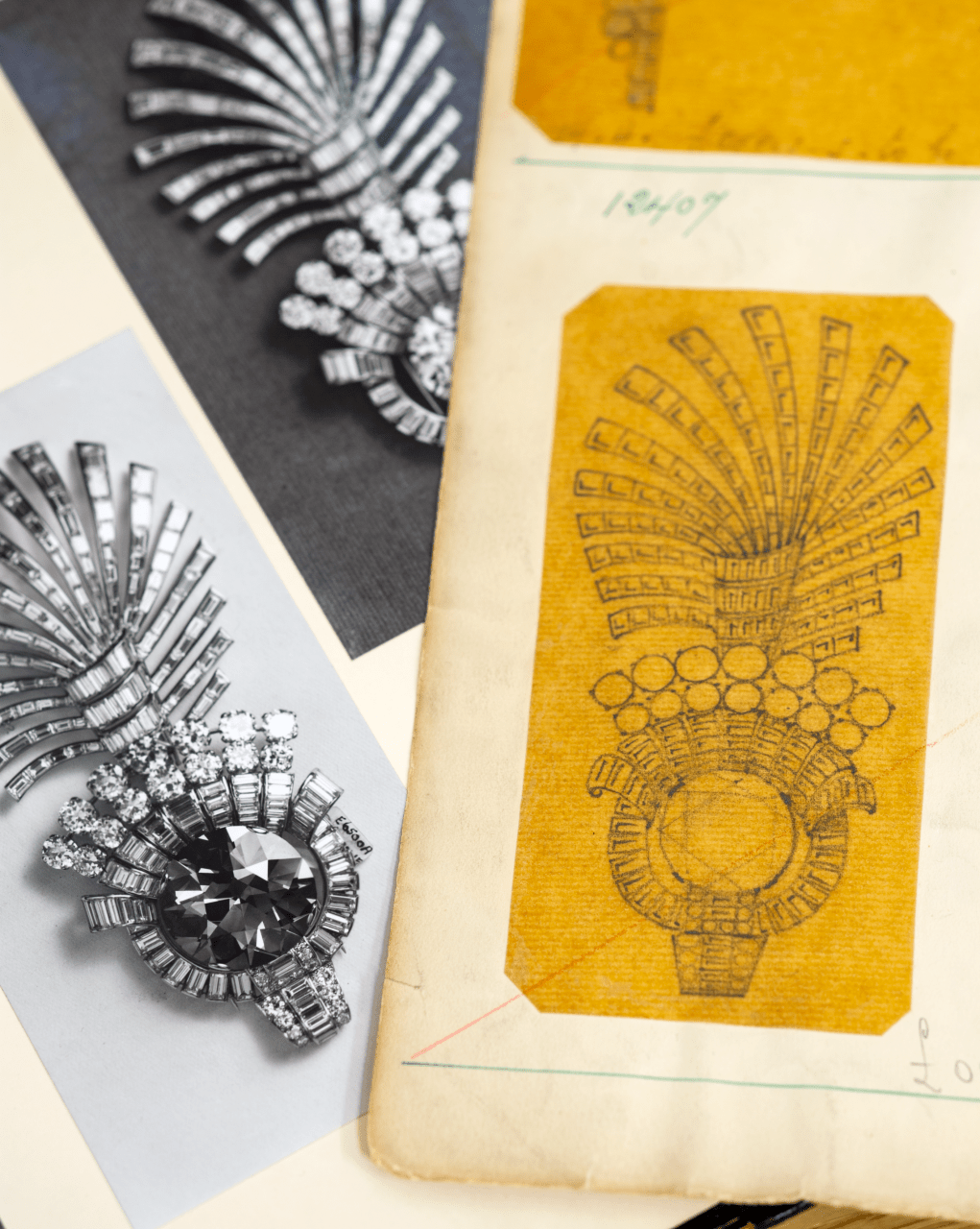
Digvijaysinhji also purchased a turban brooch from Cartier London in 1937. The design took the shape of a plume, in a modern, geometrical adaptation of a traditional Indian jewelry form. Set with baguette-cut diamonds, the piece centered around a stunning 61.50-carat brown diamond with golden highlights, known as the Tiger’s Eye. The Maharaja wore it on his turban on many occasions, sometimes trimming it with real egret feathers.
These are just two pieces among many other examples that are now held in a private collection. They are regularly displayed in exhibitions about India or Art Deco jewelry at leading international museums.