
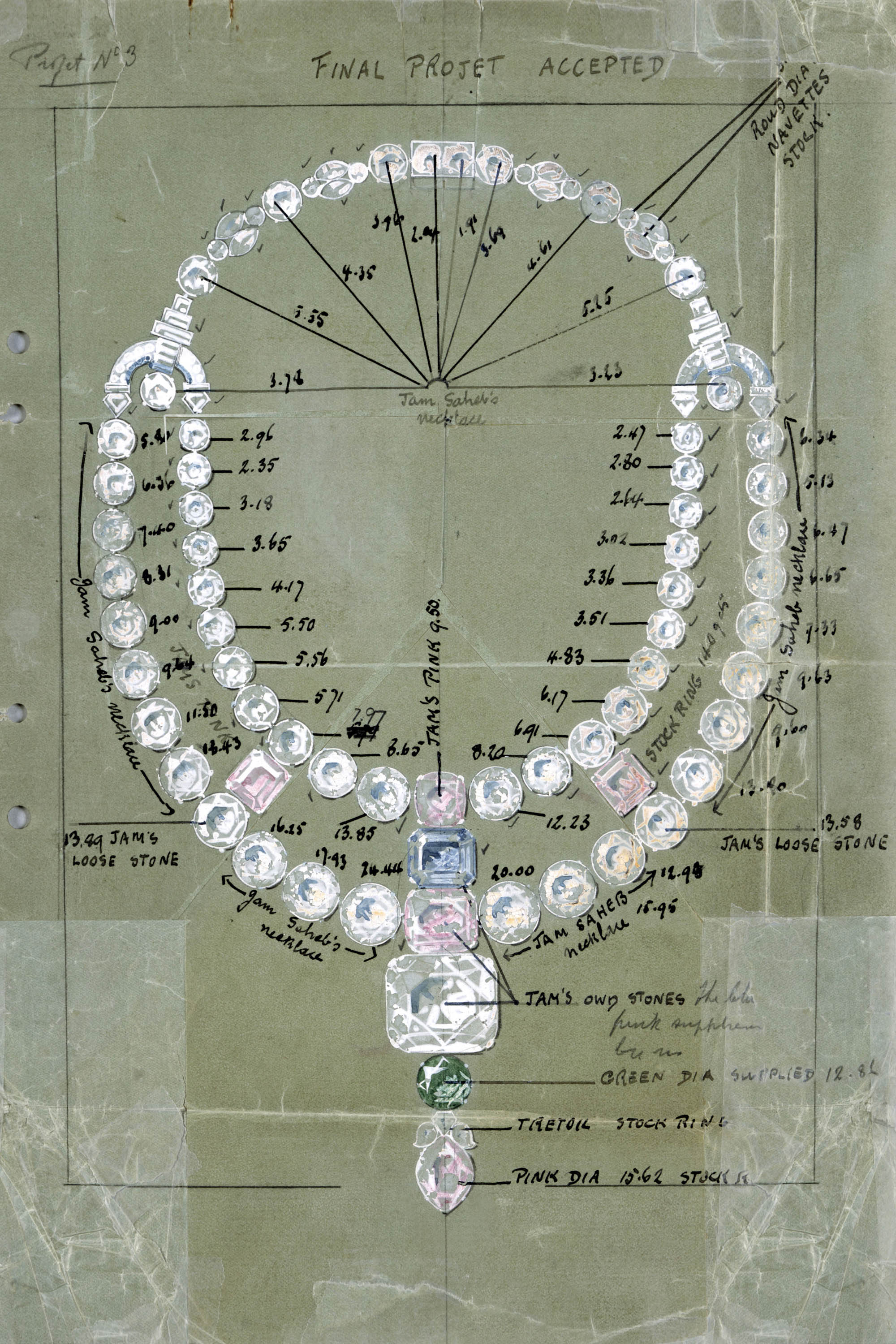
Weighing an impressive 136.32 carats, the elegantly rectangular Ranjitsinhji diamond is certainly an exceptional gem. It is named after its owner, the Maharajah of Nawanagar, who gave it to Cartier around 1930 to set in a magnificent necklace of colored diamonds, probably one of the Maison’s most spectacular pieces.
In early 1930, Ranjitsinhji Vibhaji, Maharajah of Nawanagar turned to Jacques Cartier, head of the Maison’s London branch.
He entrusted Cartier with an amazing 136.32-carat colorless diamond with bluish highlights, which he wished to set in a worthy design. Jacques, who already held a 9.50-carat pink diamond belonging to the maharajah, came up with the bold idea of designing a necklace around a series of colored diamonds. The Indian prince so liked the idea that he supplied two additional diamonds—one pink, one sky-blue—that Cartier notably complemented with a very rare olive-green diamond and an old-cut pink diamond.
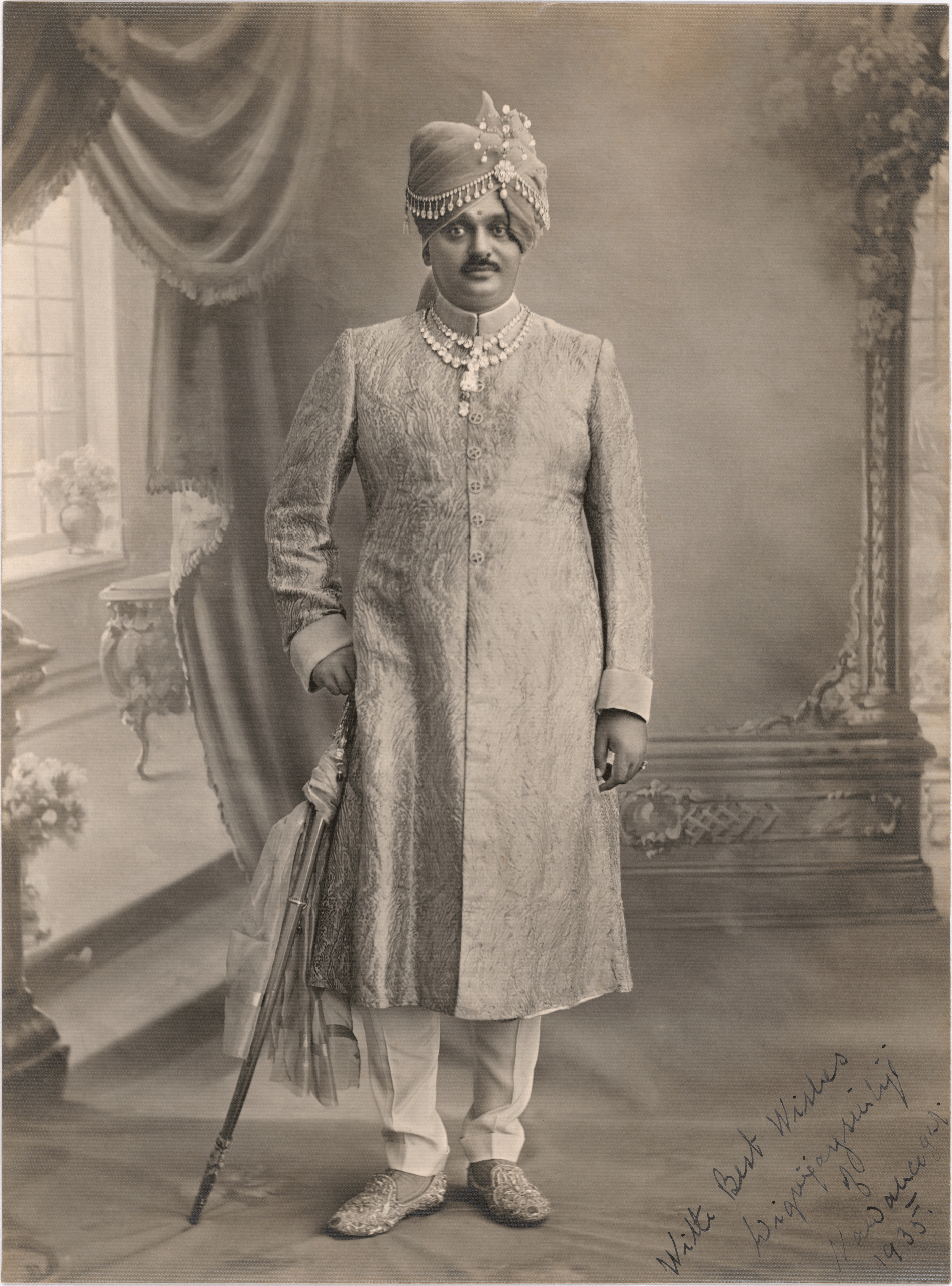
The resulting necklace consisted of two strands of colorless diamonds linked at the sides by two pink diamonds, while the center featured a cascade of five colored diamonds to which the 136.32-carat diamond was added as a pendant.
A few years later, in letter addressed to the maharajah’s successor, Jacques Cartier recounted the history of this outstanding diamond and proposed to name it the Ranjitsinhji diamond in honor of the deceased monarch. According to available information, the stone was discovered in the same South African mine as the Cullinan diamond, and was apparently recut in Amsterdam in 1913. First sold to a private collector and then to a French jeweler, the diamond was finally bought in 1928 by Ranjitsinhji Vibhaji, Maharajah of Nawanagar.