

Colored sapphires span a multitude of shades in the spectrum, from yellow, orange, pink, or purple through green, and even black.
- Gemological family: corundum
- Chemical composition: aluminium oxide with trace amounts of other elements substituting for the aluminium in the corundum structure. Depending on the color of the stone, these are iron (yellow), iron and titanium (yellow, green), chromium (pink, purplish, orange) or beryllium (orange).
- Colors: colorless, violet, purple, green, yellow, orange, pink, orangey-pink, black, etc.
- Hardness: 9 (Mohs scale)
- Renowned sources of provenance: Ceylon, Madagascar, Tanzania
Sapphires and colored sapphires
The term “sapphire” used on its own without an adjective denotes blue corundum. Red or pinkish-red corundum stones are called rubies; hence the designation “colored sapphire” only refers to sapphires that are neither blue nor red. Also known as fancy sapphires, these stones take an adjective of color before the word “sapphire” to describe them, for instance yellow sapphire.
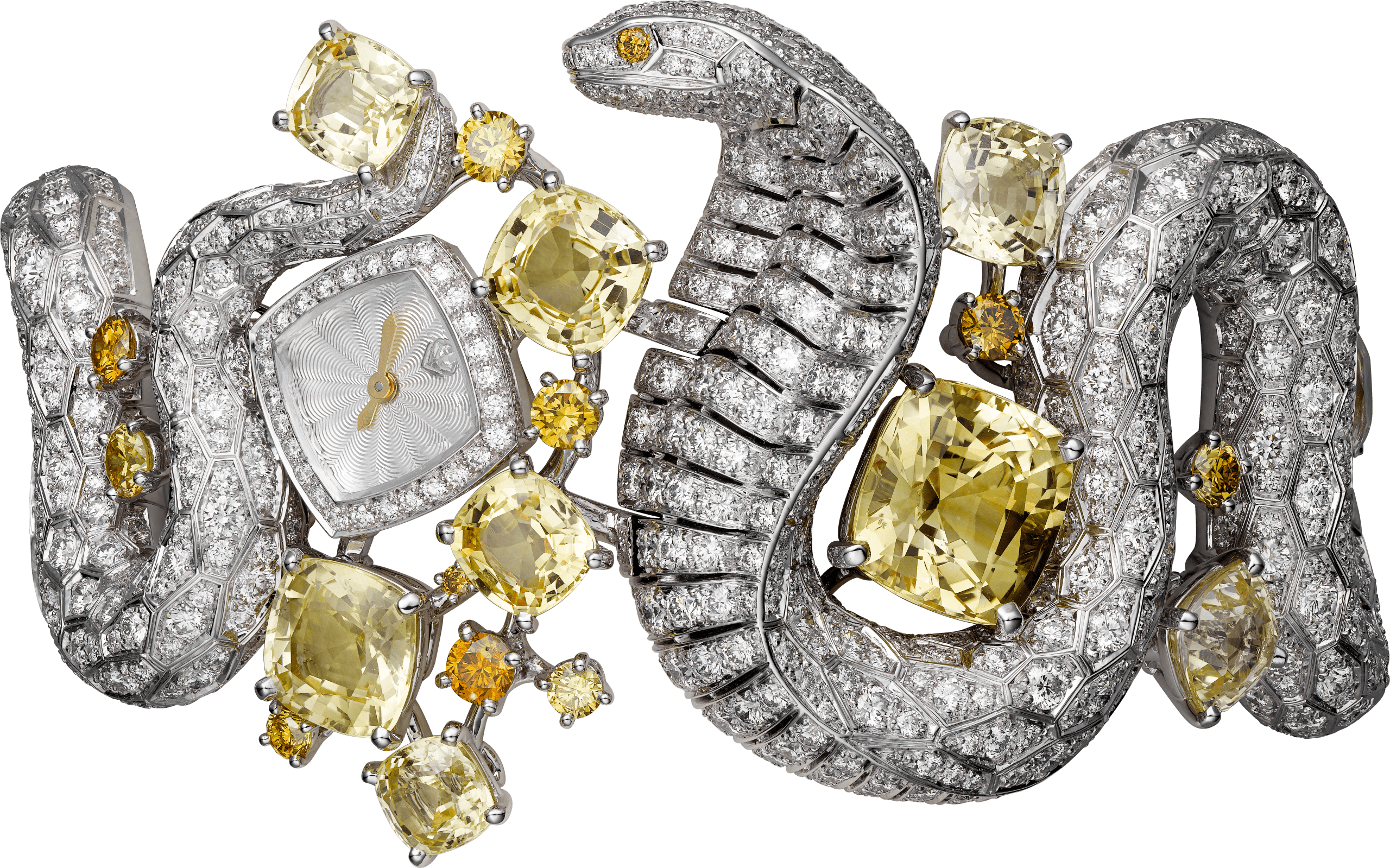
The different varieties are defined by their hues, such as pink sapphire, yellow sapphire, green sapphire, purple sapphire, or color change sapphire. Pink sapphires are the most sought-after, following padparadschas. Specimens weighing over 15 carats are very rarely found. Yellow sapphires are also especially prized when their color veers toward a golden hue.
Corundum boasts a very high hardness (the hardest, after diamond). This, along with its relatively limited amount of inclusions, makes colored sapphires much valued for their brilliance and the beauty of their colors.
Padparadscha sapphires
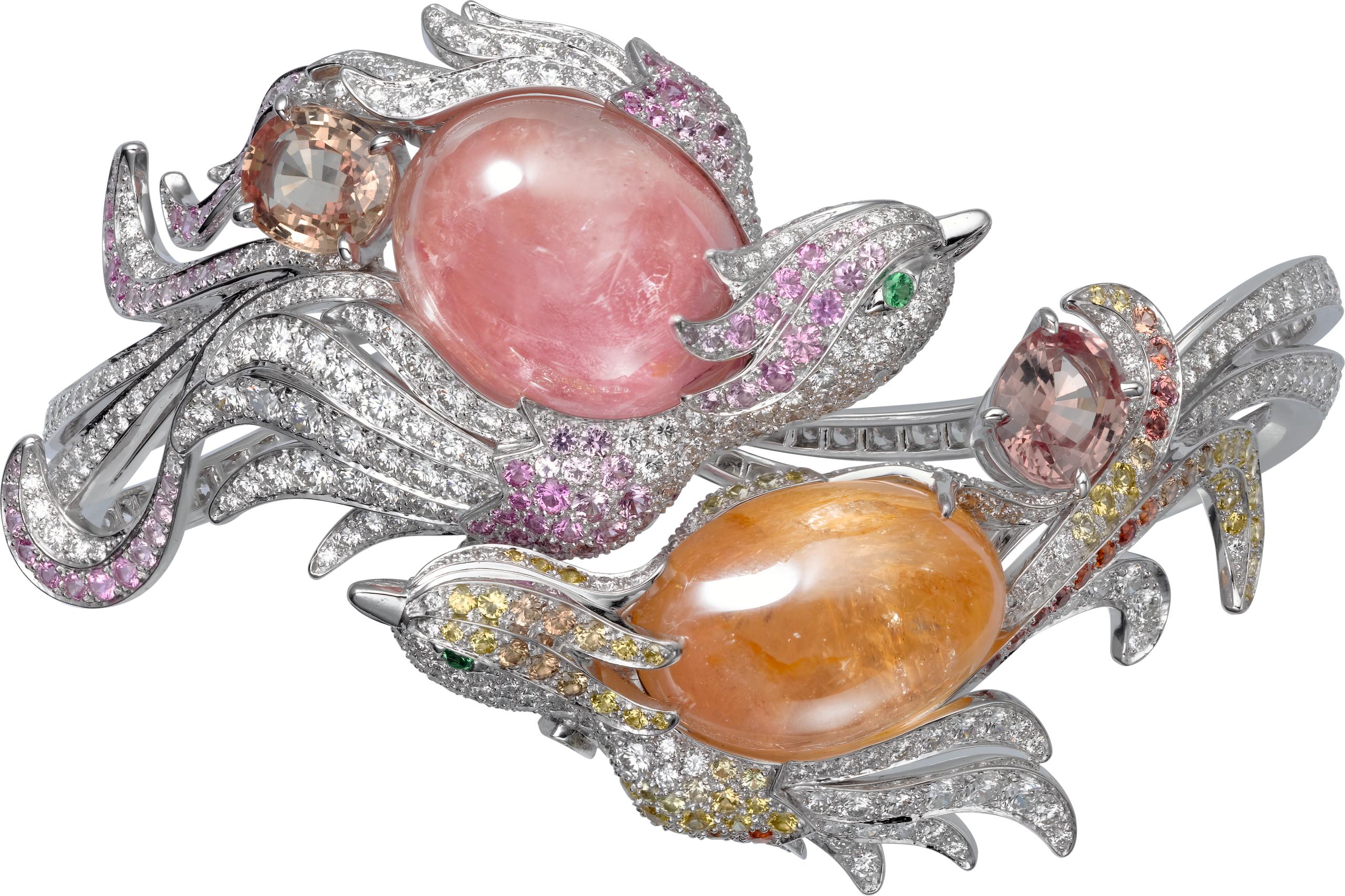
The name padparadscha stems from the Sanskrit word padmaraga, which describes the color of the lotus flower. In jewelry, the term is used to designate sapphires whose color combines delicate shades of pink and orange, ranging from pinkish orange to orangey pink, in varying degrees of color intensity.
It was long considered an appellation that could only apply to stones from Sri Lanka, but now it is attributed to stones of any origin, including Madagascar, Tanzania, or Vietnam.
The rarity and beauty of its color makes padparadscha very probably the most sought-after variety of colored sapphire, and one of the most highly prized gemstones overall. Any good padparadscha above 10 carats can be considered a rare stone. The American Museum of Natural History in New York has a magnificent specimen on display that weighs just over 100 carats.
Deposits
Colored sapphires are rarely mined directly from the rocks where they crystallized, known as primary deposits. They are mainly mined in the secondary deposits that form through weathering when the primary deposits disintegrate. The stones are carried downslope and eventually accumulate in favorable areas, often forming huge placers (gem-bearing river gravels).
Sri Lanka (Ceylon)
The renown of Sri Lanka’s deposits stretches back to Antiquity, when they were already being mined. Its Ratnapura and Elahera gem fields yield excellent quality sapphires of every color, including padparadschas, which were first discovered in this part of the world. Sri Lanka’s colored sapphires tend to have a strong color and are often used in polychrome compositions where each hue enhances the others. Their crystals can be large and clear, giving these stones singular brilliance.
Madagascar
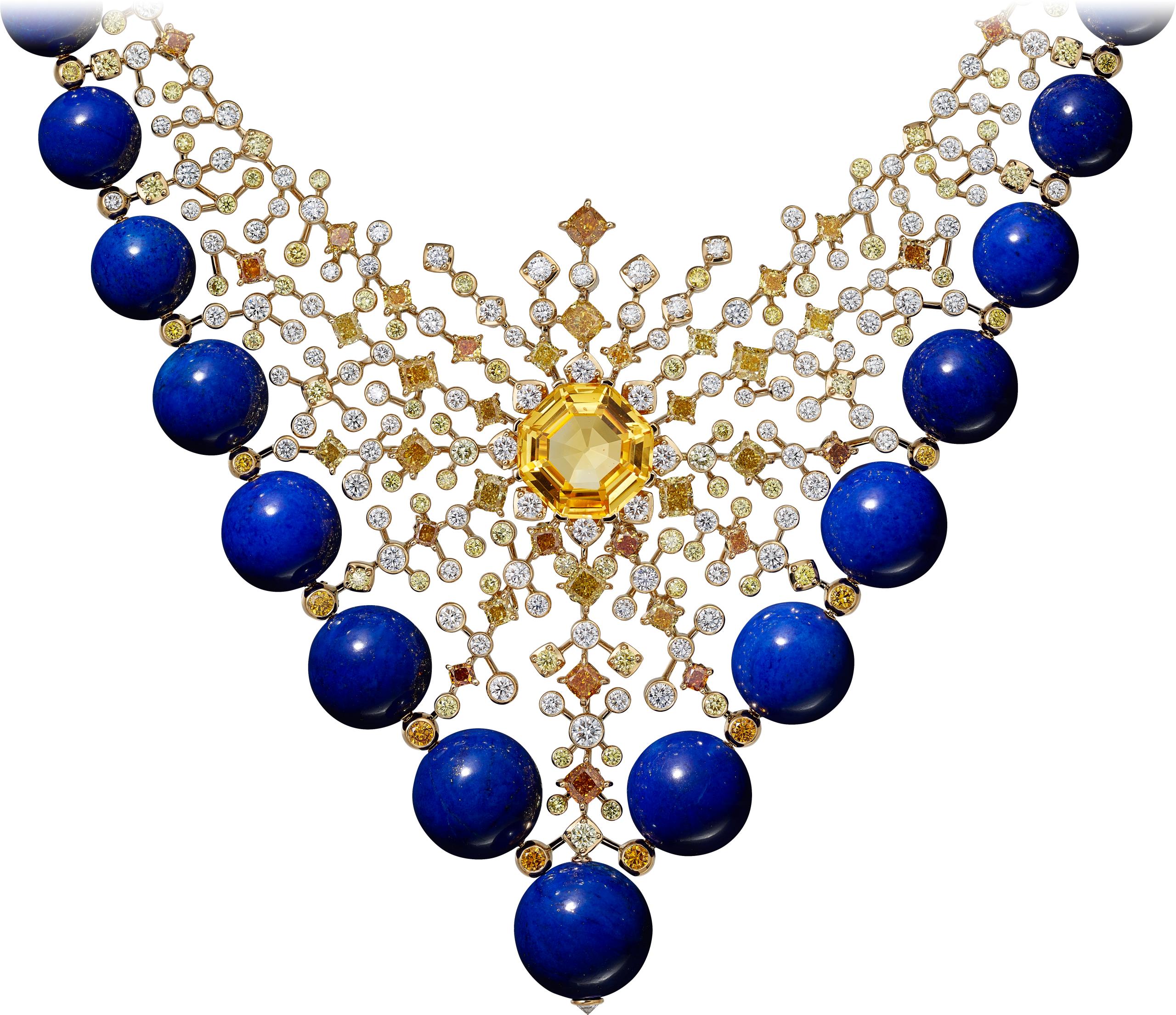
Ever since alluvial placer deposits were discovered (or rediscovered) in Madagascar in the 1990s, the numerous gem fields all over the country have elevated it alongside Australia as the world's leading producer of yellow, pink and violet sapphires. The colors are often soft and subtle. Stones are of medium size, rarely exceeding 10 carats.
Tanzania, Umba sapphires
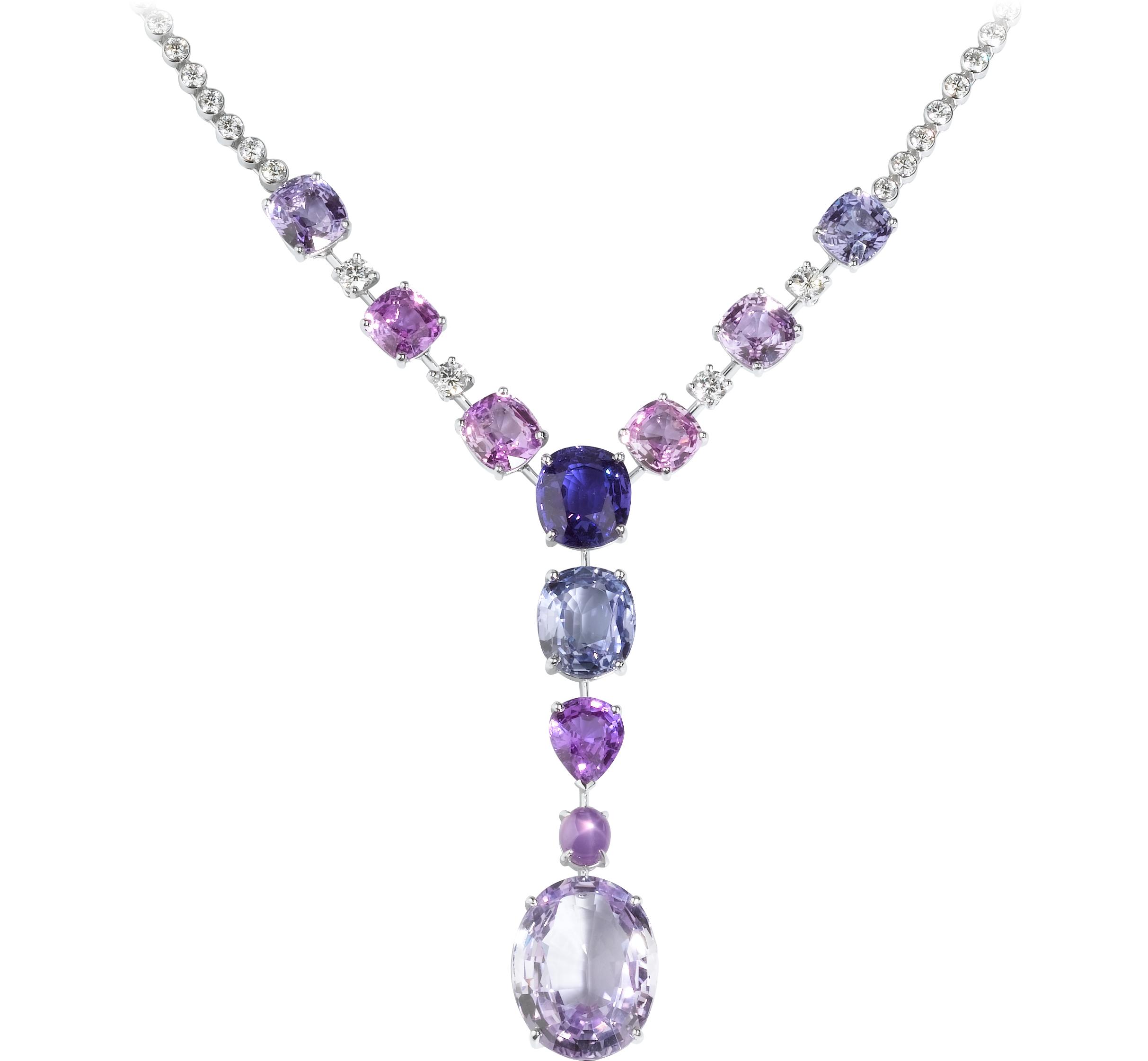
Colored sapphires are also mined in the Umba River Valley in Tanzania, which yields a wide variety of colors, including an “African padparadscha.” These stones are relatively small.
Many other countries – notably Australia, Thailand, and Greenland – produce colored sapphires in qualities that Cartier does not employ.
Special optical phenomena
Color change sapphires
Sometimes a stone's color can vary significantly depending on whether it is viewed under a natural or incandescent light source. These are known as color change stones.
Colored star sapphires
Cabochon-cut colored sapphires sometimes display six-ray asterism similar to that seen in blue sapphires and rubies (or, more rarely, 12-rayed). Asterism is caused by small needle-like inclusions of minerals such as rutile or hematite that got trapped during the corundum's formation. This type of sapphire is generally opaque. The rare specimens of translucent star sapphire are highly prized and tend to be valued at significant amounts.
Inclusions
These gems contain characteristic sapphire inclusions such as positive crystals, butterfly wings, negative crystals, tube-like inclusions, macles, crystal inclusions with stress crack, iridescence, and chevron color zoning.