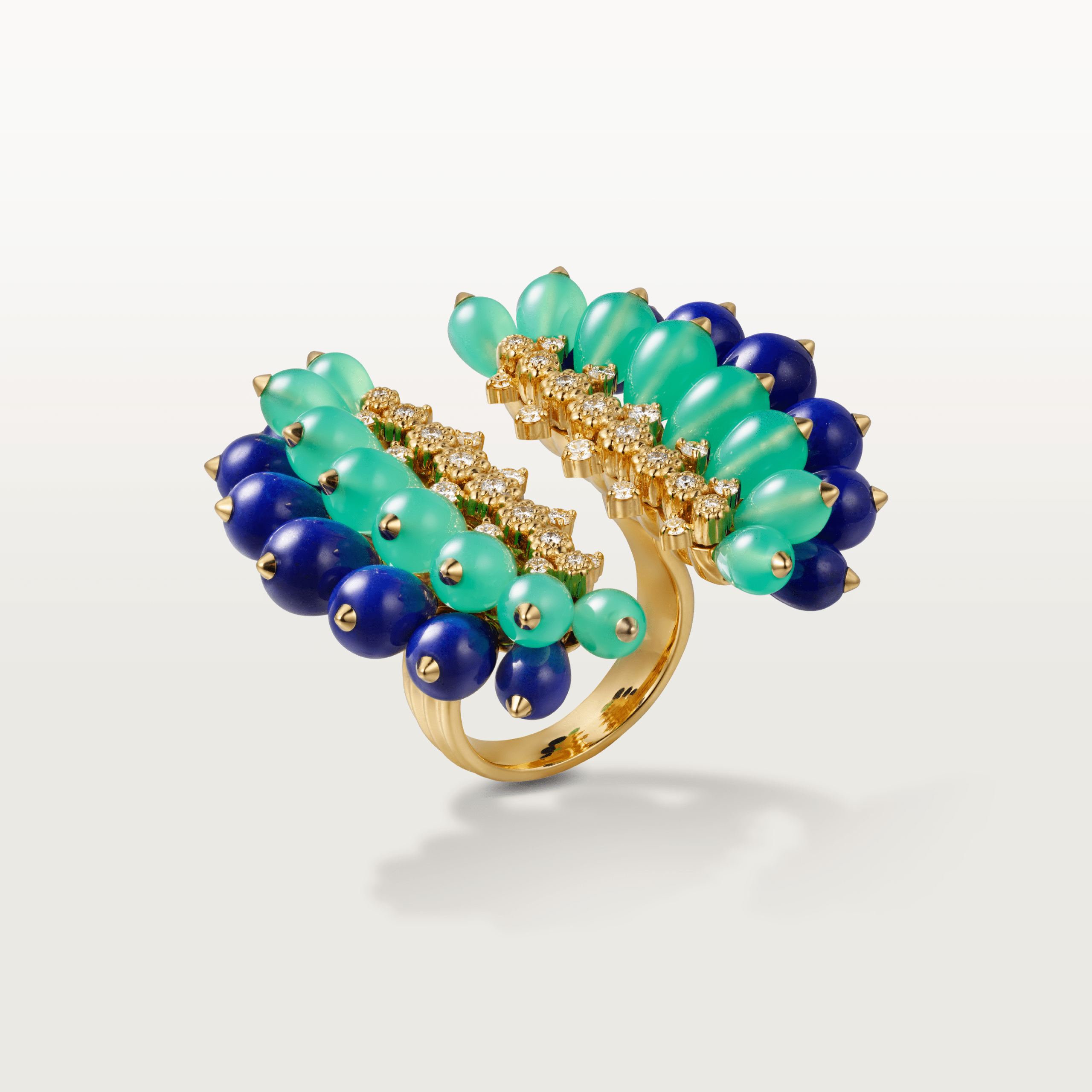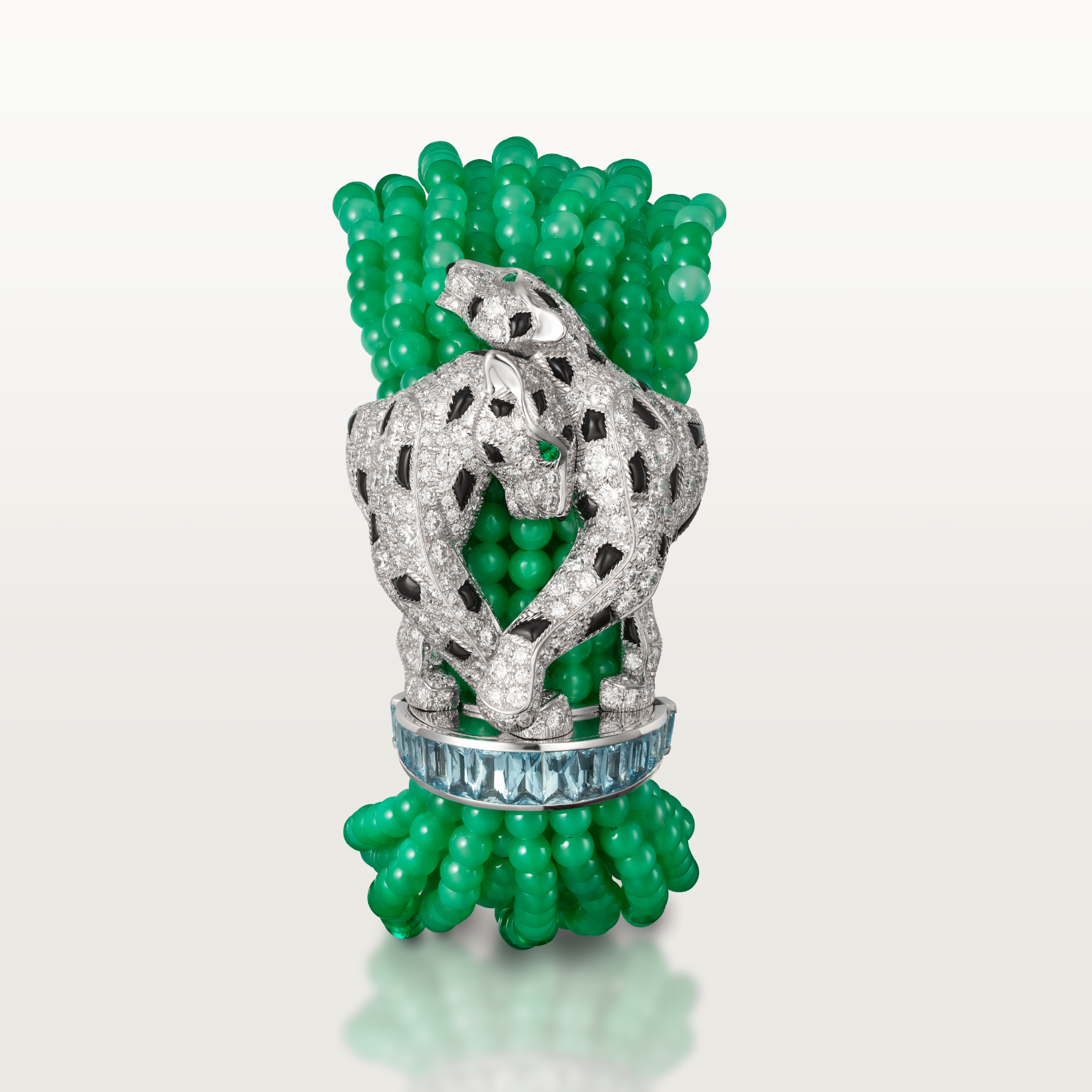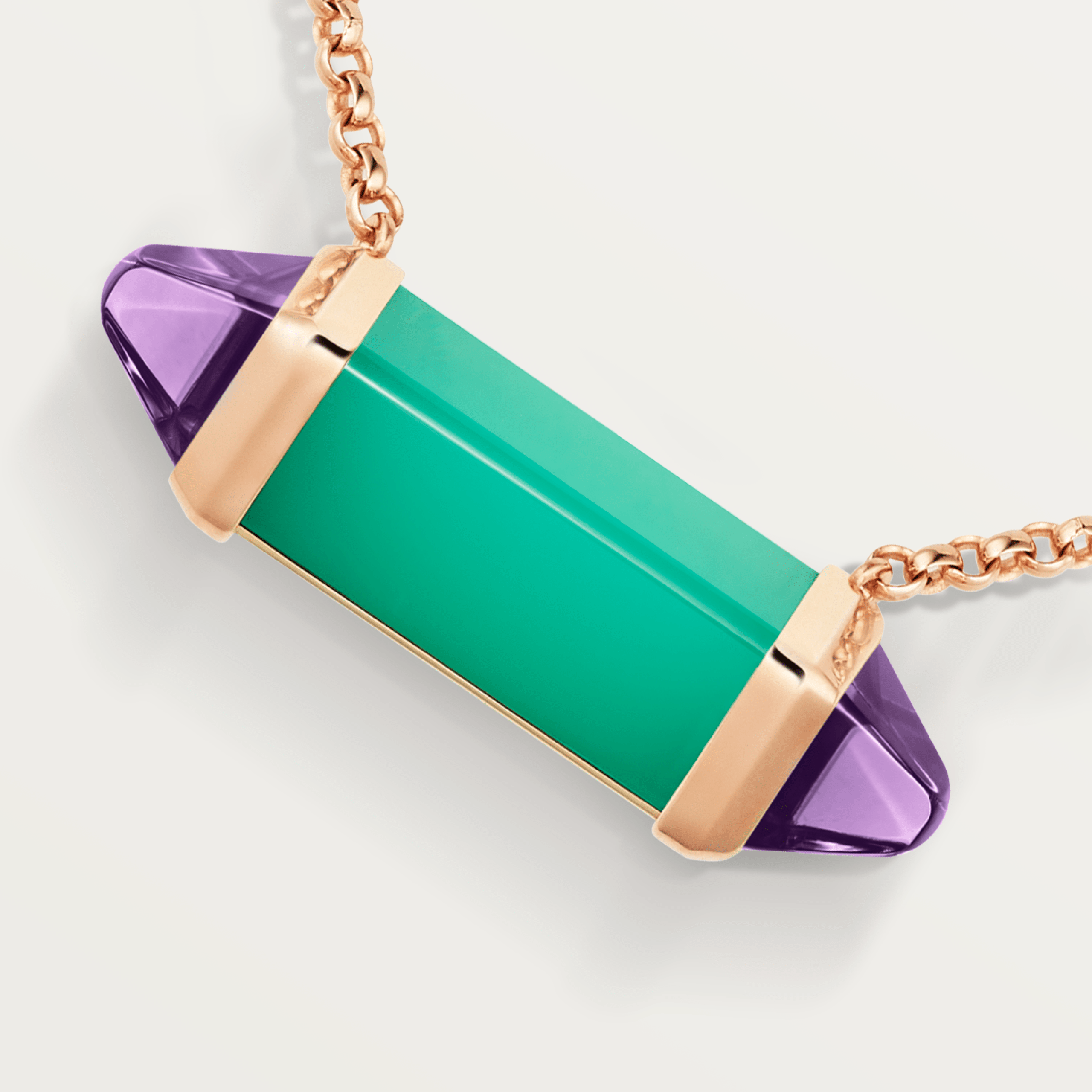
Chrysoprase ranks among the most highly prized varieties of chalcedony, because of its lush shades of green and varying degrees of translucency or opacity.
- Mineral group: chalcedony
- Chemical composition: silica (silicon oxide)
- Color: green
- Hardness: 7 (Mohs scale)
- Transparency: translucent to almost opaque
- Renowned sources of provenance: Australia, Tanzania, USA, Brazil, Poland, Turkey, Kazakhstan
Etymology, history and legends
Chrysoprase’s name derives from the Greek khrusos, meaning “golden”, and prason, “leek”. The literal translation “golden leek” refers to its color.
The use of chrysoprase as a semiprecious stone dates very far back. Historical references to it are found already in antiquity, in The Natural History by Pliny the Elder and in the Bible. The Greeks, Romans and Egyptians employed it to make intaglios and cameos. In Medieval times people ascribed an array of protective virtues to the stone. It was believed to have the power of making things invisible, helping to detect poisons and curing gout.
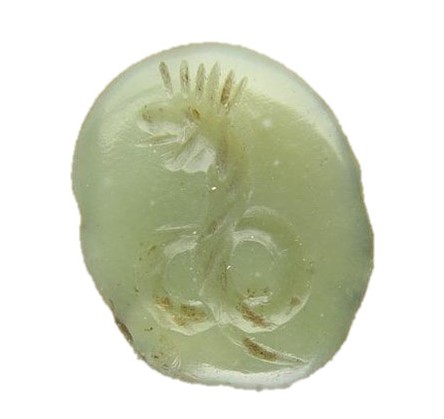
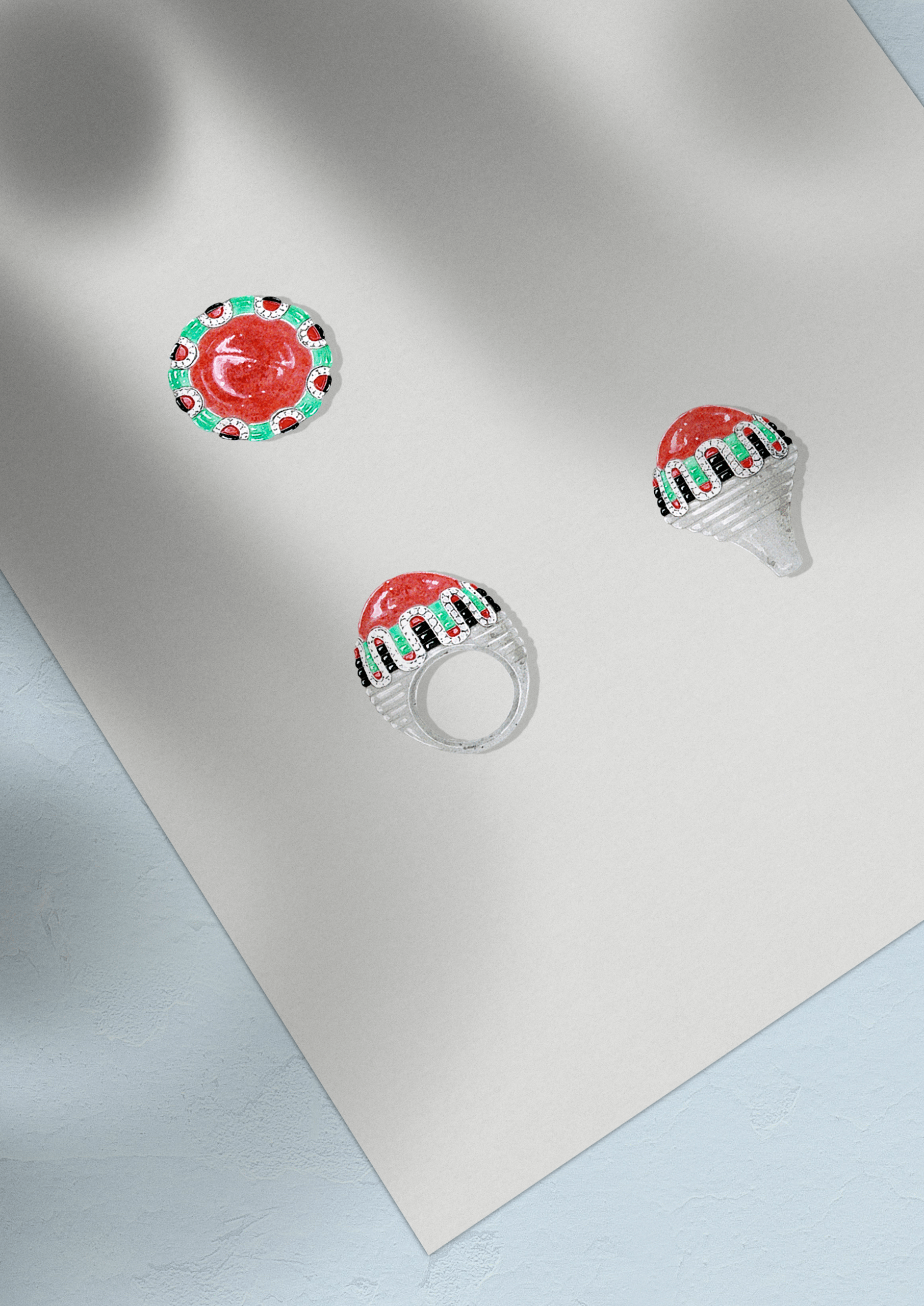
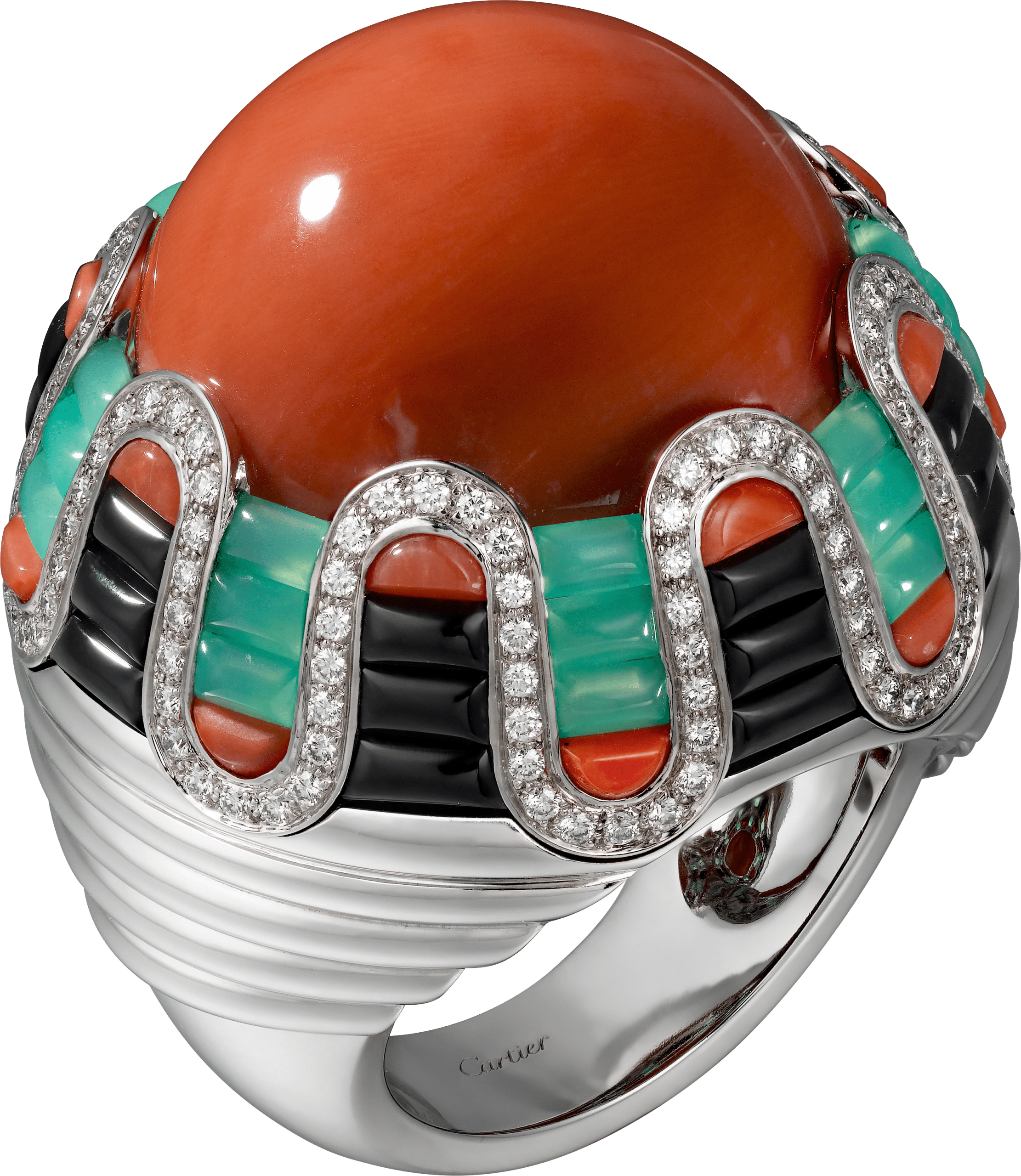
Its translucent nature inspired artisans to work with it in bead or cabochon shapes, as can be seen in many 19th-century jewels.
Famous chrysoprases
Many historical figures made chrysoprase their stone of choice. It was said that the legendary Macedonian king Alexander the Great (356–323 BC) always wore one on his belt during battle since he believed that – thanks to the powers attributed to the gem – it would guarantee military success and victory. The story goes that he lost it while crossing a river, when a snake tried to bite his horse’s saddle. He saw this loss as a bad omen and was never once able to win another battle.
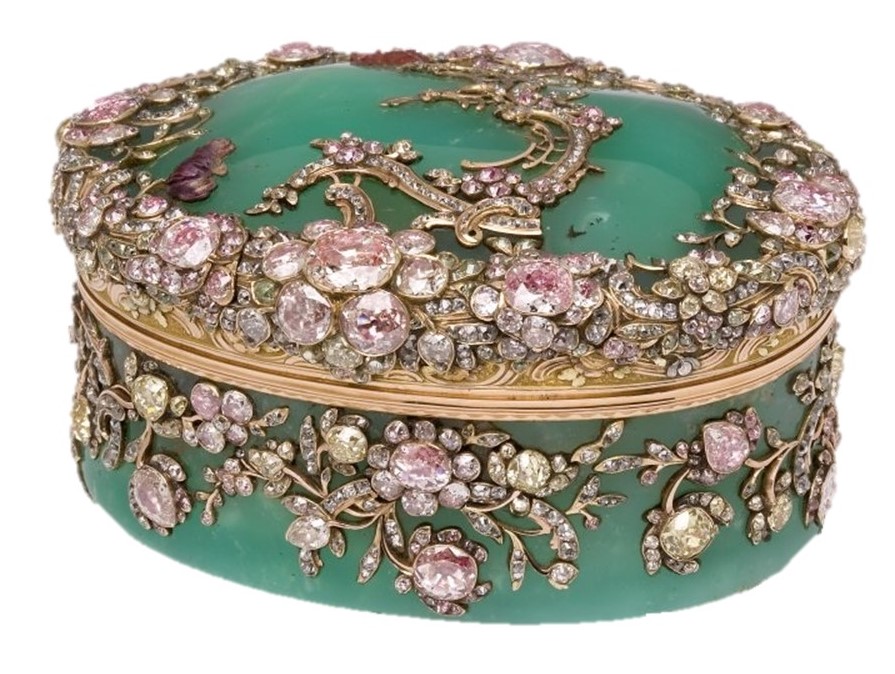
King Frederick II of Prussia (1712–1786) was also extremely fond of this stone and incorporated it into the interior decoration of his Sanssouci palace.
Colors and use
Chrysoprase is green, presenting in many shades from bright through yellow-green or bluish-green to deep green. Its color is due to minuscule nickel inclusions, mostly in the form of kerolite. These inclusions are dispersed throughout the siliceous matrix and are lodged in the micropores. Any yellow hue is caused by Fe3+ ions and the blue shade is caused by the diffusion of light reflecting off microdefects.
A member of the chalcedony family, chrysoprase has a radial fibrous structure, with a fine-grained texture that is particularly suitable for bead or cabochon cutting. The stone can be translucent to opaque, with white fibrous inclusions and small black spots. It can also display cloudy, light green to whitish areas. These inclusions are accepted depending on the quality of the crystallization and the size of the cut stones obtained.
Generally speaking, a chrysoprase is considered to be of good quality if it is translucent, of a bright color, and has few inclusions.
Formation of the stone
Chrysoprase is rich in iron and magnesium, but low in silica, and forms in the veins of a rock in the Earth’s mantle called serpentinite. While other types of chalcedony form at around 150 °C, chrysoprase requires temperatures of up to 200 °C.
Origins
The first significant deposit of chrysoprase was found in Poland, south of Wroclaw, in 1425. Nowadays chrysoprase deposits are quite rare. The main ones are in Australia, Tanzania and the United States, although there are still some in Poland, as well as in Kazakhstan, Brazil and Germany.
Australia provides good quality stones thanks to the high level of nickel in the soil. The Gumigil mine in Queensland, to the east of the country, is the world’s biggest source of chrysoprase. It was discovered in 1905 and mined from 1959, reaching peak production in the 1990s.
Tanzania’s largest mine stands at the top of Iyobo Mountain, 75 km north of Dodoma, and has been in operation for about 30 years.
Treatment, certification and provenance
Chrysoprase is not treated in any way. Laboratories are not currently able to establish the geographical origin of individual specimens from analyses. The stone can however be imitated with green chalcedony soaked and colored by chromium, which is very common on the market. Good quality natural chrysoprase remains a rarity.