
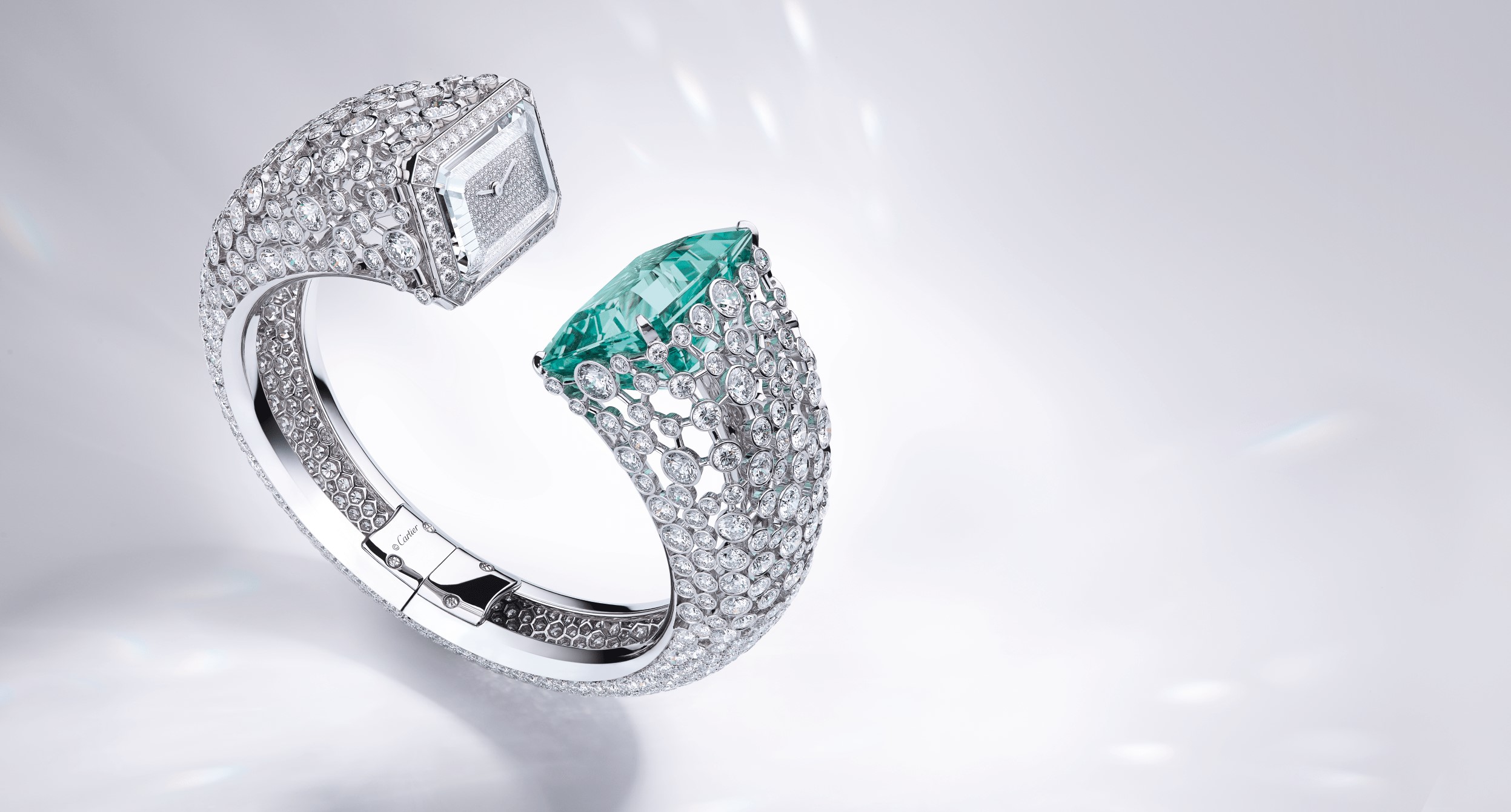
A unique feature of beryl is that this one family contains both a precious stone, emerald, and fine stones spanning a wide range of colors. Green beryl, aquamarine, morganite and heliodor are particularly popular in jewelry.
- Mineral group: beryl
- Chemical composition: beryllium aluminum silicate
- Color: green (emerald or green beryl), blue (aquamarine), pink (morganite), golden yellow (heliodor), red (red beryl, very rarely used) and colorless (goshenite)
- Hardness: 7.5-8 (Mohs scale)
- Main sources of provenance: Brazil, Madagascar, USA, Russia and Ukraine
Etymology, history and legends
Beryl is one of the oldest known minerals on Earth. The word beryl comes from the Greek beryllos, meaning shiny. It gave rise to the German word brille and the words lunette and bésicles in French, meaning “spectacles”. In the distant past, beryl was noted only for being a transparent and colorless material, whose hardness allowed it to be cut and made into optical lenses. According to Pliny the Elder, the Emperor Nero used to watch gladiatorial games through a polished glass, like a forerunner of today’s binoculars. The mineral’s magnifying effect also led to its use on monstrances and reliquaries. It was not until the 19th century that the term “beryl” came to denote all varieties of this species.
The different varieties of beryl bear rather evocative names. Heliodor, from the Greek root meaning “gift of the sun”, references that stone’s golden yellow color; the name aquamarine derives from the Latin aqua marina meaning sea water, echoing the stone’s many shifting shades and reflections of watery blue. The name morganite pays tribute to the famous banker and collector John Pierpont Morgan, while goshenite draws its name from the first deposit of this mineral discovered in Goshen, Massachusetts, USA.
COLOR AND USE
Beryl is structured by rings of silica stacked in parallel planes, linked by beryllium and aluminum. The substitution of aluminum with another element of the same size is what determines the color of the beryl, and thus its variety.
Any blue, yellow or green colorations depend on the concentration of iron Fe2+ and Fe3+. A distinction is also made between stones colored by iron (golden yellow heliodor or green beryl) and those colored by manganese (aquamarine, pink morganite and red beryl). Emeralds, on the other hand, get their color from chromium and/or vanadium. Goshenite is the colorless variety of beryl, which has no coloring elements in its chemical composition.
The arrangement of the atoms leaves empty spaces where a number of foreign elements may get lodged; this explains the difference in density between the various beryl varieties.
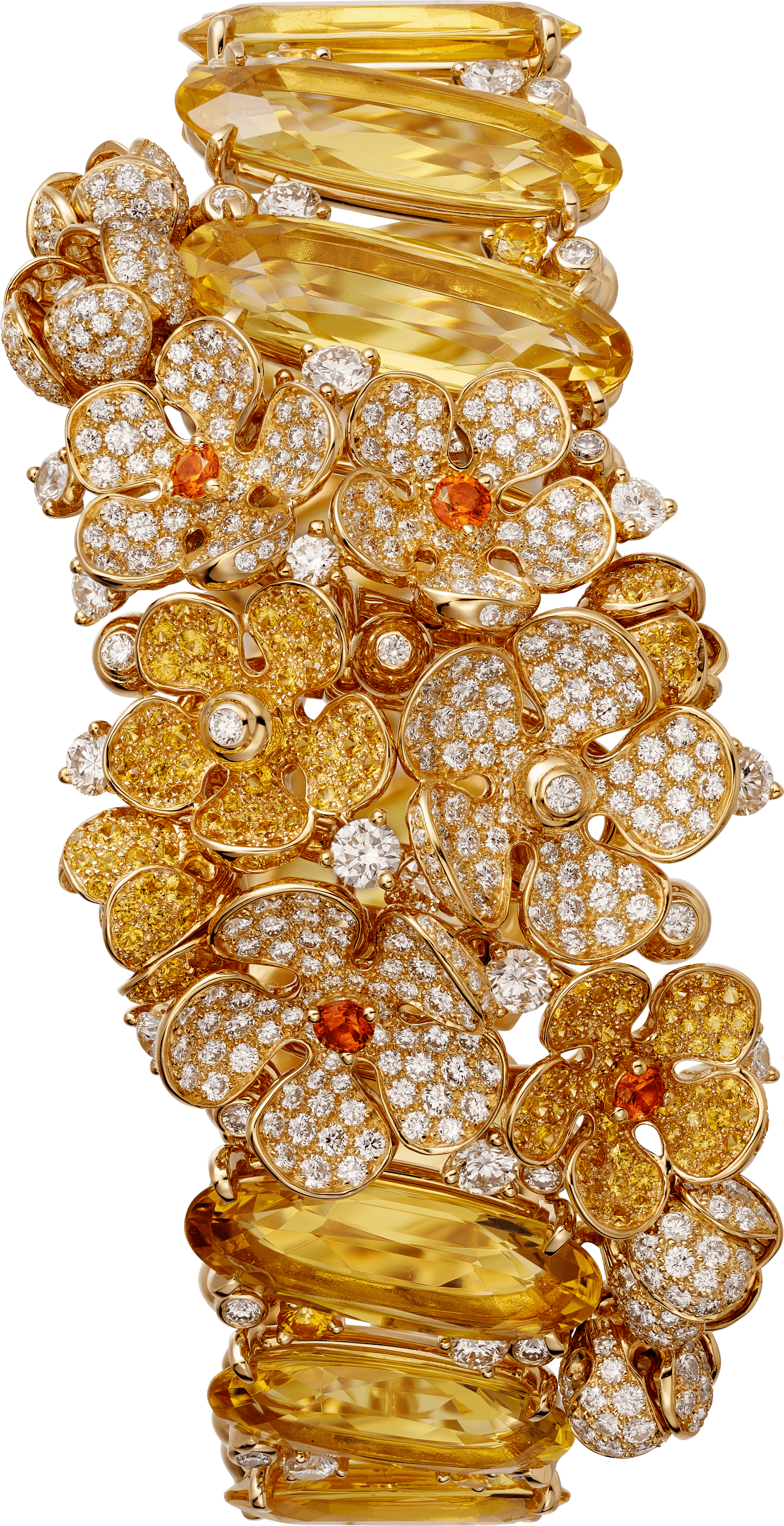
The quality of a beryl is traditionally determined by its purity and the intensity of its color. Bright, clear blue aquamarines are especially prized, as are peach-pink morganites and golden yellow heliodors.
Beryls may display two-phase inclusions, elongated parallel channels or veils of tiny droplets.
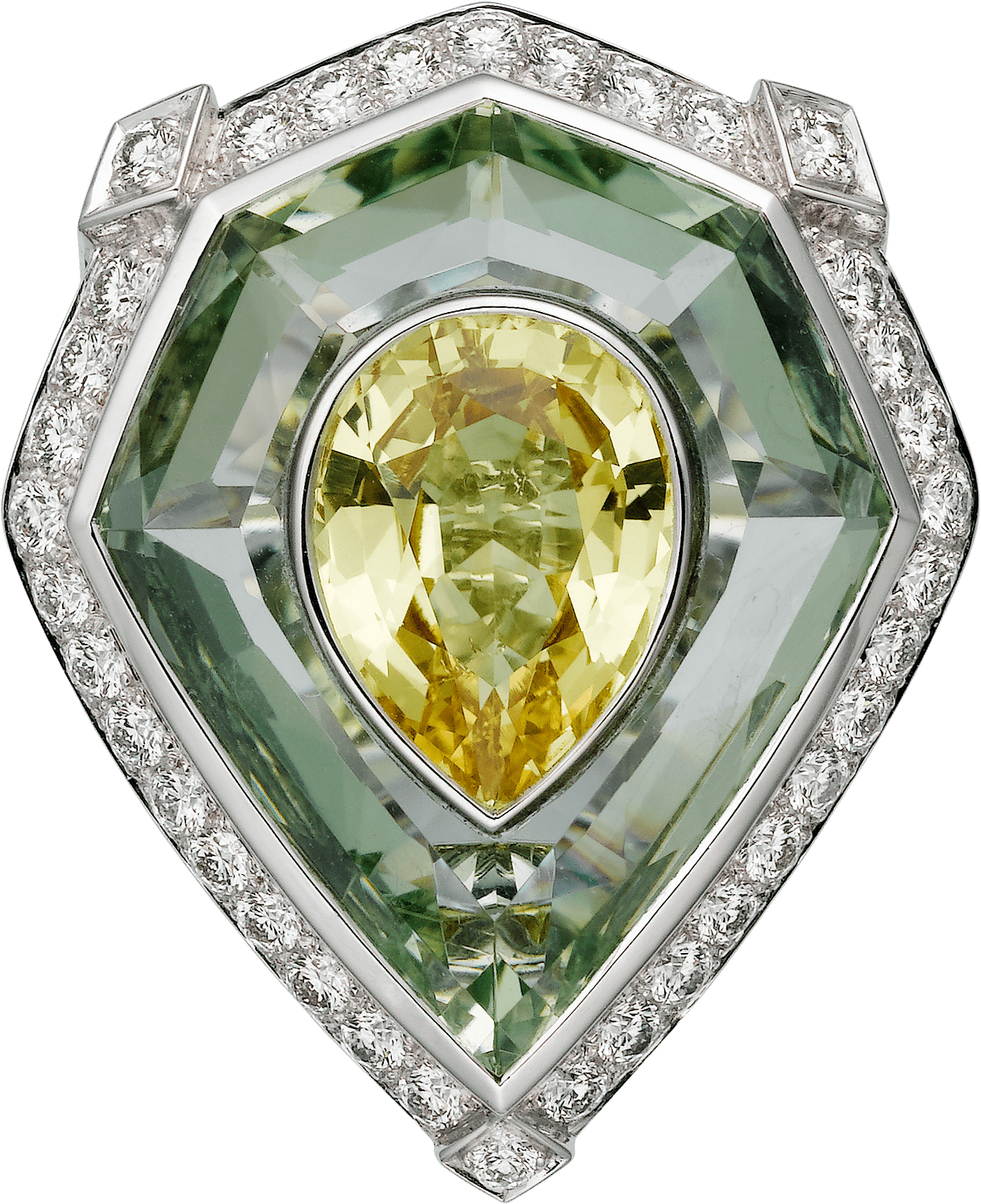
Emerald and green beryl
Although akin to green beryl in that it is a green variety of beryl, emerald is considered a precious stone and not a semiprecious gem. There are two main reasons for this: firstly, the combination of beryllium, chromium and/or vanadium that characterizes it is extremely rare, and secondly, it has its own special history. Emerald has been much admired since antiquity, notably by Cleopatra. In the late 15th century, deposits discovered in Colombia brought to light emeralds of exceptional quality, which earned the stone even more worldwide renown.
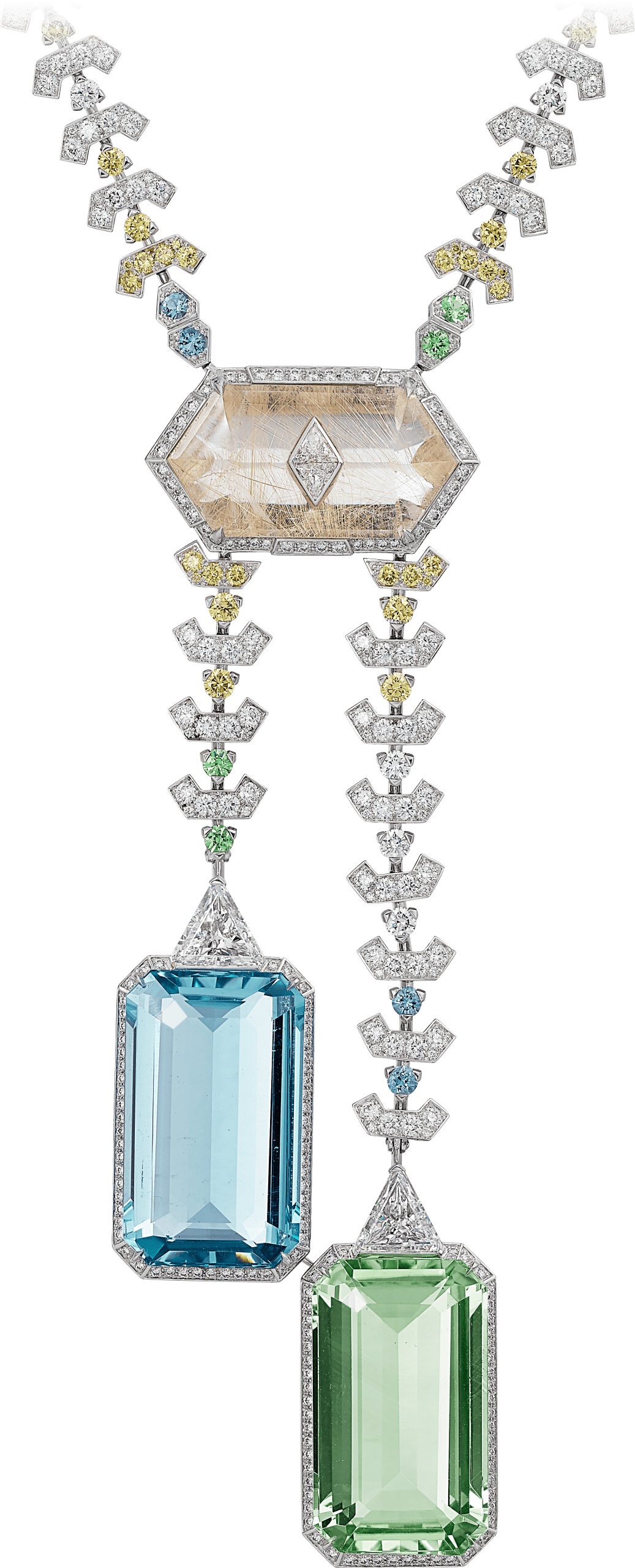
As explained above, emerald and green beryl get their color from different elements. This results in them having distinct saturation spectra: green beryl is always pale, while emeralds can range from light to dark green. The clear, delicate color of green beryl makes it a very popular gem for jewelry.
Formation OF THE STONES
Beryls are found in granitic pegmatites, rocks that form at the margins of large masses of molten rock, or magma, after they have solidified into granite. While the residual magma crystallizes at temperatures of around 1,000°C, forming common minerals such as quartz and feldspars in the process, an amount of aqueous fluid is squeezed out. This fluid material is rich in rare elements and turns into veins of gem-quality minerals such as beryl. Trapped in cavities and subjected to increased pressure, it crystallizes at temperatures above 600°C. The cavities only occur at shallow and medium depths (up to 7 km) and are found in less than 1% of pegmatites, which is partly what makes beryls so exceptional. The cavities provide space to grow unhindered, enabling the beryls to reach a very high degree of perfection. The fluid pressed out of the magma can also be found as inclusions in stones.
Most pegmatite fields, like those in Brazil, Mozambique and Madagascar, are between 500 and 550 million years old. Some younger pegmatites formed about 100 million years ago, such as the ones in southern California. The pegmatite fields on the island of Elba in Italy are about 6.2 million years old.
Because of their good resistance, beryls can be found in secondary deposits (outside the rock where they originally formed). They can accumulate on the surface as the pegmatite is eroded by water, root growth and bacteria, giving rise to eluvial deposits (from weathered pegmatites, remaining in situ). During erosion, they can also be washed away by rivers and form alluvial deposits (from weathered pegmatites, redeposited elsewhere).
ORIGINS
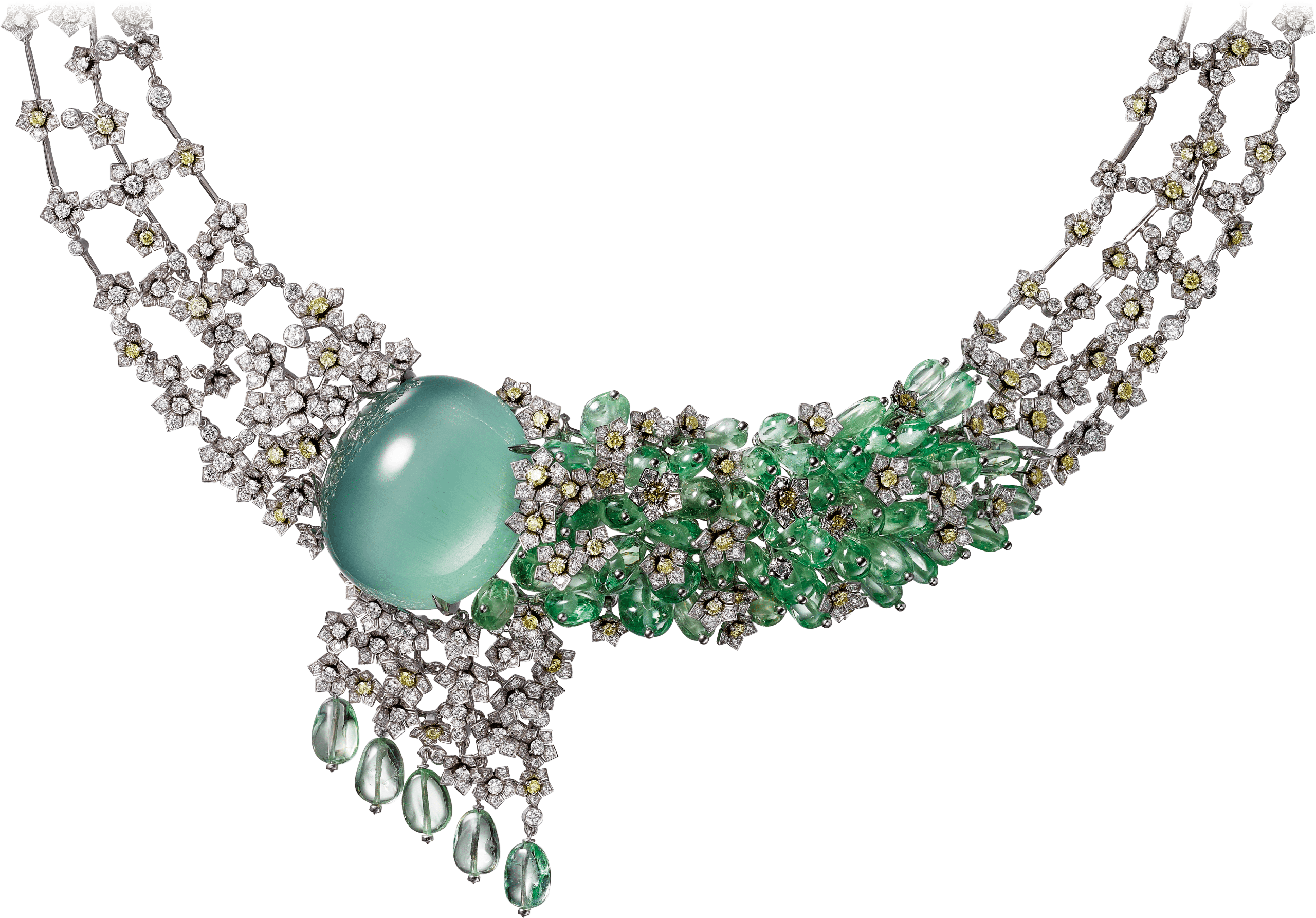
Beryl deposits are found in a wide variety of locations. The main producers of beryls are Brazil, Madagascar, the United States, Russia and Ukraine.
While all these extraction sites yield green beryl, red beryl is only found in one location, the Wah Wah Mountains in Utah, USA. Production is limited and the stones are small, weighing no more than 1 carat.
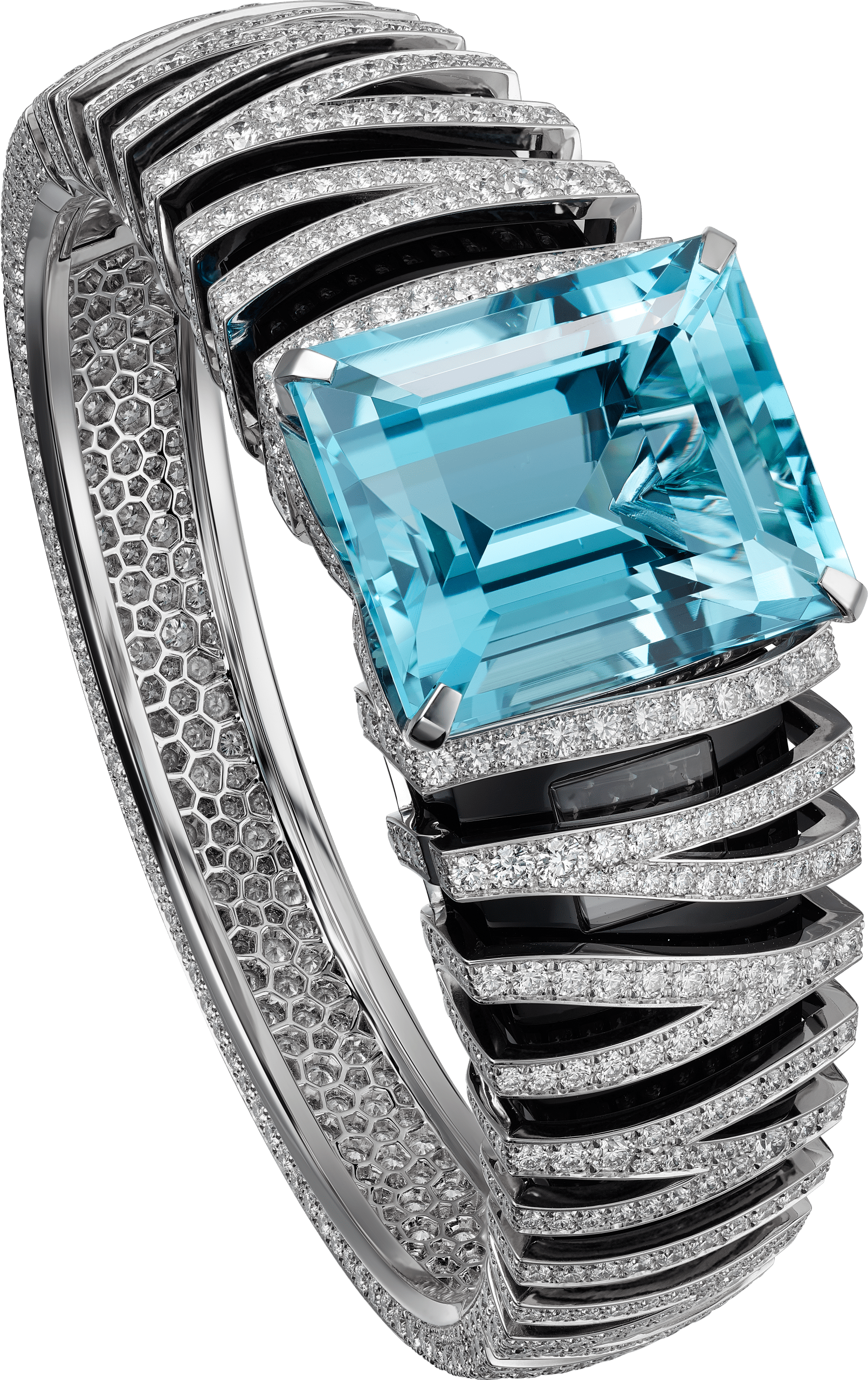
Aquamarine, which is famously mined in Brazil but also in Madagascar, Nigeria and Pakistan, has nonetheless become one of the South American country’s emblematic gemstones. The biggest deposits (Santa Maria, Pedra Azul, Santa Teresa, Medina, Cercadinho, and Fortaleza) are mainly located in the Rio Doce and Rio Jequitinhonha valleys in the state of Minas Gerais. The earliest prospecting and gemstone discoveries in this region date back to the 16th century, but serious mining didn’t begin until the 110.5 kg Papamel aquamarine crystal was discovered in 1910. With its perfect crystallization, remarkable weight, blue-green color and high sale price, the find substantially boosted the appeal of this gemstone and galvanized production.
Aquamarines take on very different shades of blue depending on where they formed. The finest stones, of a quite saturated blue, are the rare Santa Maria, Santa Maria Africana (Mozambique) and Tatu aquamarines; Pedra Azul and Santa Teresa stones are less intense. The Sao Domingo ones display the “regular” light blue color, those from Bauchi in Nigeria are paler, with slight shades of yellow, and Boca Rica aquamarines have green in them.
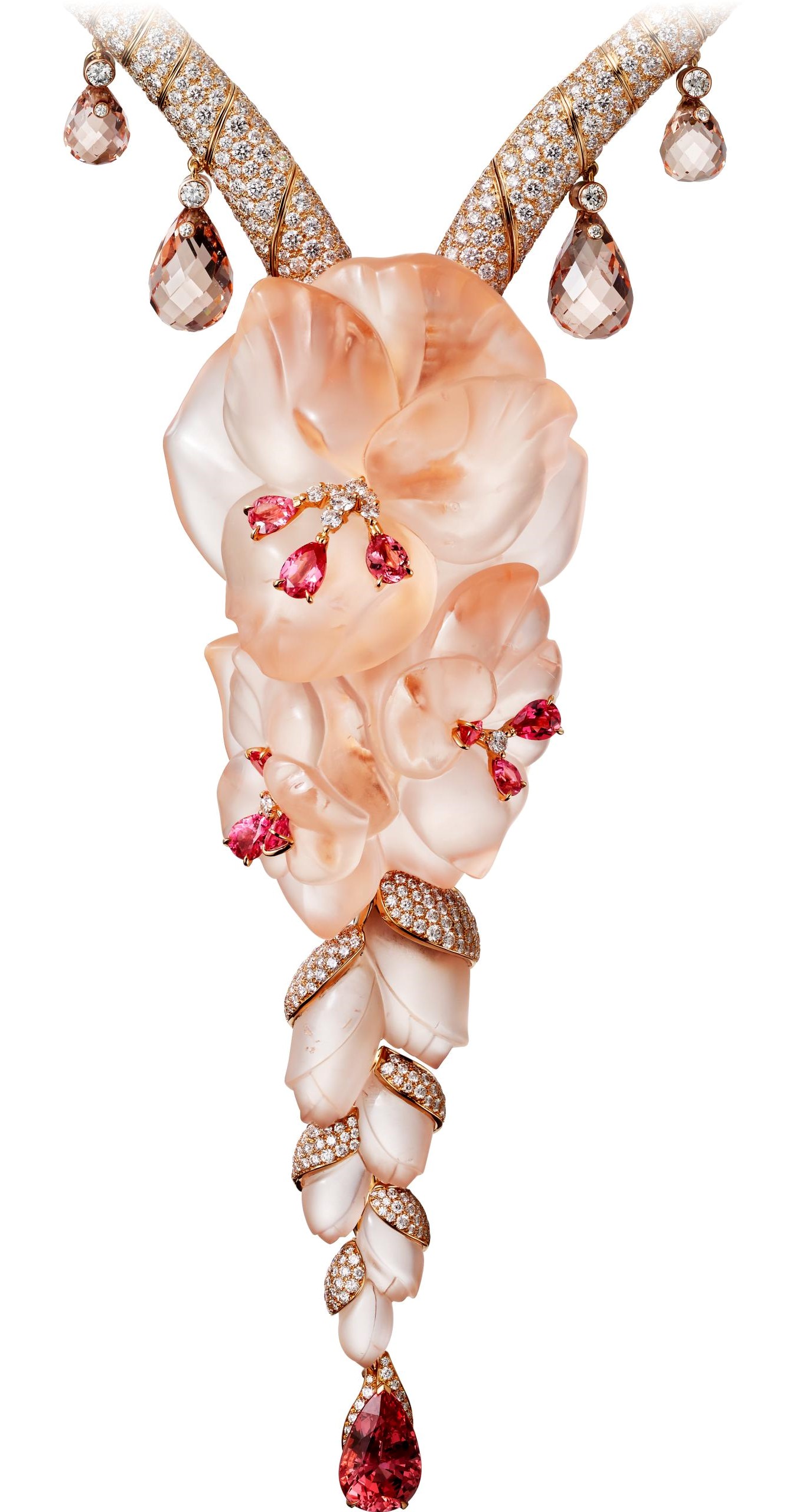
Morganite was discovered in the early 20th century in Madagascar. The finest quality stones – meaning those displaying a strong peach pink color – still originate there. Other morganite deposits are found in Brazil (Minas Gerais), the United States and Pakistan. The Corrego do Urucum mine in Minas Gerais has yielded the greatest number of morganites.
Heliodor is mostly mined in Brazil, although it is also found in the US, Russia, Madagascar and Namibia.
Care recommendations
Beryl is a relatively soft stone and must be treated with care.