
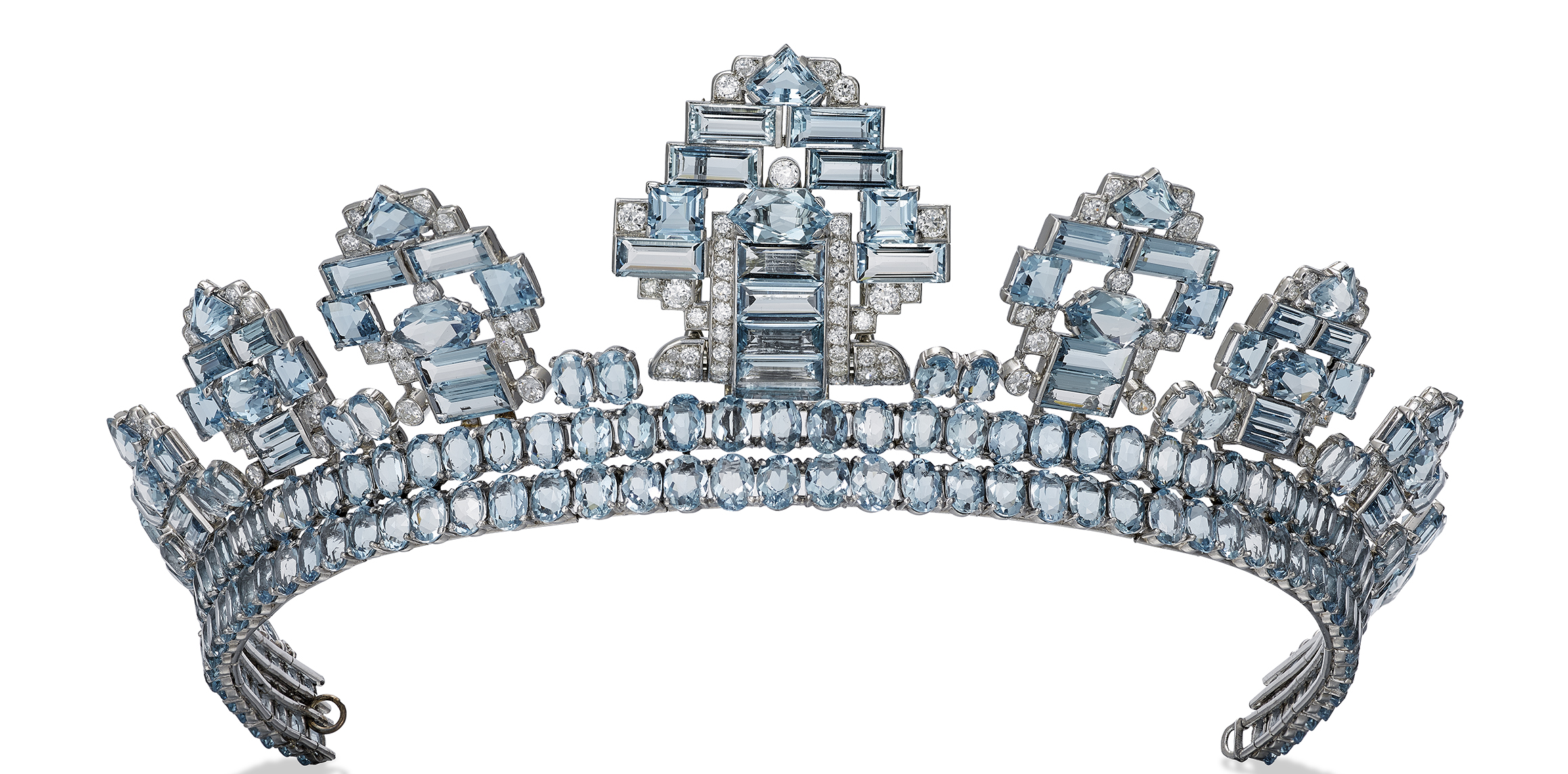
Aquamarine, a variety of beryl whose name conjures up the sea, is popular for its purity and the softness of its color. It has been sought after for jewelry since Classical times.
- Group: beryl
- Chemical composition: aluminum and beryllium silicate
- Color: blue, sometimes blue-green
- Hardness: 7.5-8 (Mohs scale)
- Main sources: Brazil, Madagascar, Mozambique, Asia
Etymology, history and legends
The name “aquamarine” was coined in the 16th century by Anselmus de Boodt and derives from the Latin aqua marina meaning sea water, after the stone’s color. Most of the gems described as beryl in Antiquity were likely aquamarines, since light blue is the most common color.
Beryl has a magnifying effect, as history bears witness. According to Pliny the Elder’s account, Nero watched the gladiatorial games through a polished beryl. This certainly counts among the forerunners of today’s oh-so-practical spectacles, formerly called “bésicles” in French and “brille” in German, both derived from the name of the crystal. Beryl’s transparency and magnifying power led to its long-time use to adorn monstrances and reliquaries.
Aquamarine symbolizes faithfulness between newlyweds and was traditionally used in engagement rings. It was also thought to protect sailors and keep them safe at sea.
Other blue stones such as topazes and tanzanites appeared later on, but this did not diminish the reputation of aquamarine.
Famous aquamarines
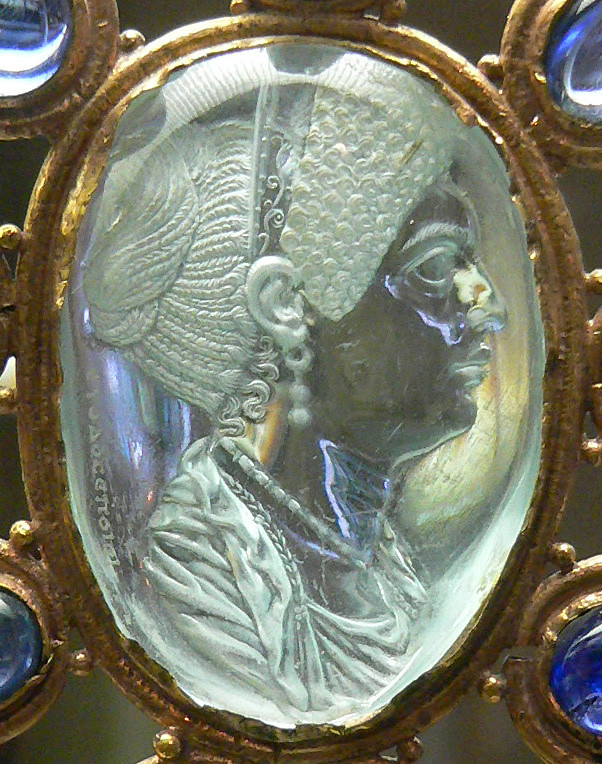
A number of museums showcase aquamarines of exceptional size, such as the 2,594-carat specimen on display in Los Angeles. Another, a 1,000-carat rectangular faceted aquamarine called “Most Precious,” is on show at the Smithsonian Institution in Washington DC. Vienna’s Kunsthistorisches Museum houses a 492-carat faceted oval aquamarine in an early 19th-century mounting. Ranking among the most famous stones from Antiquity is a well-known intaglio showing a profile portrait of Julia, daughter of the Emperor Titus, which can be seen in France’s National Library.
Colors, cuts and shapes
Aquamarine comes in shades ranging from very pale, almost imperceptible blue (often in the smaller stones), through strong blue to intense green. Aquamarines that have no trace of blue in their green color are known as “green beryl.”
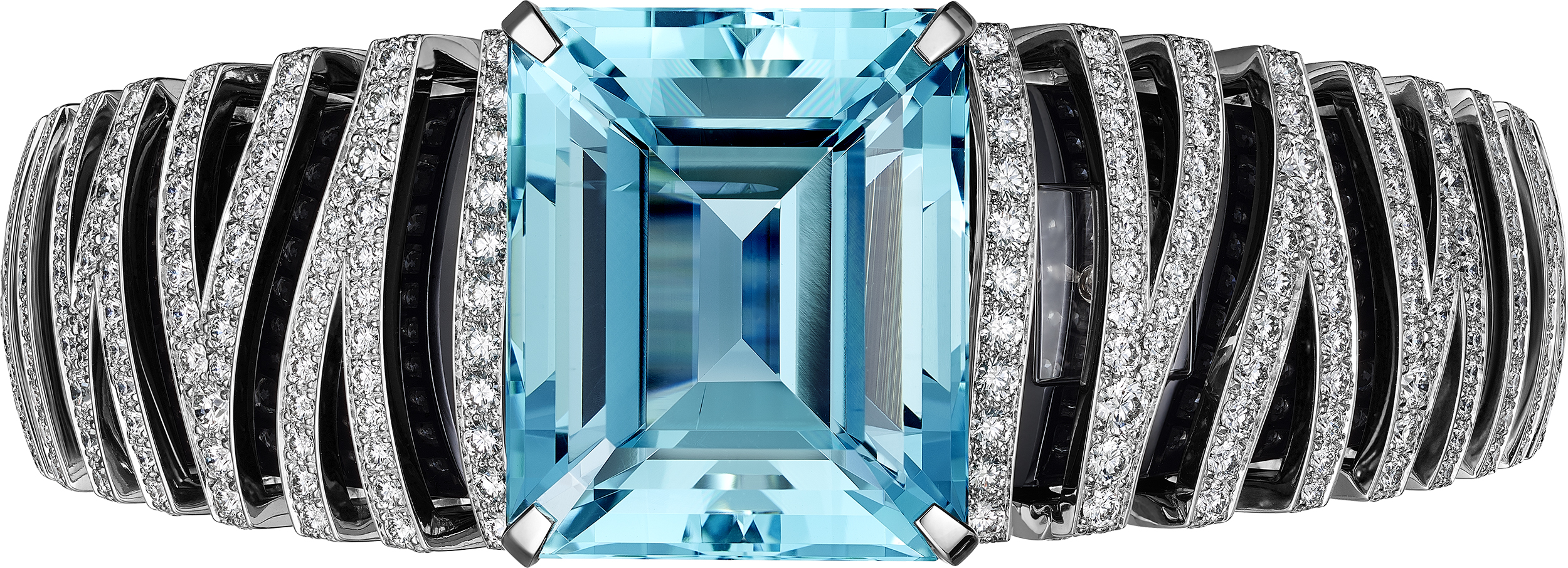
The most highly prized aquamarines are of great purity and a strong blue color, neither too light nor too dark. Hues like this mainly occur in aquamarines ranging from 20 to over 100 carats, mostly of cut-cornered rectangular shape. The presence of canals in the crystal can give rise to asterism or shimmer in stones that are otherwise almost opaque. These visually striking gemstones lend themselves especially well to contemporary designs.
Aquamarines from the Santa Maria mine in Brazil exhibit a perfectly balanced blue without any undertones, making these the most highly regarded stones—but this mine is now exhausted.
Aquamarine is shown to best advantage in a generously sized step-cut.
Formation
Gem-quality aquamarines are mainly found in pegmatites—rocks that form at the margins of large masses of molten rock, or magma, after they have solidified into granite. They are composed of characteristically large crystals and sometimes also have big crystallized cavities. Blue beryl is commonly found, although it is not always present. It mostly tends to be opaque and can measure upward of six feet. As beryl has low alterability, it is also found in gem placers resulting either from in situ weathering of the rocks where the stones formed (eluvium), or from the alteration of the rocks themselves, which were then carried elsewhere by river water and deposited as sediment (alluvium). In many cases, beryl has undergone oxidation during weathering of the host rock, leading it to develop a green or yellow color.
Origins
South America: Aquamarine is one of Brazil’s most emblematic stones. The most substantial deposits are mainly found in the State of Minas Gerais, including the legendary (and now exhausted) Santa Maria, Pedra Azul, San Teresa, Medina, Cercadinho and Fortaleza.
Africa: New deposits were recently discovered in Africa, mainly centered in Nigeria, Namibia, Mozambique and Madagascar. The gems mined here exhibit a good, quite strong blue that can see them being classed as “Santa Maria”-type aquamarine in the gemological reports.
Asia: Vietnam is a fairly recent producer of fine quality stones hailing from the Luc Yen district and other sites in Yen Bai province.
Other countries such as China, Malawi, India, Ukraine and Russia have in the past been, or are becoming, sources.
Certification
An aquamarine’s certificate may or may not specify its origin.
A stone’s origin does not guarantee the quality of the gem, although it is a recognized criterion in determining its value.
It is customary to indicate provenance by country on gemological certificates. The name of the deposit is rarely mentioned.
Care recommendations
Beryl is a relatively soft stone that needs to be treated with care. Aquamarine is also sensitive to heat, which can affect its color.