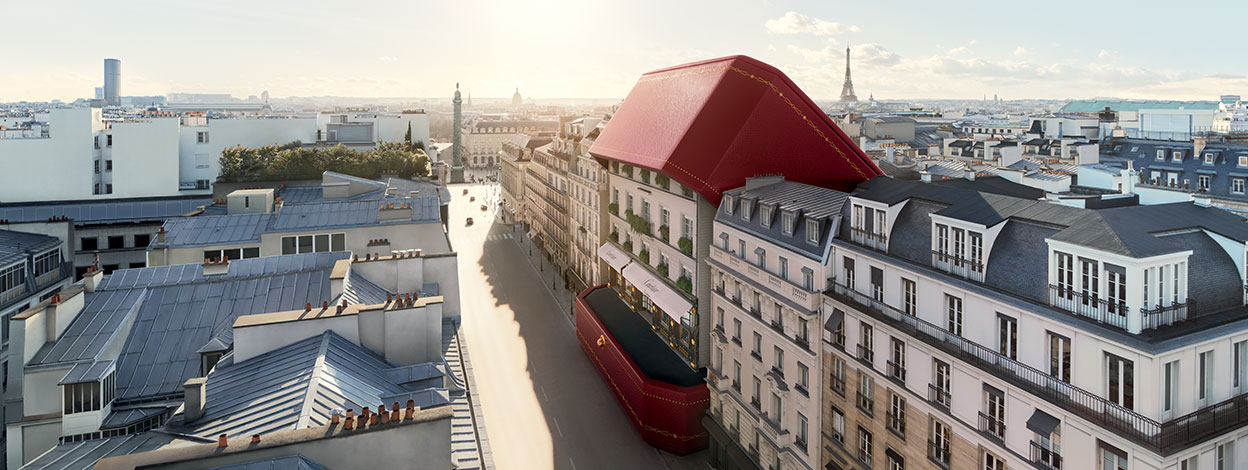
The cradle of Cartier design and style—a symbol of its very identity—13 Rue de la Paix has ranked among the Maison’s most legendary addresses ever since it opened in 1899.
From Boulevard des Italiens to Rue de la Paix
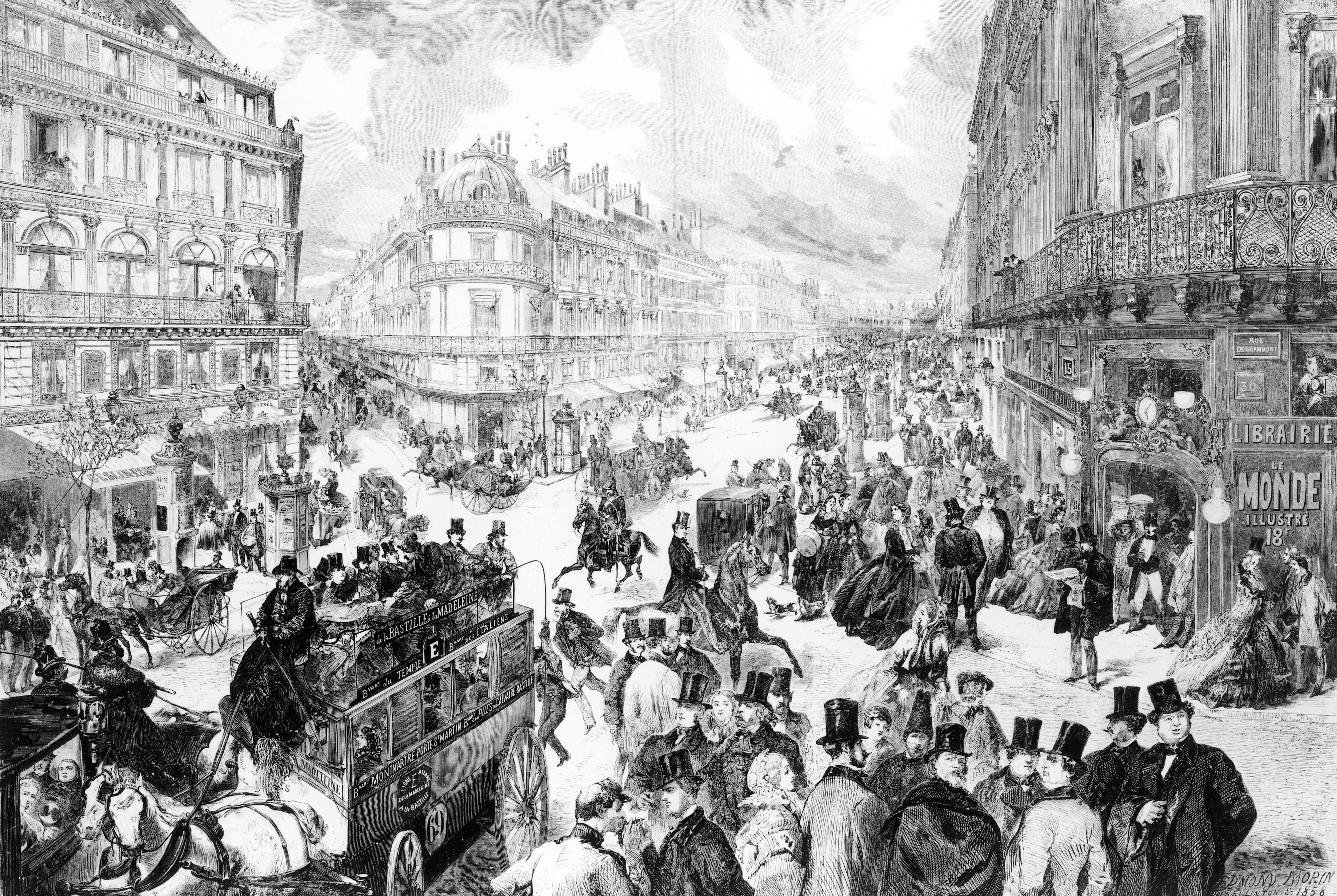
In 1847 apprentice jeweler Louis-François Cartier took over his master Adolphe Picard’s workshop at 29 Rue Montorgueil. A few years later, in 1859, Cartier’s son Alfred joined him, and they established their family store at 9 Boulevard des Italiens. The bustling Grand Boulevards neighborhood—the heart of what Émile Zola called the “new Paris”—was full of prestigious stores, banks and hotels, and a mecca for the mid-19th century bourgeois and aristocratic classes. This district was at the height of its popularity when Charles Garnier’s opera house was inaugurated in 1875.
Âgé de seulement 23 ans, Louis Cartier rejoint son père Alfred à la tête de la Maison en 1898. Il presse les mutations à venir avec le nouveau siècle – mutations urbaines, démographiques et plus largement sociétales. Aussi, probablement sous son impulsion, Cartier quitte le boulevard des Italiens et inaugure en 1899 sa nouvelle boutique au numéro 13 de la rue de la Paix.
Louis Cartier was only 23 when he joined his father Alfred at the helm of Cartier in 1898. Louis foresaw the changes that the new century would bring – the urban and demographic shifts, as well as broader changes across society. So, probably at his instigation, Cartier moved out of the Boulevard des Italiens and inaugurated its new boutique at 13 Rue de la Paix in 1899.
A street of opulent buildings with elaborate facades, Rue de la Paix was created in 1806 on the orders of Napoleon. Not only was it attractively located between Opera Garnier and the Tuileries Gardens, but it also boasted the very latest technology, such as gas street lighting. Gradually an array of luxury names opened their stores there, including Lalique, Charvet, and Vever. Charles Frederick Worth was at number 7. Widely thought of as the instigator of “haute couture”, Worth was a close friend of the Cartier family. Indeed, his granddaughter Andrée Caroline would marry Louis Cartier in 1898. These boutiques’ appeal to a wealthy clientele increased exponentially in 1899, when the Ritz opened on Place Vendôme. As Edouard Fournier wrote in his guide to Paris: “Rich foreigners have a singular affection for the Rue de la Paix (...). A number of shrewd retailers have put themselves into the path of this monied clientele that comes to them from every country. It is the most splendid and the most refined bazaar of every comfort imaginable.” In this way the Rue de la Paix became the main artery of luxury and fashion.
The metamorphoses of number 13
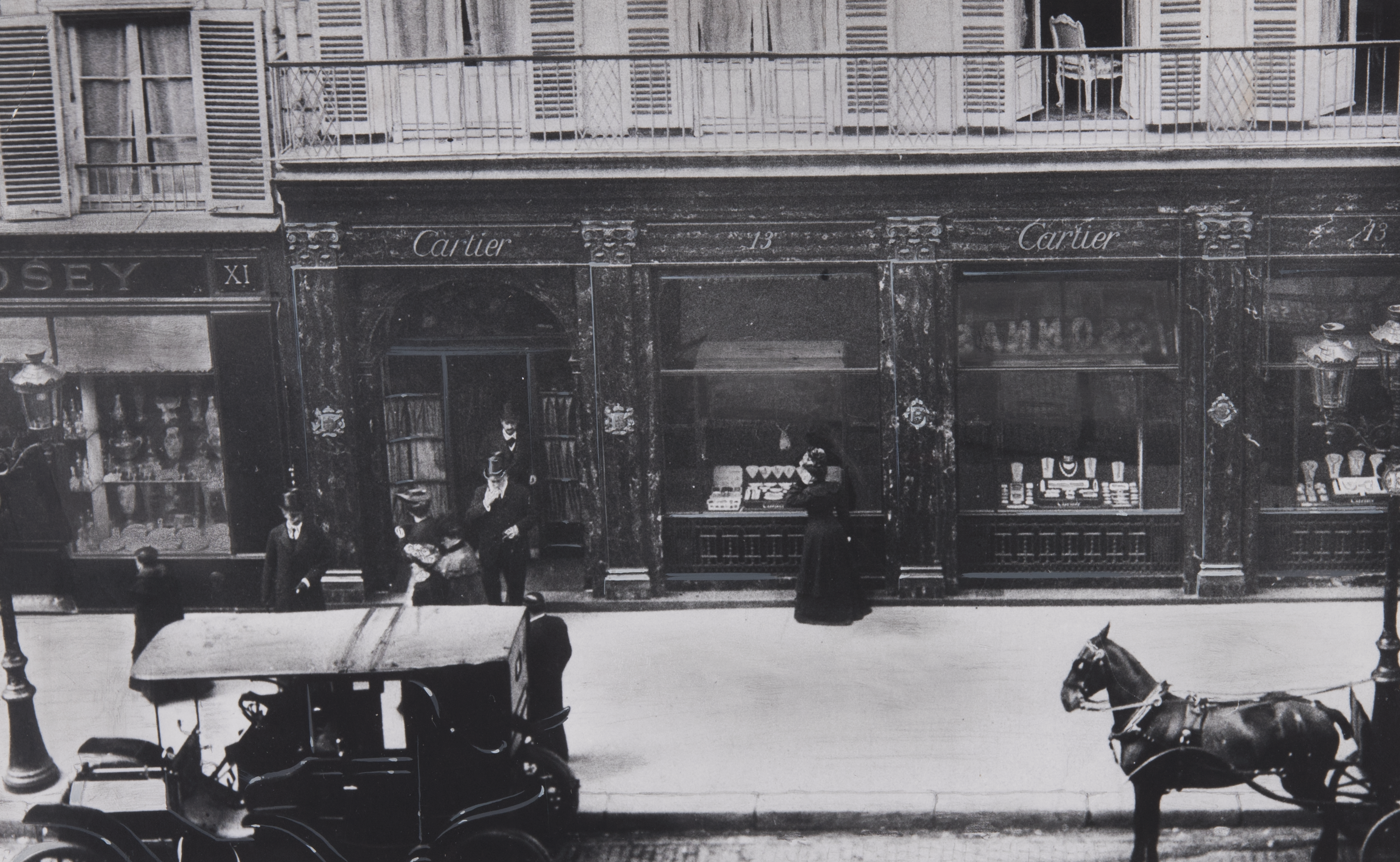
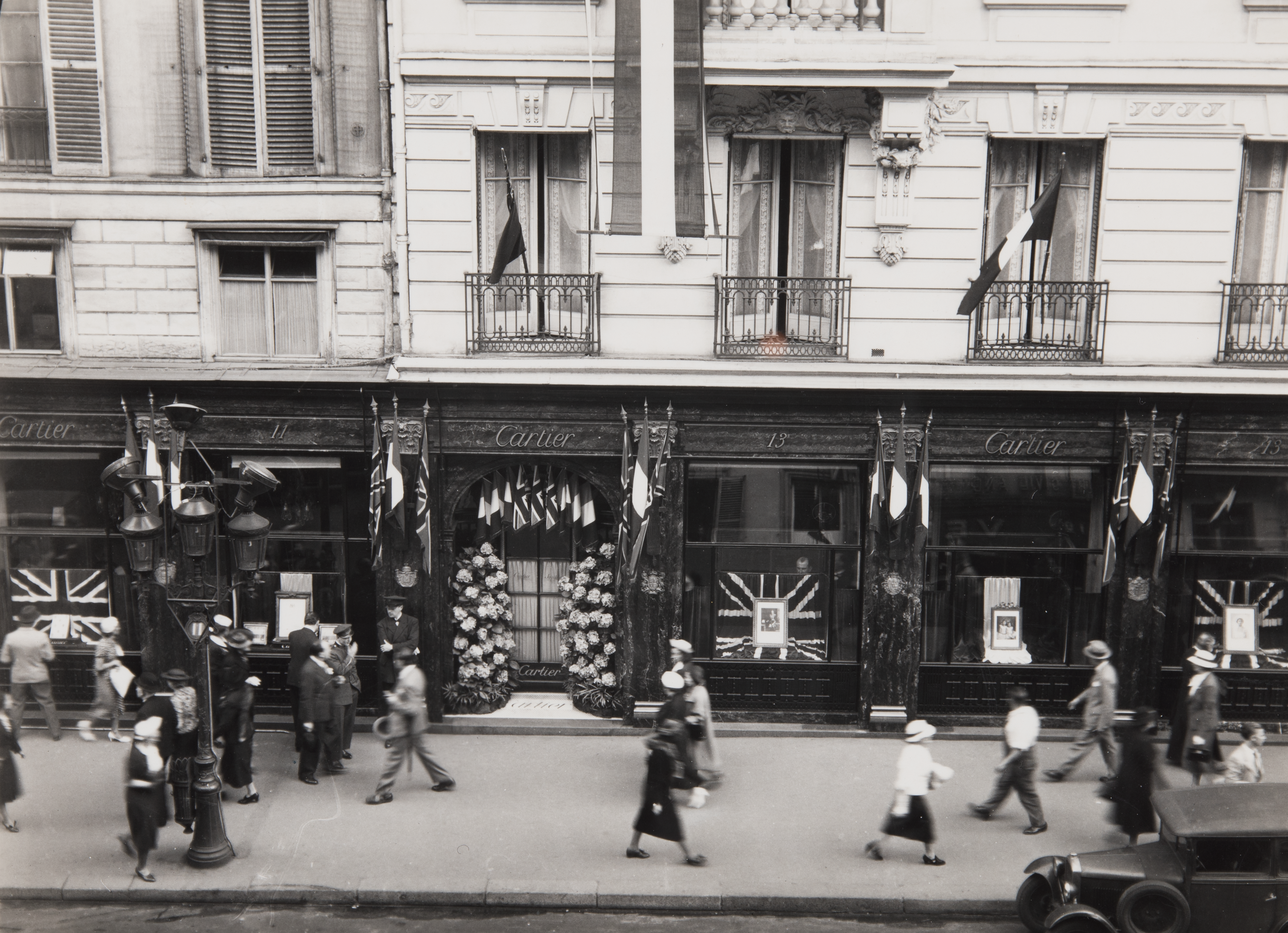
The Cartier store stood out from the very first, thanks to its façade of black Portoro marble veined in golden yellow pyrite, and its pilasters with Corinthian capitals and gilded detailing. Gradually this frontage was further adorned with warrants of appointment from the royal courts that Cartier had been asked to supply. In an era when most storefronts were still made of wood, this bold choice reflected Louis Cartier’s visionary taste.
The company timed its move to coincide with the introduction of a new style of jewelry, known today as “Guirlande style”, which combined Louis XVI aesthetics with the innovative use of platinum. A strong neoclassical influence also infused the store’s interior, designed to showcase the jewelry. Wall panels were painted with foliage and garlands, while splendid classic chandeliers hung from the painted, coffered ceilings. This commission was the work of Marcel Boulanger, who was also responsible for decorating the London Ritz.
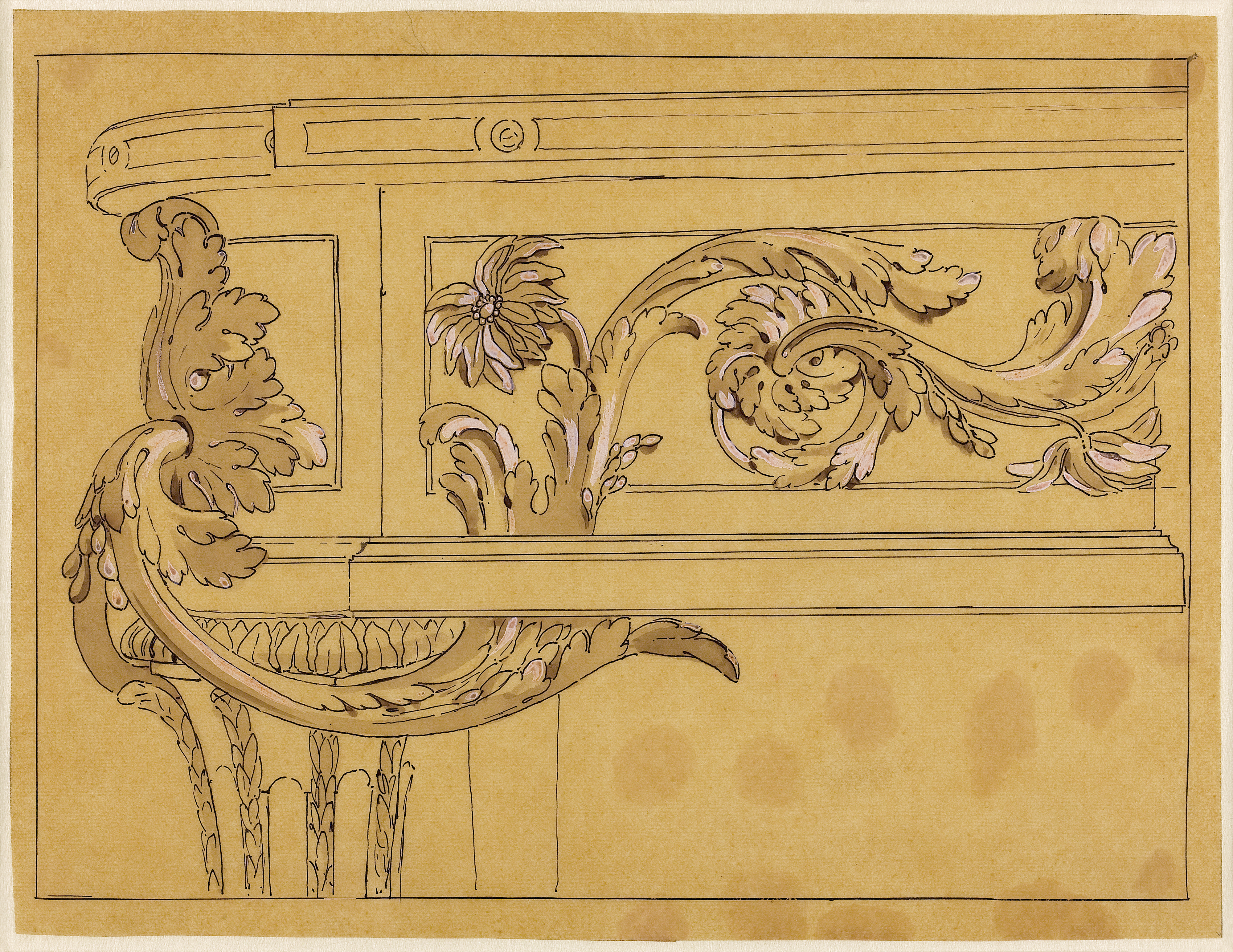

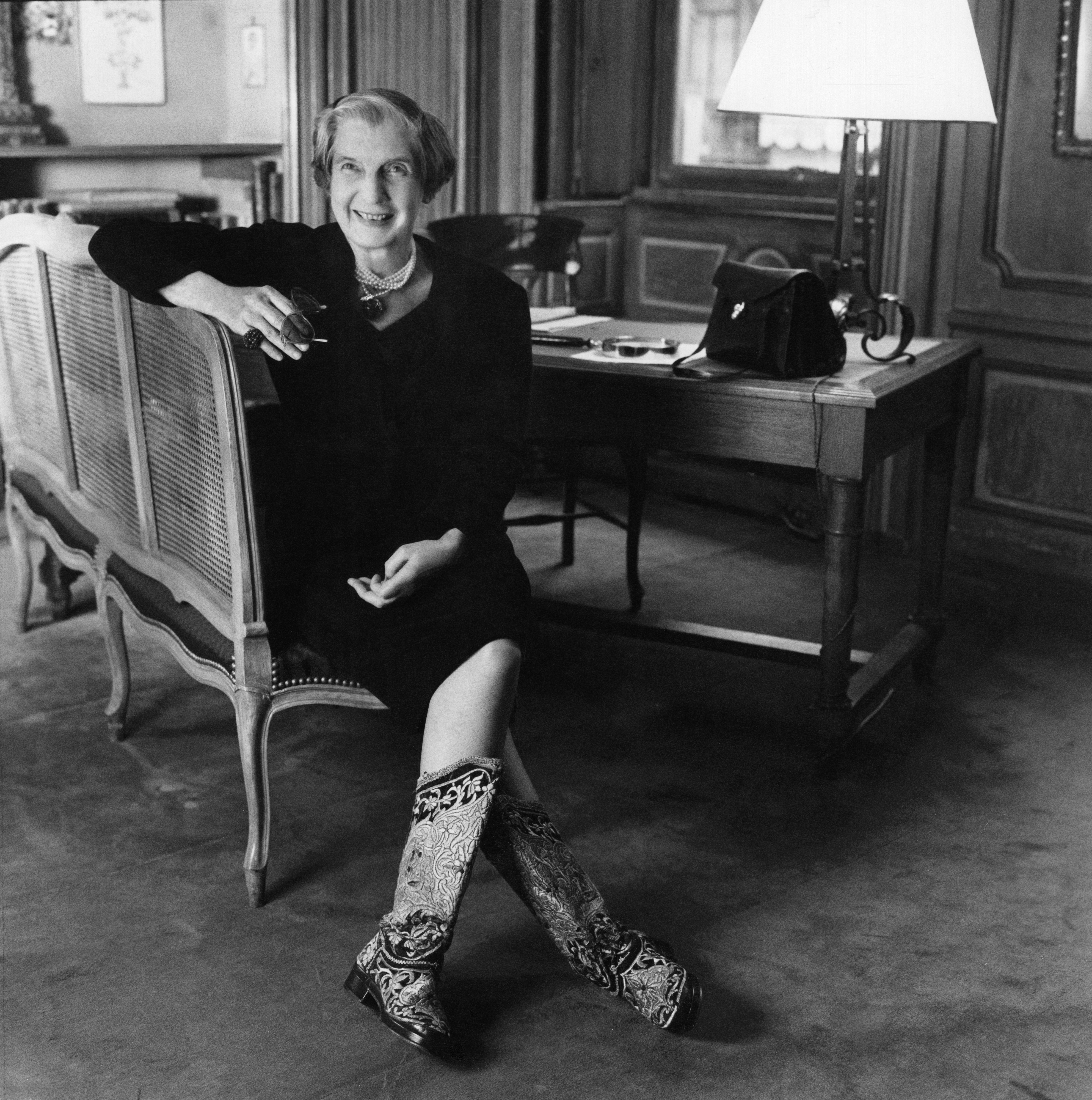
In the decade from 1910 the store gradually grew, expanding into number 11 to take over the former premises of porcelain merchants Le Rosey and handkerchief-makers Chapron. Cartier’s salerooms were organized into separate salons for the different types of pieces, with the grande galerie, the white salon, the English salon, the pearl salon, and the Louis Cartier salon. Later on, Jeanne Toussaint had an office on the first floor, with a carved wood interior that revealed little touches of her personal taste.
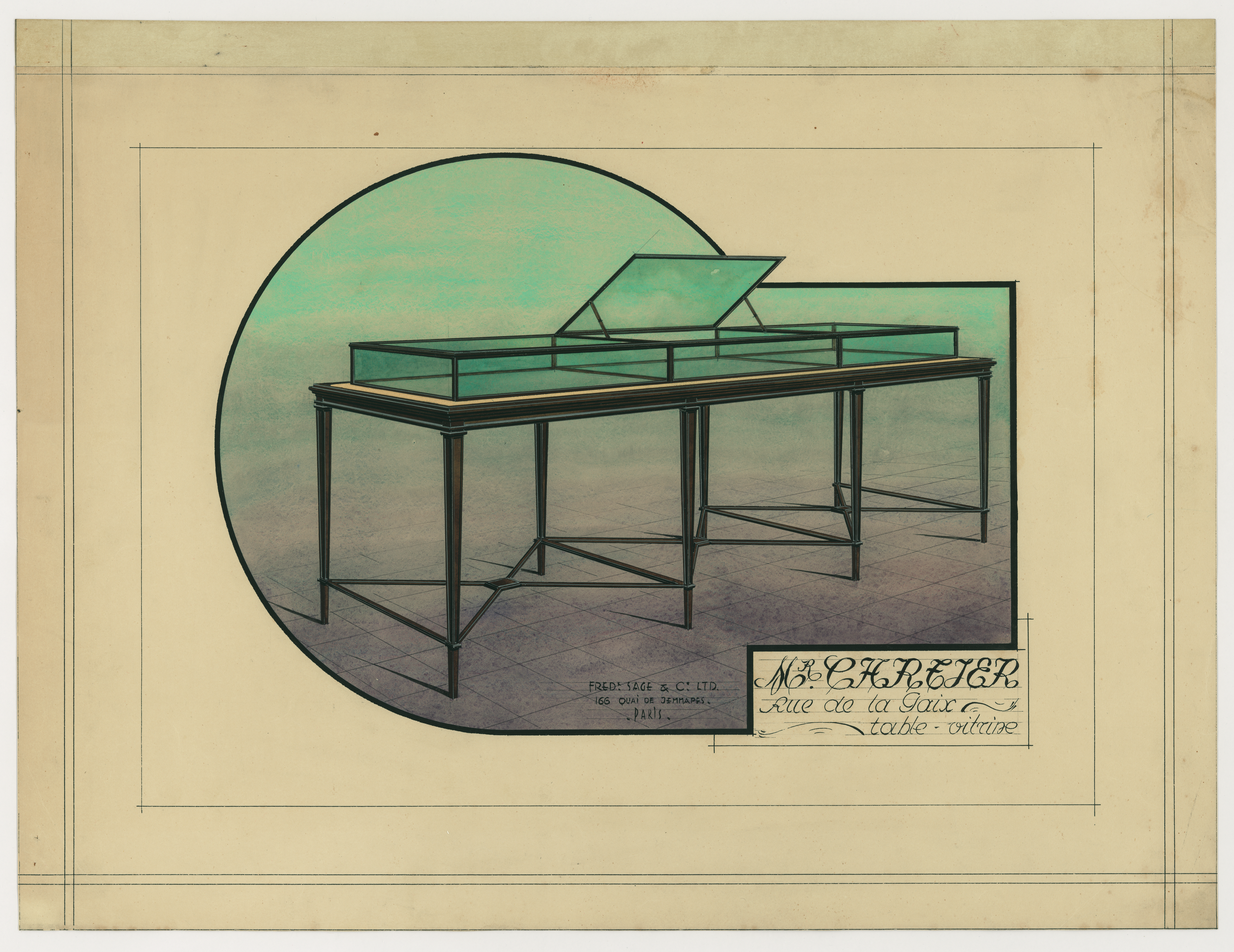
While the store’s façade changed little over the decades, its interiors were regularly updated. Interior designer Carlhian redesigned the space in the 1930s, installing sleek display windows in line with that era’s vogue for geometrical shapes.
13 Rue de la Paix was redecorated several times between 1965 and 2005. Now extending over several floors, the store houses new sales areas and some of the high jewelry workshops, along with the Maison’s archives.
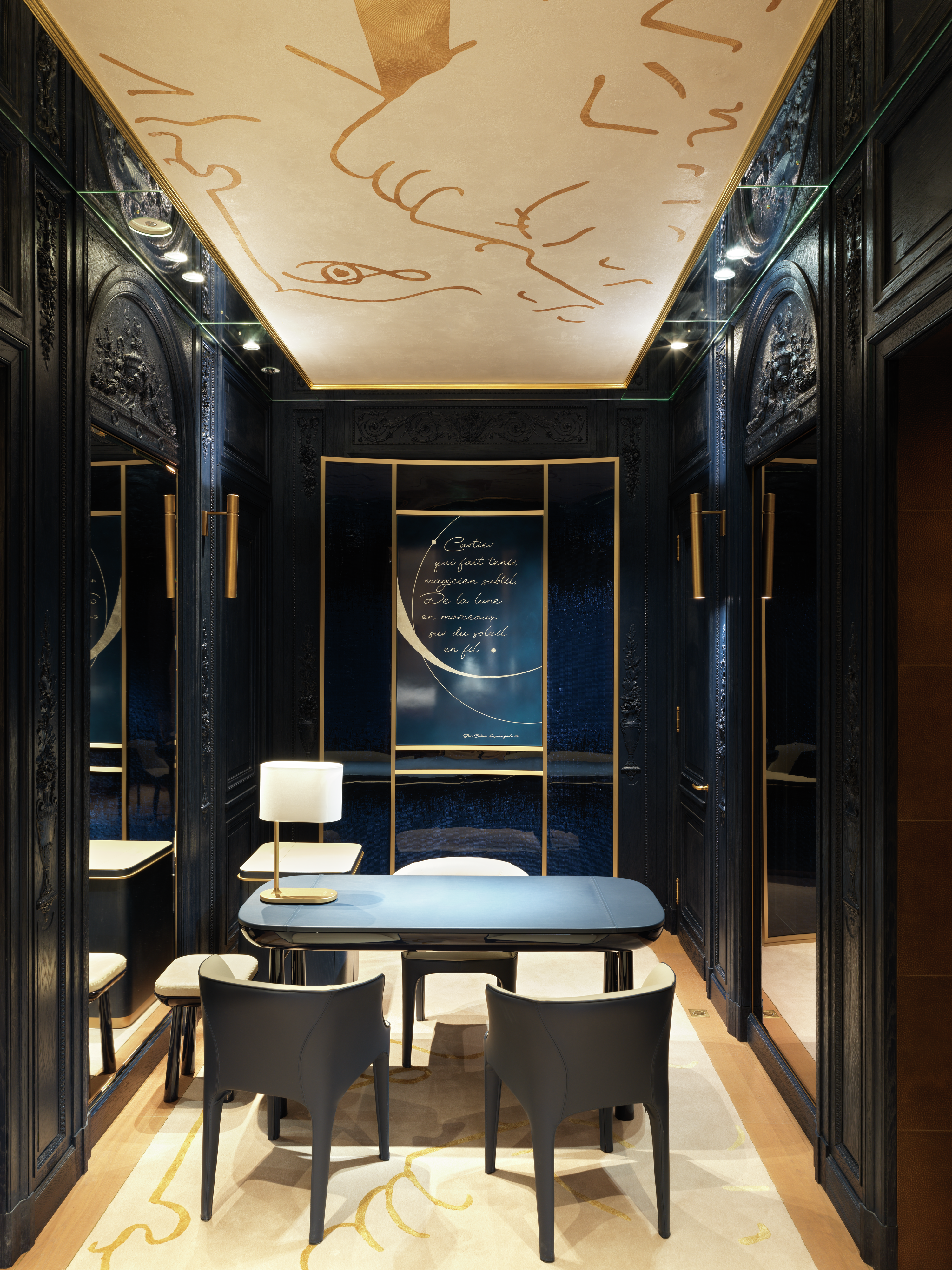
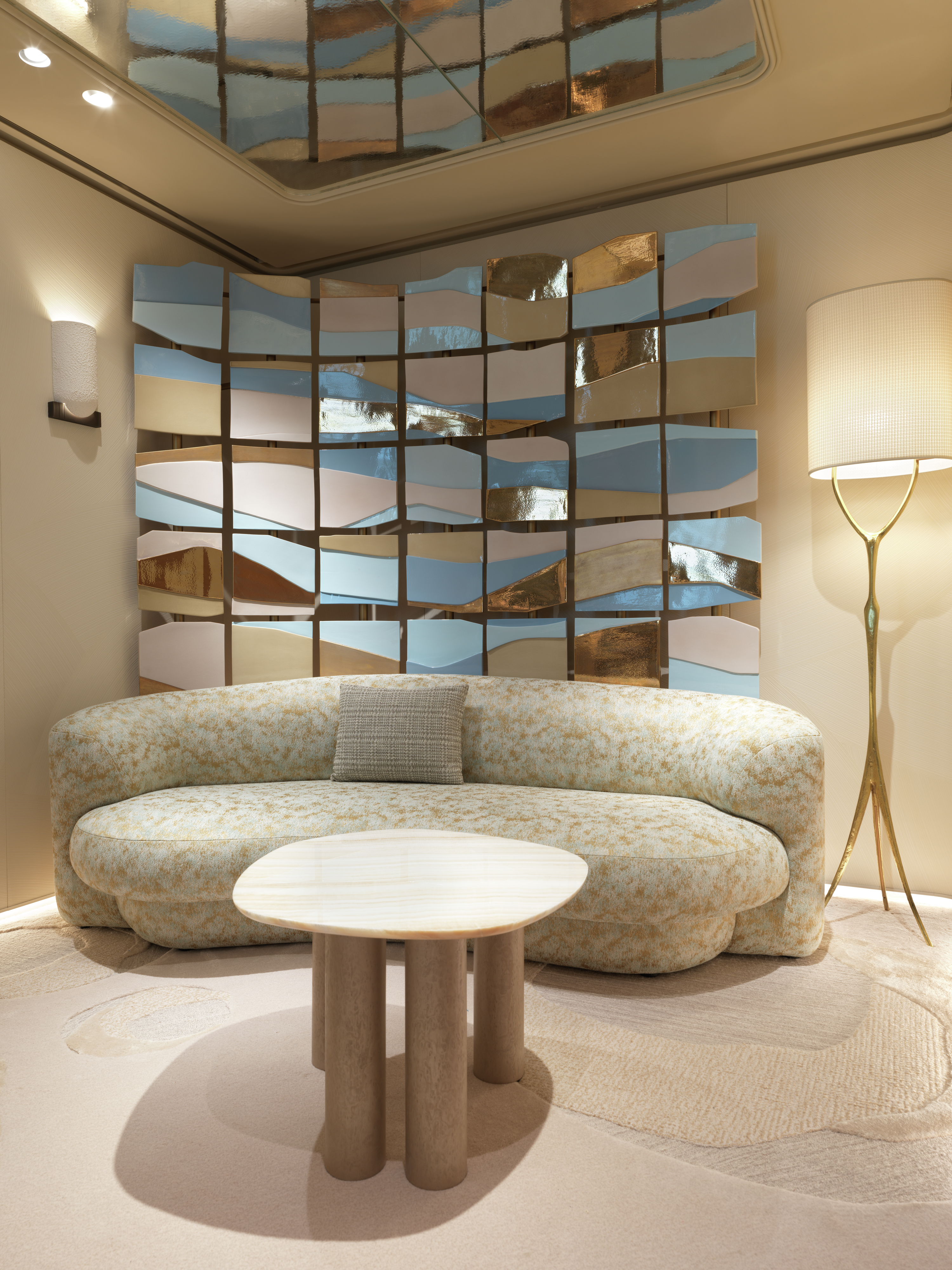
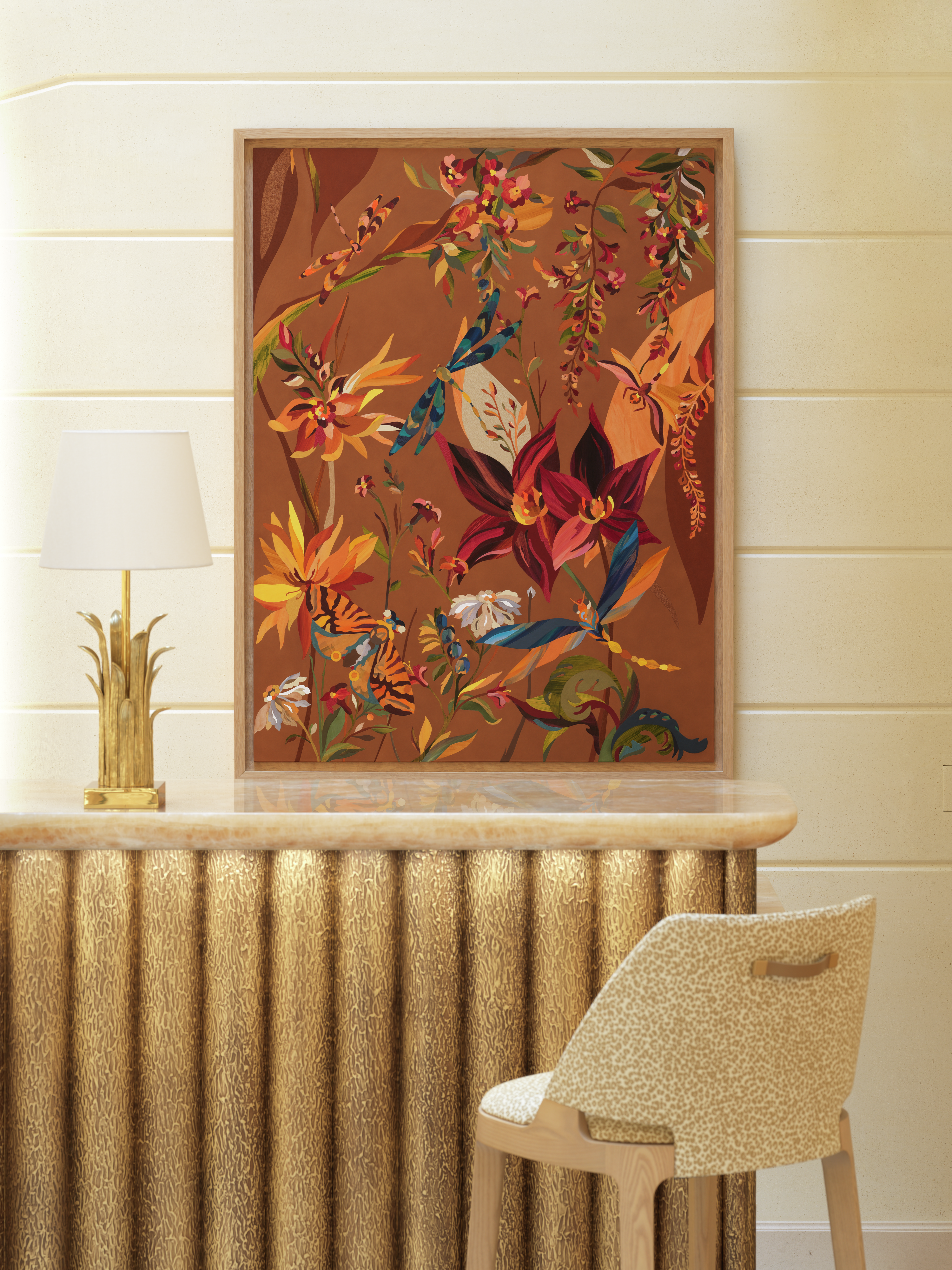
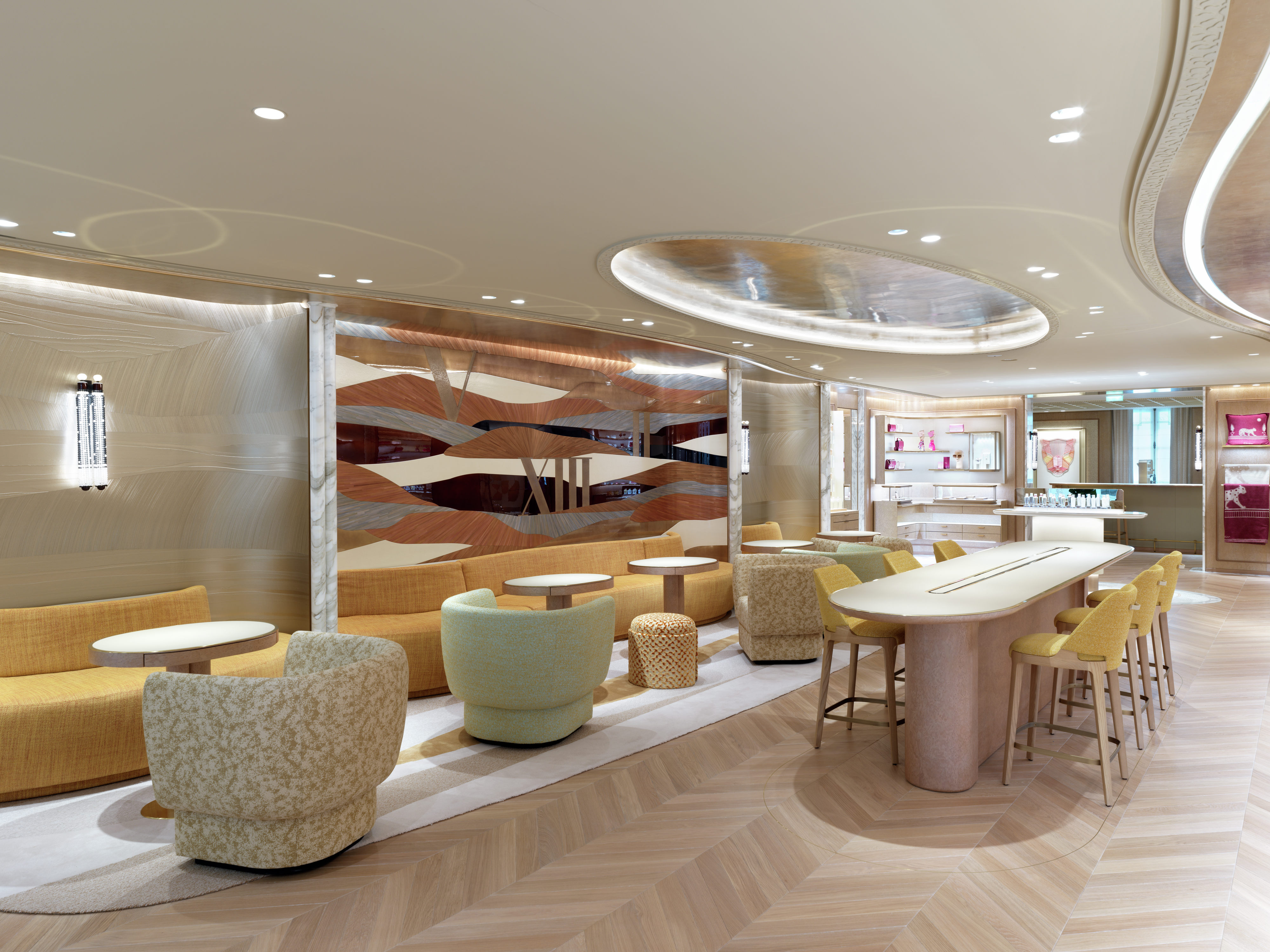
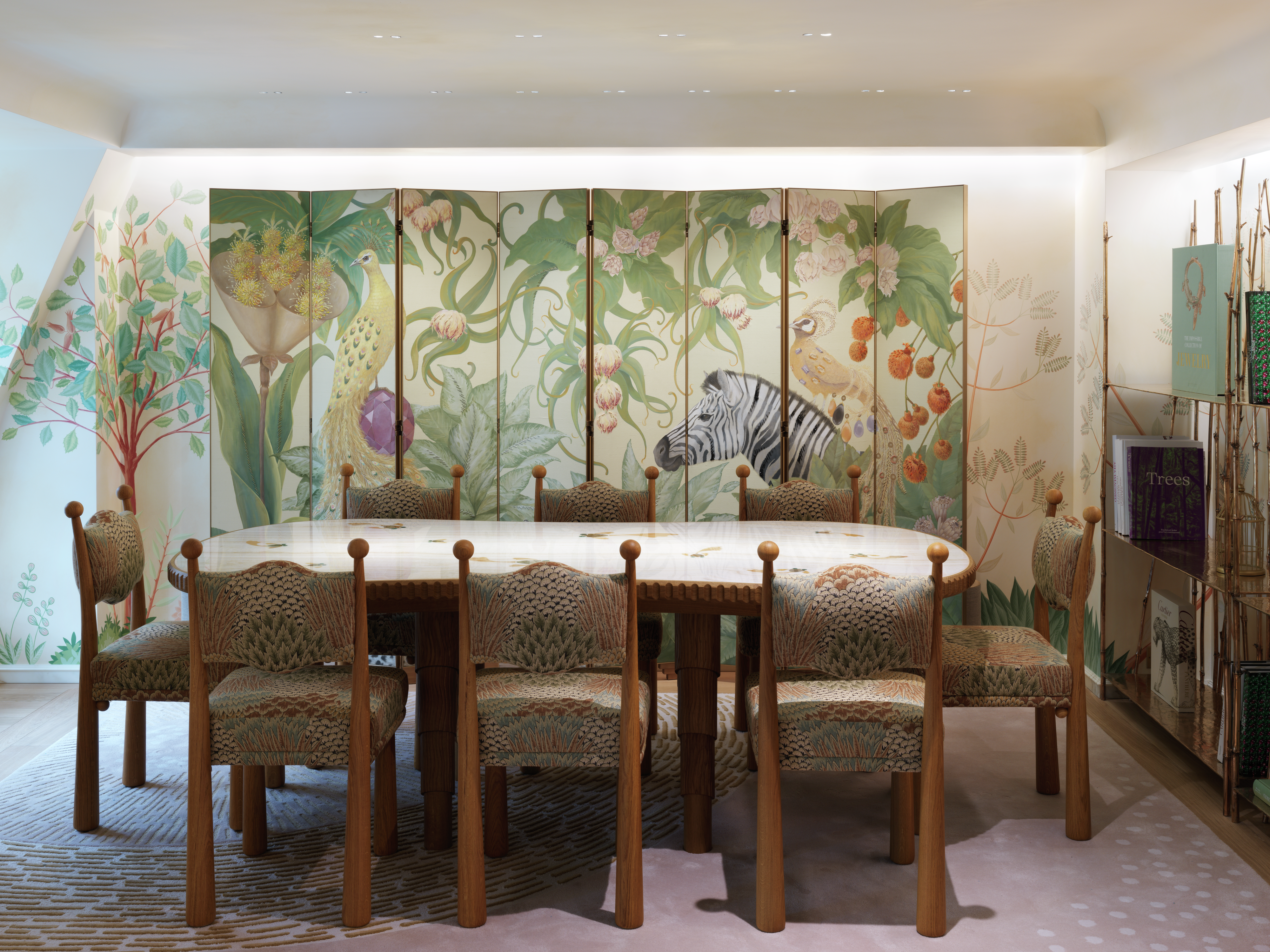
In 2022 three teams of architects were commissioned to undertake the latest transformation. Moinard Bétaille were responsible for the three stories of sales space; Studioparisien took charge of the client service, workshop, and Archive spaces; and Laura Gonzalez designed an exclusive Residence on the top floor. The interiors are both soft and luminous, inviting visitors to walk around. At the back of the store, a new multi-storey atrium brings light onto the impressive reconstruction of a classic Parisian building façade. The store’s five levels have been redesigned in a contemporary spirit that celebrates the Maison’s heritage. Combining classical elements with a fresh contemporary decor, the salons are named Art Deco, Inde, and Jean Cocteau. The wooden paneling in the Louis Cartier salon was preserved, while the Jeanne Toussaint salon pays tribute to the former creative director’s fondness for bold colors and generous volumes. Cartier’s profound respect for craft skills is reflected in several pieces commissioned from craftspeople and master artisans, including lacquered wood by Atelier Midavaine, stone marquetry by lapidary sculptor Hervé Obligi, and leather marquetry panels by Baqué Molinié.
The cradle of Cartier style
13 Rue de la Paix was attracting a prestigious international clientele from the late 19th century. Illustrious early clients whose visits are mentioned in the Archive records include Maria Pavlovna in 1899, then businessman J. P. Morgan, who acquired one of the Maison’s first platinum watches, and Aga Khan III who bought a corsage ornament and two tiaras. The contemporary press also carried accounts of royal visits, sometimes illustrated with photographs. For instance, on November 19, 1913, Le Figaro reported: “Not departing from his habits, the King of Spain first went to Cartier, the well-known jeweler in Rue de la Paix.”
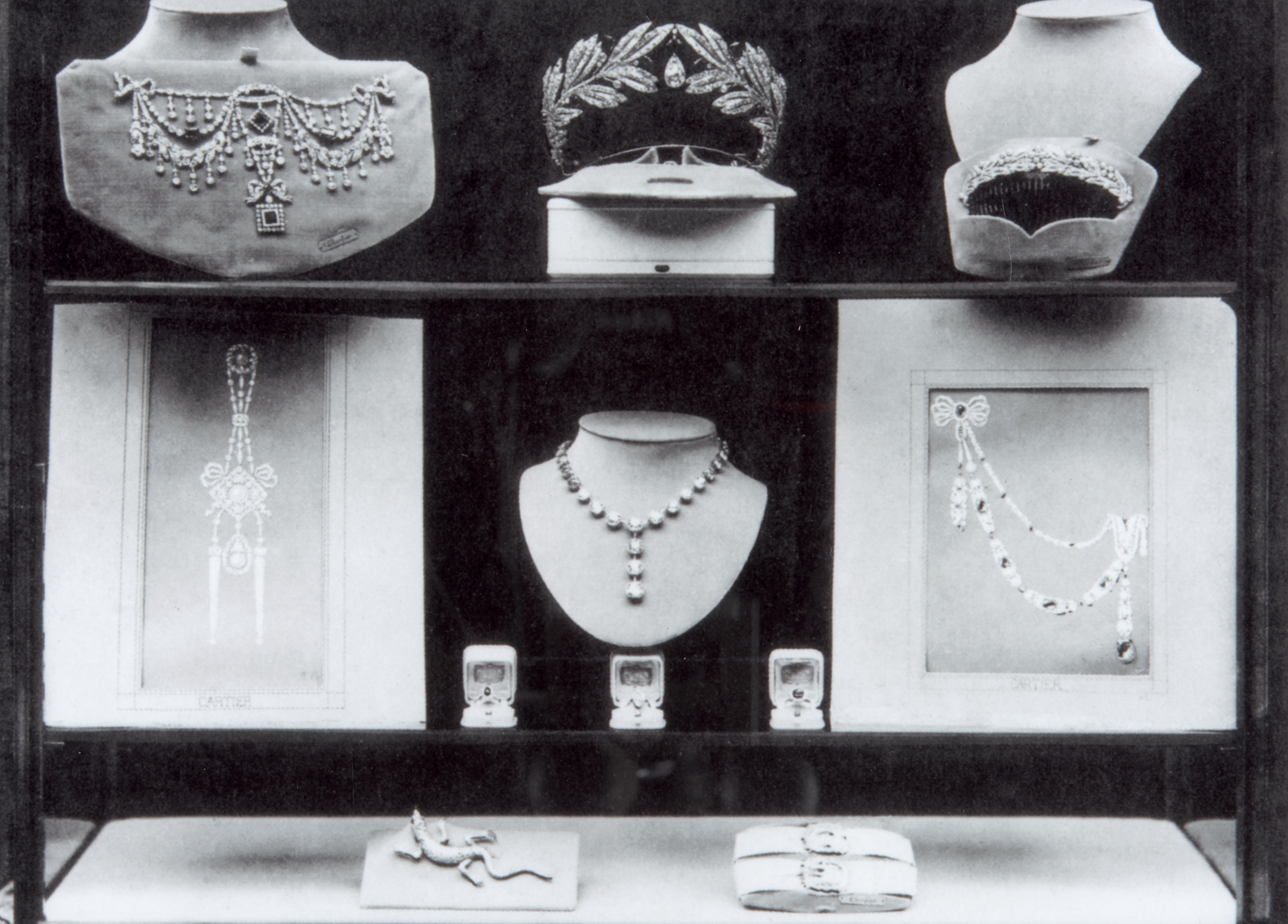
Special orders from important clients were also displayed in the Rue de la Paix storefront windows. In 1907, Cartier was commissioned to craft the jewelry in Marie Bonaparte’s wedding basket for her marriage to Prince George of Greece. For a time, the boutique showcased these pieces in a window display that included a diamond and pearl hair comb (later transformed into a tiara and now held in the Cartier Collection), and a laurel wreath tiara of diamonds and emeralds. In 1928 the 13 Rue de la Paix windows had another memorable display, with three of the Maharaja of Patiala’s commissions, including his magnificent ceremonial necklace. And to mark King George VI and Queen Elizabeth of England’s official visit in 1938, the whole storefront was decked out to celebrate Franco-British friendship.
In 1942 the store’s windows carried an even more patriotic message. In the midst of war, Jeanne Toussaint had them display brooches featuring a caged bird, symbolizing the German occupation. Two years later when the country regained its freedom, this theme was reinterpreted in celebratory fashion: now the birds were out of their cages and sported the colors of the French flag.
Daisy Fellowes, Barbara Hutton, and Mona Bismarck were leading figures of Café Society, later known as the jet set, and loyal clients at 13 Rue de la Paix. They often visited the store to buy jewelry or place orders for special designs. In 1953 the Duchess of Windsor drew attention at the Orangerie Gala ball with her stunning bib necklace of amethyst and turquoise, warmed by the glow of yellow gold. Legend has it that a few years later, in 1975, Mexican actress María Félix stepped into 13 Rue de la Paix carrying a live baby crocodile and asked the jewelers to make her a necklace that was absolutely true to life. The resulting piece, now held in the Cartier Collection, is made up of two fully articulated little crocodiles – one paved in yellow diamonds and the other in emeralds – illustrating extraordinary jewelry-making expertise.
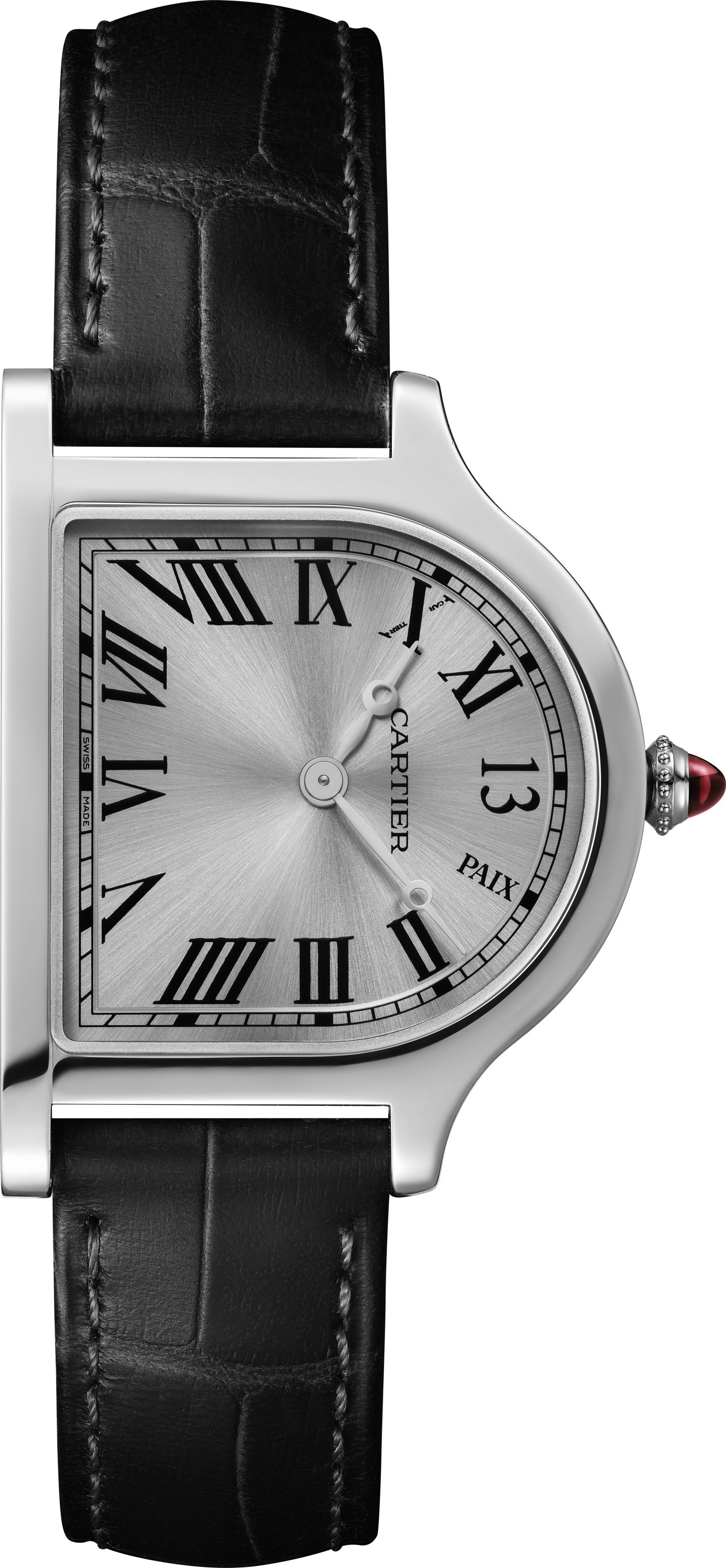
Even today, the windows of 13 Rue de la Paix regularly display exclusive collections. In 1999 Cartier presented “13 Parures pour le 13,” a collection specially designed to celebrate the store’s 100th anniversary. Another new collection with the same name was introduced in 2005 to mark the store’s public reopening after renovation. In 2022, following the locale’s latest metamorphosis, the Maison perpetuated this tradition with a suite of new designs: high jewelry sets, jeweled accessories, pieces of jewelry, and timepieces including limited series of Cloche, Tonneau, and Tank Asymmetrical watches whose dials bear the number 13.