
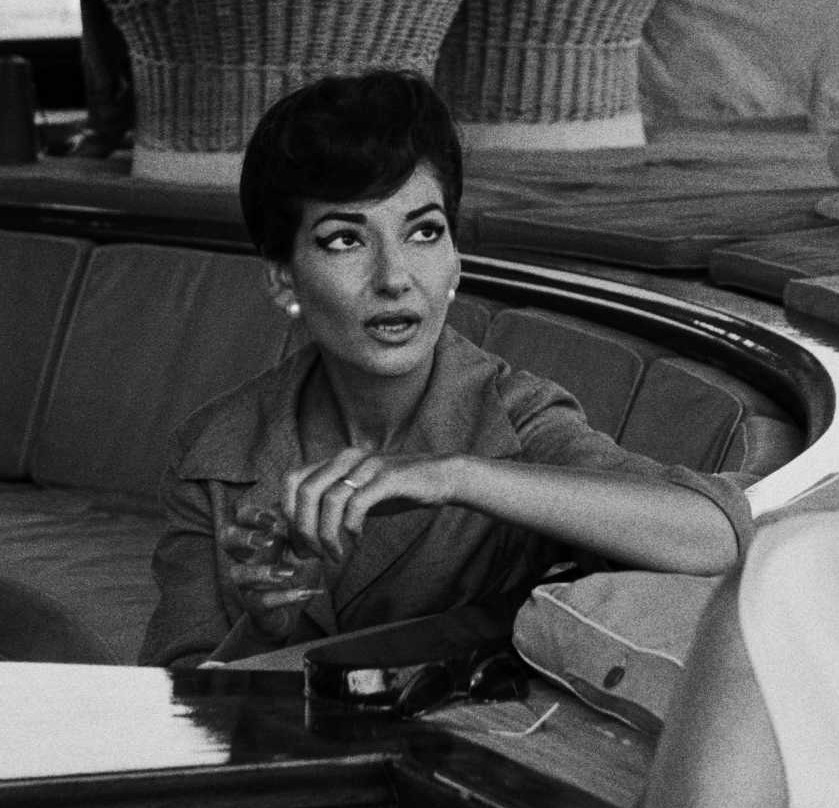
Maria Callas (1923–1977) ranked among the finest female singers of the 20th century, revolutionizing not only her craft but the image of the opera singer—now become a diva decked out in haute couture gowns and Cartier jewelry.
Born in New York on December 2, 1923, Marianna Sofia Cecilia Kalogeropoulos was the daughter of Greek parents who had fled poverty. Her mother decreed from her earliest age that she was to become a pianist, and her older sister, a singer. But a different fate was in store for Marianna: she loved to sing and had a talent for imitating the voices she heard on her mother's opera records.
After her parents separated, Marianna moved to Athens with her mother and sister in 1937, where she was accepted at the National Conservatoire. Building on the skills acquired during her lessons in singing, piano, drama and languages, the teenager joined the renowned Elvira de Hidalgo’s class. This prestigious soprano taught her the art of bel canto and helped her hone her operatic and stage skills.
A meteoric rise
Although Marianna landed her first role when she was 18, her career only really took off a few years later, after she met opera conductor Tullio Serafin. The famous maestro pulled strings to get her onto the program of Verona’s Arena Festival in 1947, where she won over the audience and critics alike. She also captivated the entrepreneur Giovanni Battista Meneghini, who would become her manager and husband.
Now known as Maria, the young Callas was already impressing the opera world with her unique timbre and her capacity to quickly prepare for each new role and make it her own – despite how widely her roles differed from one production to the next. She often earned rapturous reviews and her fame soon spread beyond the borders of Italy. The contracts came thick and fast, and she threw herself into a punishing schedule of touring and recording. Audiences flocked to hear her sing in Milan, Mexico, Buenos Aires, Dallas, Chicago, Munich, London, and New York. With each new premiere, Maria Callas got her husband to give her some new jewelry. These pieces were bought from the finest jewelers, including Cartier, and she wore them around town as well as on stage.
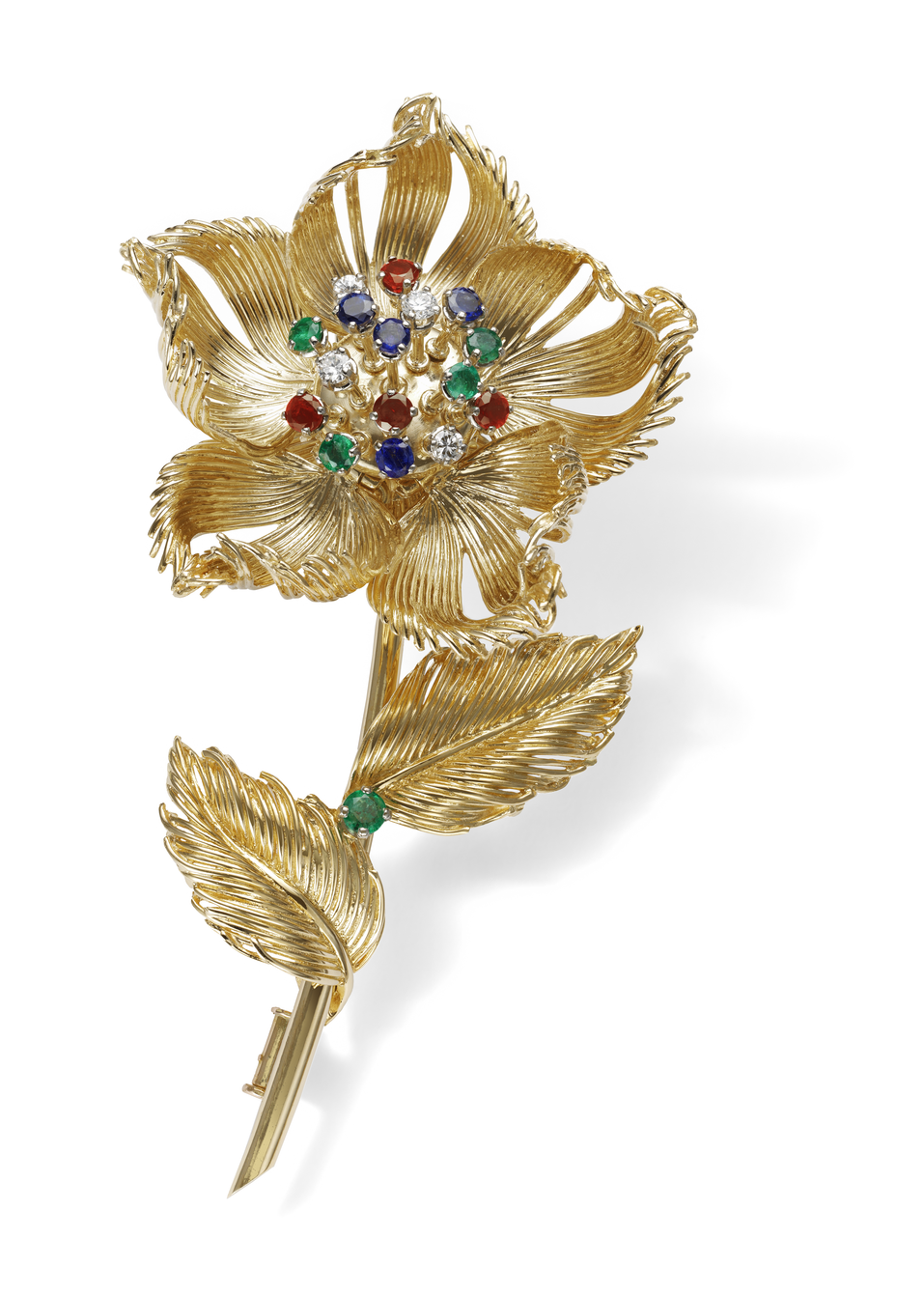
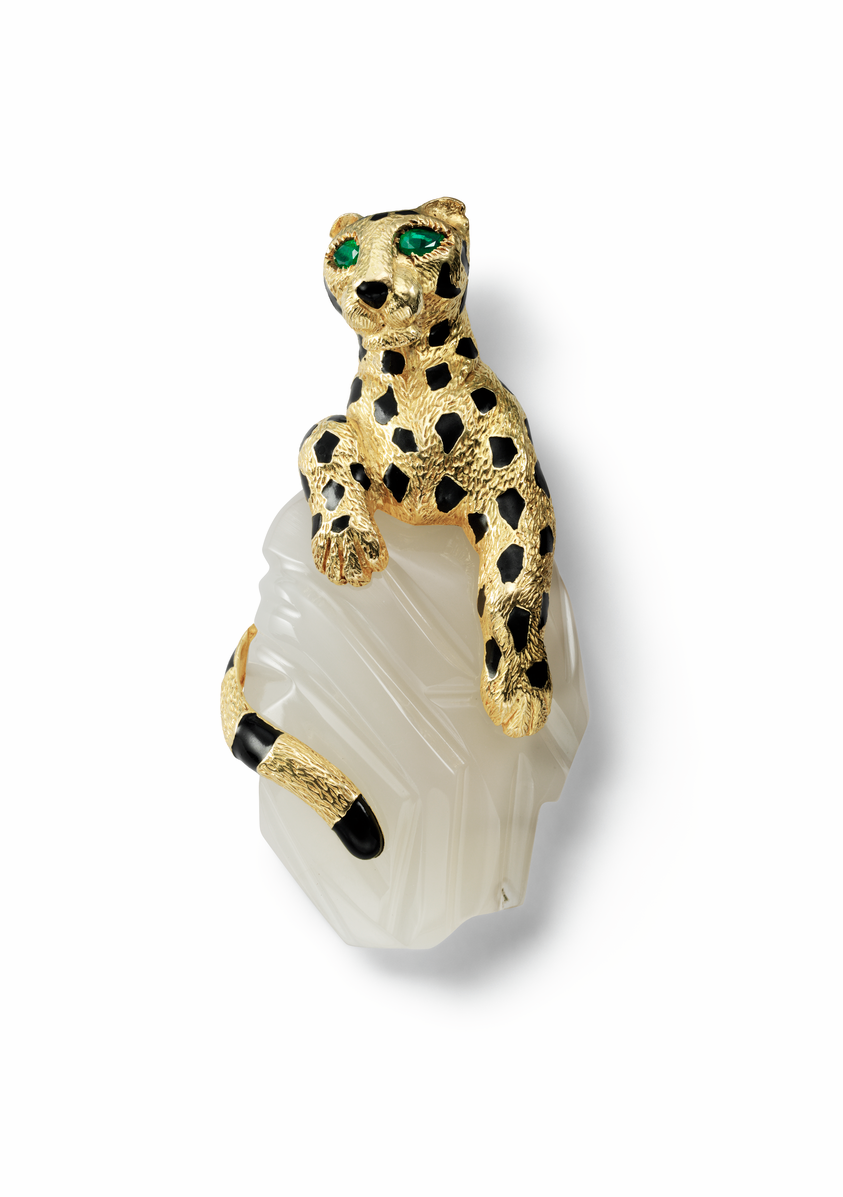
There is a 1972 brooch in the Cartier Collection that belonged to Callas; crafted in gold, platinum, diamond, emerald, sapphire and ruby, it is shaped like a rose, with an emblematic system that allows the flower’s petals to be opened and closed. She also owned a Panther brooch, symbolic of an assertive character and innate grace.
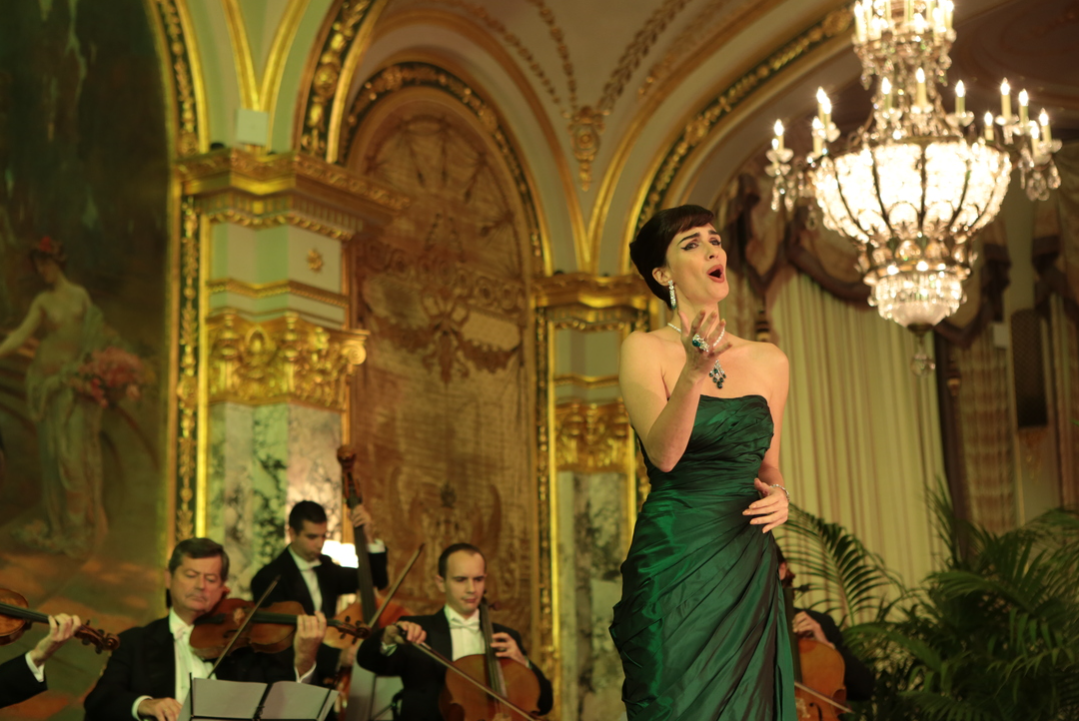
Callas’ loyalty to Cartier was such that, several decades later, when Olivier Dahan was filming Grace of Monaco (2014), he called on Cartier to create jewelry for the Callas character, as played by Paz Vega.
Starting a new life with Onassis
The end of the 1950s marked a turning point in Maria Callas’ career. Her doctors were constantly warning her that living and working at such a frenetic pace was endangering her voice, as well as her physical and mental health. After her eagerly awaited Paris debut in December 1958—a triumphant, but exhausting, performance—the singer agreed to slow down. In 1959 she yielded to the insistence of wealthy Greek shipowner Aristotle Onassis, accepting an invitation to join him on his yacht, the "Christina O". Callas felt almost reborn under the spell of Onassis and the luxury of his yacht, with its fireplaces of onyx and lapis lazuli, where she tasted a new freedom. This vacation marked the end of her marriage to Meneghini and the beginning of a passionate and tormenting relationship with Onassis. In this new life of hers, opera no longer came before everything else.
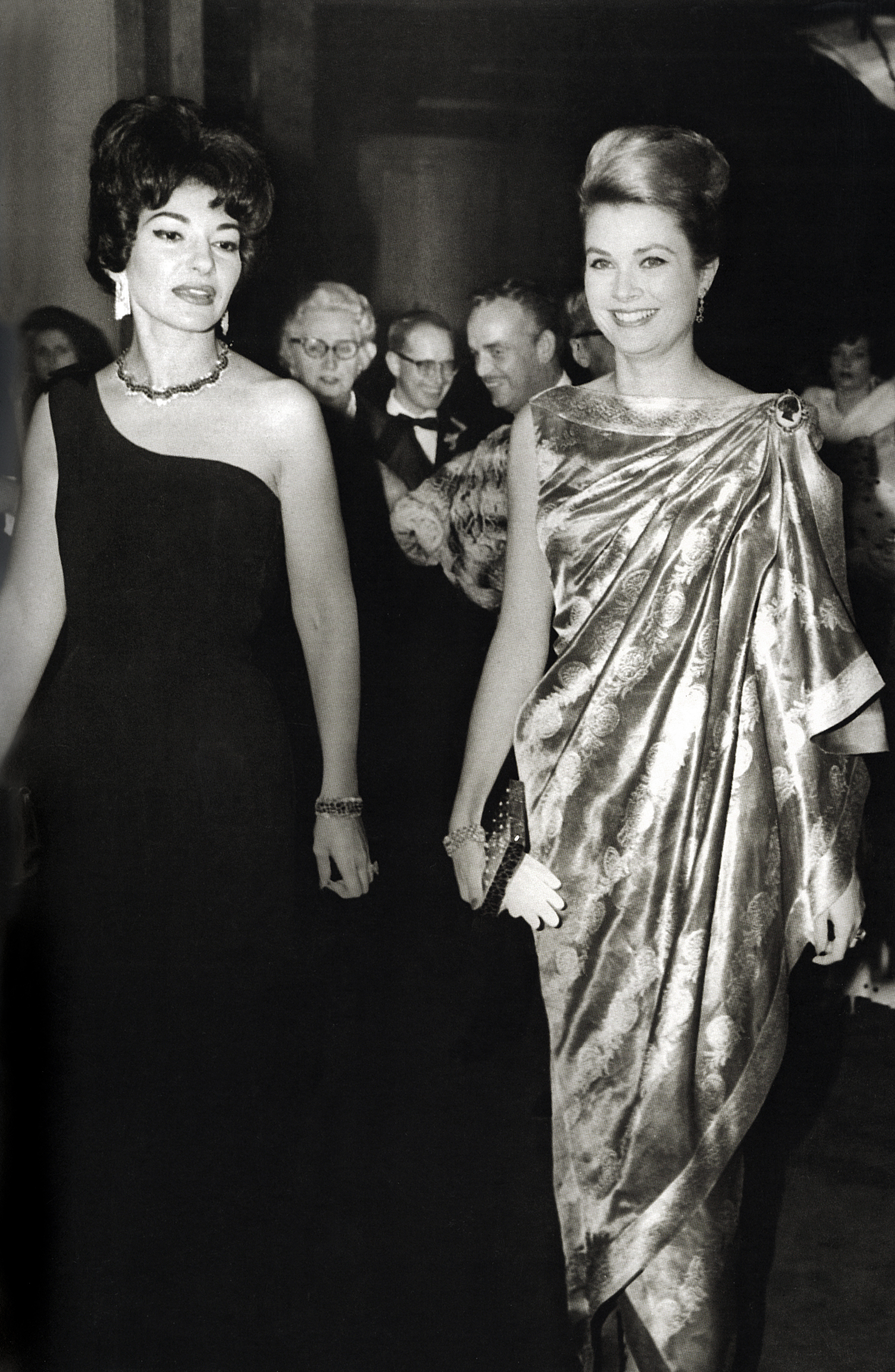
Since meeting the socialite and columnist Elsa Maxwell, Callas had also acquired a taste for glamorous society, and she now mixed in the close-knit circles of the jet set. Dressed by the world’s greatest couturiers, she jetted between New York, Venice, and Paris to attend select dinners and costume balls with the likes of Marlene Dietrich, Elizabeth Taylor, Grace Kelly, Hélène Rochas, Sir Cecil Beaton, Begum Aga Khan, and the Duchess of Windsor. While the press had a field day reporting on her social engagements, it was increasingly scathing about her singing, and downright harsh about her private life. An Italian critic wrote in 1960: “[Callas] is both an object of love and of hate. In such circumstances, simply opening her mouth is already a heroic act.”
The later years of a legendary diva
In 1969 Maria Callas decided to branch out in a new creative direction by agreeing to play the title role in Medea, a movie by talented but controversial Italian director Pier Paolo Pasolini. Callas had categorically turned down many past offers from filmmakers, including Luchino Visconti, who had been captivated by La Divina’s large expressive eyes and graceful bearing. But as an expert in playing tragic characters, Callas was fascinated by the role of Medea, which she had already performed to great acclaim on stage. Unfortunately, the film was not a commercial success.
The Greek American artist tried her hand at staging recitals and teaching opera over the following years, but never achieved the success she hoped for. Devastated by the successive deaths of several people she loved, including Onassis – who had ultimately left her to marry Jacqueline Kennedy – Callas permanently withdrew from public life, and died prematurely at the age of 53 on September 16, 1977.