

Cartier has always been as fascinated by faraway cultures as it is by the world around us, and Asia was of particular interest from early on. Along with fantastical beasts and figurative or stylized traditional motifs, its color contrasts and juxtapositions of materials have formed part of the Maison’s rich stylistic repertoire for more than a century.
Cartier and Asia from the late 19th century
Europeans have been keen on objects and works of art from Asia ever since Classical times. During the Renaissance, European collectors enriched their cabinets of wonder with precious and unique items brought back from expeditions to the Far East. The influence of Asian culture on the West reached unprecedented heights from the 19th century and throughout the 20th, particularly among artists—the Impressionists especially were inspired by the flat areas of color in Japanese prints. The World Fairs contributed to further spreading awareness of the arts and knowledge of non-European cultures. Japan was represented by a delegation as early as 1867, while China exhibited for the first time in 1900.
This chronology echoes Cartier’s design evolution. The Maison incorporated traditional Asian motifs into its stylistic vocabulary so much that the two became inextricably associated, fueling people’s curiosity and a growing vogue for these cultures. The earliest references to Asia in the Cartier archives date back to the late 1870s and relate to designs of Chinese inspiration. Japan is mentioned a few years later, around 1880.
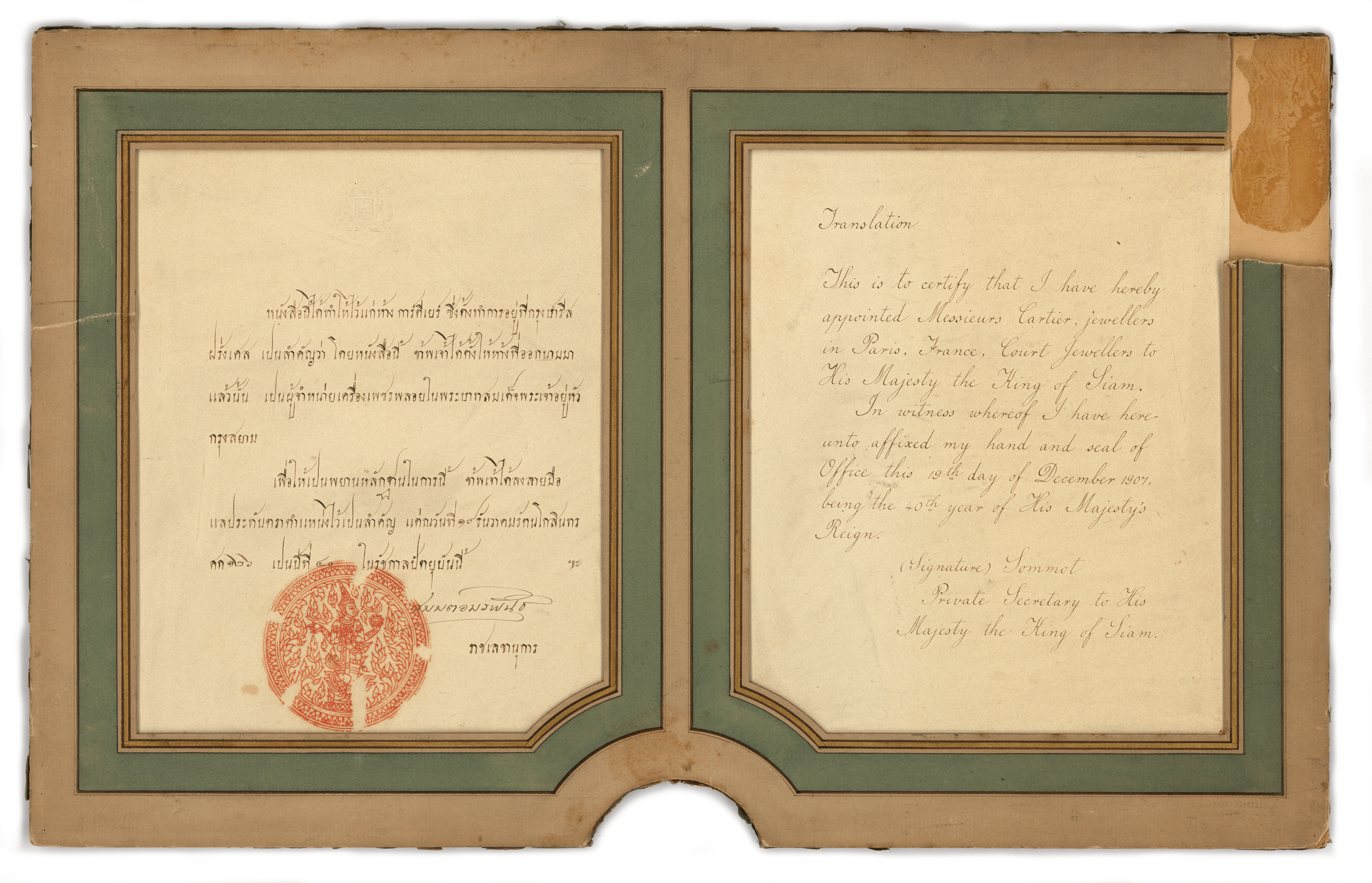
The Maison’s trade exchanges with Asia – starting in 1907, when the Siamese Court conferred its royal appointment – no doubt also stimulated it to explore this rich seam of iconographic inspiration. The renowned salesman Jules Glaenzer travelled eastward in 1908–1909 on a journey that took him to Colombo, Singapore, Bangkok, Saigon, Hong Kong and Shanghai, among other places.
Asian design motifs came to define the Cartier style
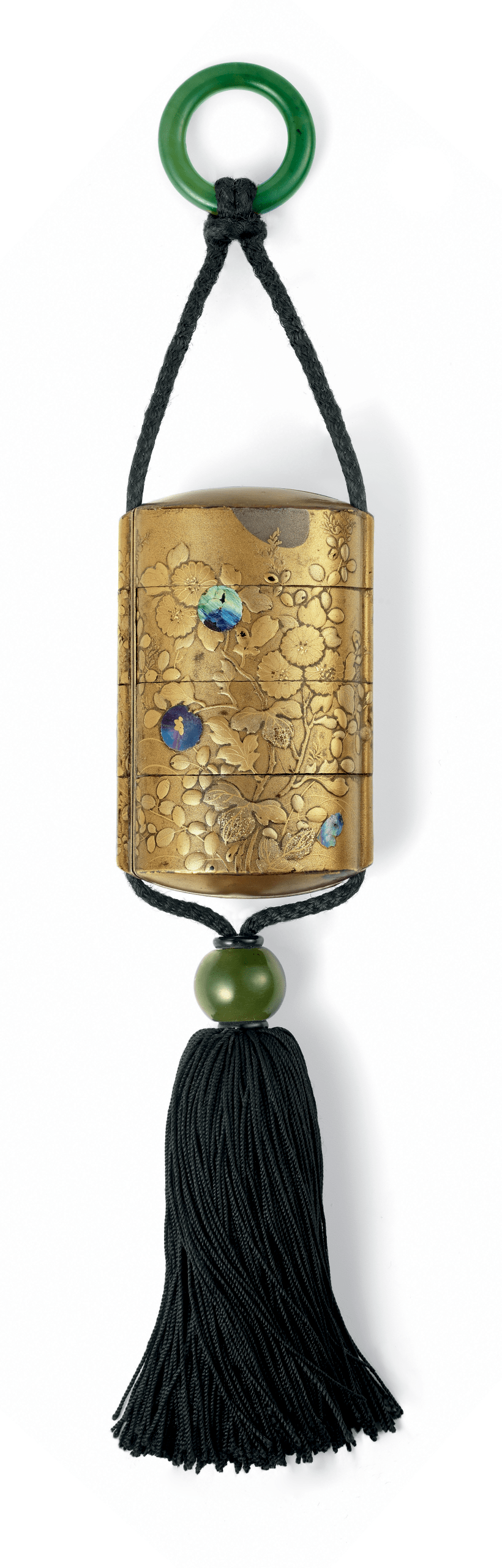
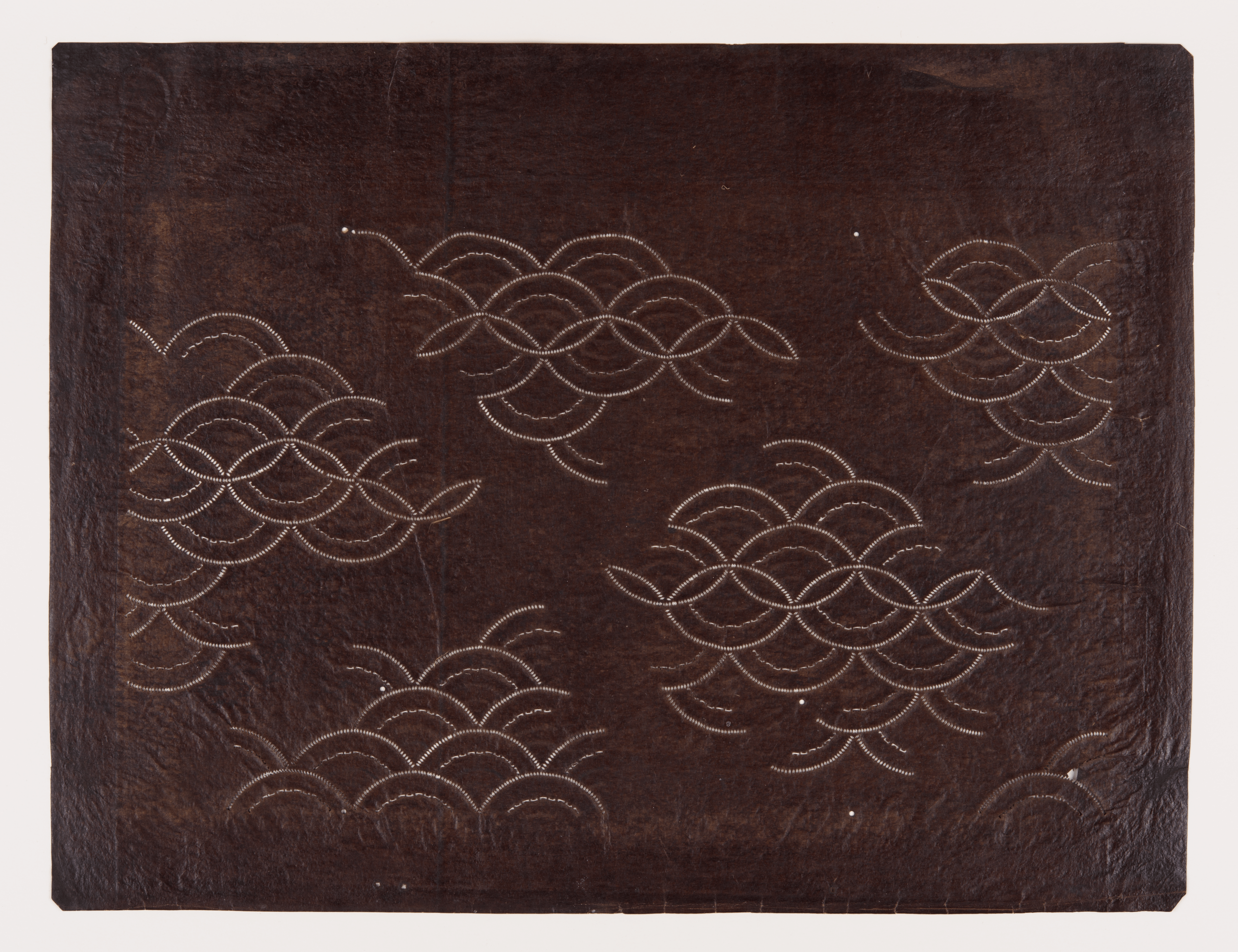
As a keen-eyed lover of art and beauty, Louis Cartier played a decisive role in how the Asian aesthetic came to influence the Maison’s creations. He often visited specialist Parisian dealers to buy antiques, both for his own private collection and to share with those he worked with. He had a particular fondness for katagami, a type of fine stencil used in Japan for dyeing cloth, whose traditional motifs would be used in the Maison’s designs. The fastening system used on early 20th-century vanity and cigarette cases also owes a lot to inrōs, the little containers with stacked compartments that were worn suspended from the waist on a kimono sash.
Louis also allowed the in-house designers to consult his extensive library, which held The Grammar of Ornament, published by architect and interior designer Owen Jones in 1865, and all the issues of Le Japon Artistique (“Artistic Japan”), a magazine whose reproduction of a silk fabric patterned with wisteria branches inspired a pair of 1903 brooches.


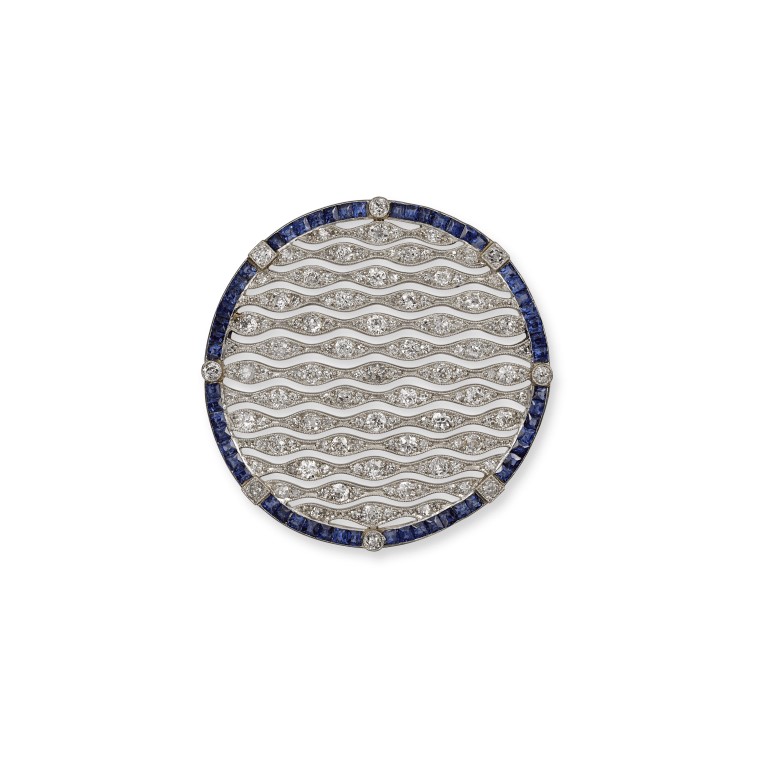
Whether drawn from real objects or books, Asian influences contributed enormously to defining the “Cartier style.” Their stylized, verging on abstract, interpretation of natural elements and symbols found an echo in Louis Cartier’s quest for essential purity and the simplification of forms. Many pieces from this period—later dubbed “style moderne”—play with contrasting shapes, clean lines and strong graphic effects, heralding the following decade’s Art Deco aesthetic. Certain pieces seem to be directly inspired by Far Eastern cultures. For instance, two brooches dating from 1907 and 1910 recall the stylized waves of a Japanese print or katagami patterns, while other, more geometric designs bring to mind sapeques, the Chinese coins that also gave rise to traditional decorative ornaments.
Throughout the following decade, these kinds of motifs would continue to enrich Cartier’s repertoire. Clouds, basketwork patterns, traditional meanders and ideograms are all typical of Cartier designs from this period. A fine example is the 1926 brooch with a curved structure radiating from its central black Chinese-inspired enamel motif. Untethered from their symbolic connotations, yet still true in their forms, these designs take on a certain universal quality and are instantly intelligible thanks to their evocative power and graphic force.
Myths and Emblems
While the Roaring Twenties at the height of Art Deco were marked by a taste for the faraway, the exotic, and an Oriental fantasy style, Cartier stood out for its respectful approach and subtle knowledge of distant cultures.
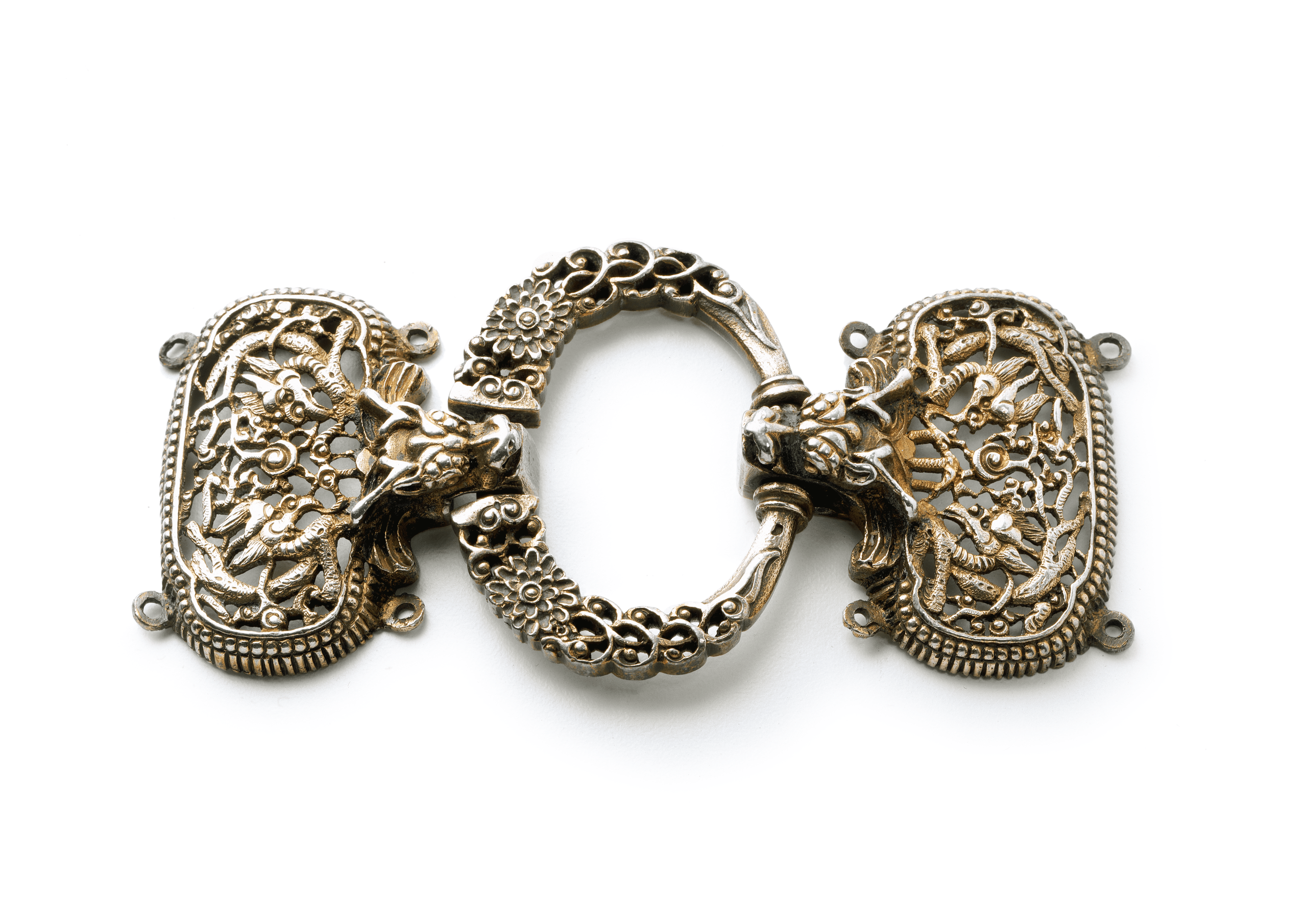
The way in which the Maison integrated Asian animals—often fantastical or mythological creatures—into its repertoire offers a telling example of this. Far from the common European representations that could be caricatural or nightmarish, Cartier’s evocations of these beasts preserved their traditional meaning, showing them with their ritual attributes. The dragon, for instance, is not represented as a terrifying monster at Cartier, but abides by the undiluted codes of Chinese iconography. A benevolent being that holds divine power and has peaceful—even protective—intentions, it features on several 1920s vanity cases within marine settings, since mythology describes dragons as living between sky and water. The dragon is also a symbol of the Empire and watches over Earth’s people from the celestial world, so it is often depicted surrounded by a multitude of ruyi, lucky decorative patterns recalling clouds and representing the heavens.


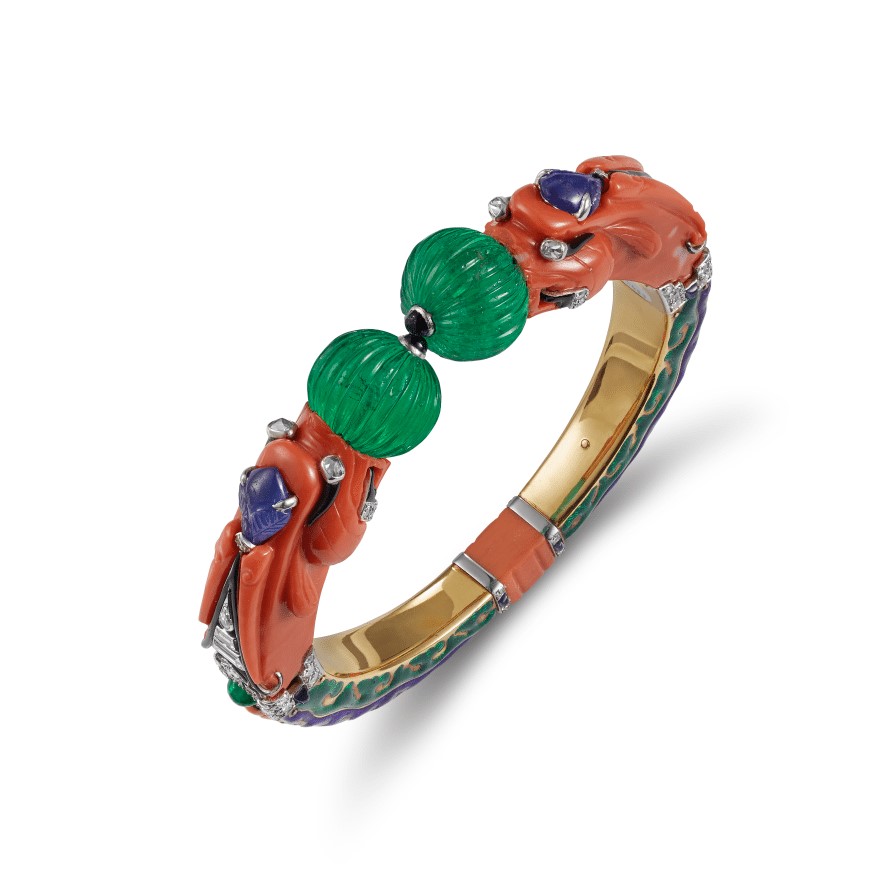
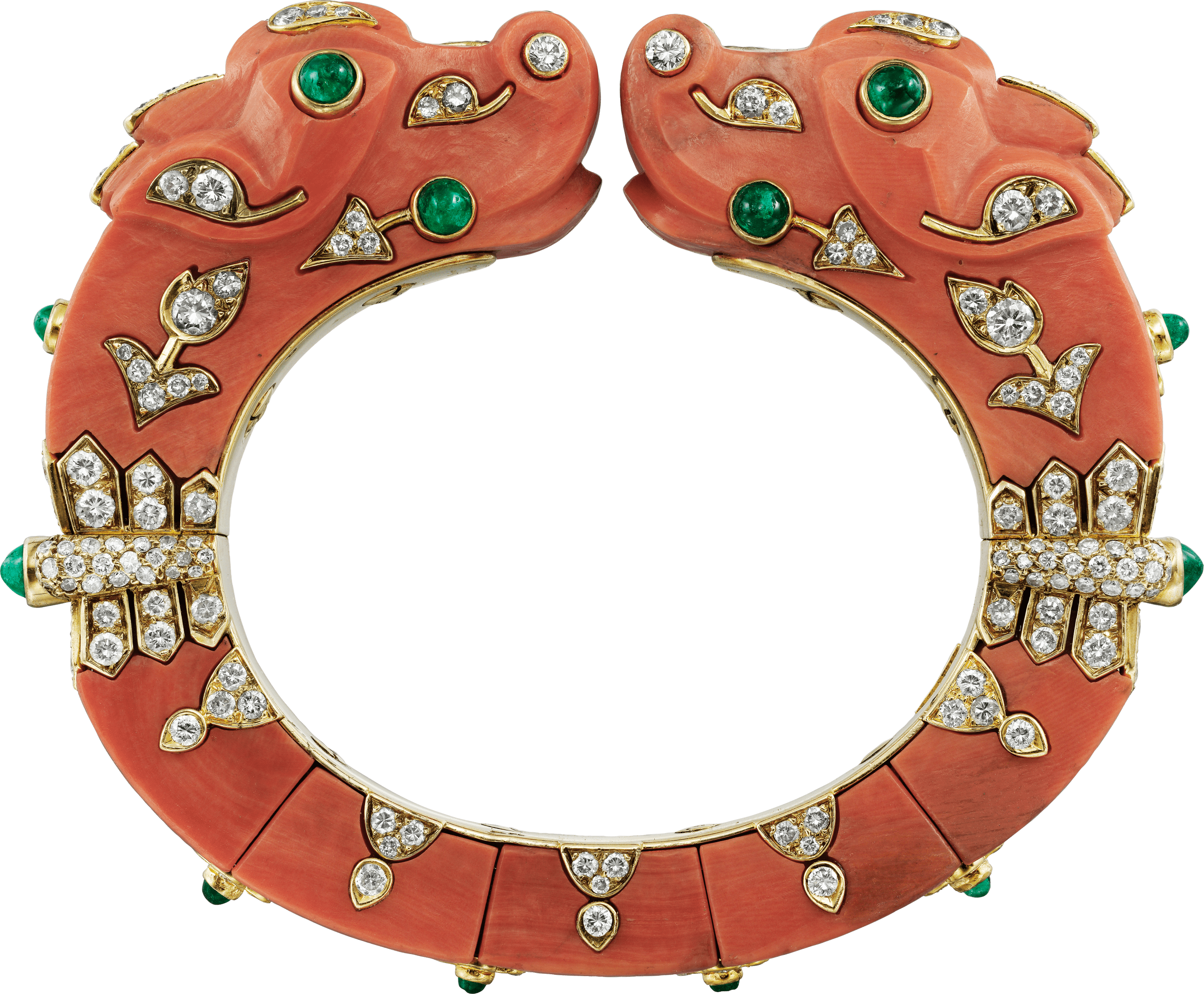
Foo dogs, phoenixes (or fenghuang), elephants, carps, and turtles—many animals, some of which already formed part of Cartier’s design repertoire in a different form—were now depicted according to the rules of Asian iconography. The chimera, a creature that is inextricably associated with the Maison’s bestiary, is undoubtedly among the most emblematic. From the 1920s onwards, its visual appearance was strongly influenced by Indian and Far Eastern cultures, which considered it a well-intentioned being synonymous with prosperity. The Maison notably conceived a new form of bracelet with two heads, usually of coral and emerald, facing each other. These pieces have become Cartier classics, appealing to a great number of clients including the opera singer Ganna Walska and famous heiress Daisy Fellowes.
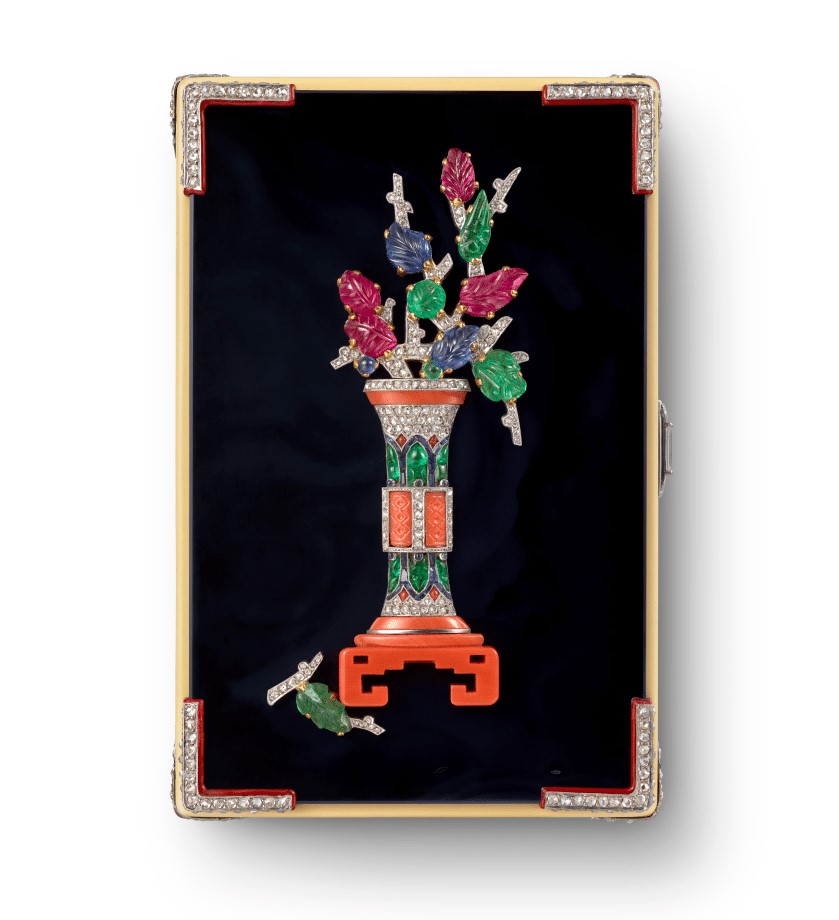
The Asian arts influenced not only the bestiary, but also the flora that is such a great source of inspiration for jewelers. Cartier added lotus flowers, chrysanthemums (which have positive connotations in Asia, where they herald the arrival of autumn), prunus and peonies to its repertoire. The art of Chinese and Japanese flower arranging, which seeks to recreate an ideal of nature in miniature, also inspired Cartier to compose new designs of vases or baskets of flowers and fruit, playing with the evocative mix of shapes and the colors of the stones.
A new palette of colors and materials
The Maison’s taste for Asia is closely tied to the choice of gemstones. In the early years of the 20th century designers were experimenting with bold chromatic contrasts, and Far Eastern influences led Cartier to bring some novel materials into its design vocabulary. Coral found new uses, now being cut or sculpted to form flowers or chimera heads. Enamel—generally red or black—enabled the Maison to expand its color span by introducing new shades. Lacquer also started to appear more frequently, often solid black deployed in big blocks of color. The vanity cases of the 1930s play on the contrast between large black-lacquered surfaces and coral detailing, in a particularly graphic color combination that has since come to epitomize the Cartier palette.

Other chromatic combinations also became strongly characteristic of the jeweler, notably the green/red accord. This contrast was first introduced by allying ruby with emerald, and then further explored through the use of jade—one of that era’s most desirable gems. In China this stone is considered particularly precious, highly prized for the many benefits people endow it with. In 1934 Barbara Hutton entrusted a necklace to Cartier made of 27 jadeite beads, probably cut in the 18th century, in order for the Maison to add a diamond and ruby clasp. This historic necklace is now held in the Cartier Collection.

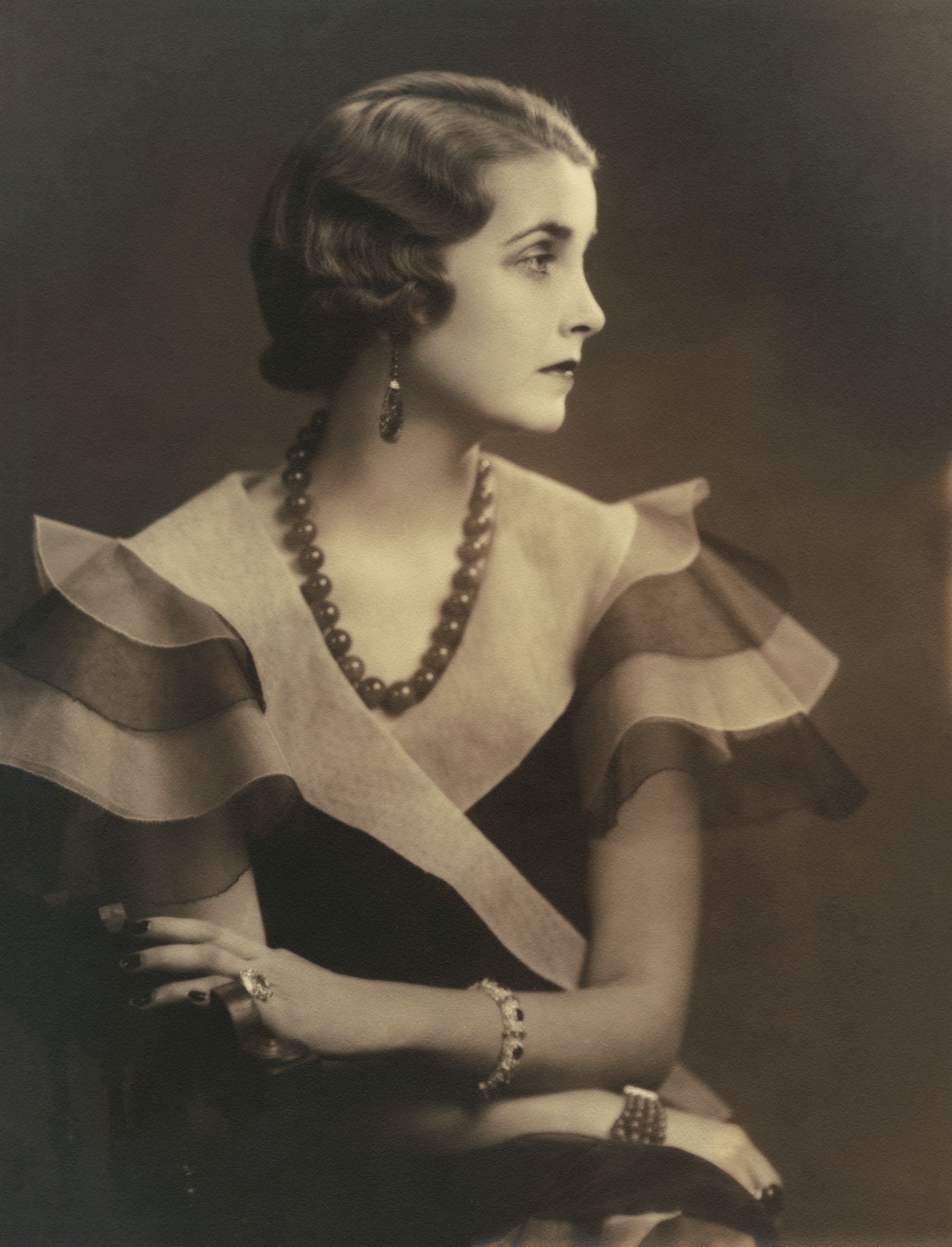
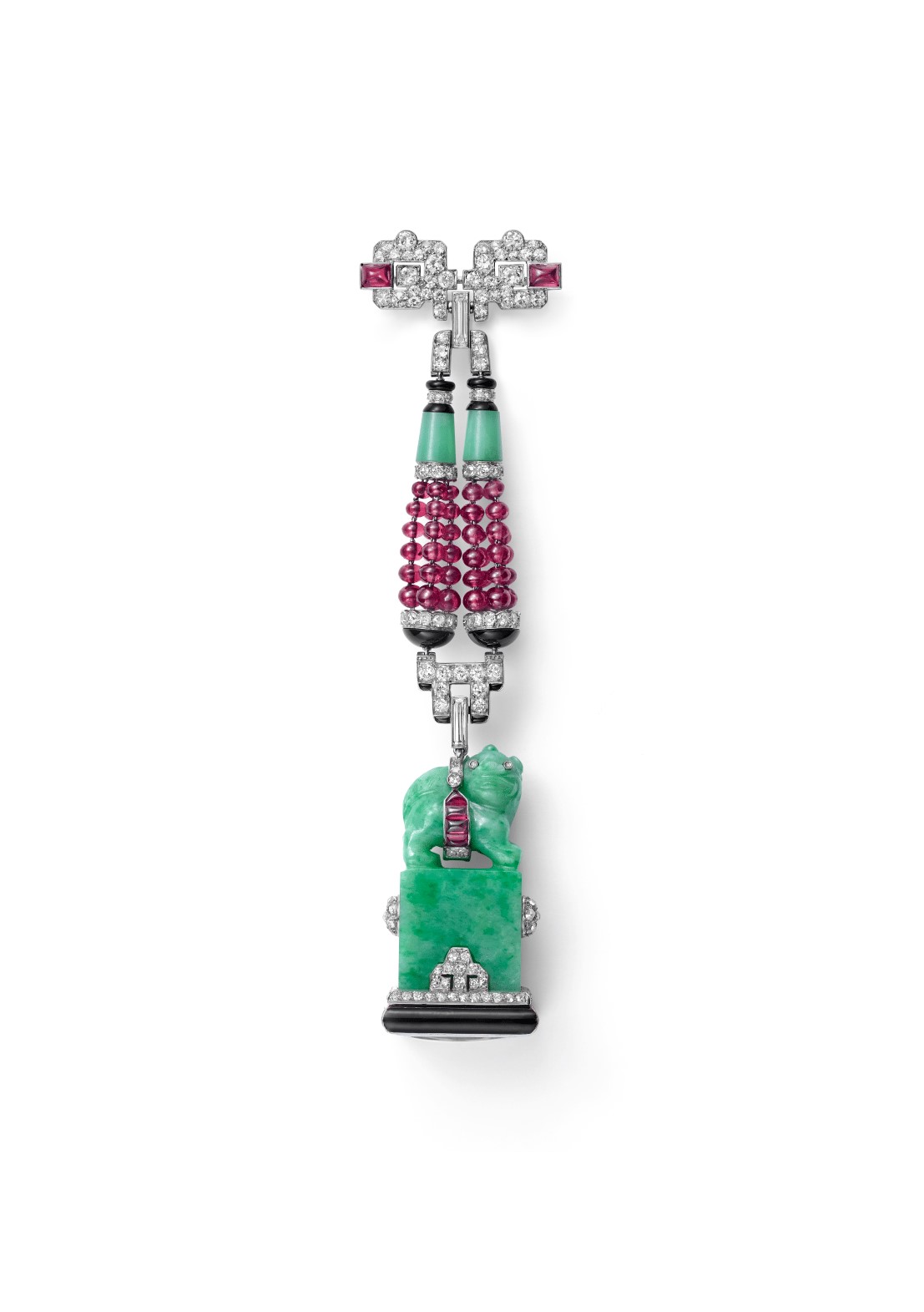
Jade also appears in the form of older pieces, often dating from the 18th or 19th centuries, which Cartier bought from antiques dealers and showcased spectacularly in new designs. Vanity cases would for instance feature little engraved panels, while timepieces were adorned with centuries-old jade sculptures depicting animals or deities characteristic of Chinese or Japanese culture.
Similarly, the Maison repurposed other antique pieces such as burgauté lacquer, especially for vanity cases and decorative objects like vases. These pieces were true collectors’ items, and many would come to form part of that era’s most prestigious private collections, such as that belonging to Mona Bismarck.
Asia in contemporary designs
Asia weaves its way right through the Maison’s history, from past to present. In the 1950s the chimera enjoyed renewed popularity, championed by the Maison’s then-Creative Director Jeanne Toussaint. Alongside rigid cuff bracelets—some of them fully pavé-set with diamonds and rubies—Cartier also offered pieces covered in a profusion of coral beads. The chimera appealed to many clients, including Mexican actress María Félix, who owned a couple of these bracelets.
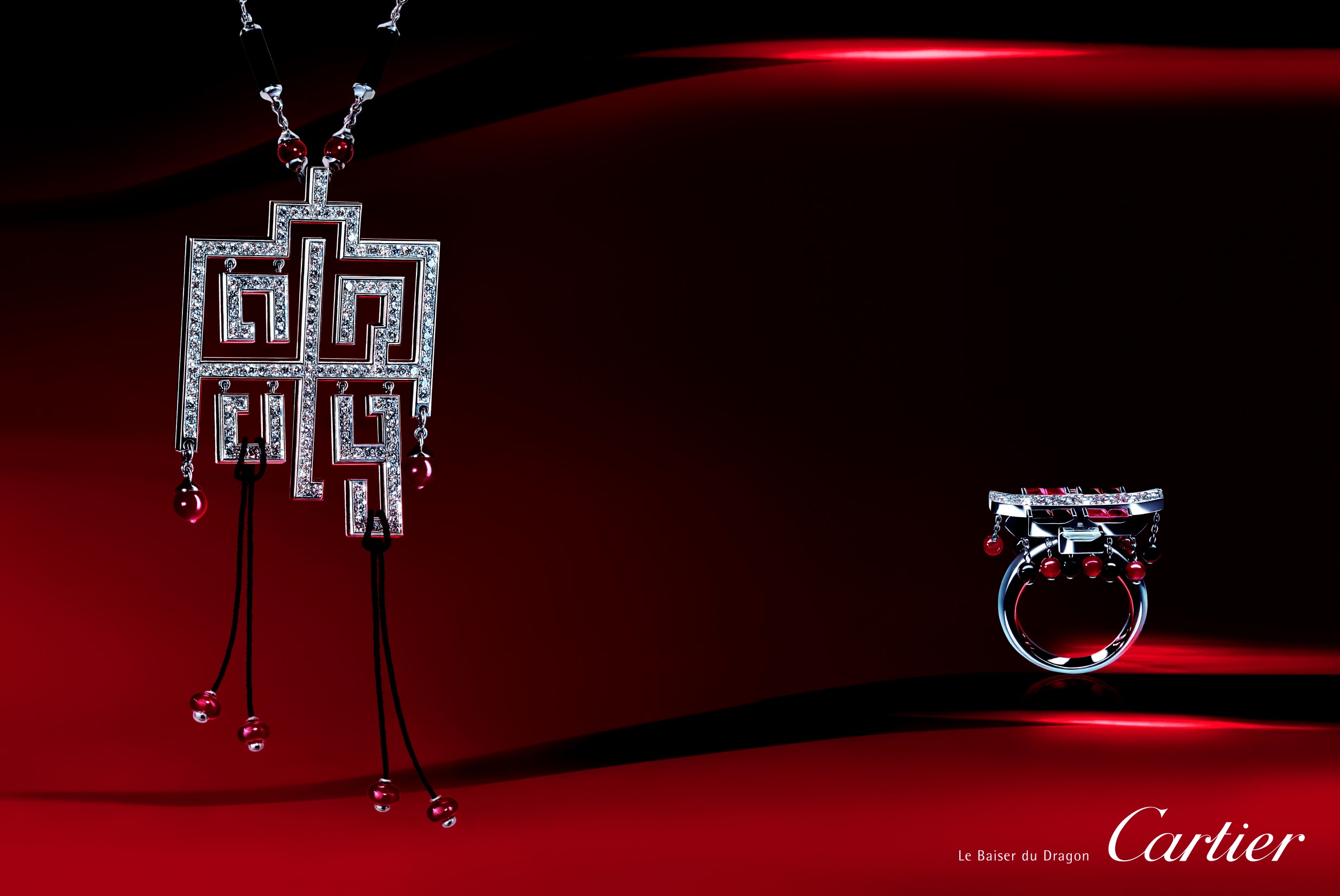
A fantastical menagerie of creatures is still emblematic of the Maison. It held a starring role in 2002 in the Le Baiser du Dragon jewelry collection—forerunner to the eponymous fragrance two years later—and again in the 2008 Chimeras and Dragons High Jewelry collection.
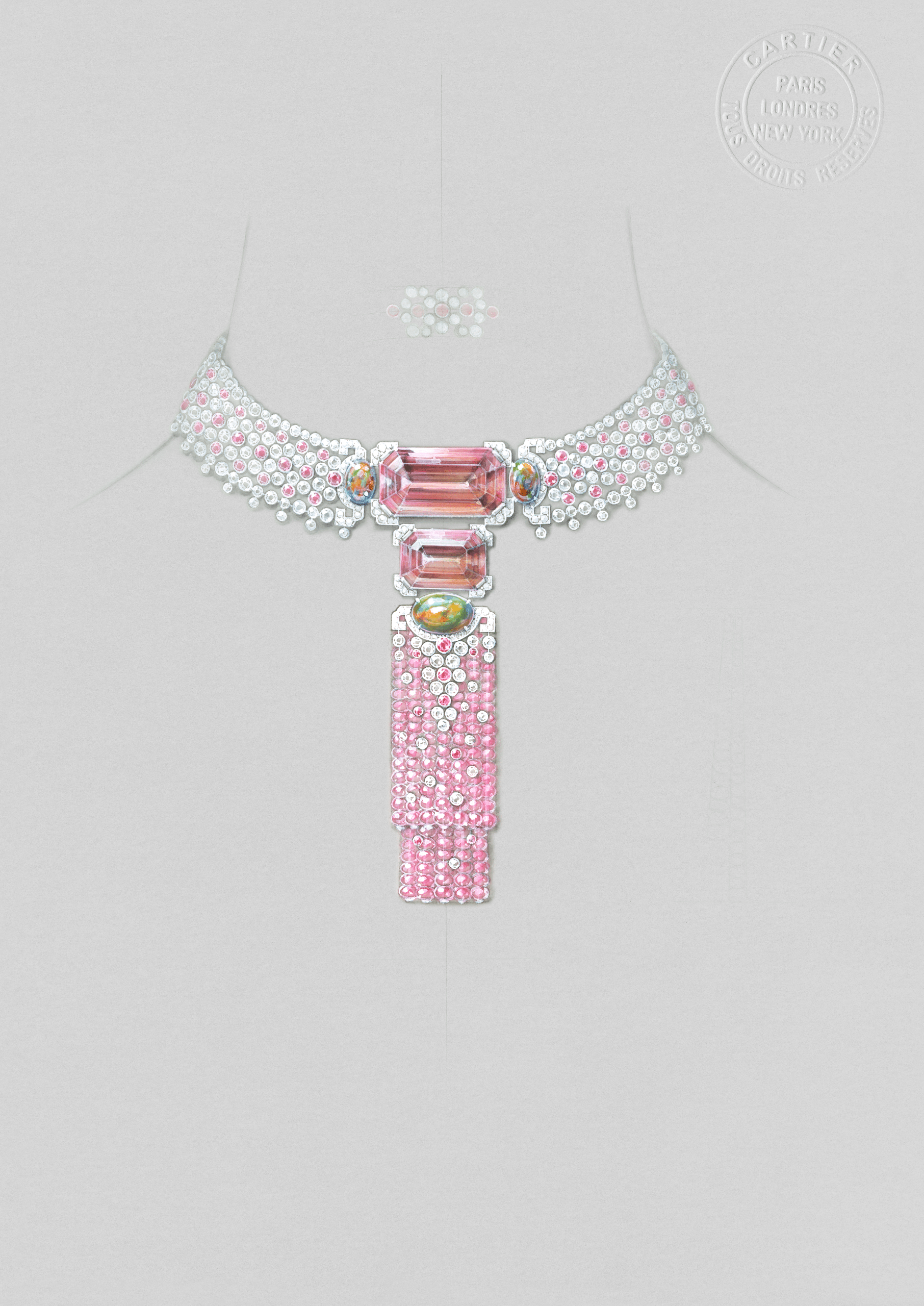
Asia has constituted a familiar horizon for the Maison over the years. More abstract references can also be seen in designs that showcase its landscapes or traditions. A good example of this is the Yoshino high jewelry set crafted in 2018, which draws on a palette of pinks to suggest Japanese cherry blossoms.
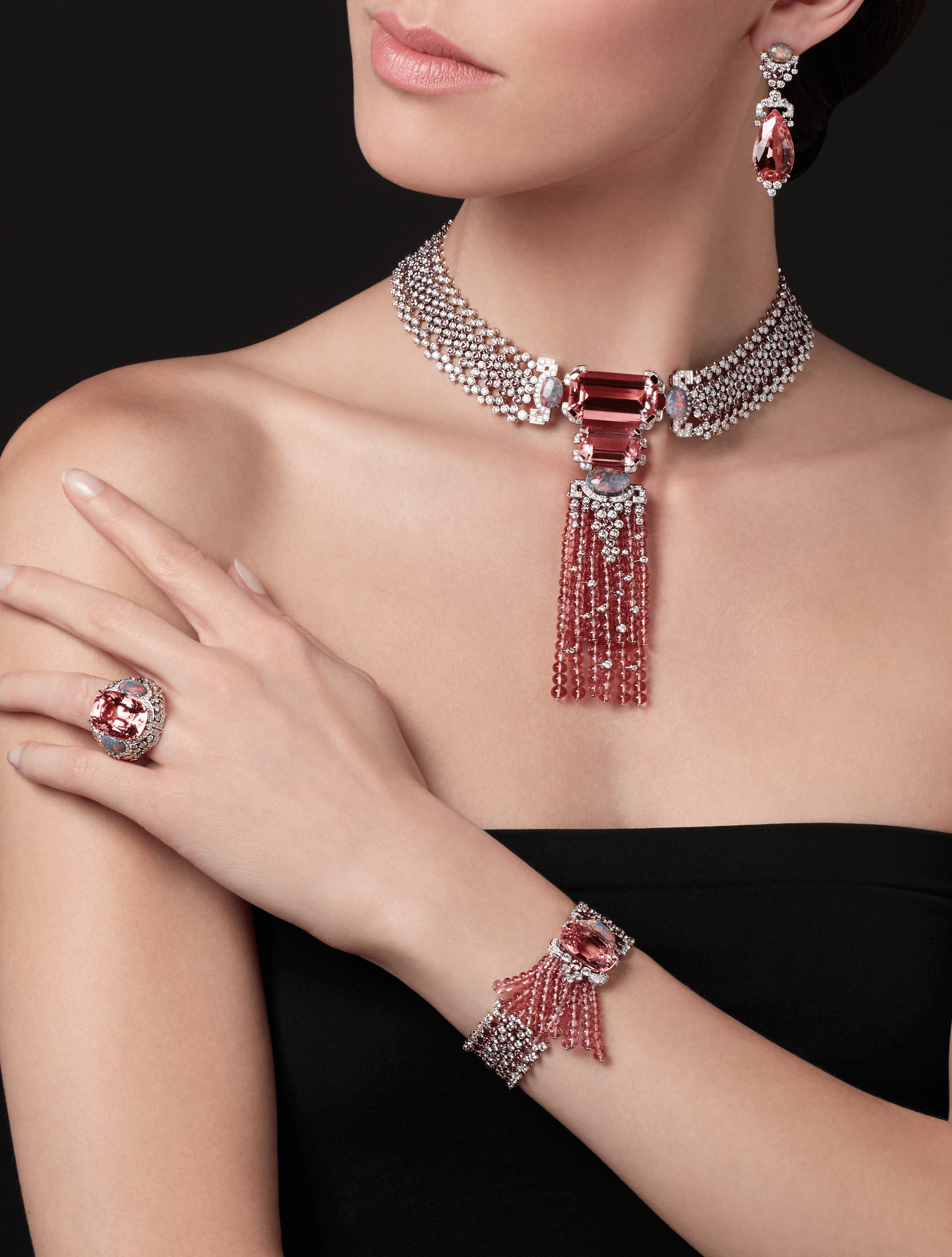
Cartier’s creations are woven through with mythological creatures, striking color combinations and stylized motifs of Asian inspiration to such a degree that they have at times become intrinsic to the Maison’s style.