Foremost among the precious metals, gold has been used in jewelry and the arts since Antiquity. Yellow but also rose, white, green... it exists in various shades through alloys with other metals.
- Family: metal
- Colors: mainly yellow, white, pink
- Hardness: 2.5 (Mohs scale, pure gold)
- Main sources South Africa, United States, Canada, Autralia, Russia, China
Properties and origins
Gold in its native state is found in quartz or pyrite, two mineral species that can be present in alluvial deposits and rocks. It is highly ductile, a property that makes it extremely malleable so it easily stretches without breaking. One troy ounce (31.10 g) will yield a 28-m² sheet after melting at 1,064°C. It does not oxidize in air or water. Today’s biggest gold mines are in South Africa, the United States, Canada, Australia, Russia and China, which extracts the most gold of any country.
Different shades of gold are used in jewelry-making and these are obtained through various alloys, where pure gold is combined with one or more other metals. These alloys are graded by a unit of measurement known as the karat, which equates to the proportion of pure gold in the mix, out of a total of 24 parts of pure gold. Hence 18-karat gold designates an alloy made up of 75% pure gold and 25% other materials.
- Yellow gold is an alloy of 75% pure gold, 12.5% silver and 12.5% copper.
- Pink gold is an alloy of 75% pure gold, 20% copper and 5% silver.
- White gold is an alloy of 75% pure gold and 25% palladium.
The symbolism and history of gold
Gold has been held to be very precious since Antiquity, as its Latin name aurum reflects, conjuring up as it does both riches and bright shine. The symbolic value of gold cuts across civilizations and periods of history. In Mesopotamia gold was associated with the sun because of its sparkling nature, and was considered divine. As a symbol of power in ancient Egypt, gold was reserved for the use of the Pharaoh and his court. It also represents a promise of eternity because of its inalterability, as we see in the richly decorated ancient tombs that have been discovered. In the same way as reliquaries enshrine the remains of holy martyrs, gold marks out the extraordinary from the ordinary.
Since gold was highly prized for its rarity even in Ancient times, it was already being mined at several sites in Mesopotamia, Greece and Nubia. But the Spanish conquest of America in the 15th century marked the start of a period of abundant gold. The precious metal began to be used more extensively than just jewelry and decorative arts. In the mid-19th century, the United States became the world’s leading gold producer when new seams were found in California. This triggered a gold rush, as people migrated there in the hope of striking it rich. Other deposits were later discovered in various parts of the world, including South Africa and Australia.
Cartier and variations on the theme of gold
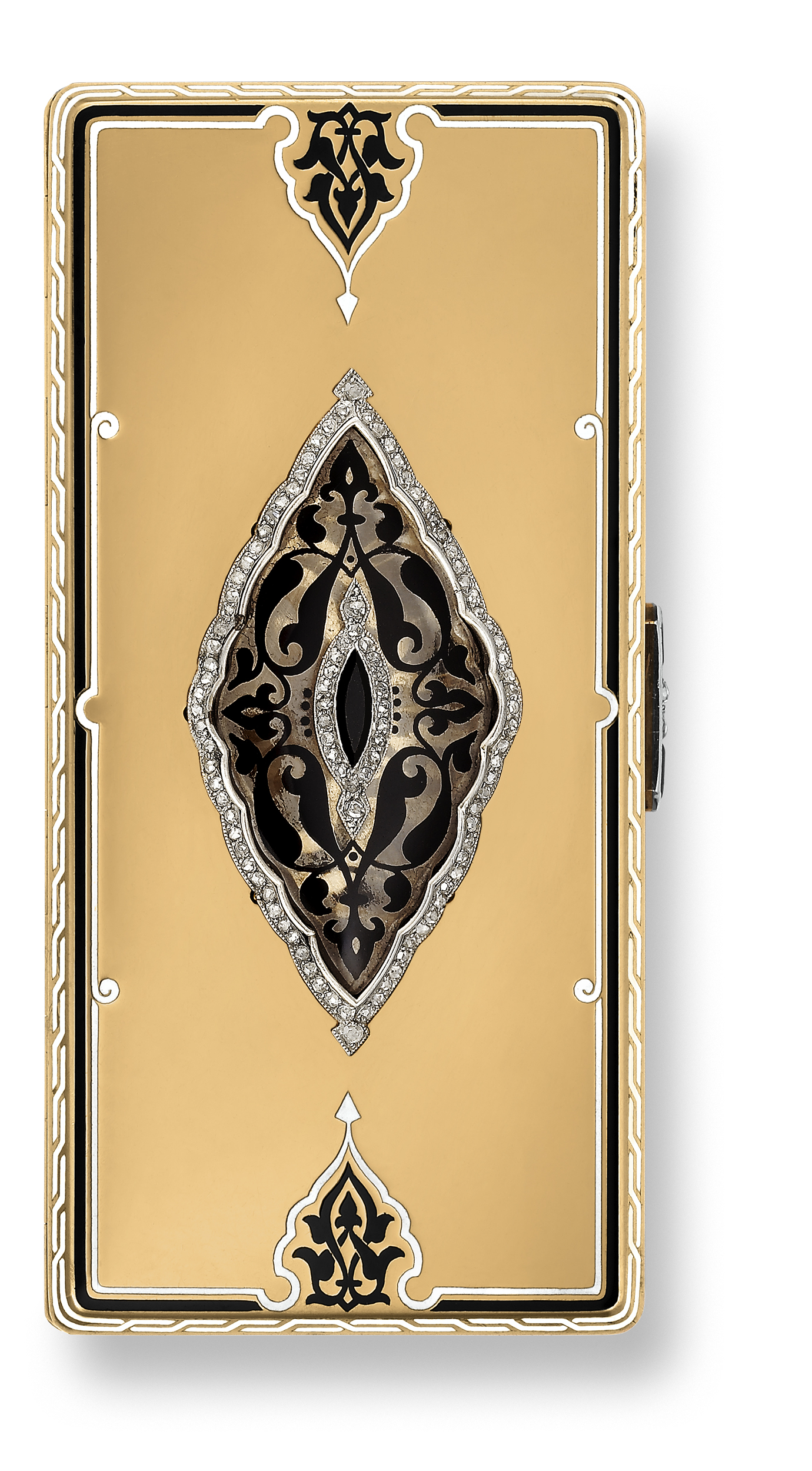
During the second half of the 19th century most of the Maison’s designs were made of gold. It was considered the most precious of metals in that era, along with silver. Gold was crafted with highly skilled traditional techniques such as chasing or guilloché, which play with different textural effects. At the turn of the century, the Garland style swept in and made platinum ubiquitous. The Art Deco period also foregrounded the sober gleam of white precious metals. Yellow gold returned to the Maison’s design palette from the 1920s onward, drawing inspiration from the great civilizations of afar, as seen on cigarette cases channeling Persian influences, and chimera bracelets inspired by Chinese jewelry-making.
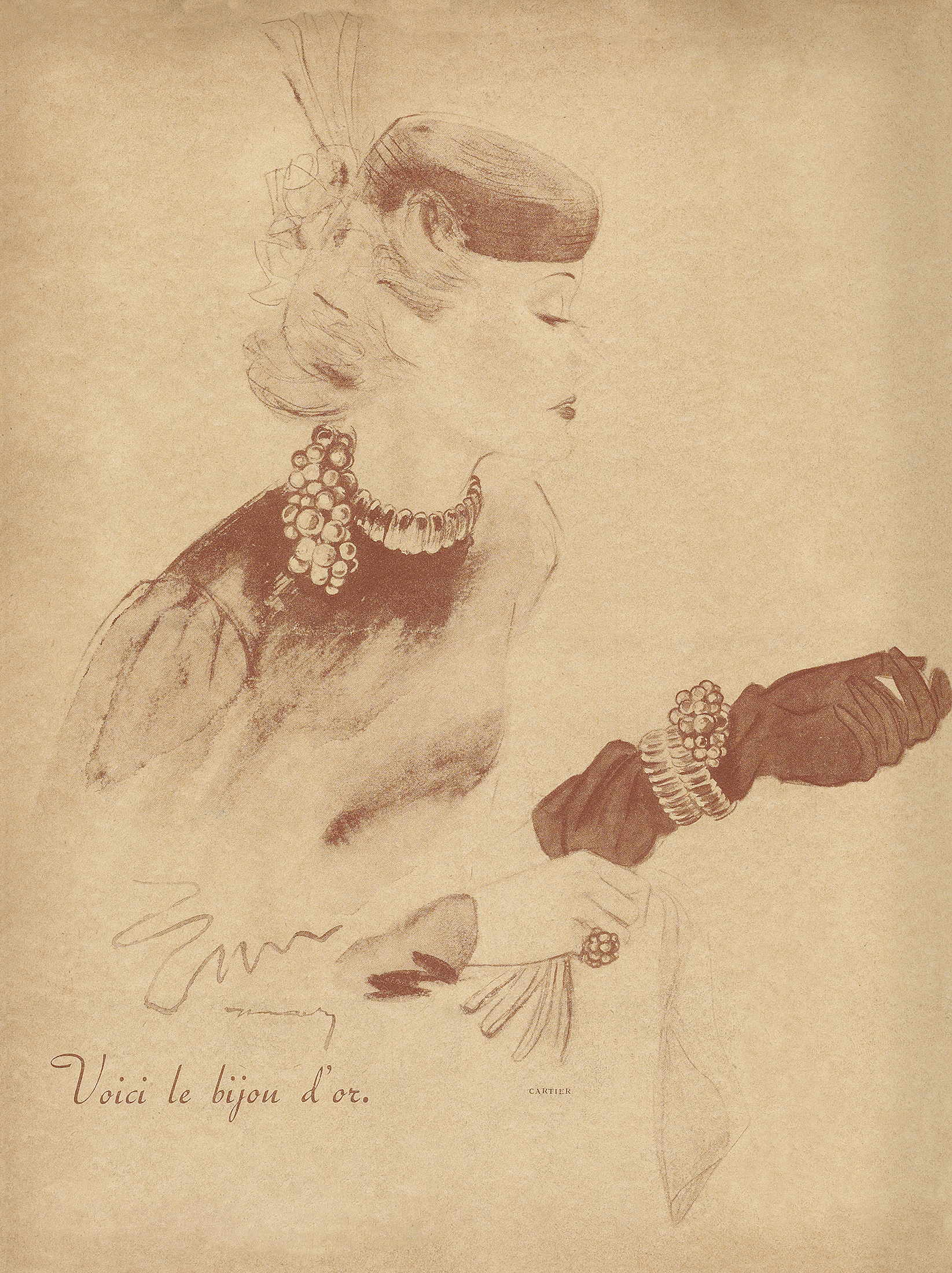
Gold was spotlighted under the influence of Jeanne Toussaint, Cartier’s creative director from 1933. She favored the use of yellow gold, probably a mark of her taste for Indian jewelry. Her design direction brought out all the generosity of this rich metal, drawing appreciation for the warmth of its color. It was used in combination with precious and semi-precious gems to create pieces of high color. In 1937 Femina French magazine celebrated the comeback of gold with an article devoted to Cartier entitled “Here’s the golden jewel” (Voici le bijou d’or).
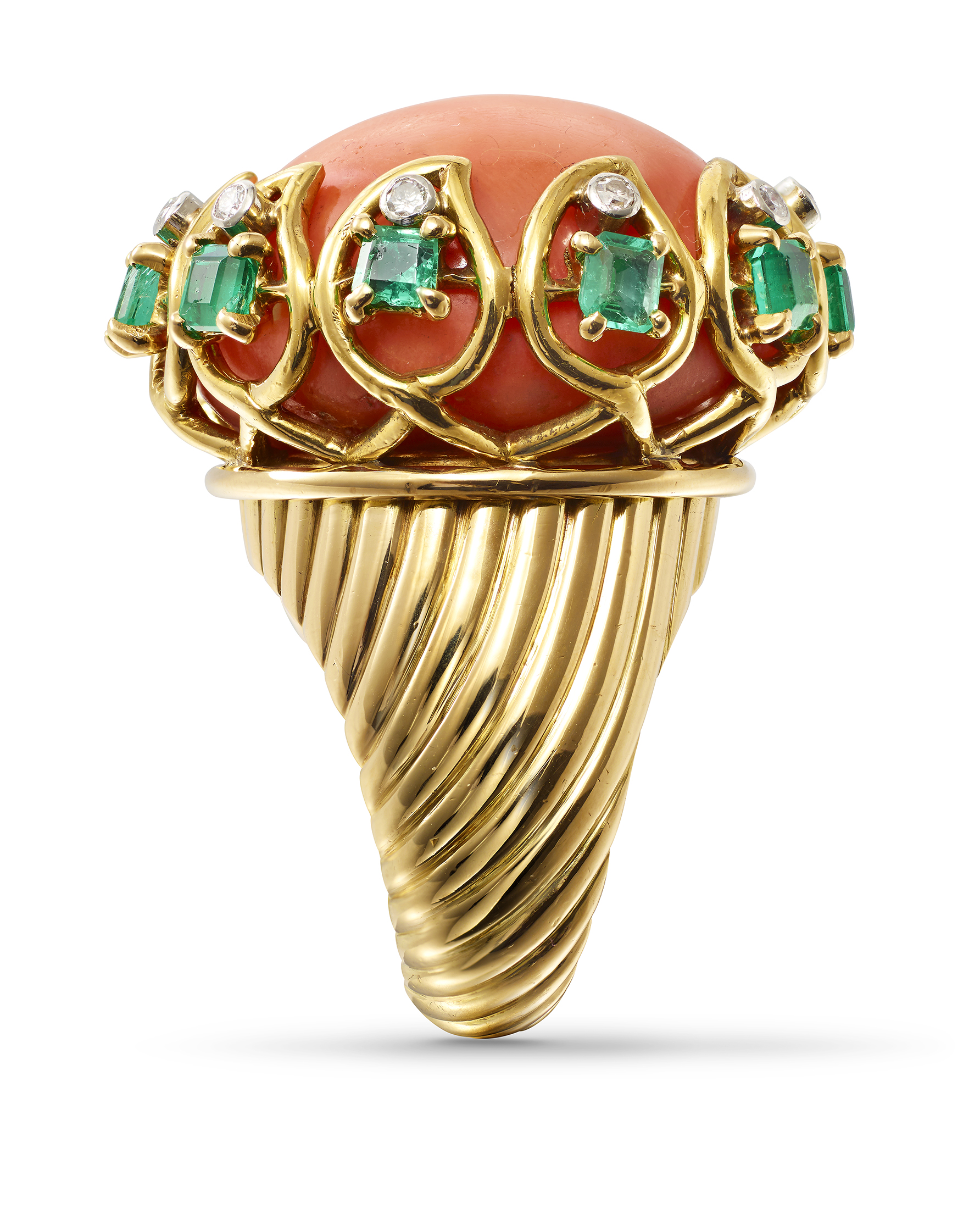
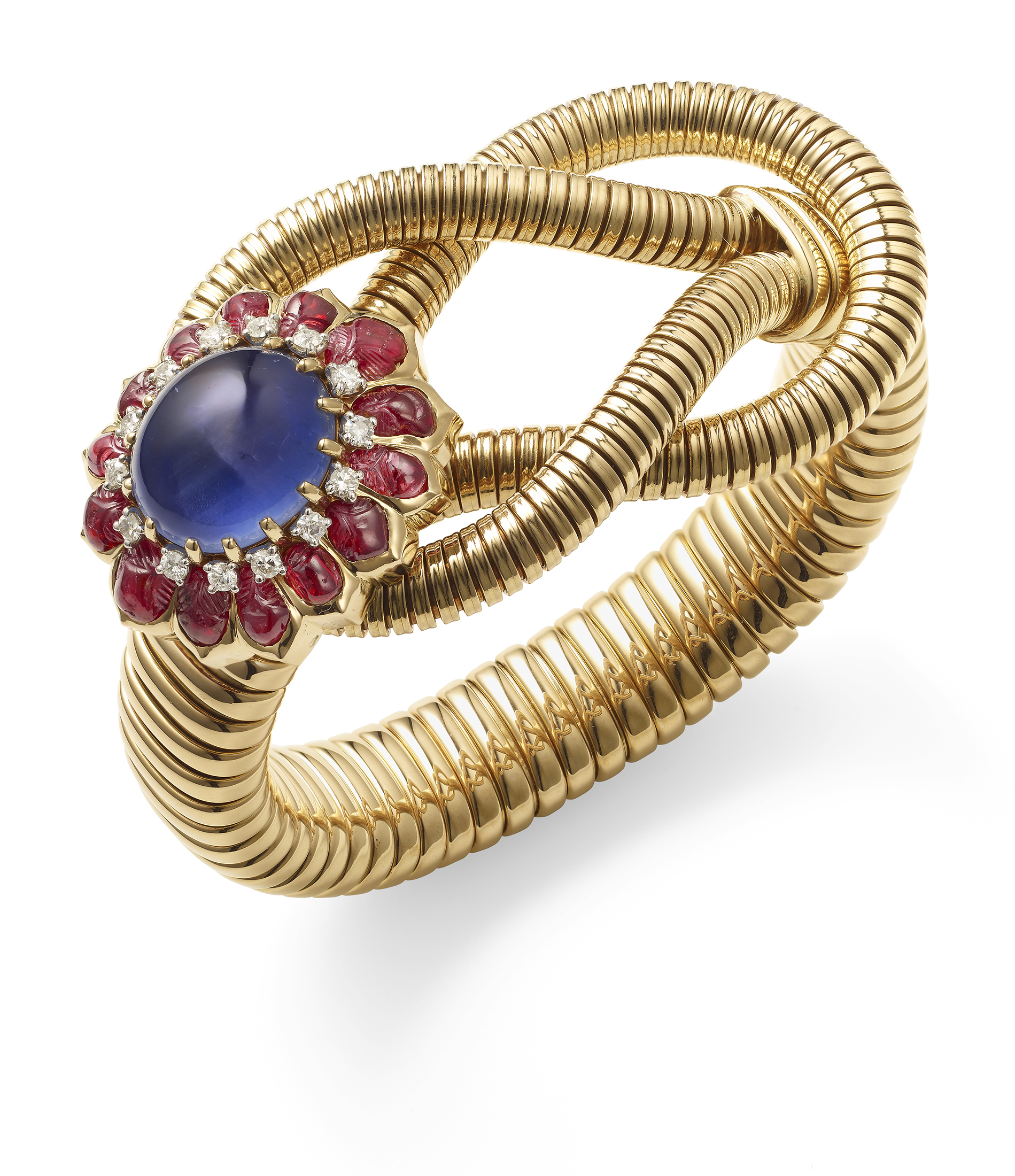
The warm sheen of yellow gold inspired the Maison’s designers from the 1930s onwards, and its popular appeal lasted until the 1970s. Designs became increasingly abstract, expressing strength and boldness. Gold began to be used in ever more sculptural ways, as jewelry-making savoir-faire evolved and diversified. It was worked in ridged wire on gaspipe bracelets, braided as on the 1949 Palmier necklace, or shaped into subtle openwork designs. The metal lent itself easily to the jewelers’ play and took on a multitude of shapes. Balls, spikes and ribbons of gold testify to the virtuosity of the Maison’s workshops. Some designs were so bold they even mixed techniques, like in the egg-shaped vanity case from 1958, acquired by Lady Deterding in 1960. The subtle guilloché pattern of the case contrasts with the smooth gold beads that make up the strap, giving an exquisite interplay of textures.
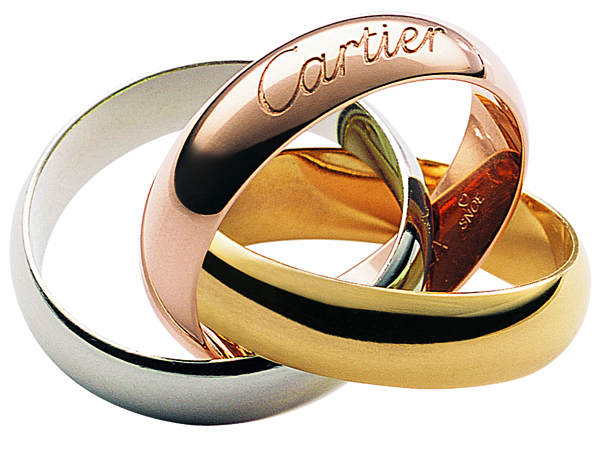
The different tones gold comes in also illustrate the decorative potential of this metal. The three-band ring, later dubbed the Trinity ring, was designed by Louis Cartier in 1924 and became one of the Maison’s iconic jewelry pieces in the 1970s. Its singularity lies in the alliance of the three colors of gold that make it up – pink, yellow and white.
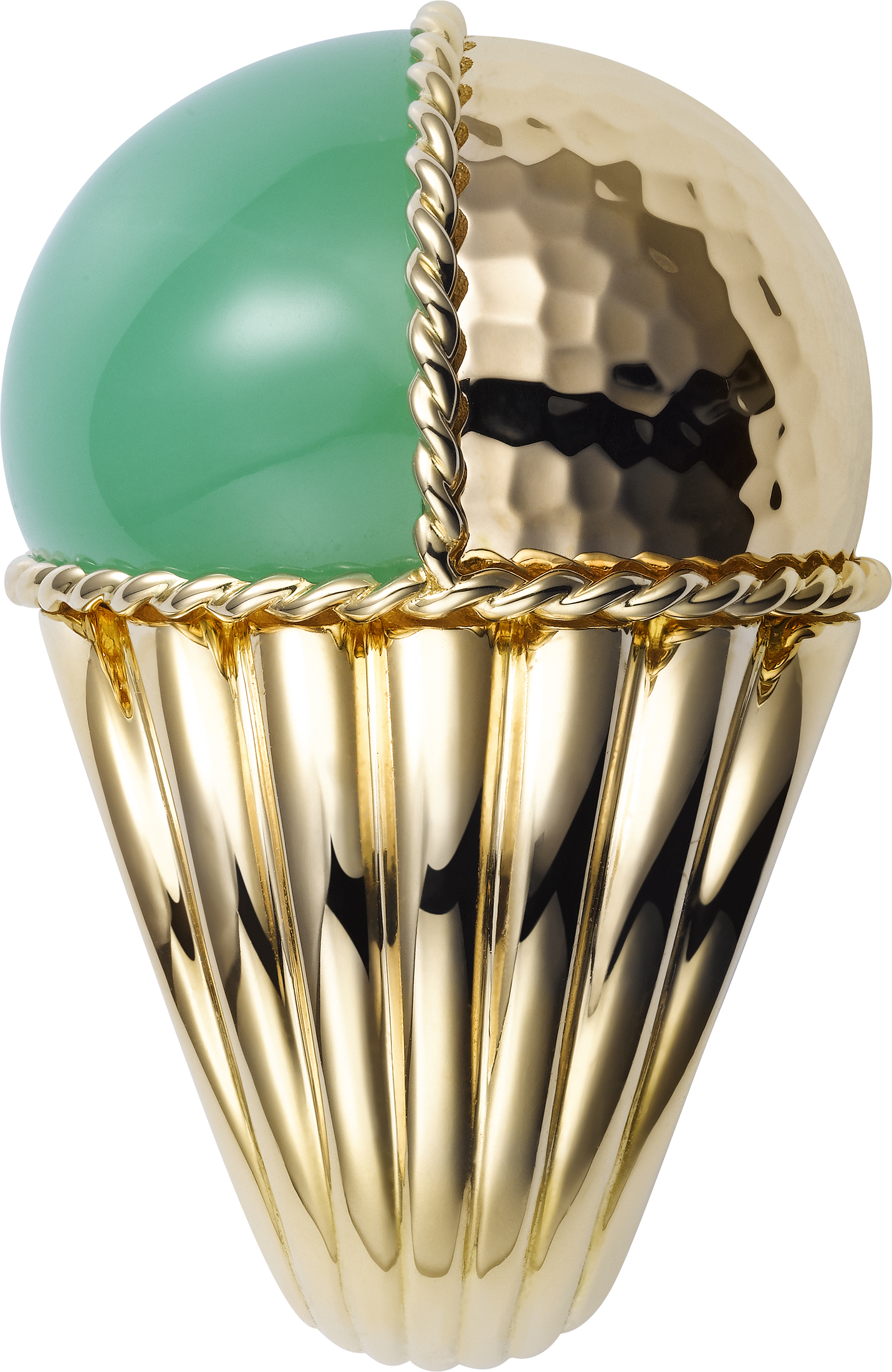
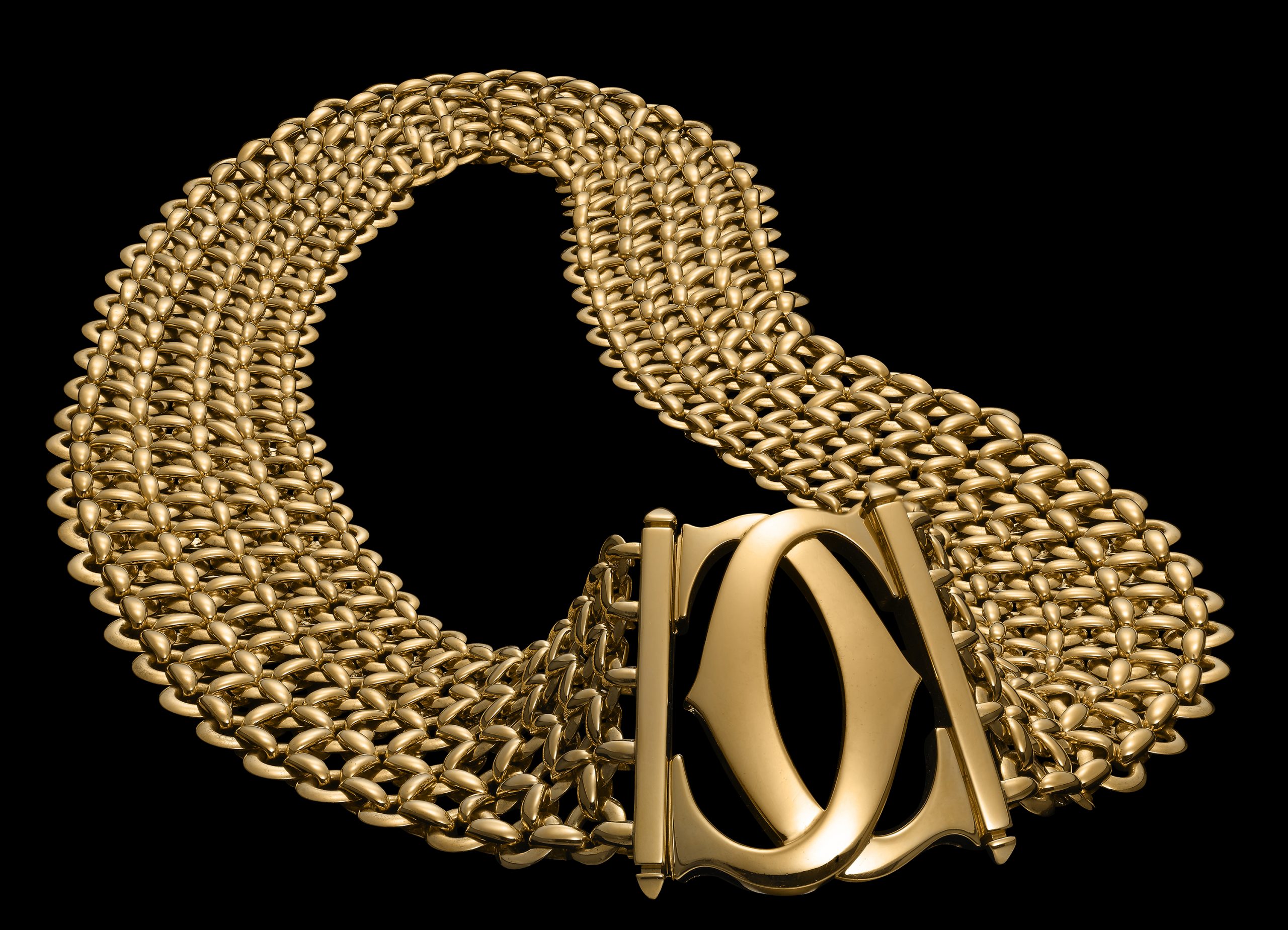
In the late 1990s, the Paris Nouvelle Vague collection took gold to new heights with cascading mesh necklaces, chunky rings, rings with fringe exploding out of them... all pieces that expressed the gaiety of this precious metal. In 2013 Cartier added more gold pieces to the collection, combining fresh textures, shades and forms to make it even more full of fun.
Gold is so enormously malleable that people have been working it since Ancient times using techniques that are still in use today. These include granulation and chasing, which the Maison’s workshops have used respectively on the dials of exceptional watches and on a 2015 pendant depicting a flight of swallows. A timeless metal, gold brings tradition and craftsmanship to life in a spirit of modernity.