
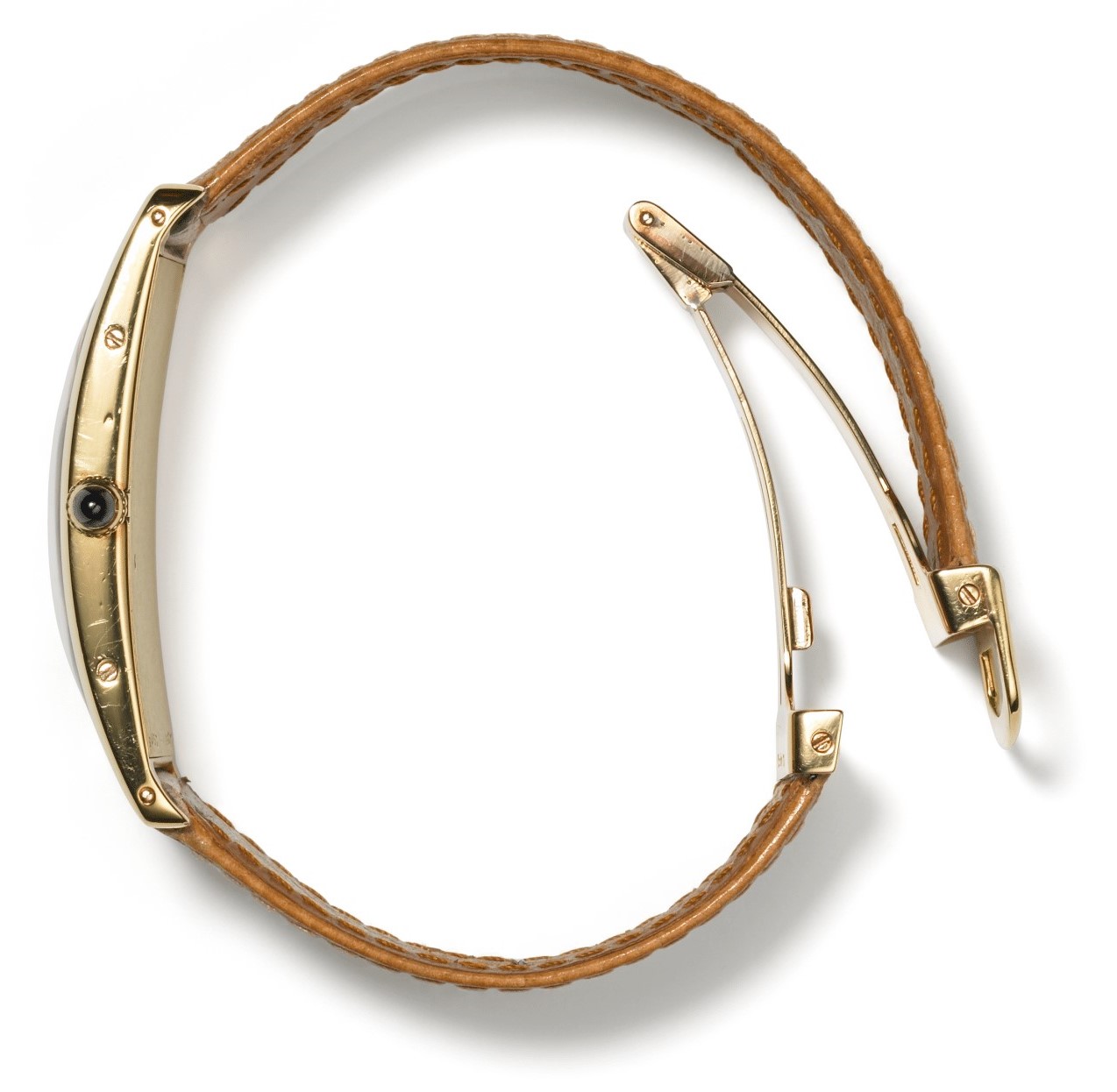
The folding buckle, patented in 1910, is an articulated clasp for closing a wristwatch strap.
The folding buckle was designed in 1909 by Swiss watchmaker Edmond Jaeger, who applied for a patent in 1910 to be used exclusively by Cartier. Jaeger had been supplying movements and mechanisms to the Maison since 1903. In 1907, he signed a contract with Cartier under which all of his inventions would be exclusive to the jeweler for nearly 25 years.

This new device was not only more secure than the traditional pin buckle – it does not open completely, thereby ensuring the watch will not fall off the wrist – it also earned praise for its elegant, discreet design. Initially, the folding buckle was used only occasionally, for instance on a 1914 wristwatch featuring the first spotted panther pelt motif in the Maison’s history. It was later incorporated systematically on the Santos wristwatch, followed by the Tank wristwatch on its first release in 1919. The innovative device reflected the art of refined simplicity encouraged by Louis Cartier in watchmaking. The design, featuring a continuous graphic line, is all the more essential.
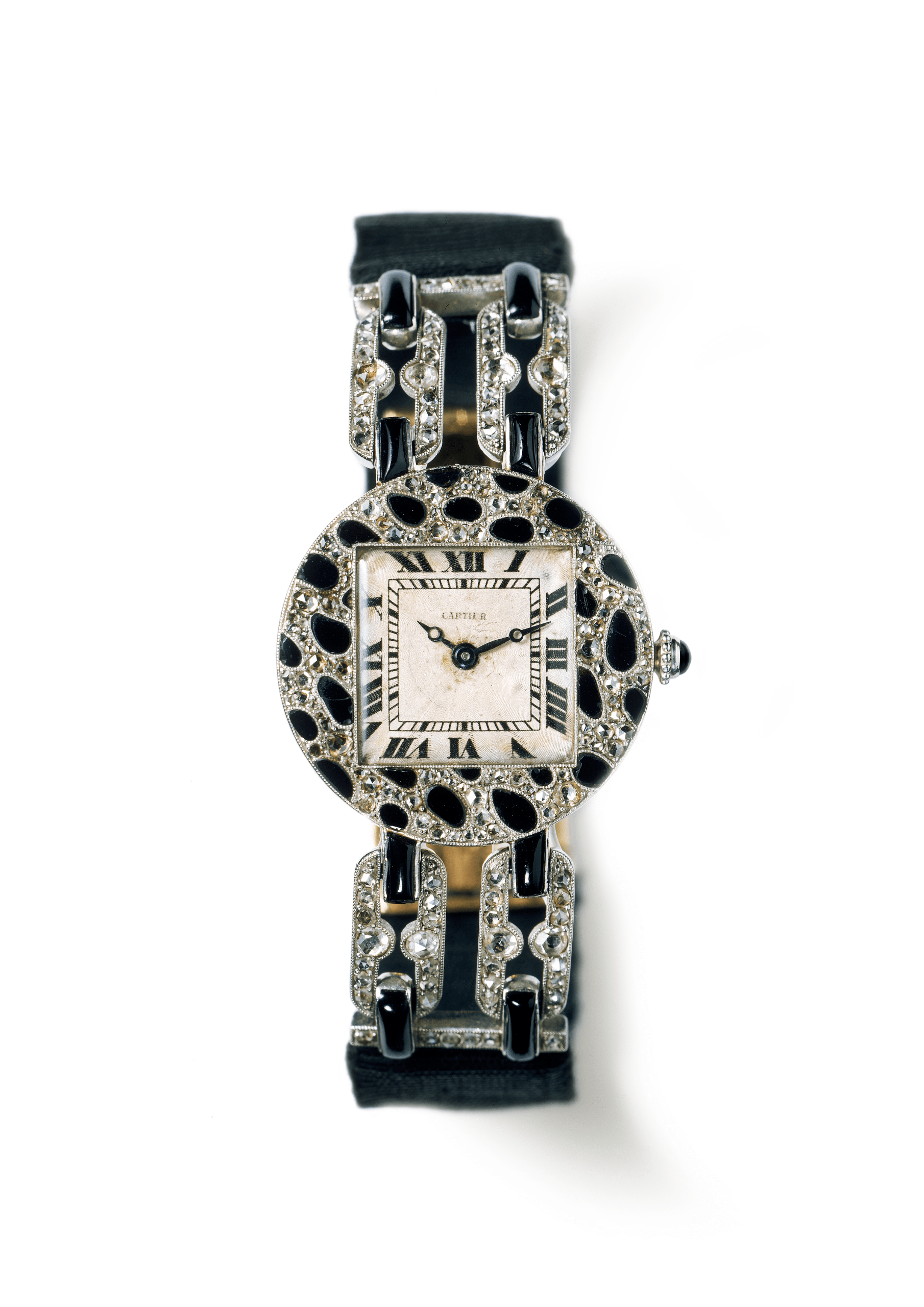
The folding buckle, like the winding crown adorned with a cabochon-cut sapphire, the radiating Roman numerals and the chemin-de-fer chapter ring indicating the minutes, became an eternal trademark of Cartier timepieces.