
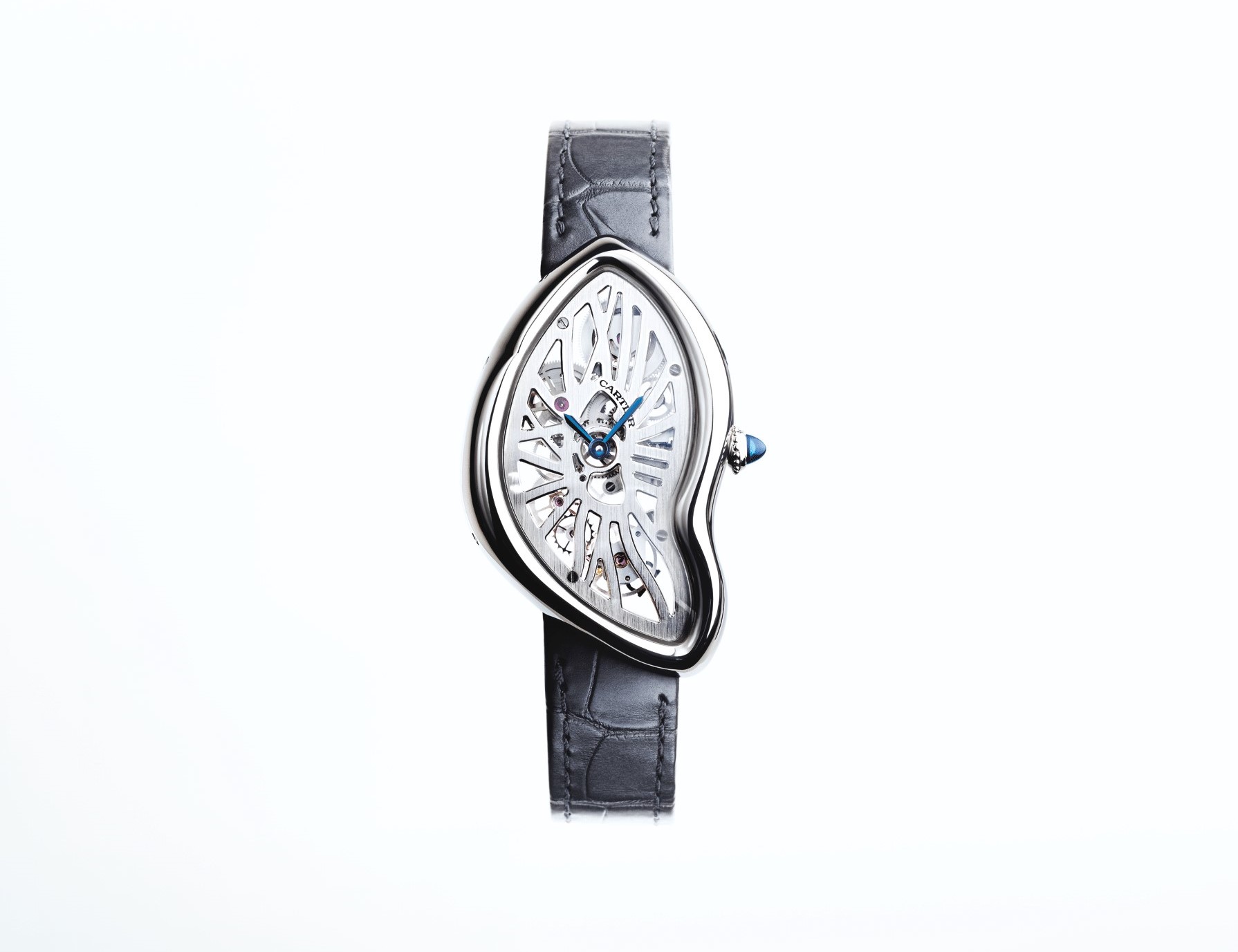
Designed by Cartier London in 1967, the Crash wristwatch eschewed tradition with an unprecedented “distorted” design.
According to an oral legend the idea behind this creation arose when a London client brought in for repair a wristwatch that looked like it had been run over by a car. Jean-Jacques Cartier – son of Jacques Cartier and director of the Maison’s London store since 1941 – would have taken such a liking to the case’s unusual shape that he would have decided to reproduce its distorted design, and the Crash wristwatch was born. This model, whose case turned traditional watchmaking codes and shapes upside down, speaks to the creative effervescence of the late 1960s and early 1970s, playing convention not without a hint of mockery.

The Crash watch, which mirrored Cartier’s reflections on the different forms of beauty, revealed an unexpected aesthetic in which a harmonious design emerges from apparent chaos.
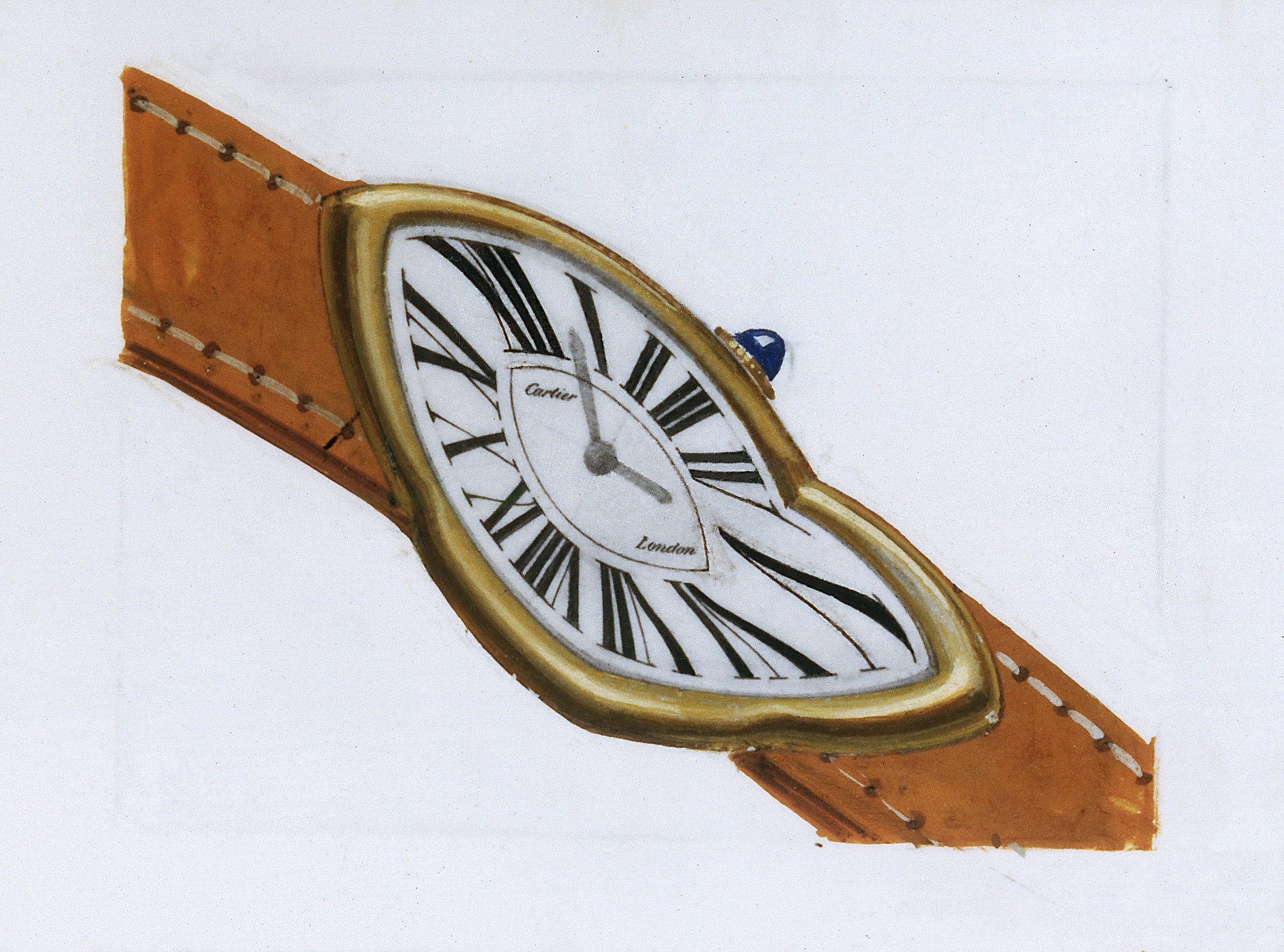
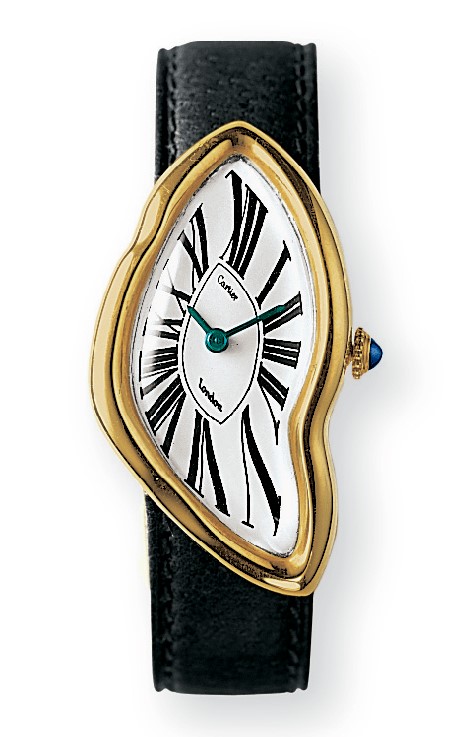
Although it upsets traditional codes, the Crash fits into the Maison’s research on “shaped” watches initiated in the early twentieth century. After the squareness of the Santos and Tank wristwatches and the synthesis of round and rectangular in the Tonneau, this creation explores the possibilities presented by the oval: stretched, altered, its design proposes an unconventional interpretation of an emblematic reflection on the Maison’s style as applied to timepiece shapes.
Now an emblem of Cartier’s timepiece repertoire, the Crash wristwatch is regularly released in limited editions. In 2015, the Maison introduced a version featuring a skeleton movement and Roman numerals distorted to fit the utterly unique shape of the case.