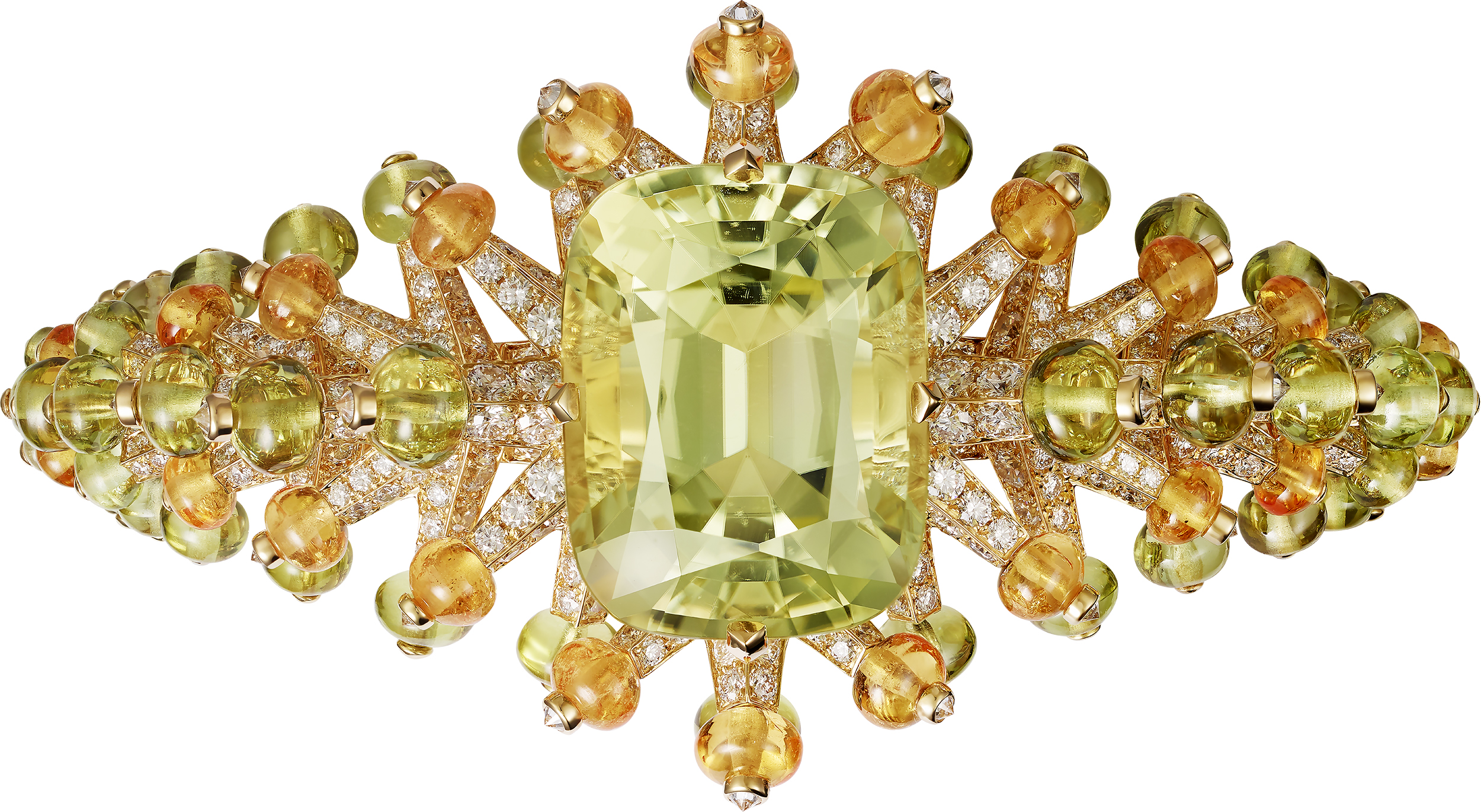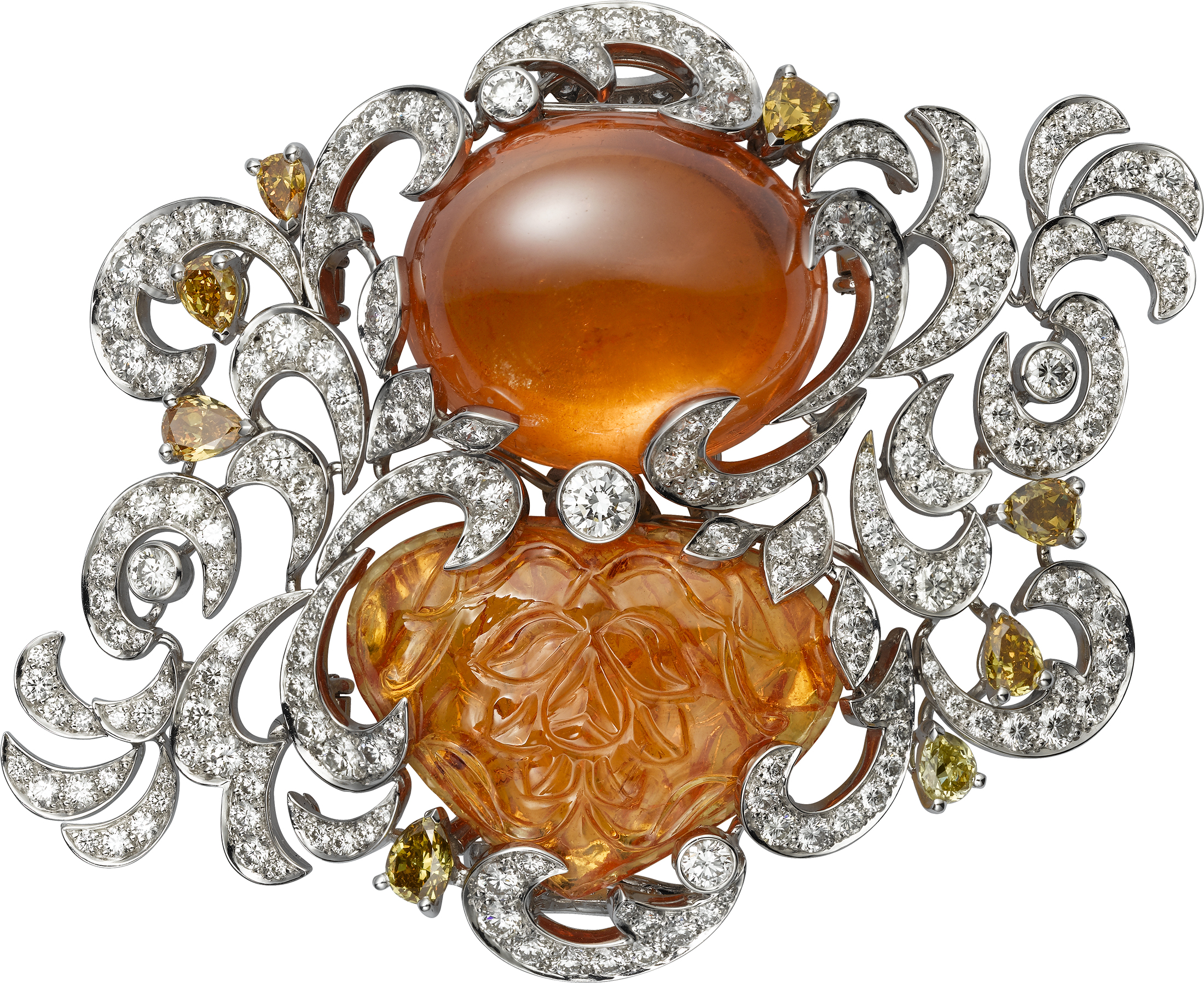
The garnet group is made up of a broad range of minerals including almandine, tsavorite, spessartite and hessonite, with varieties such as demantoid and mandarin garnet especially popular.
- Mineral group: garnet
- Chemical composition: aluminum or calcium silicate and other elements
- Main colors: red, red-to-orangey, pinkish to purplish red, yellow, greenish-yellow, green, brown, black-green, colorless
- Hardness: 6-7.5 (Mohs scale)
- Main sources of provenance: Madagascar, Ceylon (Sri Lanka), Zambia, Tanzania, Brazil, India
Etymology, history and legends
The word “garnet” is said to derive its name from the color of the fruit borne by the pomegranate tree.
Pliny the Elder made mention of the carbunculus alabandicus, a name taken up by Agricola in the 16th century. Other commonly found appellations such as almandite and alamadine referred to the medieval gemstone almandine, which glowed like embers. Many of the red stones in jewelry from ancient and medieval times are in fact almandines.
These gemstones were at the height of their popularity in the second half of the 11th century. In 12th-century Europe, the substantial pyrope garnet deposits in Bohemia (now the Czech Republic) began to be mined, and some very fine specimens can be seen on 15th-century Gothic jewelry. Garnets also adorned the crowns of the Queens of England and the Russian Empresses, causing a big stir at the 1878 World’s Fair in Paris.
The name of demantoid garnet derives from demant, meaning “diamond” in Old German, in reference to its brilliance and fiery sparkle. The most sought-after stones – prized for their intense green hue – come from Russia’s Ural Mountains, where they were discovered in 1853. Initially confused with emerald, peridot and chrysoberyl, demantoid was not recognized as a distinct variety of garnet until 1878.
Tsavorite draws its name from Tsavo National Park in Kenya, where it was first unearthed in 1971.
The German mountain range of Spessart in Bavaria gave its name to the spessartite garnet, although this stone is no longer quarried there today.
Colors, use and origins
Garnets form a group of some fifteen minerals of the cubic system, each with a slightly different chemical composition.
Their color arises from the chemical elements of their structure: iron, in red to purplish-red almandine and red pyrope; chromium, in green andradite and bright red pyrope; vanadium in tsavorites, and manganese in orange-hued spessartites.
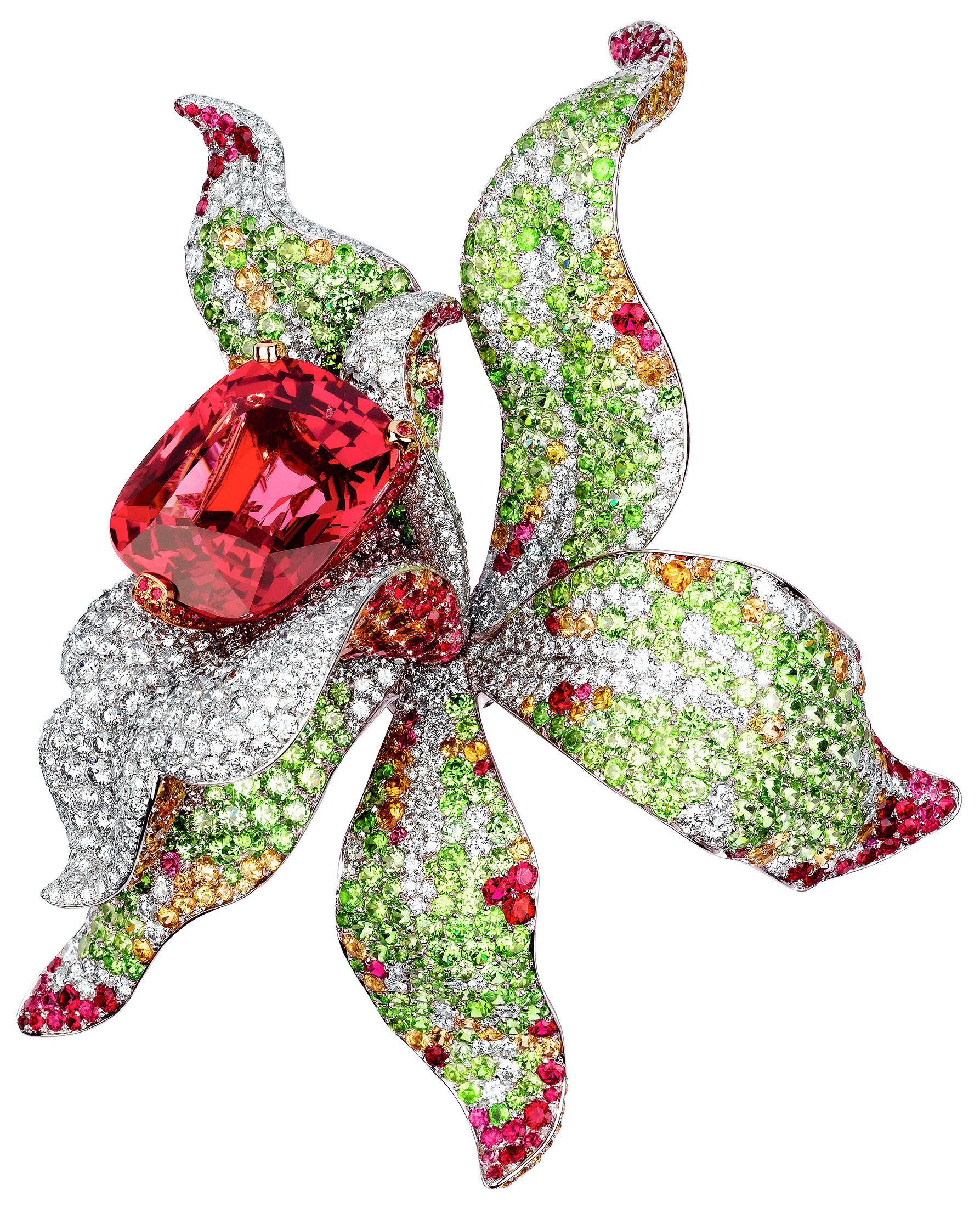
Demantoid: The green demantoid is the rarest type of garnet and very highly prized for its exceptional brilliance. It is a variety of andradite whose hue can vary from greenish-yellow to greenish-blue. Historically mined in Russia, it has also been quarried at more newly discovered sites in Namibia, Italy and, most recently, Madagascar.
Demantoids became extremely popular in the years immediately after their discovery, as evidenced by the Russian crown jewels and many Art Nouveau pieces.
Gem-quality stones very rarely exceed one carat. The Smithsonian Institution boasts a demantoid that is remarkable both for the intensity of its color and for its weight – at 11.24 carats, it is the largest stone of this quality that we know of.
Demantoid garnets can boast a distinctive fibrous inclusion known as a horsetail, making them especially coveted by connoisseurs.
Tsavorite: A variety of grossular garnet, tsavorite has a light green color, often tinged with blue due to its vanadium content. It is found in East Africa and is primarily mined in Tanzania, Kenya and Madagascar.
This stone seldom weighs above seven or eight carats, although there are a handful of specimens exceeding 20 carats. Most stones weigh no more than three carats.
Tsavorite must be virtually free of inclusions if it is to be used in jewelry. Such stones serve both for pavé settings and as center stones – most commonly of oval or cushion shape, or in an emerald cut.
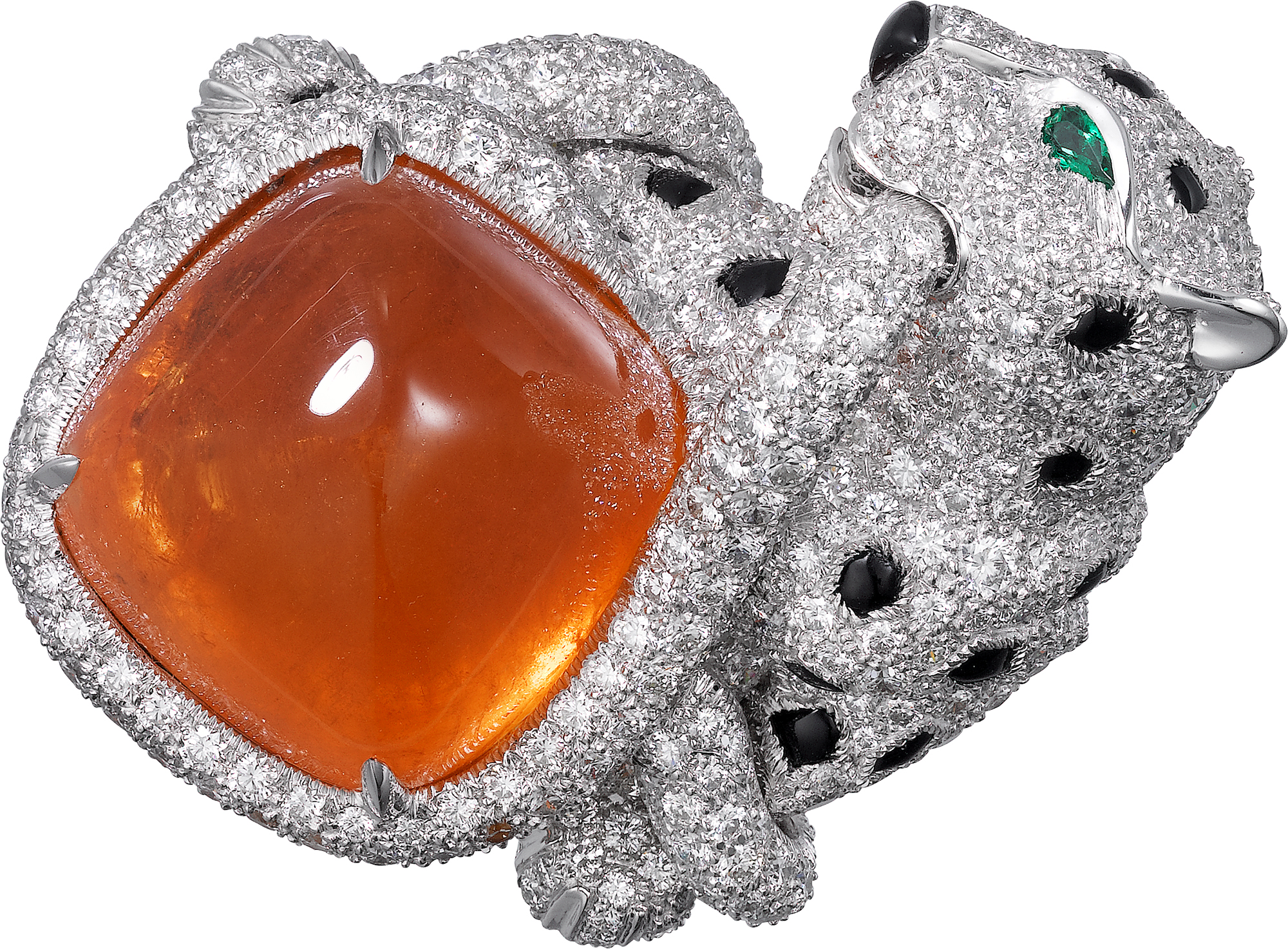
Spessartite garnet: In 1991 a variety of spessartite was discovered in the Naukluft Mountains in Namibia that displays an extraordinary bright orange color. This remarkable gem is also known as “mandarin garnet” (a registered trade name). Tanzania’s Loliondo deposit, discovered in 2007, is renowned for yielding a plentiful supply of good-sized stones of excellent quality.
Red garnets: Almandine, rhodolite and pyrope are the red varieties of garnet, characterized by the intensity of their various hues.
Other varieties of garnet are not used much in jewelry.
Hessonite: Sometimes labelled “cinnamon stone,” hessonite can be distinguished from spessartite garnet by its (grossular) variety and its yellower hue. Several deposits are documented, including mines in Sri Lanka, Brazil, India, Pakistan and Madagascar.
Formation of the stone
Garnets are typically metamorphic minerals (pyrope, almandine or the grossular varieties, hessonite and tsavorite) but can also be found in volcanic rocks (almandine and demantoid), pegmatites (spessartite) or sedimentary deposits.
Certification
Some garnets can give rise to an origin search.
Care recommendations
Like all gemstones, garnet should be handled with care, although it is a fairly resistant stone.