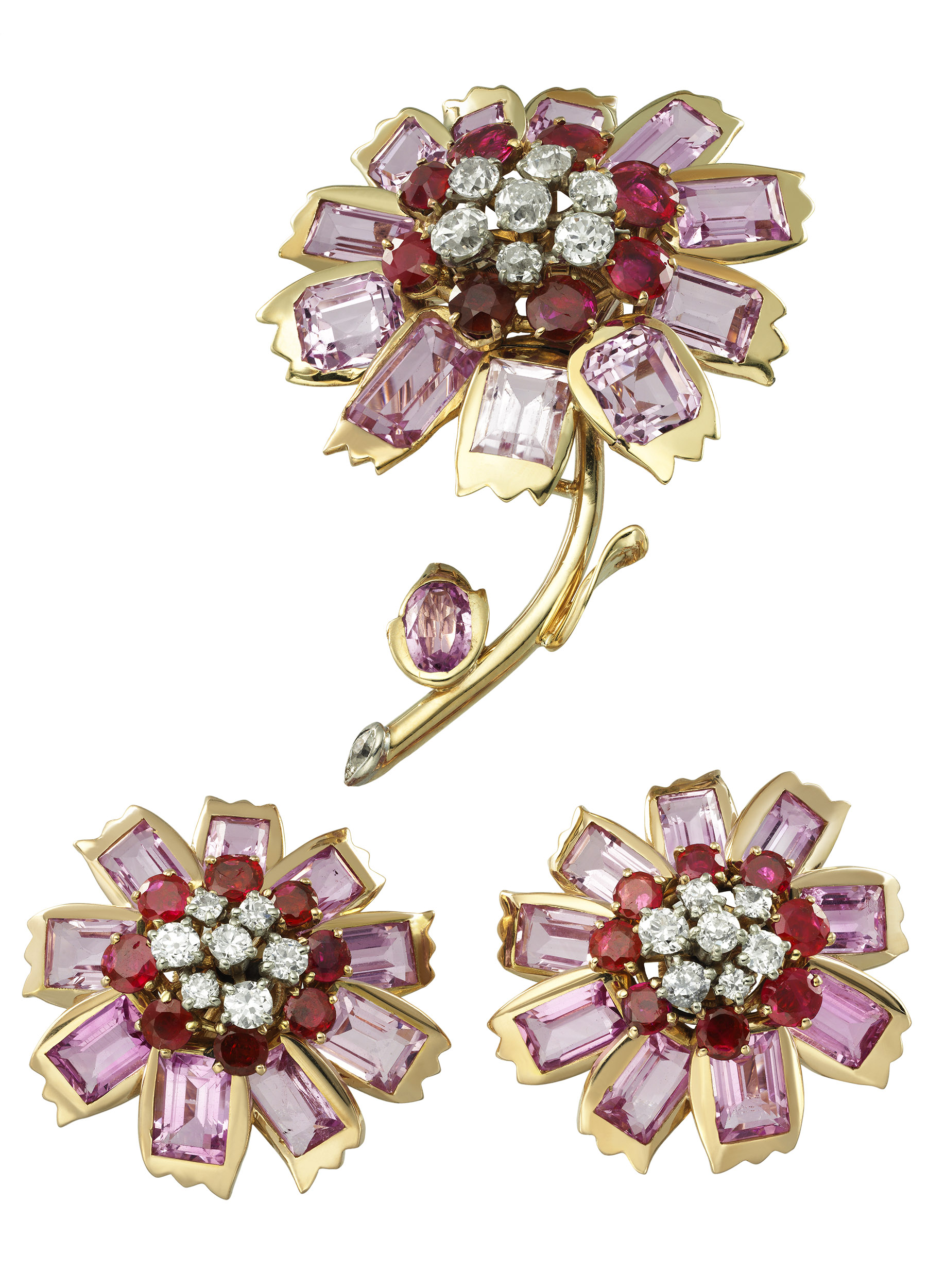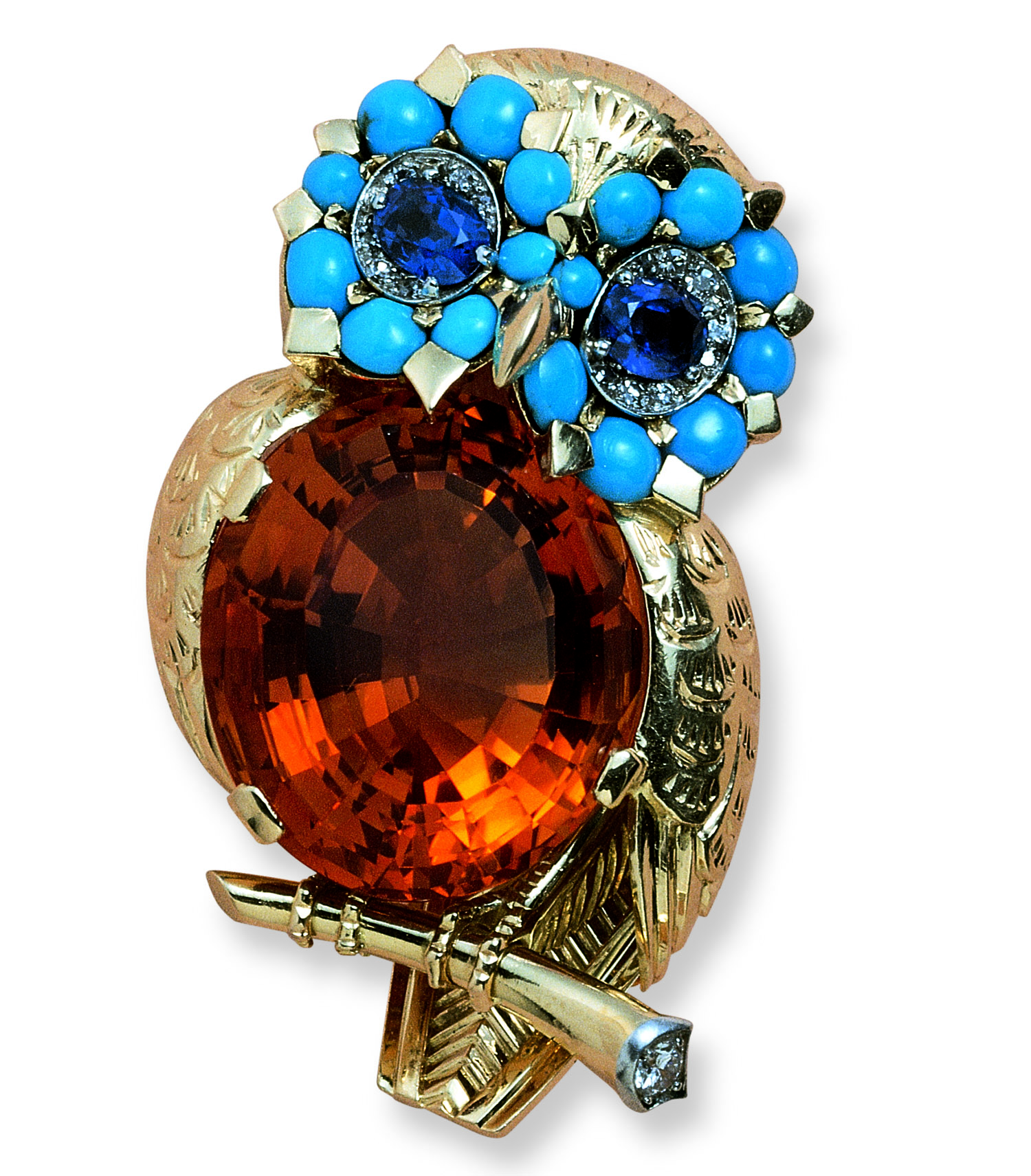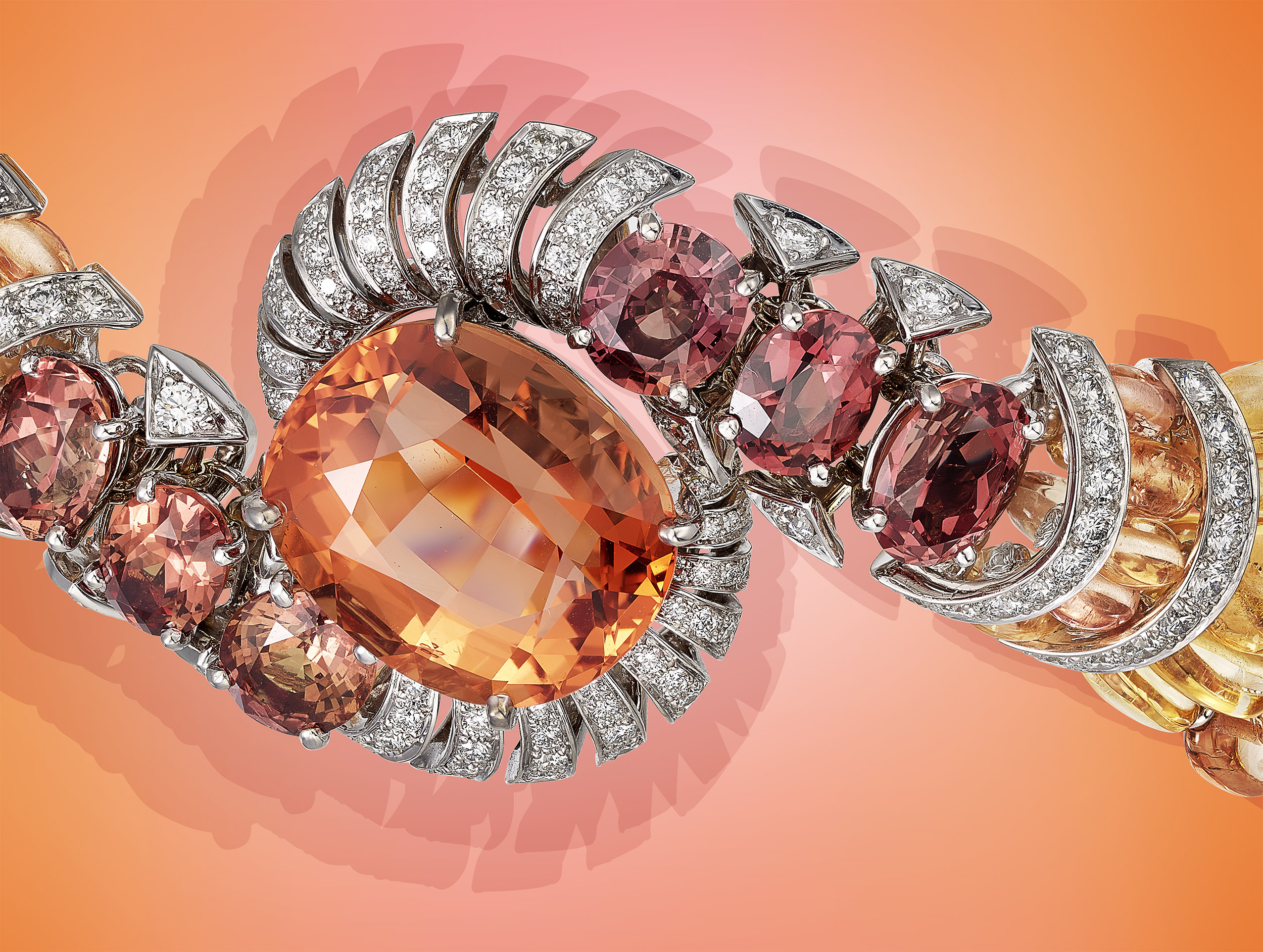
Topaz has been known since the Renaissance and was long confused with citrine, although it can be distinguished by the quality of its crystallization as well as its brilliance. Its warm color is generally yellow or tending towards orange, and, more rarely, can be blue.
- Mineral species: topaz
- Chemical composition: aluminum silicate containing fluorine
- Colors: mainly yellow, orange or blue, sometimes champagne, pink, colorless or even bicolor
- Transparency: transparent
- Hardness: 8 (Mohs scale)
- Main sources: Brazil, Madagascar, Russia
Etymology, history and legends
According to a legend reported by Pliny the Elder, the name topaz comes from the Greek topazos, an island in the Red Sea where gemstones were traded.
What passed for topazes in Classical times were not the stones we recognize as such today. Most likely they were either peridot or serpentine—that is, green stones. Not until Medieval times and the Renaissance did the name topaz come to be definitively associated with yellow stones. As Anselmus de Boodt wrote in his early 17th-century work Le Parfaict joaillier: “nowadays the topazes of jewelers are precious stones of golden color.”
Topaz was not defined as a mineral species in its current sense until the end of the 18th century. The most famous deposit mined chiefly in the 18th century was at Schneckenstein in Saxony, Germany.
Various forms of the name continued to be used until World War II—oriental and occidental topaz, Indian topaz, and noble topaz described a range of yellow stones, from citrine to yellow sapphire. Only the name “imperial topaz” is still applied to orangey-red topazes. The deposit at Sanarka in Russia yielded a lot of pink topazes in the 19th century.
Famous topazes
The Braganza topaz is among the most famous, recognizable by its almost colorless yellow and by its imposing weight of nearly 1,680 carats. It was originally owned by the Portuguese Crown, and for many years this stone was mistaken for a diamond.
Other famous topazes are huge cut stones displayed in museums, such as the enormous 7,725-carat yellow topaz at the Smithsonian Institution in Washington, or the blue topaz exhibited in Chicago’s Field Museum of Natura l History, which weighs over 5,800 carats.
Colors, cuts and shapes
The orange-toned variety appeared in the 18th century in the Ouro Preto mines of Brazil, which also yielded the first—very rare—pink topazes. Cartier does not use blue topaz.
The rarest and most sought-after variety of topaz is called Imperial topaz, which is the color of gold with flashes of orangey-red.
Topaz is used mainly in the form of cut stones and in its Imperial topaz variety. Topaz comes in all shapes—oval- or pear-shaped, emerald cut, marquise, and more. Some topazes display breaks in their crystallization (or twinned crystals), which form characteristic geometric patterns.
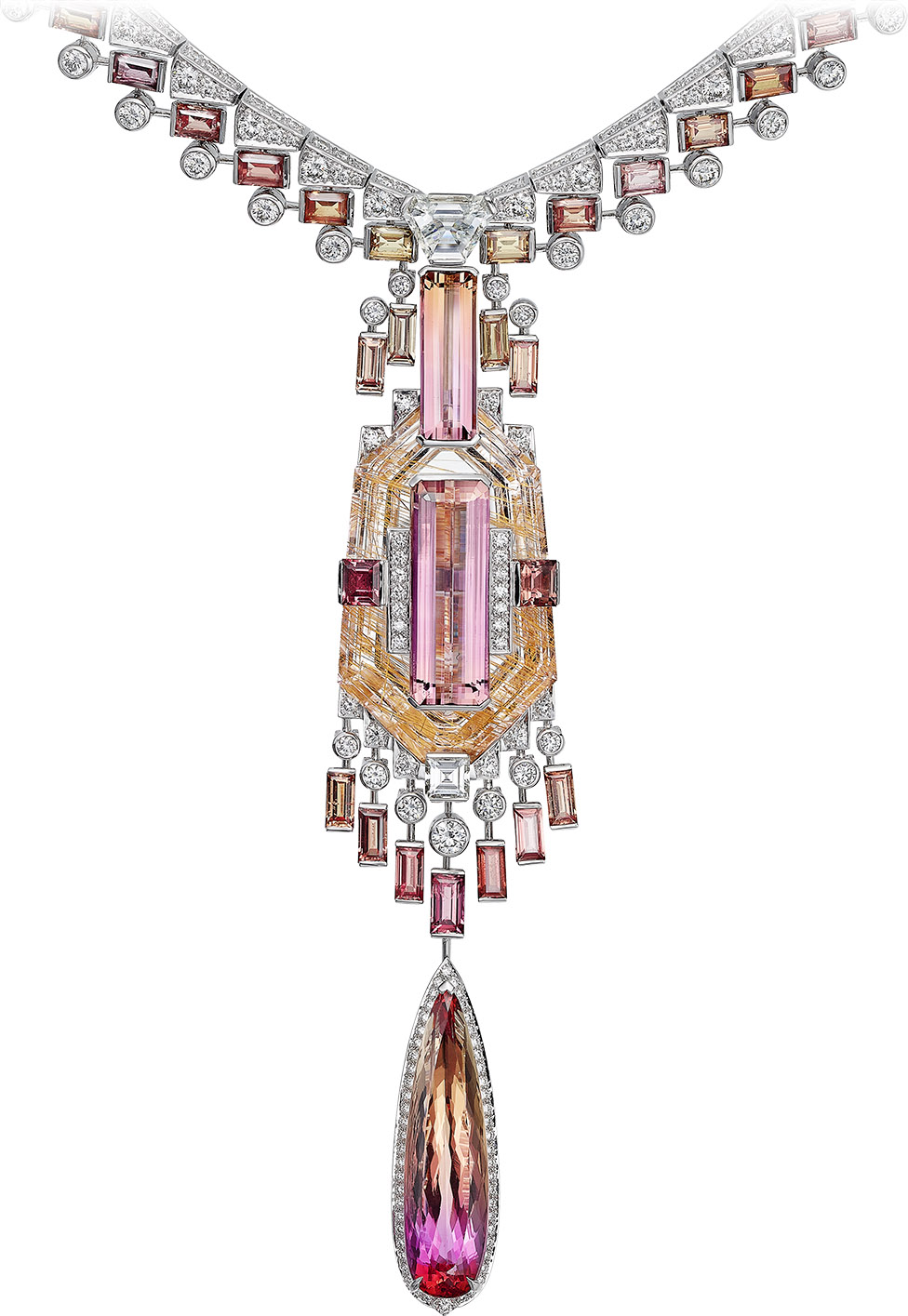
Formation of the stone
The finest topazes are found mainly in pegmatites, especially those that are rich in sodium and lithium, and in hydrothermal veins (where materials have flowed through at high temperatures). They can also be found in gem-bearing sands in rivers.
Origins
The fine quality Imperial and pink topazes are extracted from mines around Ouro Preto in Minas Gerais, Brazil. There is an abundance of pale blue or colorless topaz in Brazil. Deposits in the Ukraine and the Russian Urals also yield blue and yellow topaz. Vietnam has quite recently become a source for topaz.
Certification
Topaz is issued with a certificate that does not specify its origin. Only the finest topazes of pinkish red can justify the nomenclature Imperial topaz.
Care recommendations
Topaz is sensitive to hard knocks and must be handled with care.