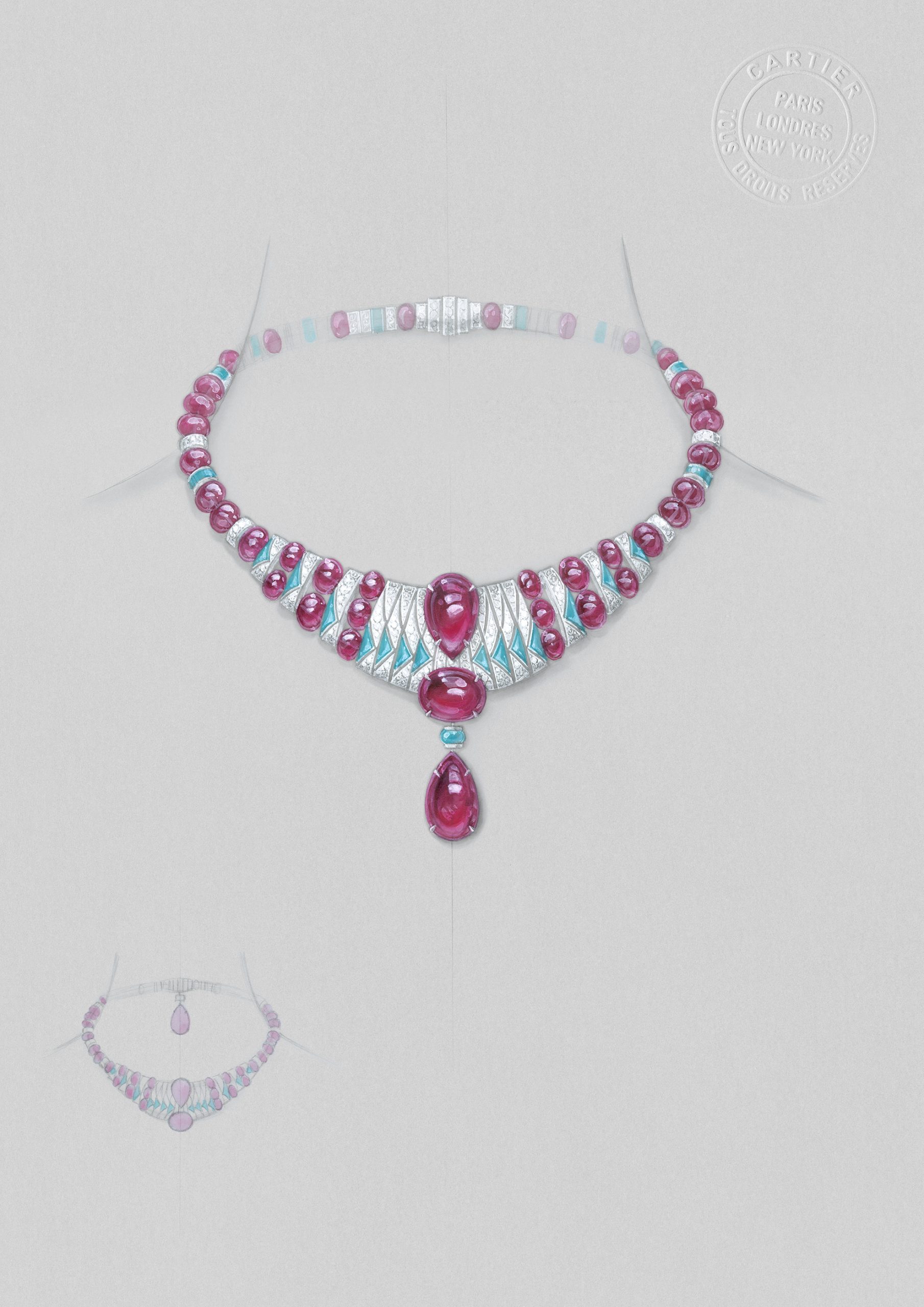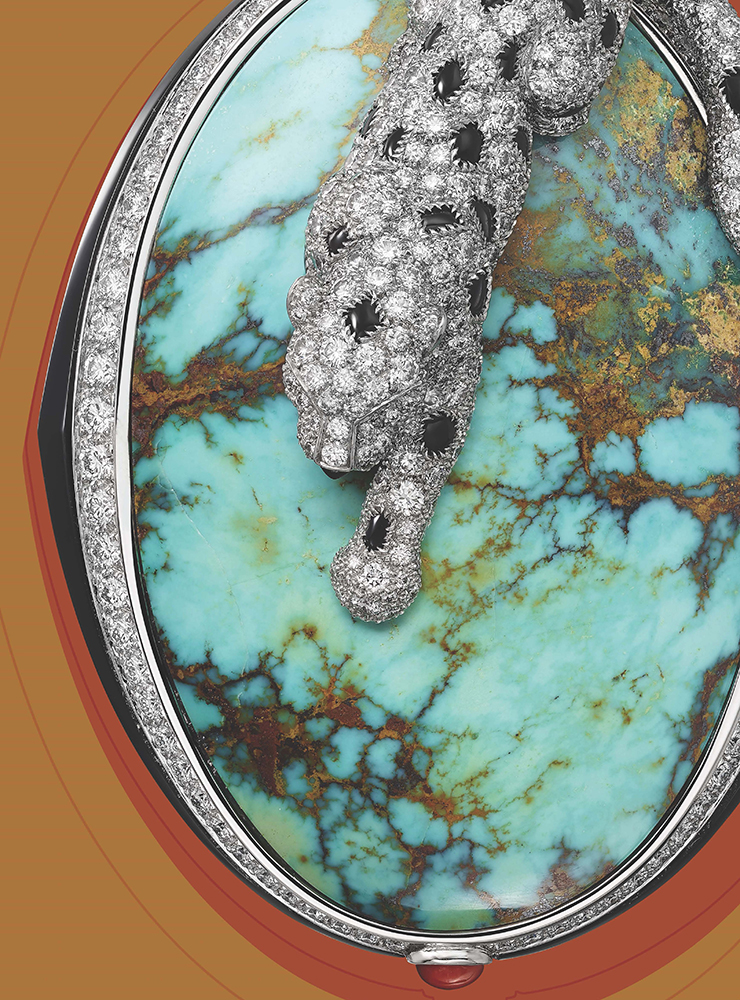
Turquoise is an opaque gemstone that has given its name to the eponymous soft blue-green color.
- Mineral group: turquoise
- Chemical composition: copper and iron aluminum phosphate with some water (H2O) content
- Color: from light blue to pale blue-green
- Transparency: opaque
- Hardness: 5-6 (Mohs scale)
- Main sources of provenance: Iran, Afghanistan, Tajikistan, United States, Argentina, China
Etymology, history and legends
The name “turquoise” is probably derived from the root “Turkish,” relating to the mines in Turkistan where these gems were extracted in the 14th century for export to Europe.
Turquoise is symbolically reputed to have wellbeing and protective properties. A 2nd-century Arabic text also tells us that this stone is supposed to bring wealth and victory.
The Egyptians had a great liking for it and were already mining the Sinai deposits in 4000 BC—deposits which were subsequently forgotten for three millennia.
This gem is traditionally held in high regard in Iran, where very productive mines were discovered in the late 5th century, around Nishapur. During the latter part of Iran’s Qajar era (late 18th to early 20th centuries), turquoises were engraved with naturalistic motifs like birds and flowers, or with traditional religious inscriptions, their grooves delicately gilded with fine gold. These stones were used in jewelry-making but could also serve as money.
The history of this blue-green gem also stretches back a long way on the American continent, with many Pre-Columbian artifacts having been found decorated with turquoises.
Color and use
Turquoise is either used in cabochon or sculpted form.
The most highly prized are stones of a strong and even blue, with no green undertones.
Turquoises with matrix display veining of copper sulfide or mother rock, giving rise to inspiring patterns for designers.
Its chemical composition makes turquoise a porous material that’s highly sensitive, and can turn greenish through oxidation. In some cases, the original color can be restored if the damage is not too deep.
Formation of the stone
Turquoise forms in pyrite-rich volcanic rock that contains copper sulfides, and is generally found alongside copper deposits.
Origins
Historically the stone was mined in Iran, where the Nishapur mine is still active. To this day, the country harbors some of the finest turquoises.
There are a host of deposits across the western United States. Other sources include China, Afghanistan, Tajikistan and Argentina.
Certification
Gemological laboratories do not mention the geographical origin of turquoise in their reports.
Specific features
Cartier accepts colorless wax on the surface only, in line with traditional practice among lapidaries.
Care recommendations
The use of thinners or ultrasonic cleaners should be avoided as these might alter the color of the stones. Turquoise is sensitive to grease and absorbs oil, so it should not be brought into contact with cosmetics, fragrances, leather or any other material that may contain grease.
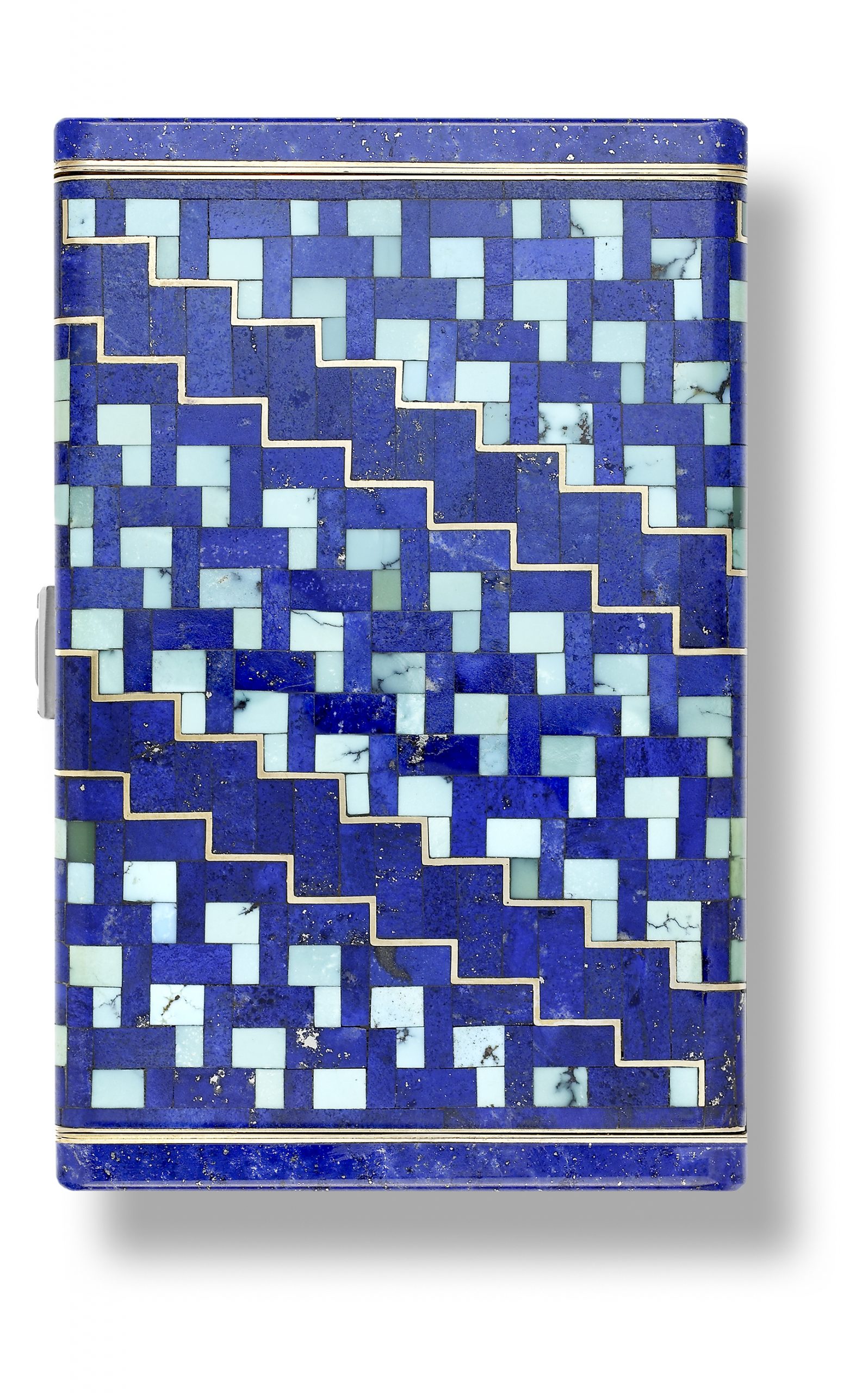
Cartier and turquoises
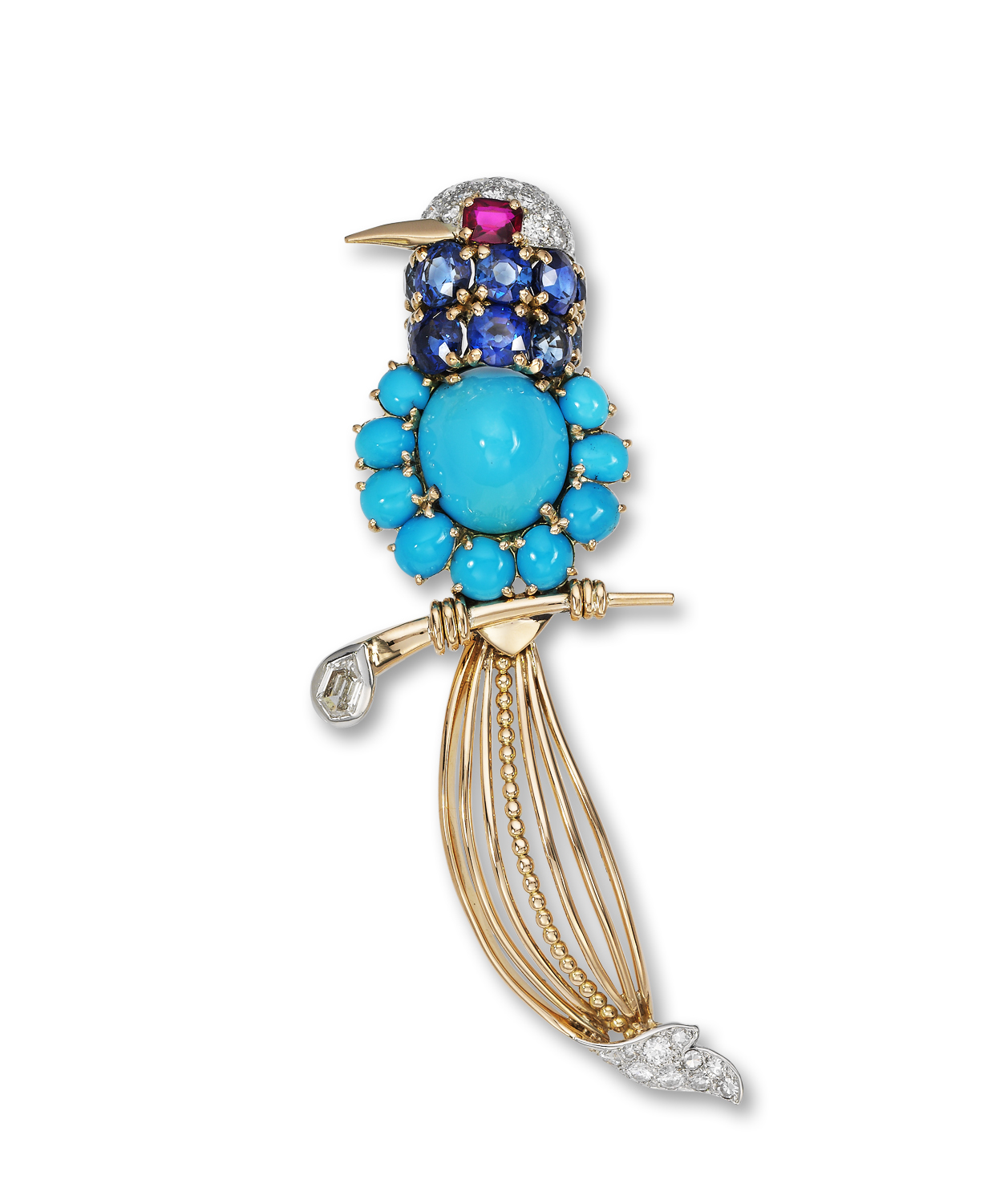
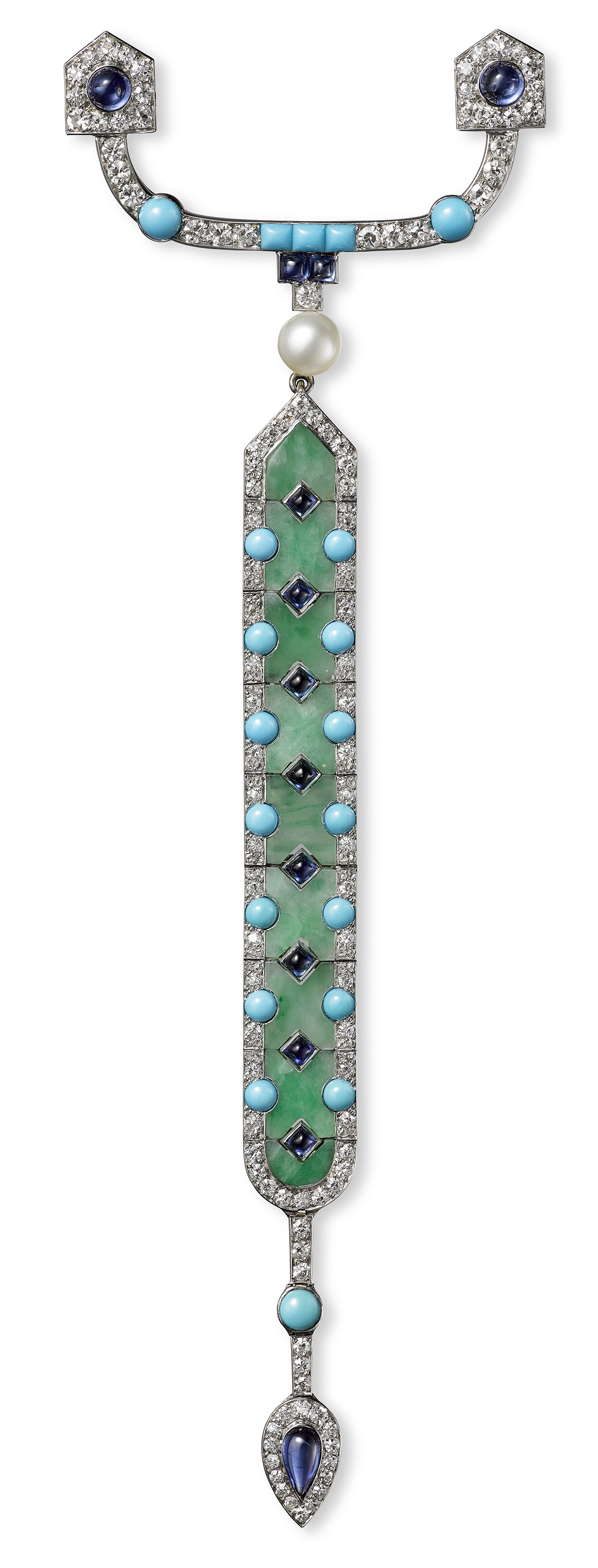
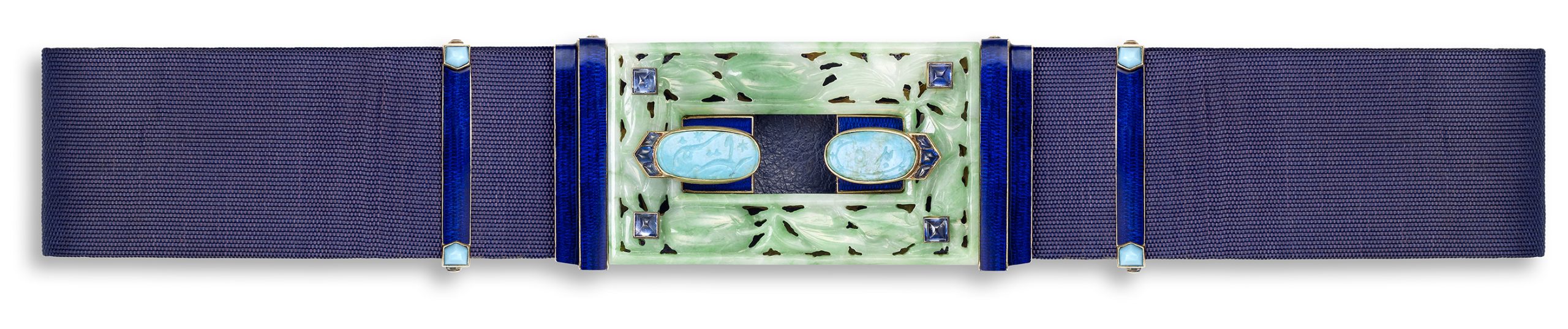
Cartier values turquoise for the softness of its blue to blue-green hue, which is so distinctive and rounds out the jeweler’s color palette. The Maison has used it since the early 20th century in bold designs that introduced unprecedented color combinations. A fine example of this is a 1913 brooch-pendant featuring jade panels accented with turquoise and sapphire cabochons. This piece is emblematic of Cartier’s Modern Style, attesting to the influence of the Ballets Russes and their Orientalist aesthetics. Not only does the turquoise enliven the design, it also adds a touch of “exoticism” to the piece.
It is quite probable that this use of turquoise was related to Louis Cartier’s interest in Egypt. Around 1910 he encouraged his designers to go and learn about Pharaonic civilization, initially by visiting the Louvre. Soon the Maison’s repertoire came to incorporate traditional motifs, divinities and hieroglyphics, along with new materials such as cornelian, lapis lazuli and turquoise.
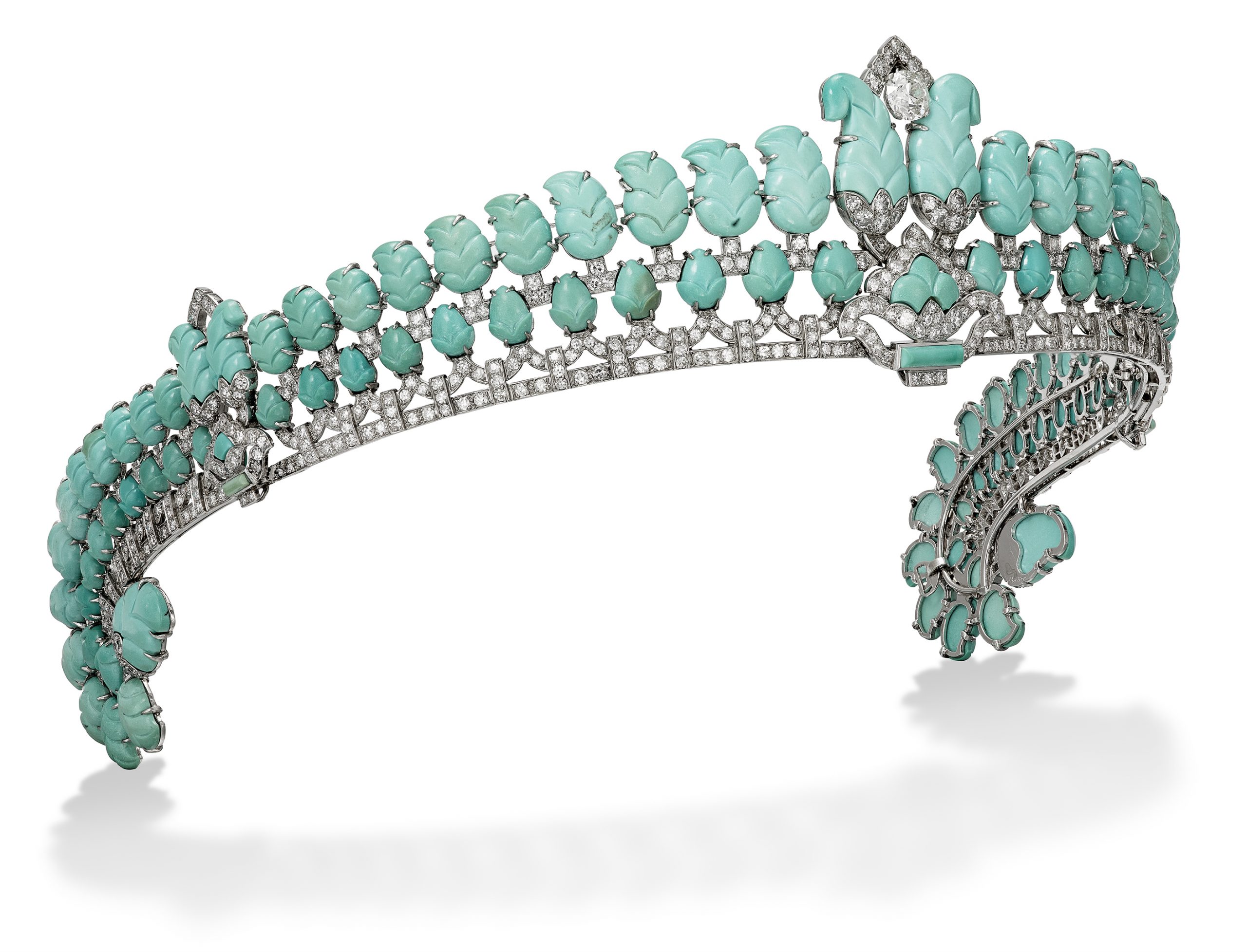
Cartier reveled in its power to evoke faraway civilizations. Alongside Egyptian-influenced designs, it also employed turquoise to adorn pieces that drew on Asia and the Orient for inspiration—either in combination with other stones or used alone, as on a spectacular 1936 Indo-Persian tiara.
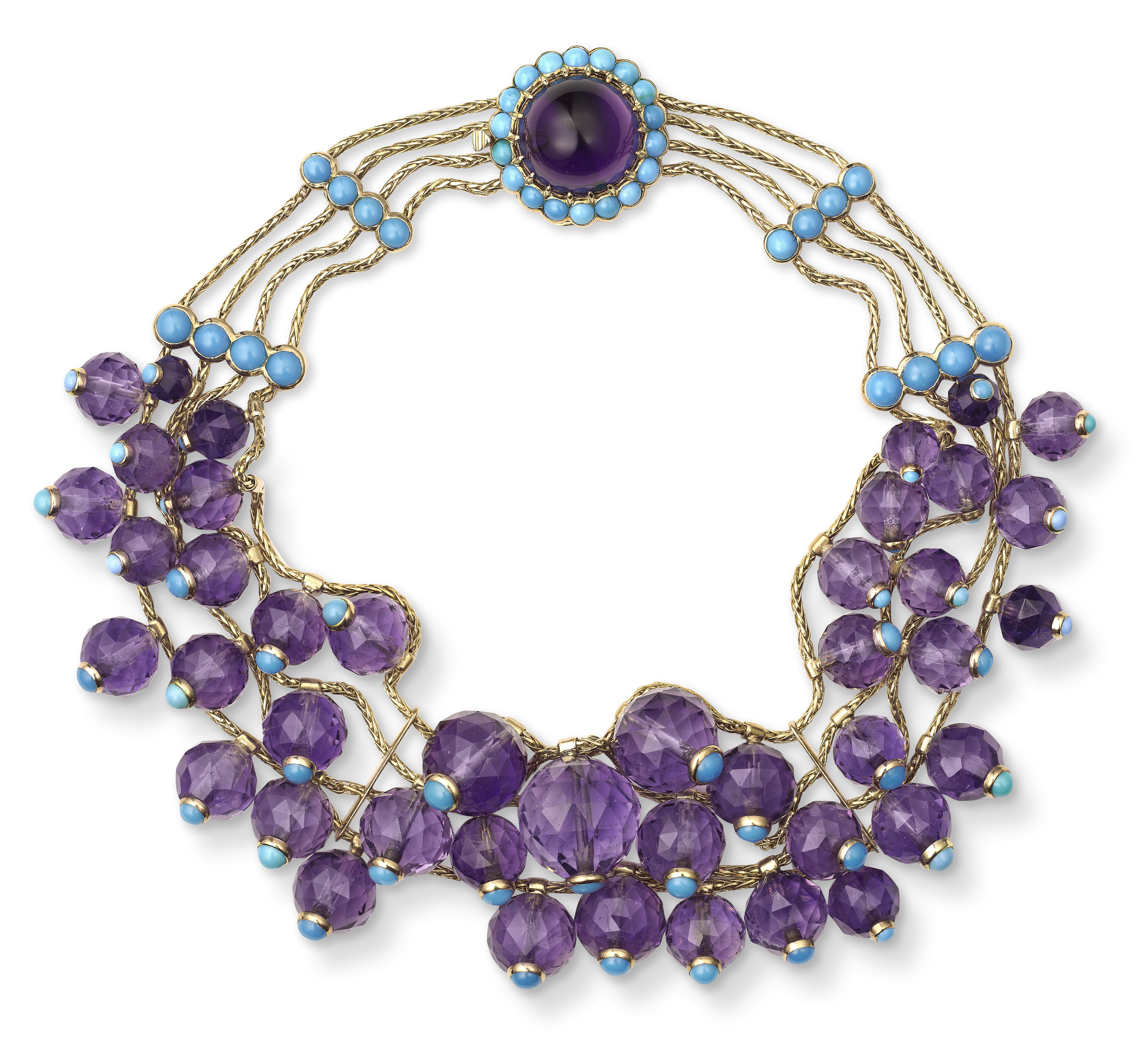
Under the sway of Jeanne Toussaint, creative director from 1933, Cartier combined coral, emerald, colored sapphires, citrine and turquoise in jewels that exploded with riotous color. Turquoise was very much in the frame—Toussaint intuitively juxtaposed it with the deep purple of amethyst, creating a novel color combination that soon became a classic.
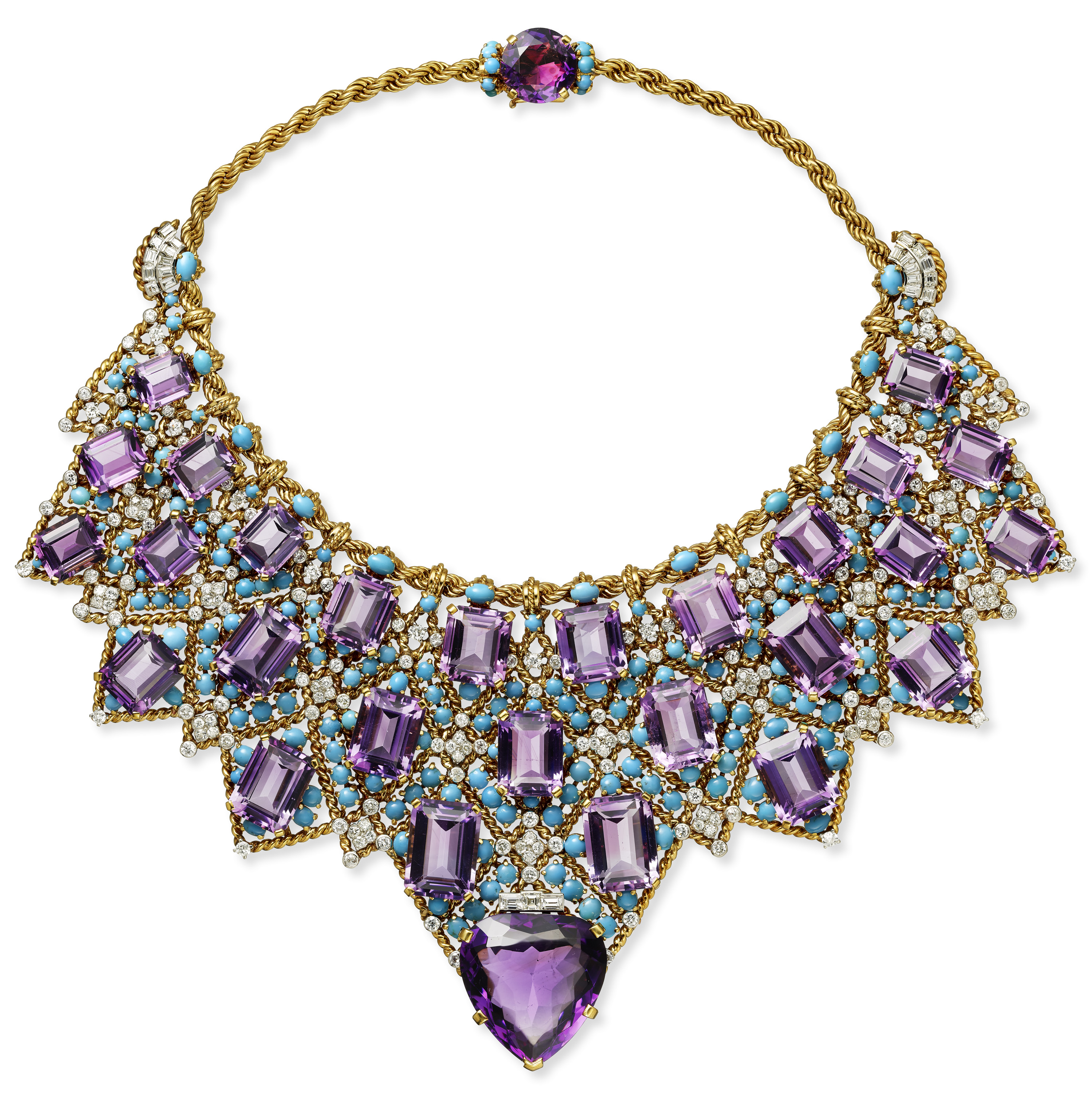
In its quest for unusual and characterful stones, Cartier also distinguished itself by using carved Persian turquoises. A 1938 bracelet made for Louis Cartier’s wife features a pair of them. More recently, in 2016, the Maison mounted similar carved turquoises on a High Jewelry parure.
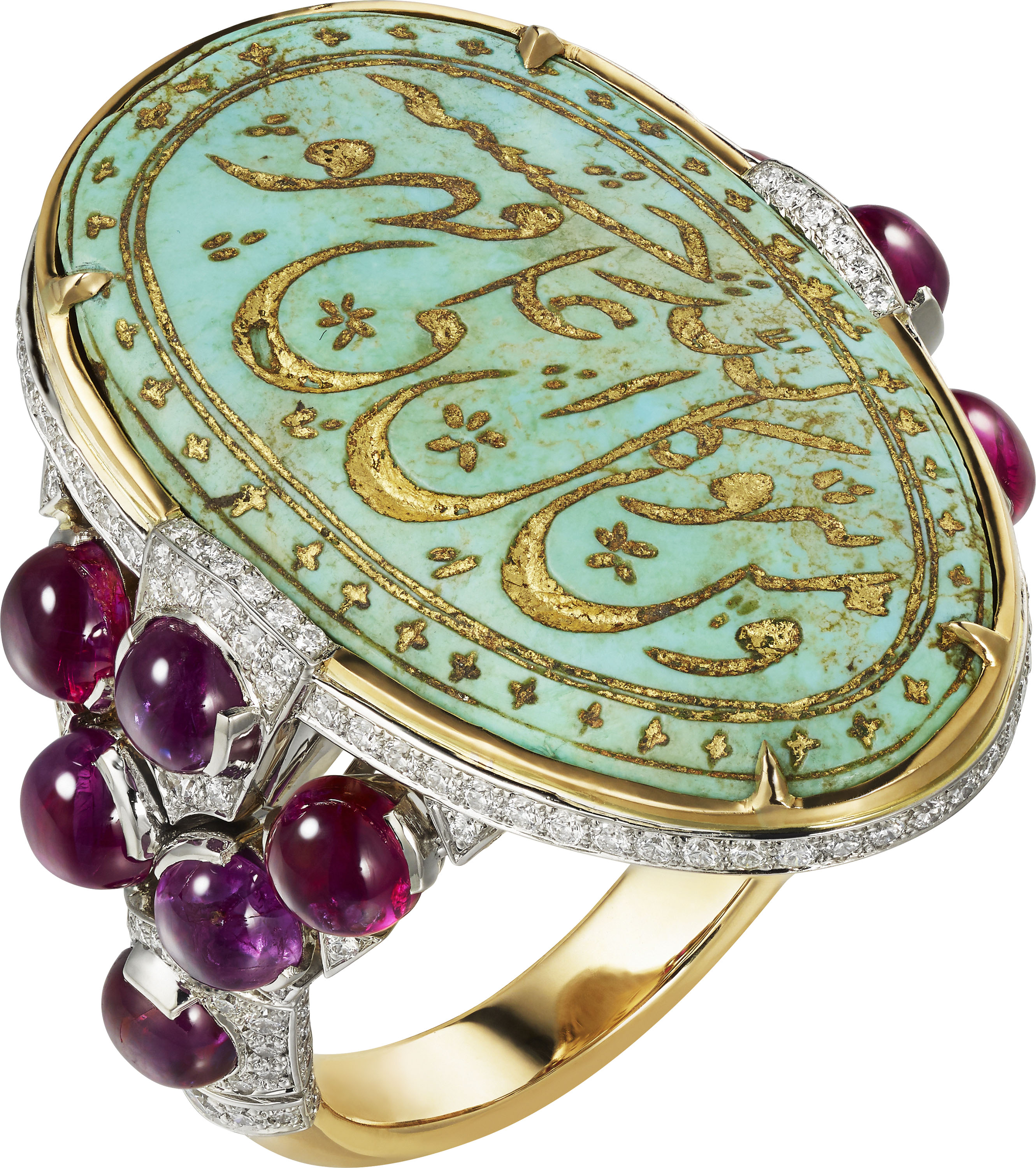
Turquoise has found its rightful place in contemporary design. Often used in minor touches to add vibrancy to a piece, it featured in a collection of Art Deco-inspired necklaces, bracelets and rings launched in 2018, as well as in High Jewelry sets like the strikingly graphic Chromaphonia set.