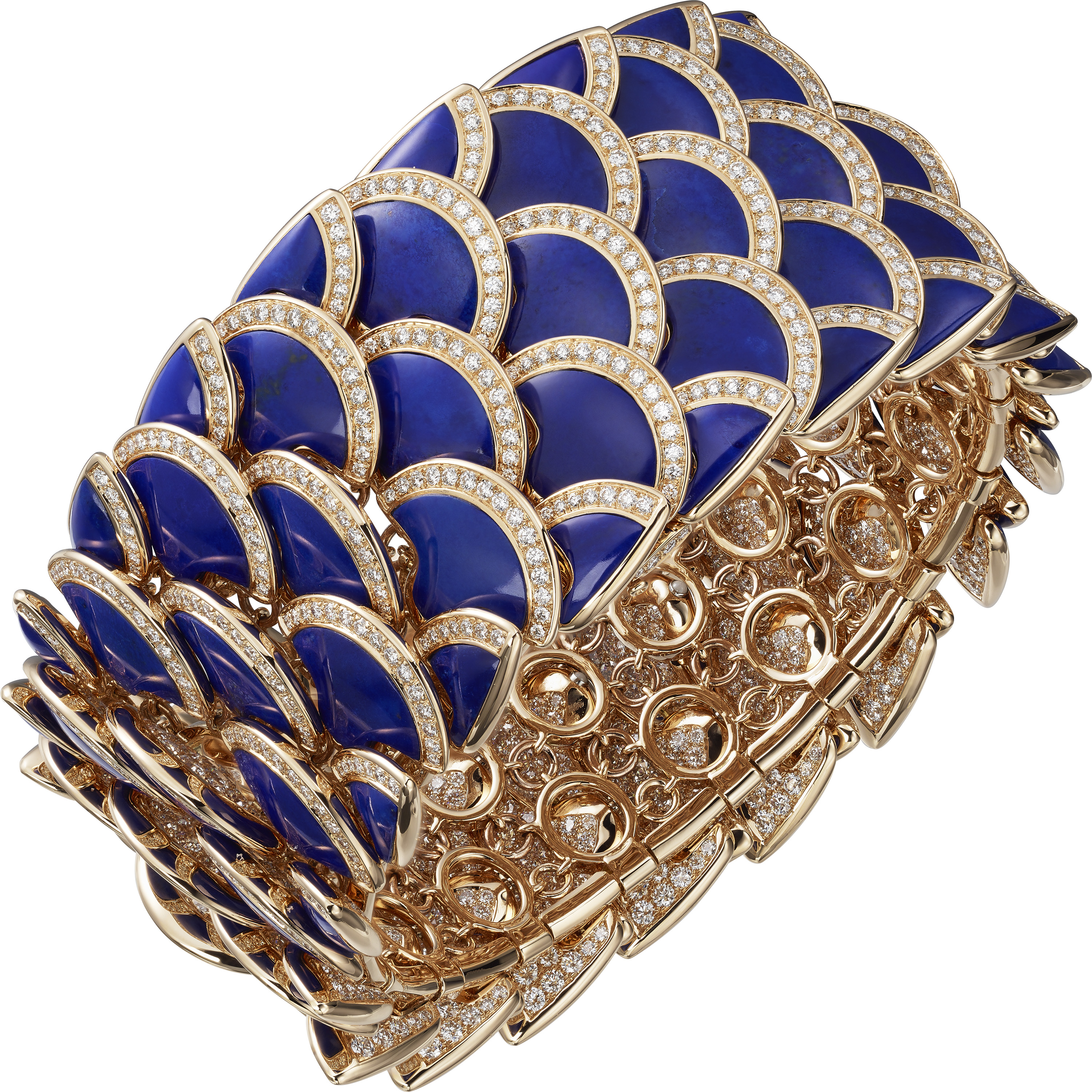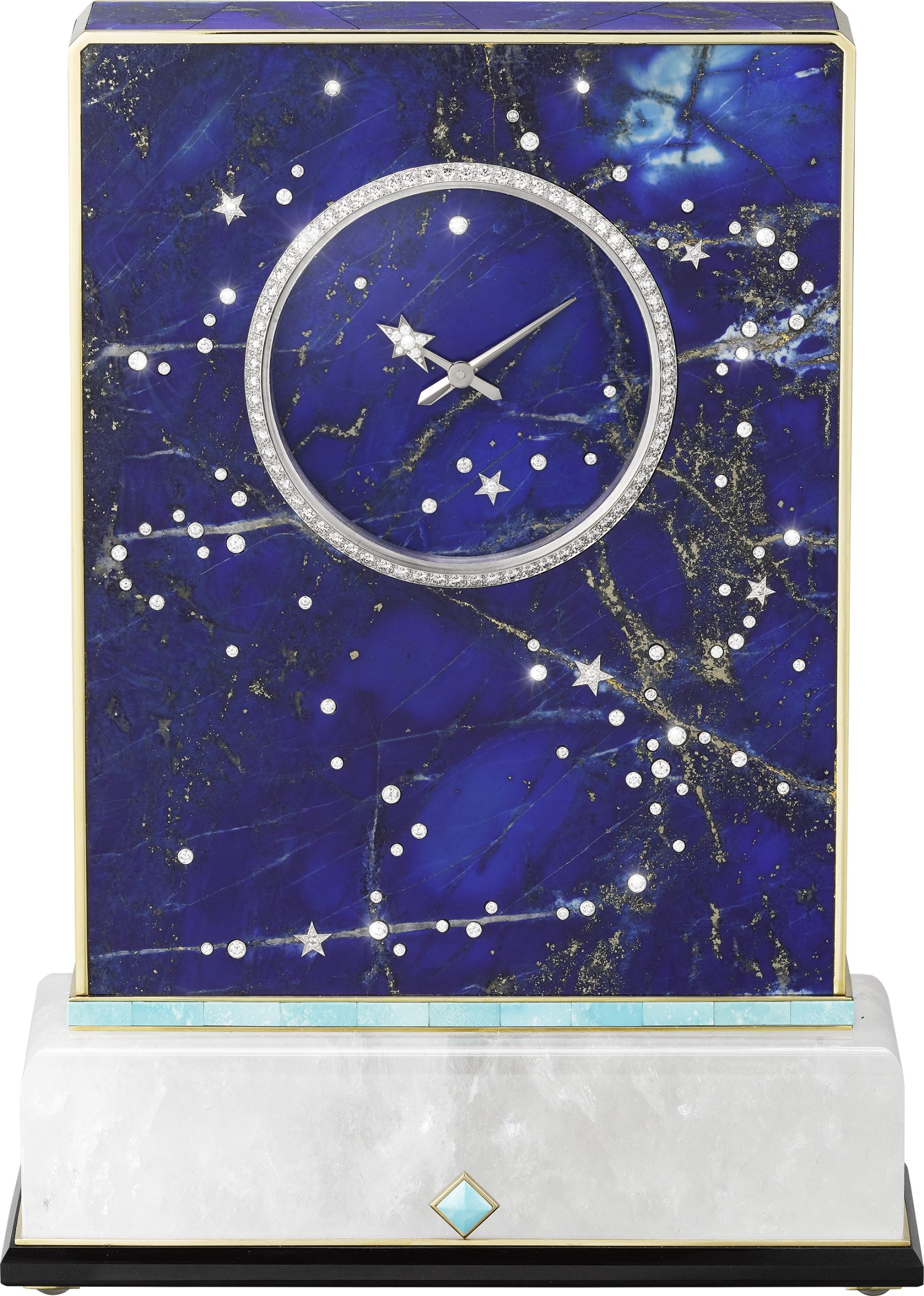
Lapis lazuli, a deep blue ornamental stone, is one of the oldest and finest materials known, constantly featured in jewelry design.
- Chemical composition: sodium and calcium aluminosilicates containing sulfur and sulfate ions
- Transparency : opaque
- Color : ultramarine, sometimes flecked with pyrite crystals (golden) and/or calcite or dolomite veins or crystals (white)
- Hardness: 5,5 (Mohs scale)
- Main sources of provenance: Afghanistan, Chile, Russia
Etymology, history and legends
Lapis is the Latin word for stone and lazuli is derived from “azure,” which comes from the Persian word lazhward, meaning “blue.”
In the Epic of Gilgamesh, one of the first books about the history of humanity dating from the 18th century BC, Gilgamesh evokes a “lapis lazuli tree whose branches are loaded with seductive fruits…”
Known as early as the 4th millennium BC, lapis lazuli adorned many jewels and objects from the Sumerian and Egyptian eras, as seen among the treasures revealed in Tutankhamun’s tomb, discovered in 1922. The blue stones of Antiquity, referred to as “sapphires,” were very often actually lapis lazuli. In Roman times, this stone was considered to be an aphrodisiac and was frequently found in the pharmacopeia of the Middle Ages.
For centuries, lapis lazuli was mined in Afghanistan and transported to Baghdad, where it was traded and exported to the rest of the world. Because of its remote origins, the stone’s deep blue hue was referred to as “ultramarine,” literally meaning “from beyond the sea.”
Ground into a pigment, lapis lazuli was highly prized by artists during the Middle Ages, who used it to adorn the most precious illuminated manuscripts, and later by Renaissance painters. During both periods, it was a very expensive material, more costly than gold. Lapis lazuli was also used for the manufacture of ceramics, glass and enamels. Its popularity grew worldwide throughout the 13th and 14th centuries and until the industrial era, when it was dethroned by synthetic pigments.
Lapis lazuli is the national stone of Chile, where it was discovered (or perhaps rediscovered) in the mid-19th century. It is nicknamed “the flower of the Andes” after the company that extracts the stone and its eponymous mine.
Famous lapis lazuli
Many objects bear witness to lapis lazuli’s use in liturgical art and the creation of ornamental objects by royal courts around the world. One example is the Egyptian pectoral necklace—representing a vulture adorned with lapis lazuli—found in Tutankhamun’s tomb and intended to protect him during his life on earth and in the hereafter.
Color and use
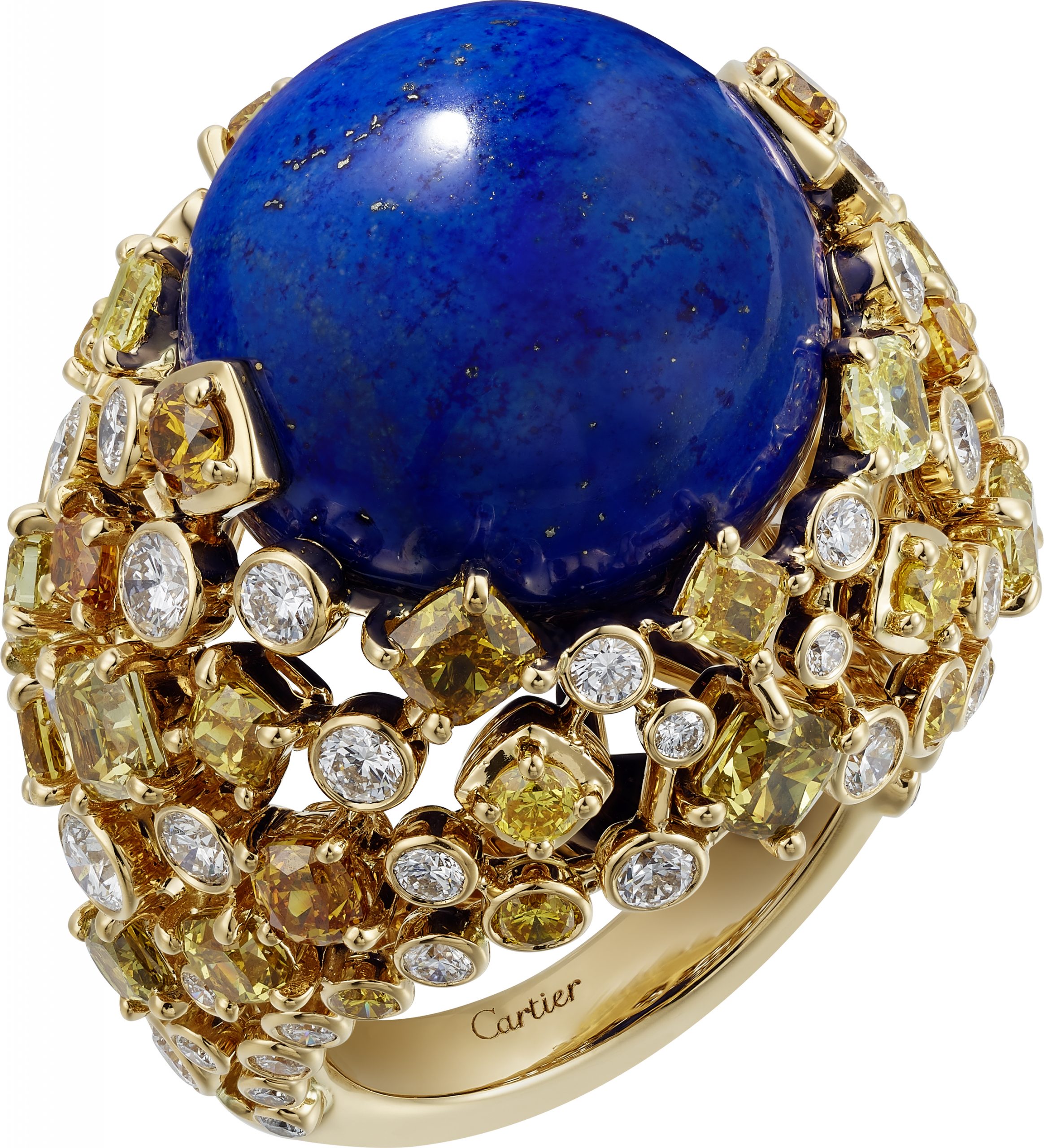
The most prized stones are those with a uniform appearance. They have little or no components other than lazurite. Lapis lazuli featuring tiny golden flecks of pyrite evoking a starry sky is also highly sought-after.
Formation of the stone
Lapis lazuli is a rock—an aggregate of minerals—entirely or partially composed of lazurite. Small quantities of other components are frequently found. For instance, dolomite or calcite can create areas or veins with a whitish hue, while pyrite brings small flecks of yellow with a metallic glow.
Origins
Lapis lazuli has been known and extracted in northeastern Afghanistan for over 6,000 years. With its craggy mountains peaking at 2,500 meters, the region is difficult to access. It is renowned for the unparalleled quality of its stones, particularly since the 1970s. Afghanistan’s geological formations continue northward, into neighboring Tajikistan, which produces lesser quality stones.
As a leader within the luxury sector, Cartier is committed to ensure it applies responsible sourcing practices. As a result, the Maison has decided to stop sourcing lapis lazuli from Afghanistan as of October 2018.
In Chile, where lapis lazuli was discovered in the mid-19th century, the stone is mined at an altitude of 3,600 meters in the Andes, along the border with Argentina. Its veined structure makes it ideal for decorative uses. Only rare specimens containing no calcite can be compared to Afghan lapis lazuli.
Lapis lazuli is also found in Siberia (Russia), Canada, California and even in Italy.
Certification
Lapis lazuli is not subject to certification.
Care recommendations
Lapis lazuli must be handled with care to avoid scratching and chipping. It does not withstand rhodium-plating, ultrasound, chemical treatments or excessive heat.
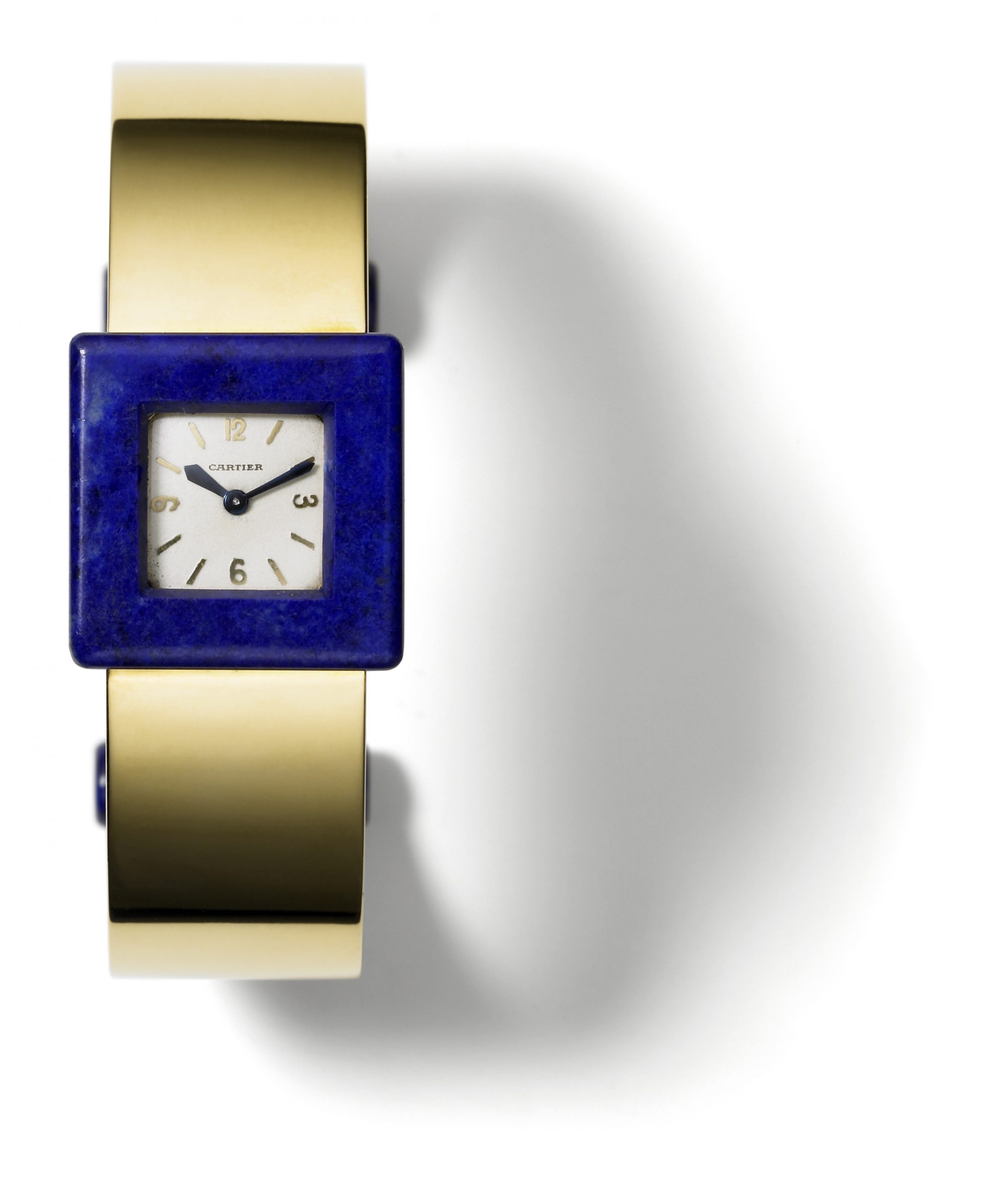
Cartier and lapis lazuli
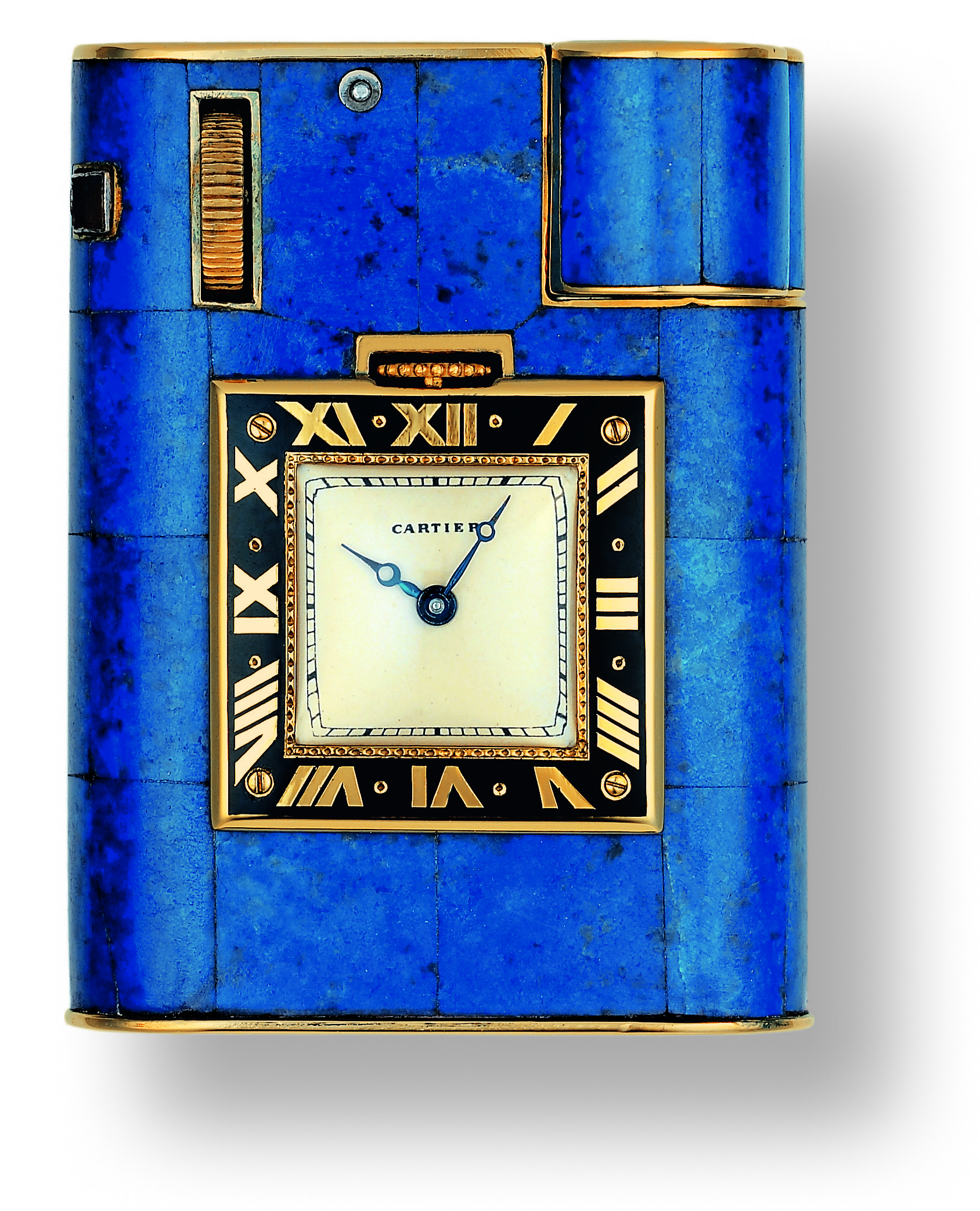
Among all the stones used by Cartier, lapis lazuli holds a special place. For countless millennia, lapis has been a material of choice in jewelry-making and the decorative arts. Since its earliest days, the Maison has been using the stone, as illustrated by a bracelet with lapis lazuli medallions adorned with diamond fleur-de-lis motifs, created around 1850.
Decades later, around 1910, Louis Cartier encouraged his designers to include lapis in Egyptian-inspired pieces such as vanity cases embellished with figurine deities, accessories decorated with hieroglyphs or lotus flowers, and portico clocks. Lapis lazuli is often combined with coral, carnelian or turquoise in a faithful evocation of the ceremonial objects which once surrounded the pharaohs.
In addition to lapis lazuli’s historical significance, Louis Cartier appreciated the stone for its intense hue. Displaying his taste for experimentation with color, he dreamed up graphic, contrast-rich creations, introducing unprecedented combinations of materials. Sapphire and emerald, coral and onyx, lapis lazuli and jade… these bold associations were the early harbingers of the Art Deco style.
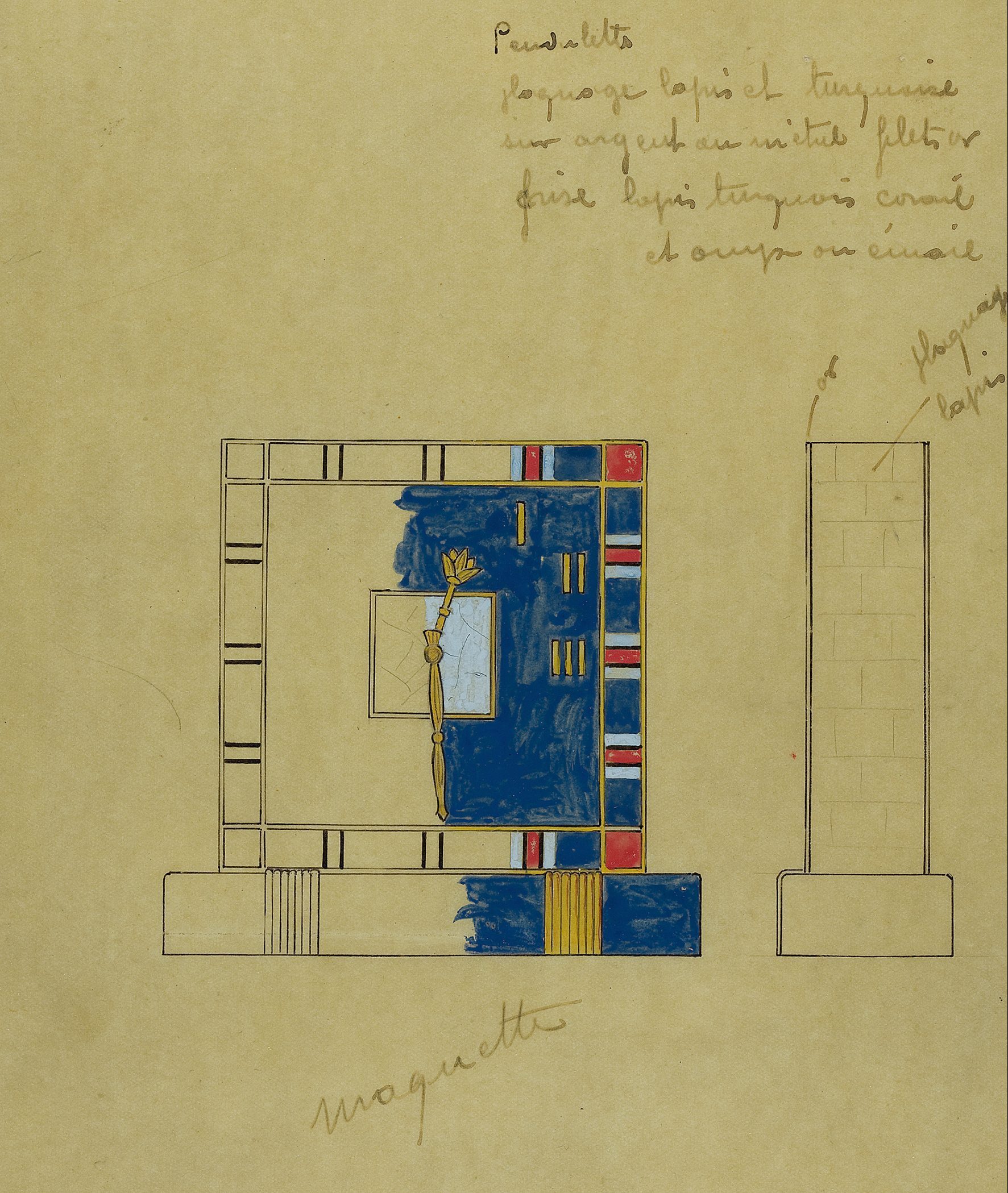
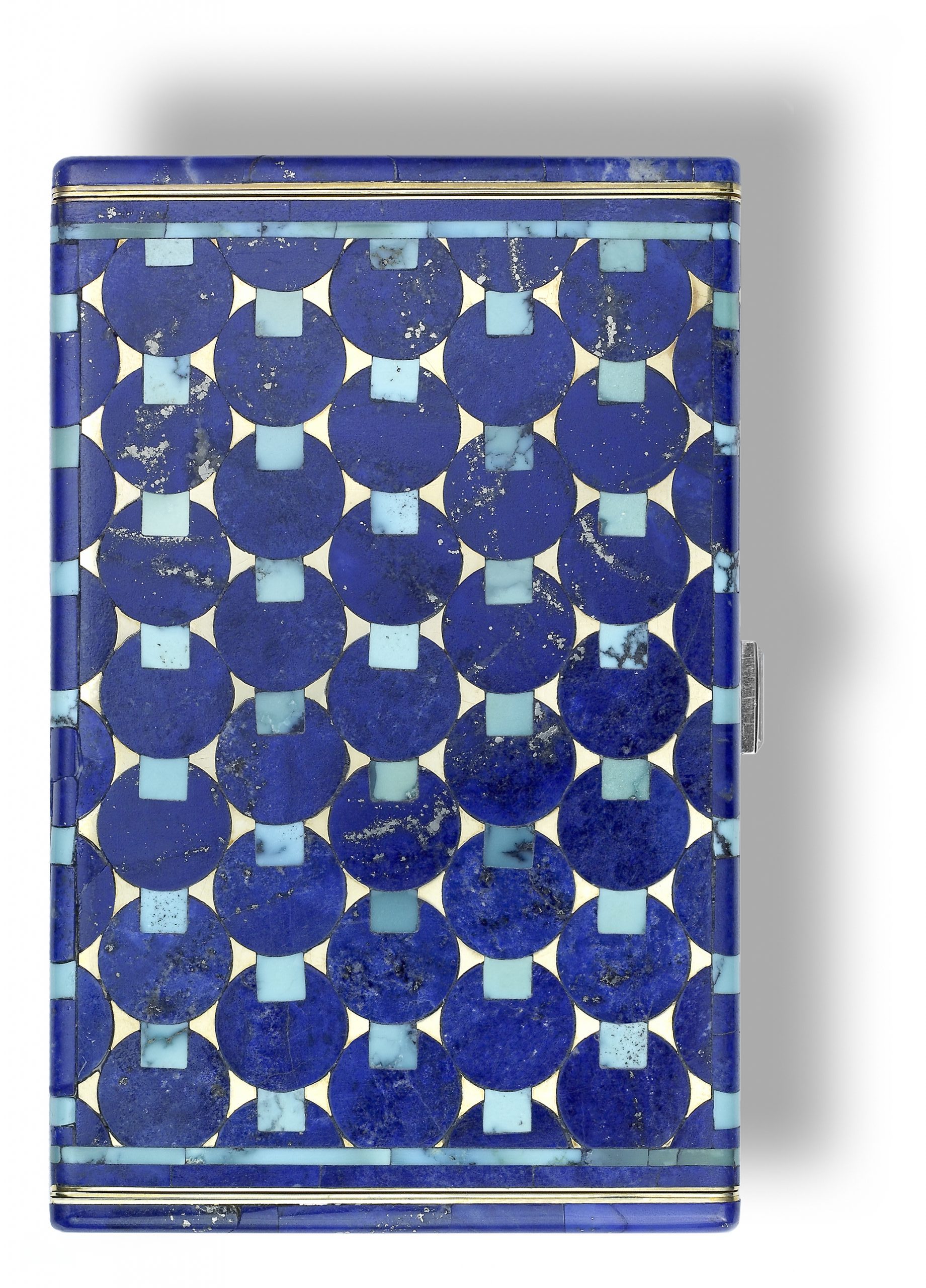
In the 1930s and the postwar era, the Maison continued its research on color and brought a host of novel combinations to jewelry. In a 1935 article, the journalist S.R. Nalys observed that “jewels [are treated] like a decorative composition, like a ‘whole’ in which the colors glisten, giving rise to the most unexpected contrasts between not only sapphires, emeralds and turquoise… but also jade, coral and lapis.” Jeanne Toussaint, Cartier’s creative director from 1933 to 1970, exalted lapis lazuli for powerful pieces in yellow gold, or more subtly paired it with turquoise to play on the variations of blue.

Never absent from the Maison’s workshops, as illustrated by the many accessories and jewels created over the decades, lapis lazuli is regularly showcased in contemporary pieces as well. Some illustrative examples include an ingenious reversible High Jewelry bracelet made in 2017, a clock evoking a starry sky presented the same year, and several pieces from the Cactus de Cartier collection.