
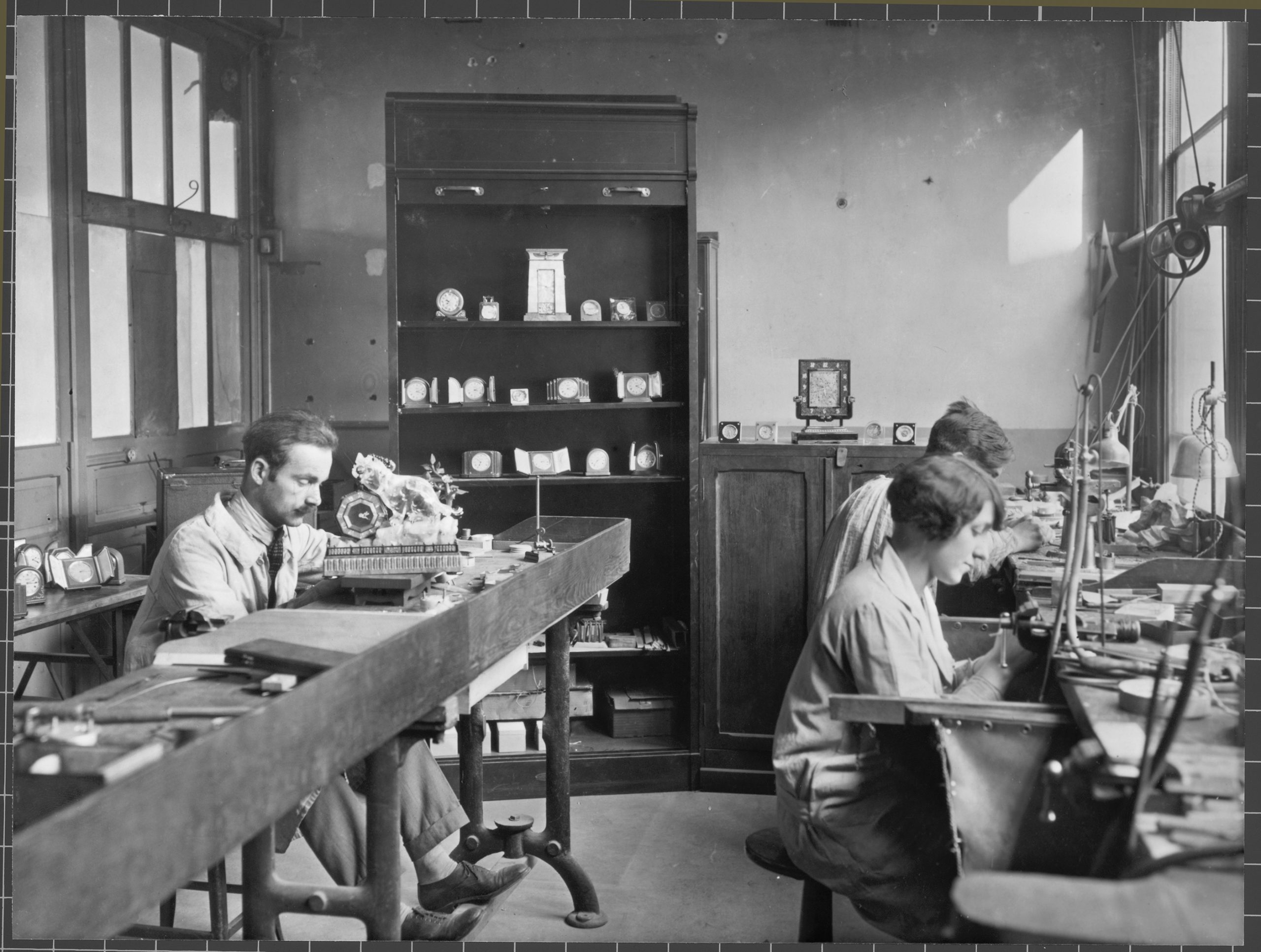
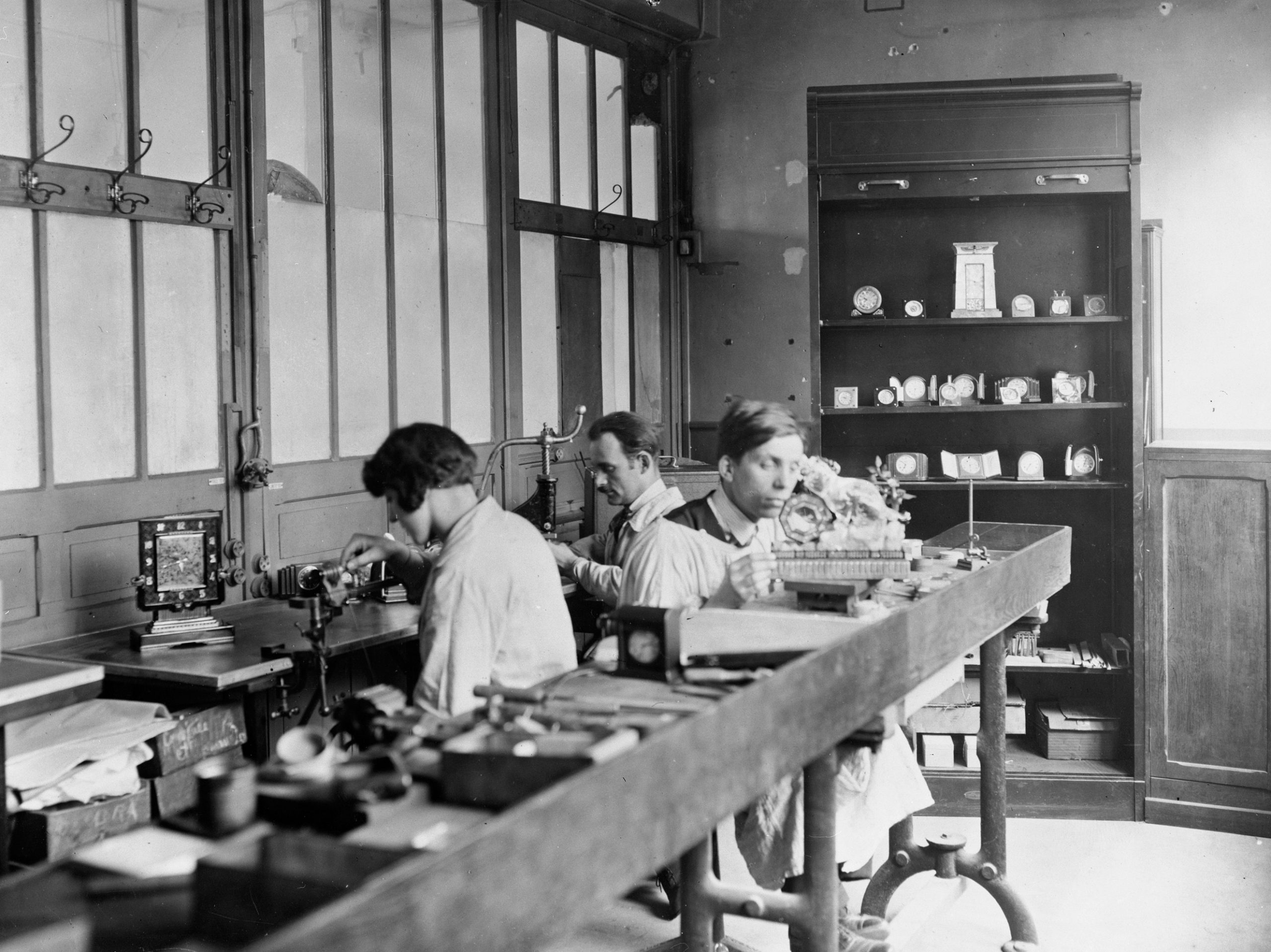
Maurice Coüet (1885–1963) was a talented watchmaker who designed fascinating timepieces for Cartier. His creations, such as the “mystery” clocks, combined outstanding savoir-faire and poetry.
Maurice Coüet was born in 1885 into a family of watchmakers. He trained alongside his father in Évreux, in the region of Normandy, before moving to Paris, where he opened his own workshop on Rue Saint-Martin. Beginning in 1911, Maurice Coüet designed clocks exclusively for Cartier: eight years later, he joined the Cartier workshops on rue Lafayette.
Louis Cartier had noticed early the talent of this young artisan with a passion for high-precision mechanisms and optical illusions, who could craft masterpieces that seemed to defy the laws of nature. As early as 1912, Maurice Coüet designed what were known as “mystery” clocks for the Maison. Their hands, as if floating, seemed to move magically in a transparent block of rock crystal.
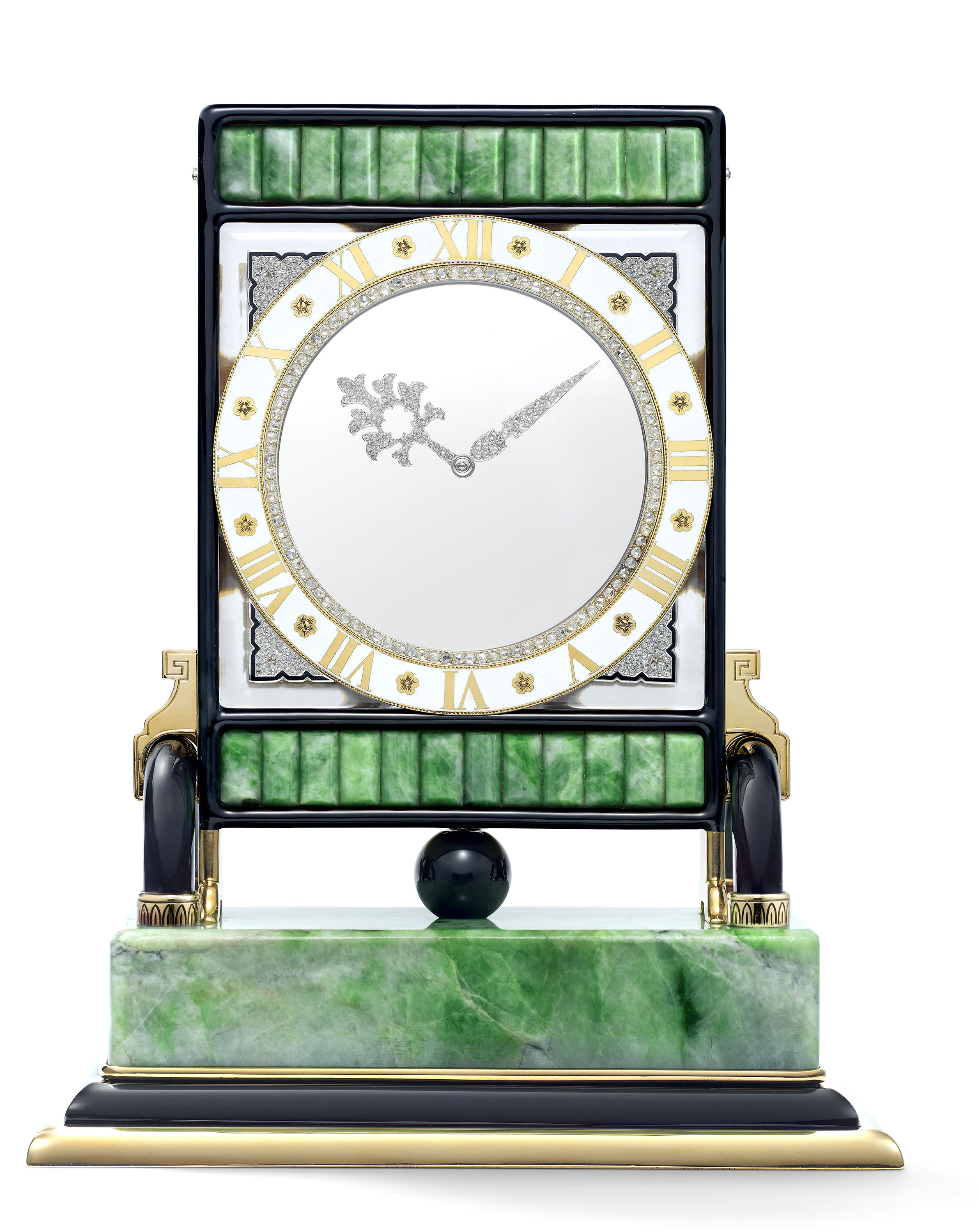
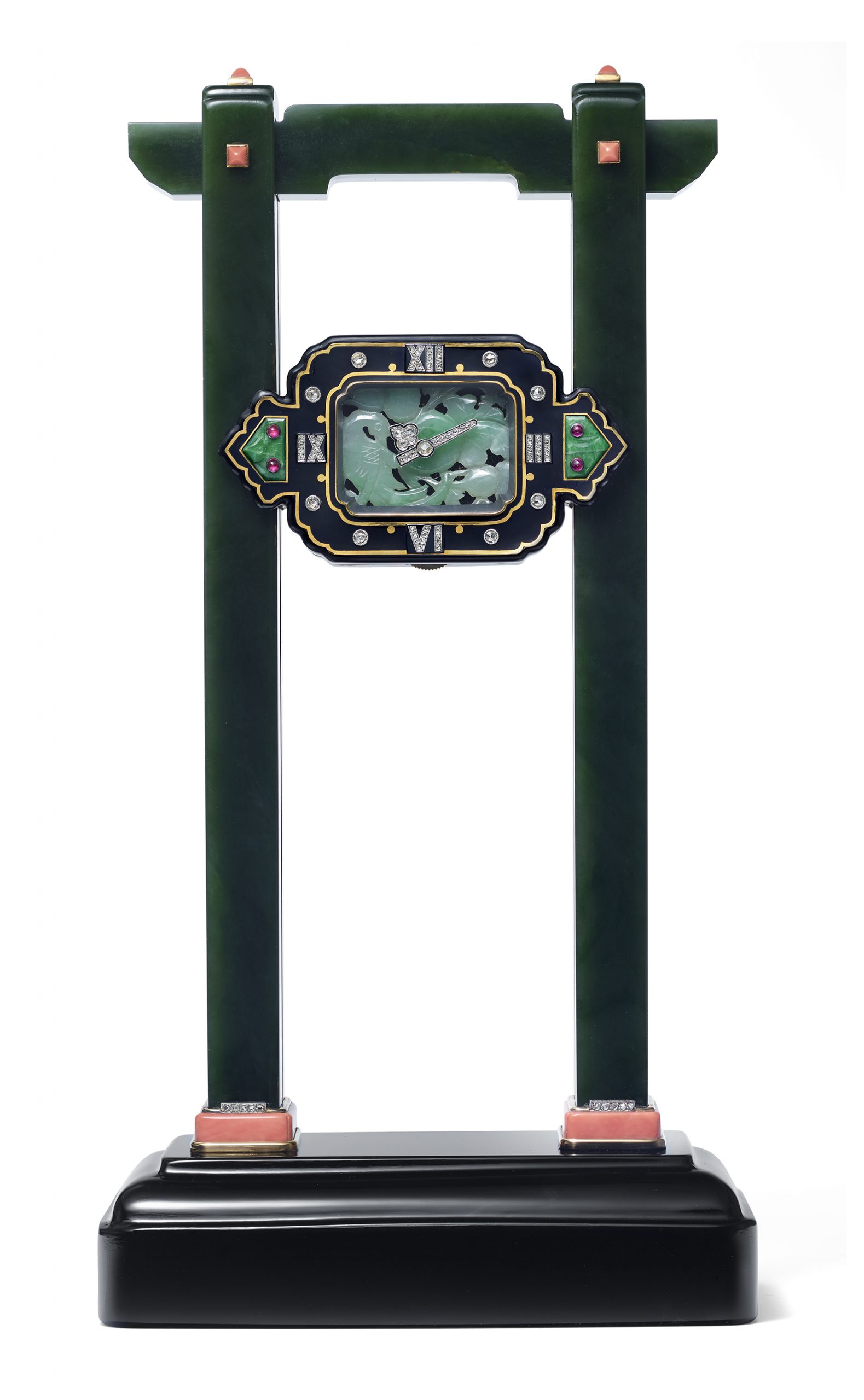
This first creation marked the beginning of a rewarding collaboration that spanned more than three decades. Employing up to thirty artisans at the time of its installation in the Cartier premises on rue Lafayette in 1919, Coüet’s workshop designed charming miniature timepieces for Cartier as well as so-called “semi-mysterious” clocks which were treasure troves of savoir-faire and enchantment. These included his famous magnetic clocks, generally featuring a basin filled with water and a figurine floating on its surface pointing to the time on the clock’s edge. There were also gravity clocks, whose cases slowly descend down a column or between two pillars.
Another equally remarkable invention had a highly evocative name: the “comet” clock. A 1913 model, preserved today in the Cartier Collection, features a rotating disk of blue enamel at its center, with one index in the shape of a radiant sun and another in the shape of a crescent moon. The lower half of the disk is concealed by a semi-circle which alternately reveals the trajectory of the sun or moon along the hour scale, depending on whether it is day or night. Blending excellence, skill and poetry, this type of clock demonstrates that not only was Maurice Coüet a clockmaking genius, he was also an artist whose designs provided an outlet for his vast imagination.
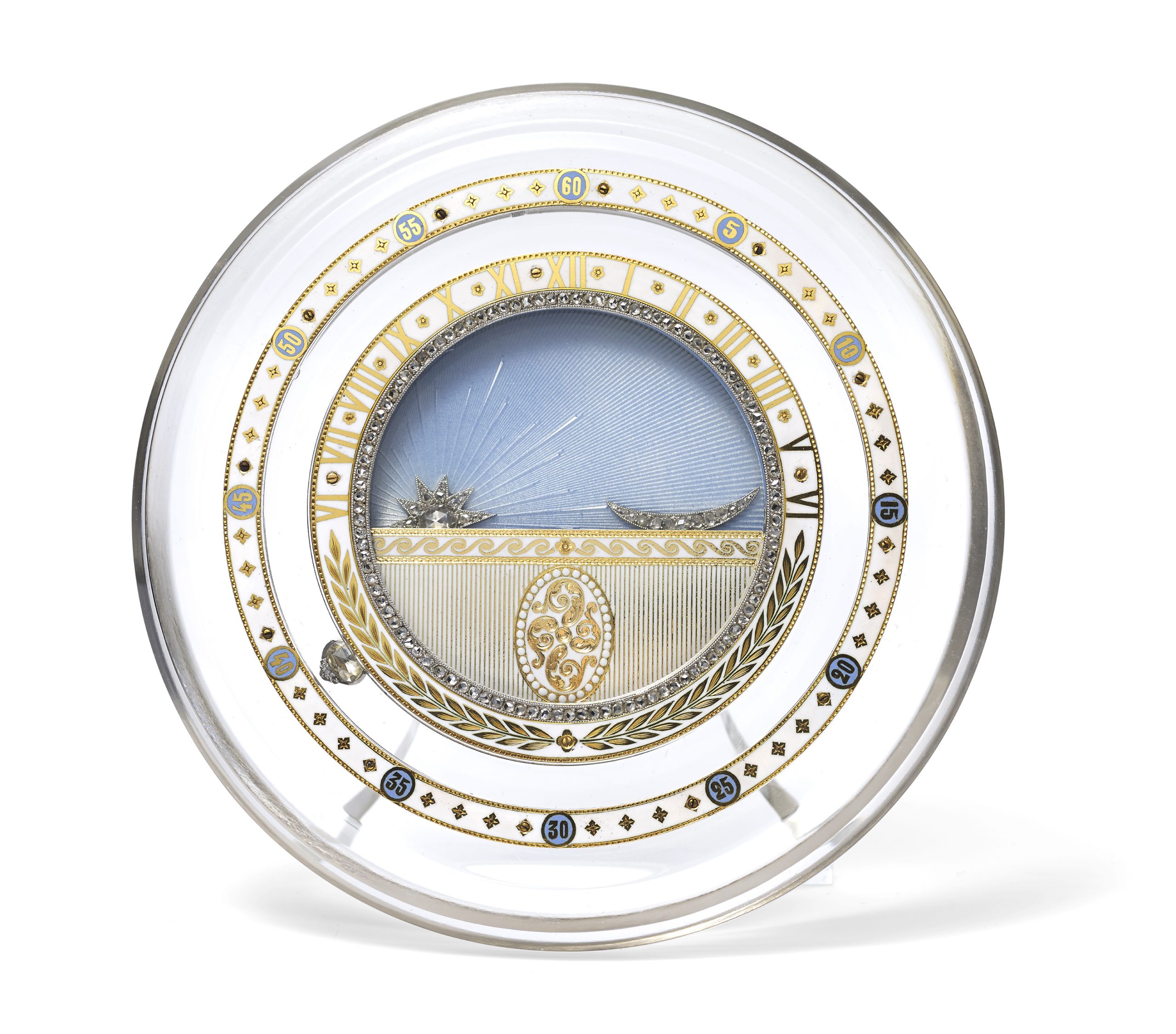
Coüet’s workshop also created objects which, although not technically complex, nonetheless displayed rare elegance. For instance, he produced incredibly delicate models with a rock crystal surround, and clocks crafted out of hard stones cut into geometric shapes, enhanced with precious gems. These latter creations convey Maurice Coüet’s and Louis Cartier’s shared taste for streamlined aesthetics blending the essential shapes and balanced proportions that were emblematic of the Art Deco period.
Following the Great Crash of 1929, Coüet’s name appeared less and less regularly in the Maison’s archives. His mystery clocks, whose technical aspects and precious materials made them too costly during the economic recession, became increasingly rare, and the workshop began to focus on “semi-mysterious” or decorative models. In 1930, Maurice Coüet moved to the workshop of a Parisian jeweler named Renault, located on Rue Réaumur, before joining the Cartier workshop eight years later[1].
[1] Hans Nadelhoffer, Cartier by Hans Nadelhoffer, Éditions du Regard, 1984.