
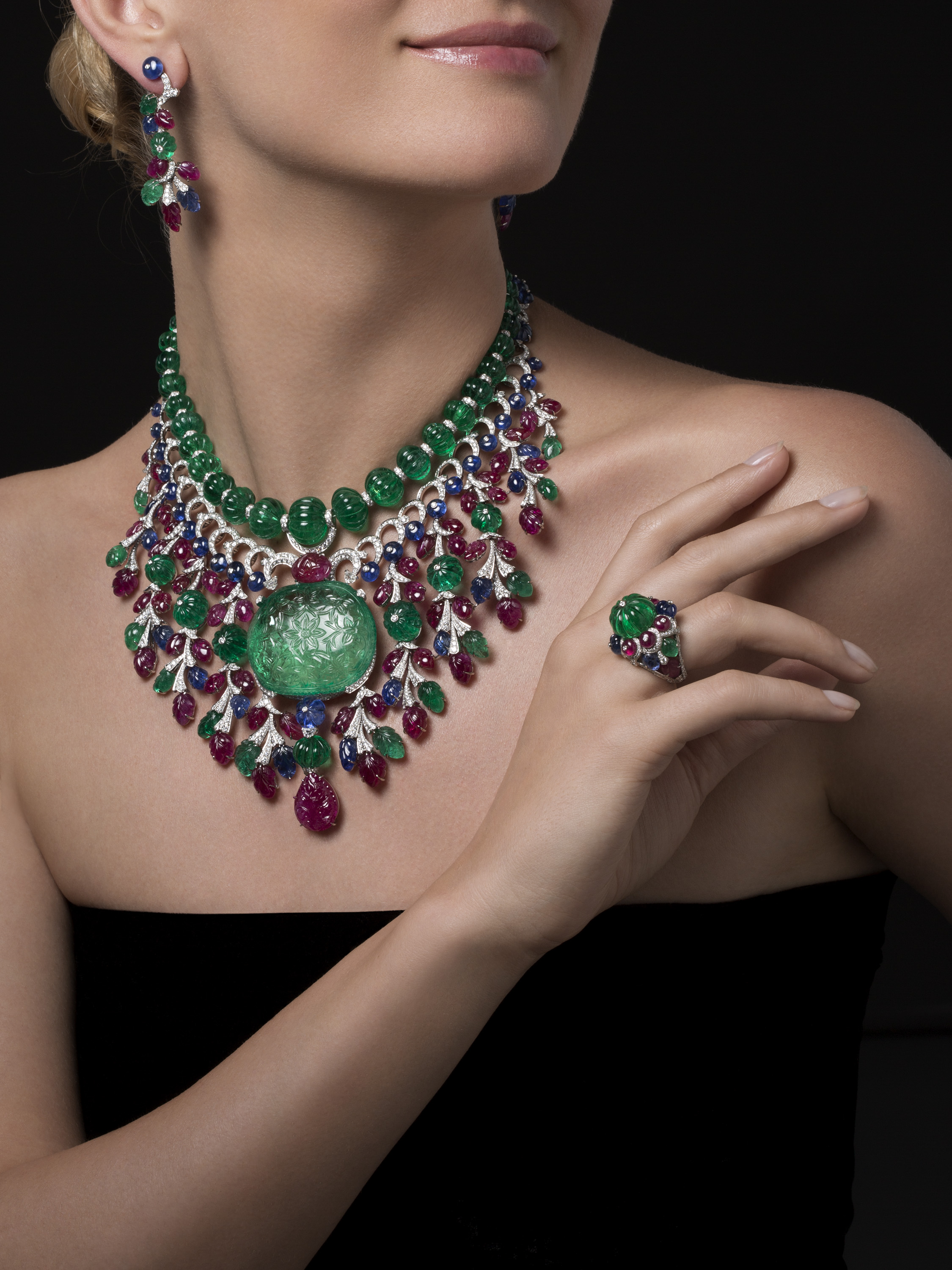
Tutti Frutti is emblematic of Cartier. Since the mid-1920s, the Maison has created precious “foliage”—as described in the in-house archives—made up of sapphires, rubies and emeralds, all carved or sculpted into botanical forms in prestigious Indian gem-cutting workshops. Bursting with headily evocative colors and shapes, these bouquets appealed to a distinguished and renowned clientele, which included Linda Porter—the wife of the famous American composer—and Daisy Fellowes. At the request of the latter, the jeweler crafted an impressive “Hindu-style” necklace laden with several hundred carved precious stones. In 2016, Cartier presented an even grander necklace called “Rajasthan” as a tribute to the Indian origins of the Tutti Frutti style.
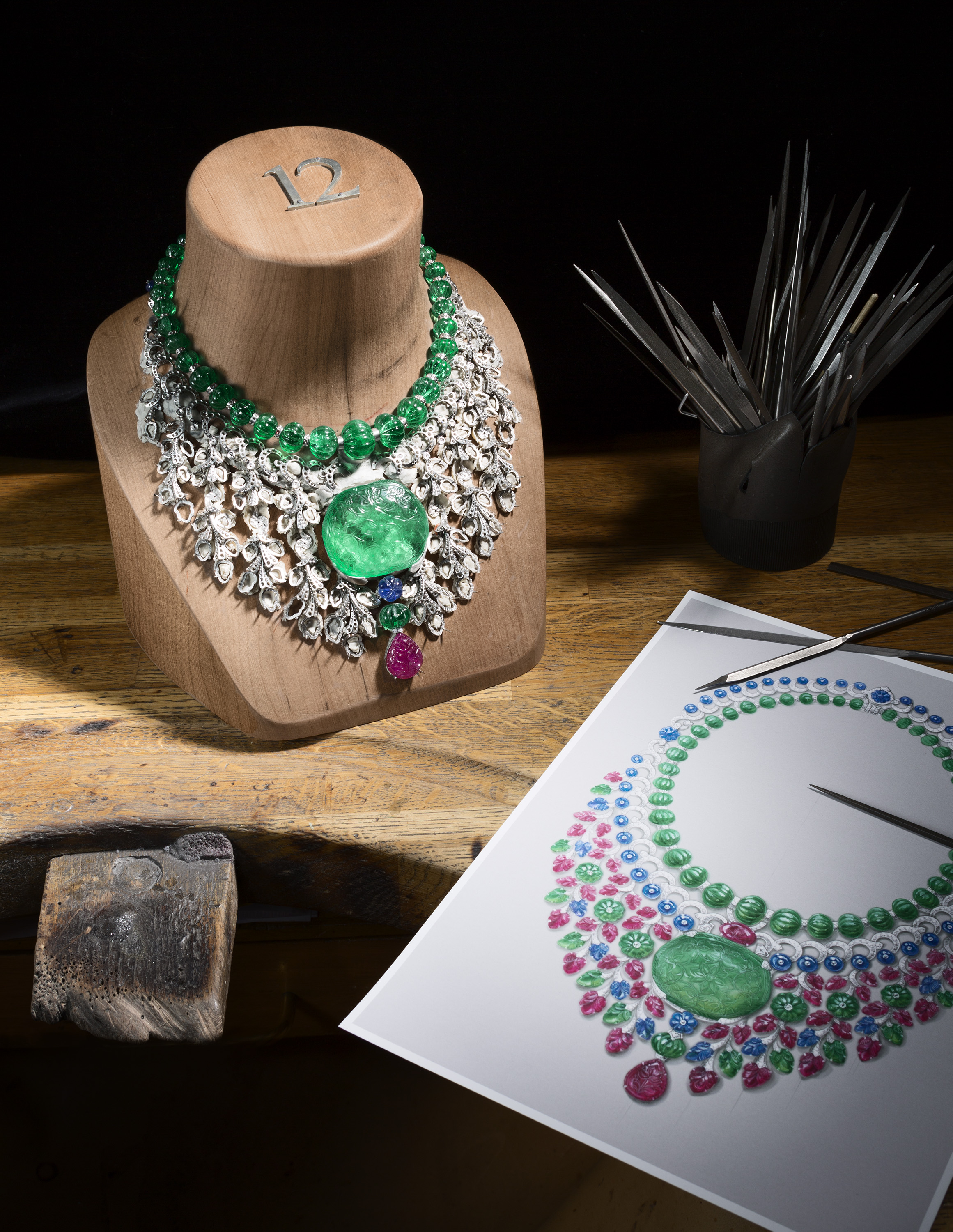
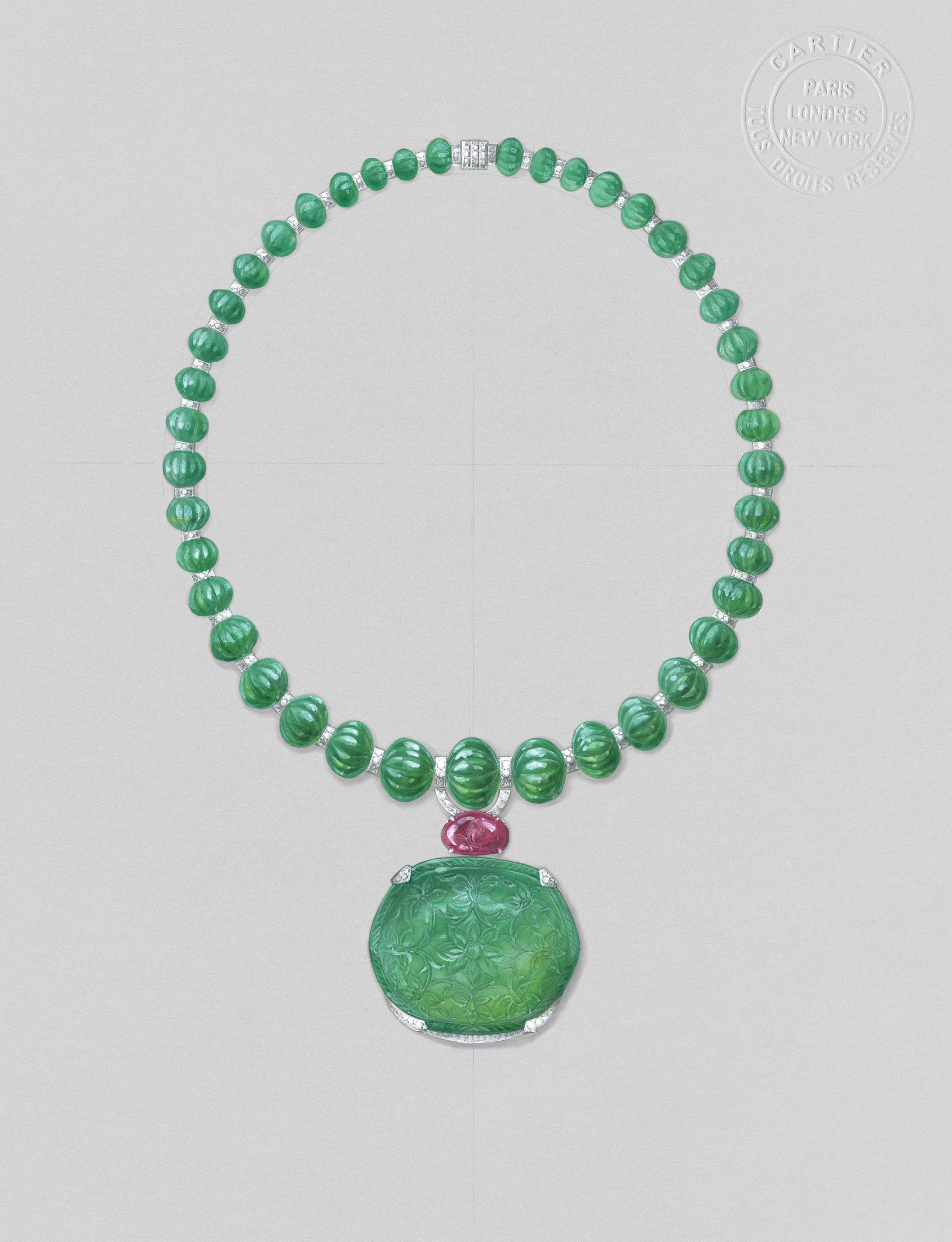
Due to the abundance of gems as well as their proportions, this spectacular piece combines every superlative. To guide their creative process, the Maison’s designers delved into the archives, carefully studying, among others, the sketch of the necklace created for the Maharani of Patna in 1935. The same fundamental elements can be seen here, beginning with the bib shape. Circular paved motifs form a border around this creation, surrounding a strand of magnificent melon-cut emerald beads. Lines of diamonds hang from the necklace like precious vines, displaying a surprising, naturalistic fluidity. In the center of the composition, Cartier has placed a 136.97-carat emerald from Colombia, whose carved floral motifs were probably executed in the famed glyptics workshops of Jaipur, in India. The convertible necklace can take on multiple forms. The strand of emerald beads, holding the impressive carved emerald, can be detached, while the central emerald can also be replaced in the bib necklace by a brooch whose motifs blend in perfectly with the piece.