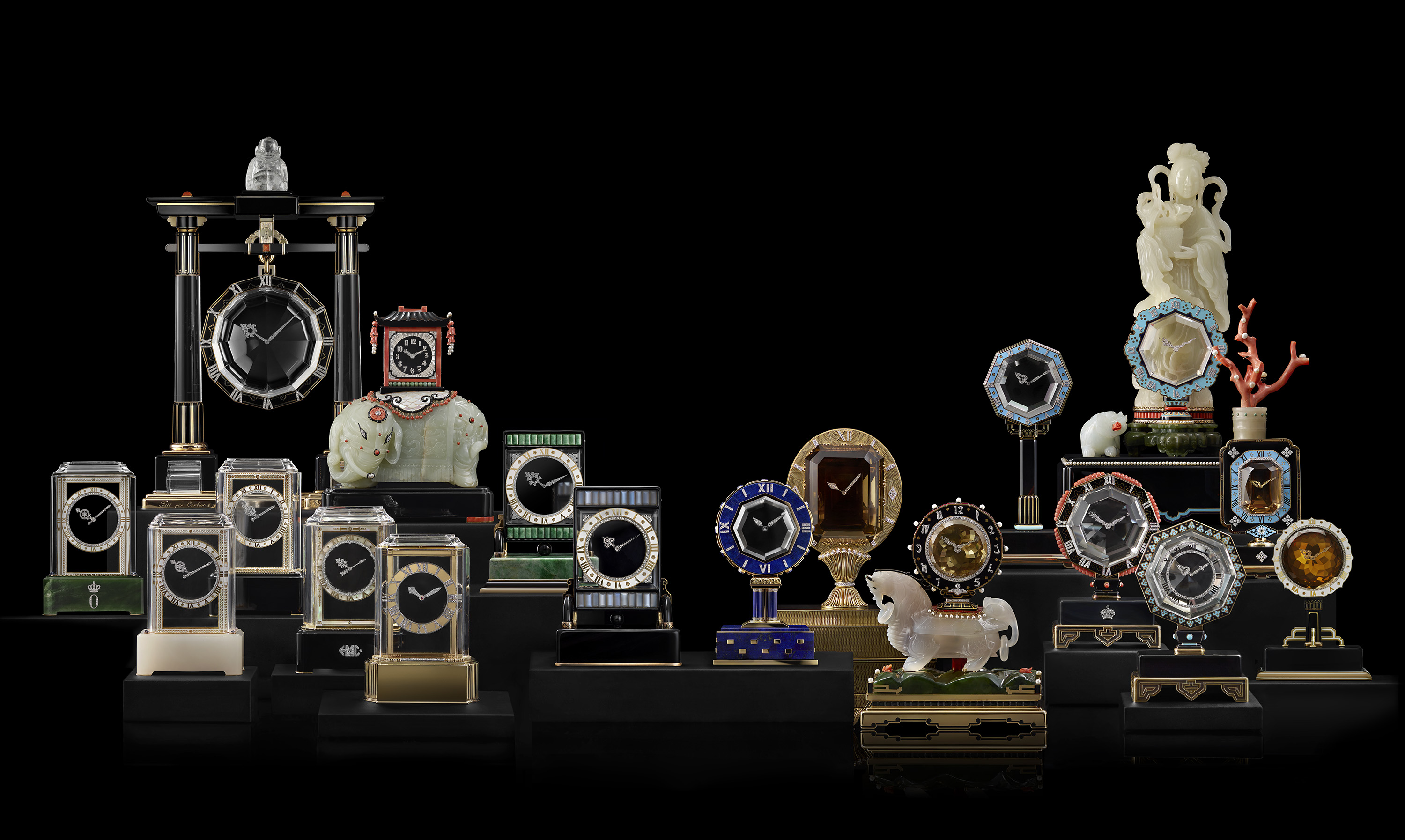
Characterized as “marvels of the clockmaker’s art” by La Gazette du Bon Ton in 1925, mystery clocks are emblematic of Cartier’s clock-making expertise. Halfway between art objects and curiosities, they are true collector’s items.
The birth of “Model A”
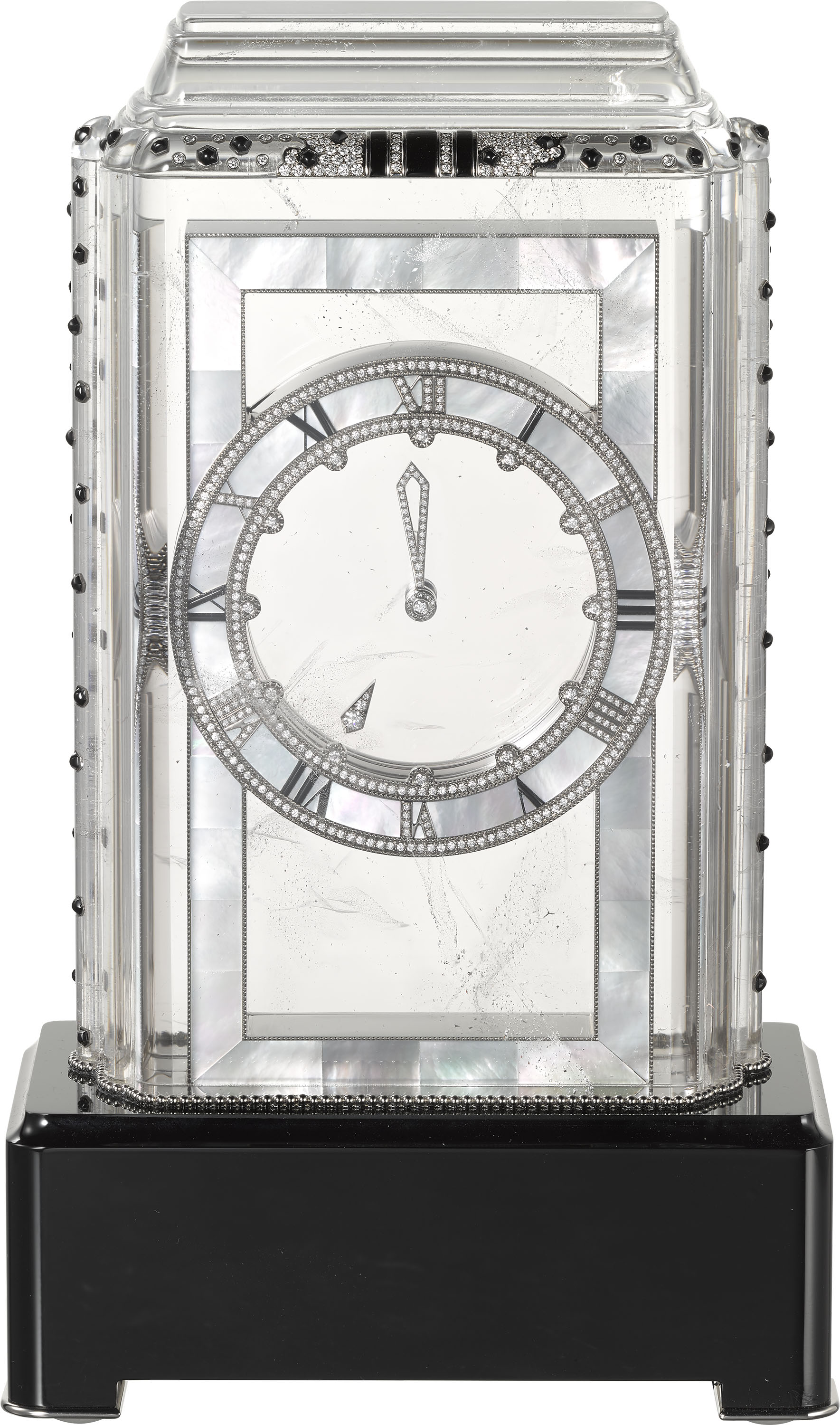
The invention of mystery clocks grew out of a meeting between Louis Cartier (1875–1942) and Maurice Coüet (1885–1963). The latter, born into a family of clockmakers, quickly developed a passion for rare models and ingenious mechanisms. Louis spotted his talent and initiated a collaboration, formalized in an exclusivity agreement in 1911 for the production of clocks. The following year, Coüet created his first mystery clock for Cartier, known as “Model A.” Its hands appeared to move in a transparent dial without any apparent mechanism.
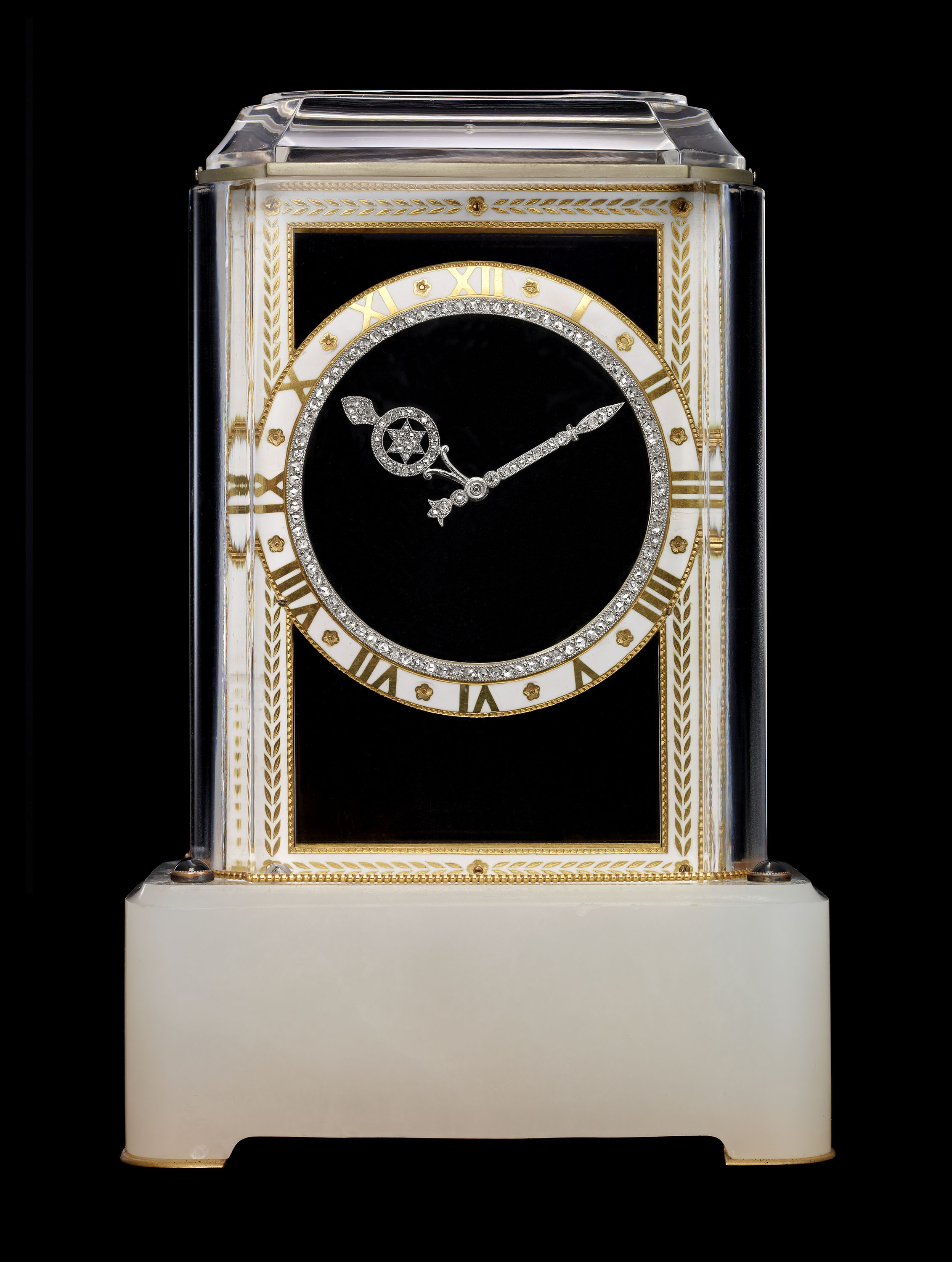
The clockmaker was probably inspired by the inventions of the French illusionist Jean-Eugène Robert-Houdin (1805–1871), but took the illusion farther. The secret of the mechanism lies in a play of transparency. Each hand is actually fixed to a glass disk with a toothed outer edge, driven by a worm gear hidden in the rim joined to the movement concealed in the base.
In addition to the mystery of their mechanism, the special feature of the “Model A” clocks lays in their essential design. They are composed of a block of rock crystal on a base of opaque stone, such as onyx or agate. The rim of the dial is outlined in a fine, linear gold ornamentation of neoclassical inspiration. The hour hand is also sometimes decorated with a star inscribed in a circle.
Unique pieces resulting from exceptional savoir-faire, some of these clocks have been acquired by leading figures, such as John Pierpont Morgan Jr., who bought one of the early Model A’s in 1913, or the Count of Greffulhe in 1914.
A diversification of forms
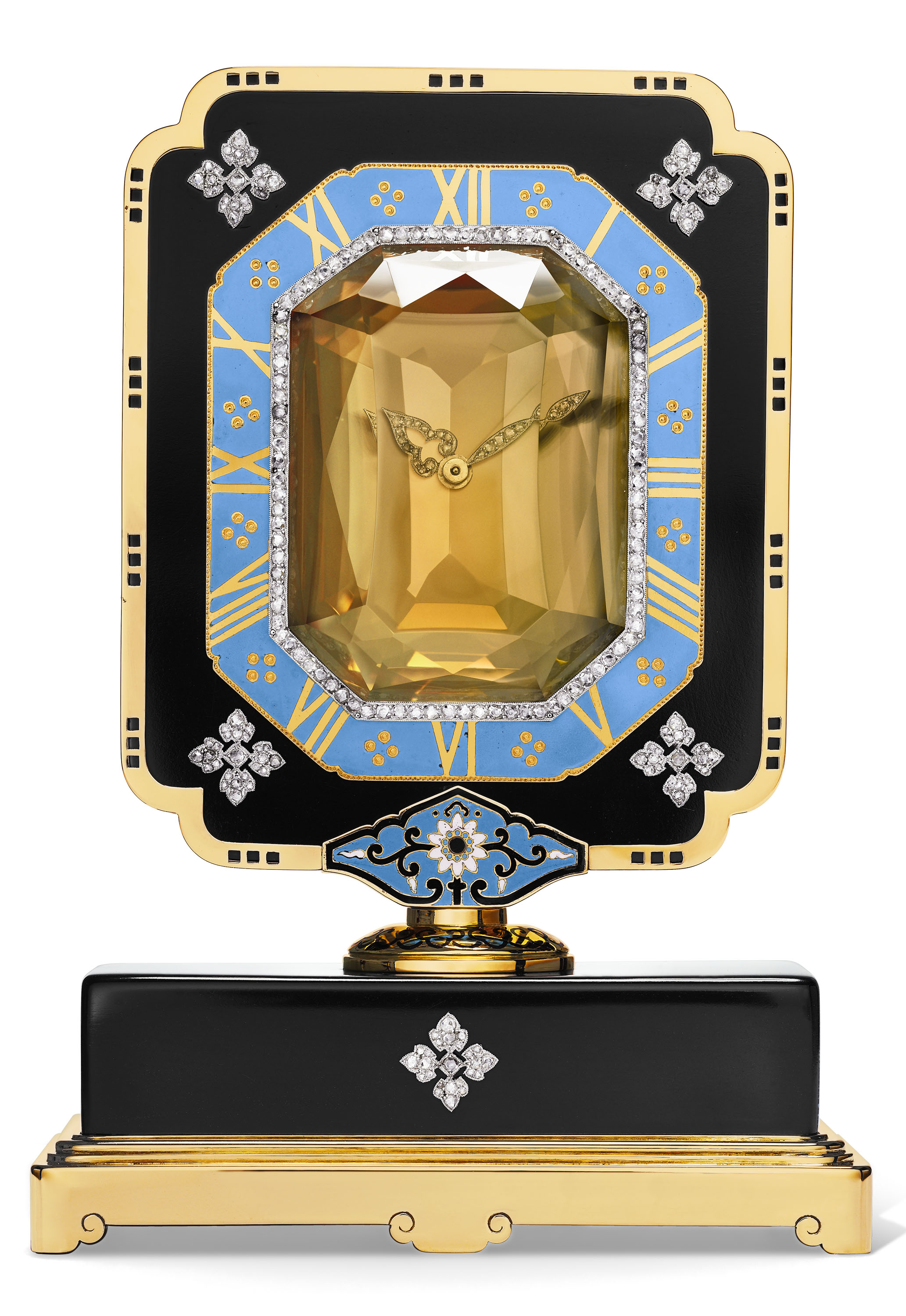
Following the success of the “Model A” mystery clocks, the pieces grew more complex and enriched in a great variety of forms. In 1920, Maurice Coüet invented mystery clocks with a central axis for Cartier. The dial, still crafted in transparent stone, was supported on a central pillar rising from the pedestal, which conceals the movement. This type of clock aptly underscores the Maison’s style, where design is expressed in harmony of composition and precision of line. The volume of dials unfolds, set with new stones, now faceted, such as citrines.
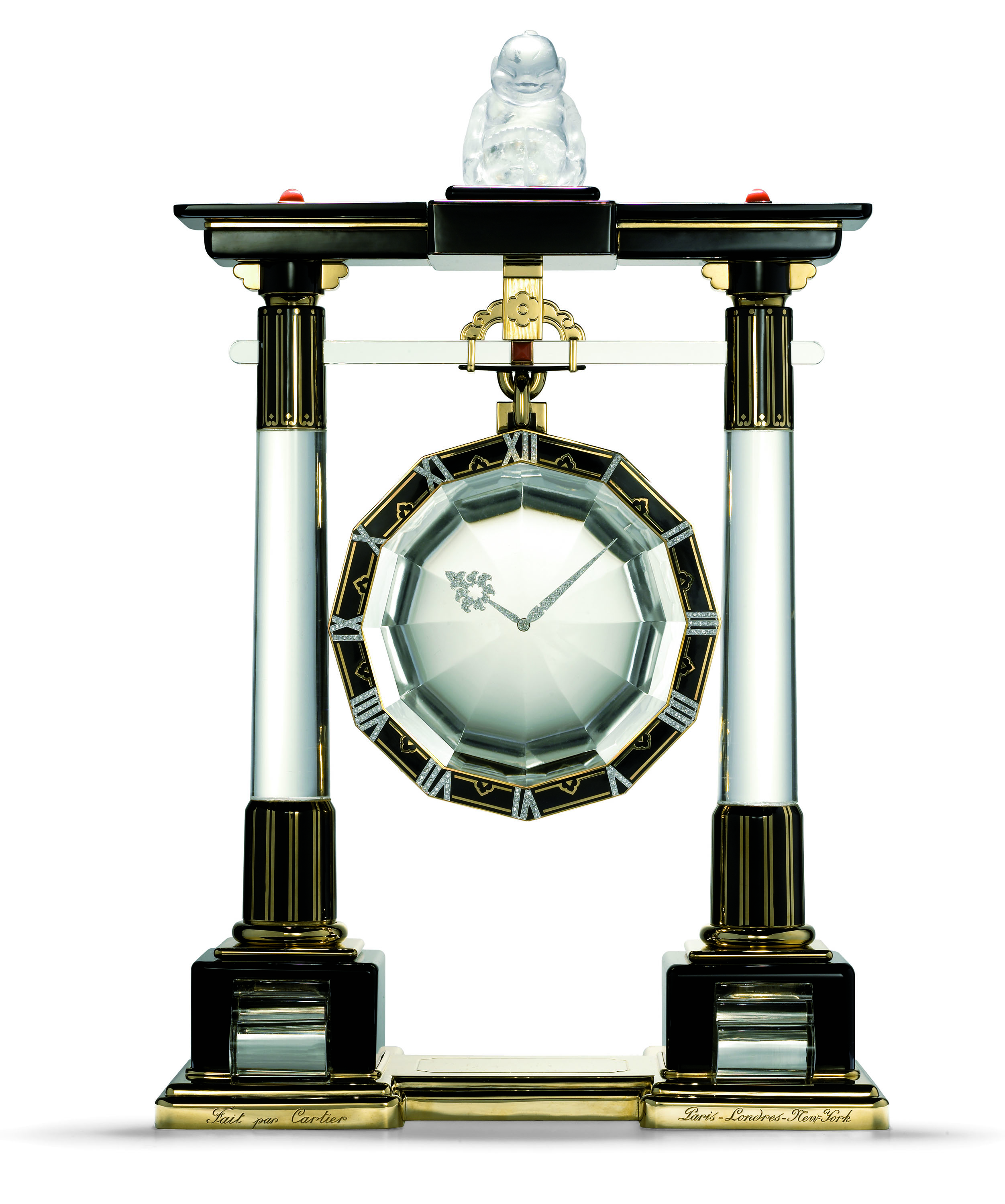
The perfection of the mechanism of the central axis clocks, and the refinement of the taste shared by Louis Cartier and Maurice Coüet for clean lines and geometry, led them quite naturally to the creation of the clock known as “Portique.” Six models of this clock were realized between 1923 and 1925. Their particularity lay in the position of the dial, which was suspended like a gong.
One of these clocks, now in the Cartier Collection, is adorned with a smiling pot-bellied deity sculpted in rock crystal: the Billiken. This figure, invented in 1908 by the American illustrator Florence Pretz, takes after jovial Japanese divinities. The structure of the clock also echoes the torii, traditional Japanese gates at the entrance to Shinto temples.
This syncretism is also found in other Cartier mystery clocks, such as a model featuring a jade elephant figurine of Chinese origin dating to the eighteenth century.
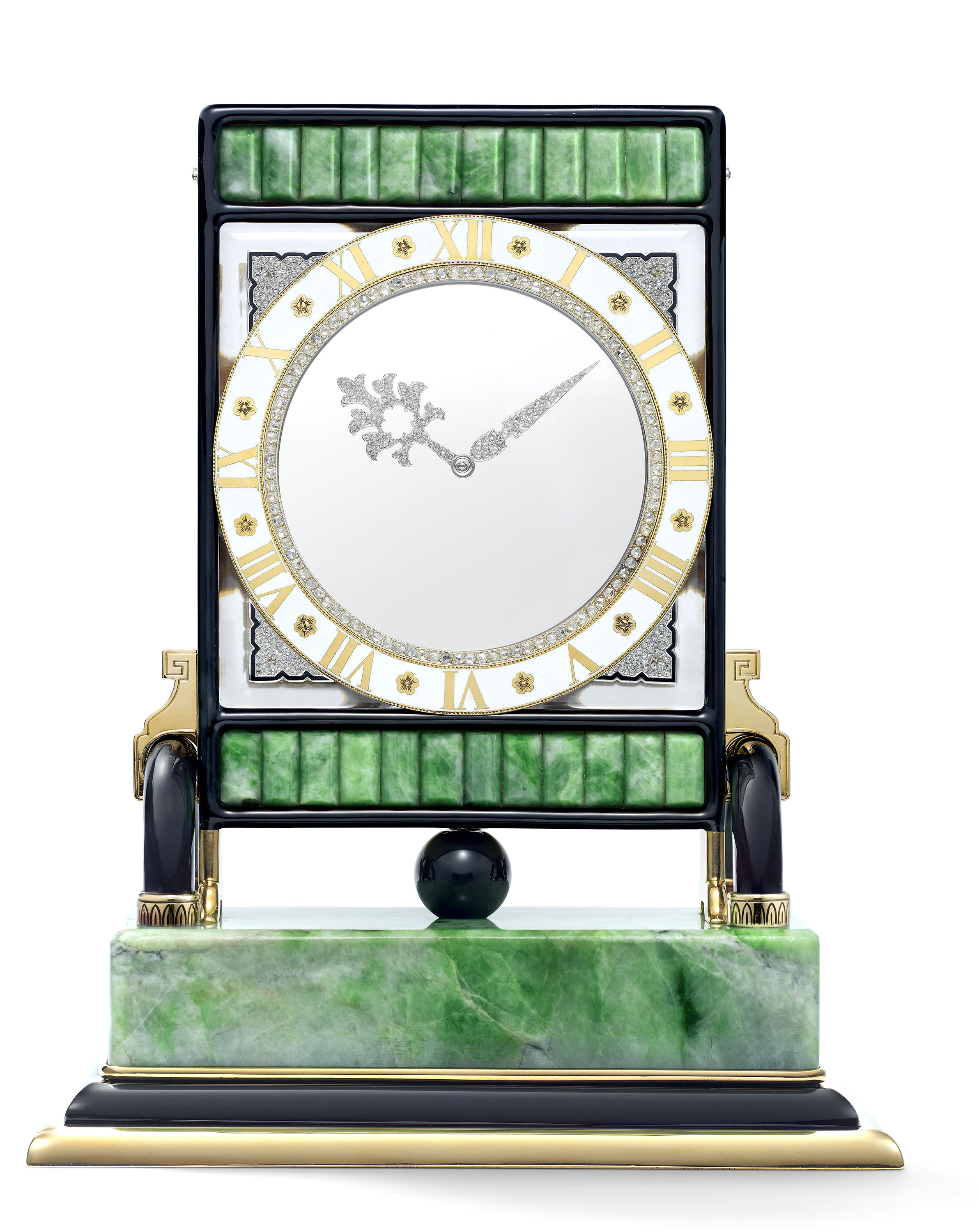
Another variation of the central pillar, the screen clock has an equally complex structure. The dial is sustained by two lateral supports mounted on a pietra dura base. A sphere between the dial and the base hides the central axis connecting the hands to the movement. The design plays with full and empty space, as well as transparency.
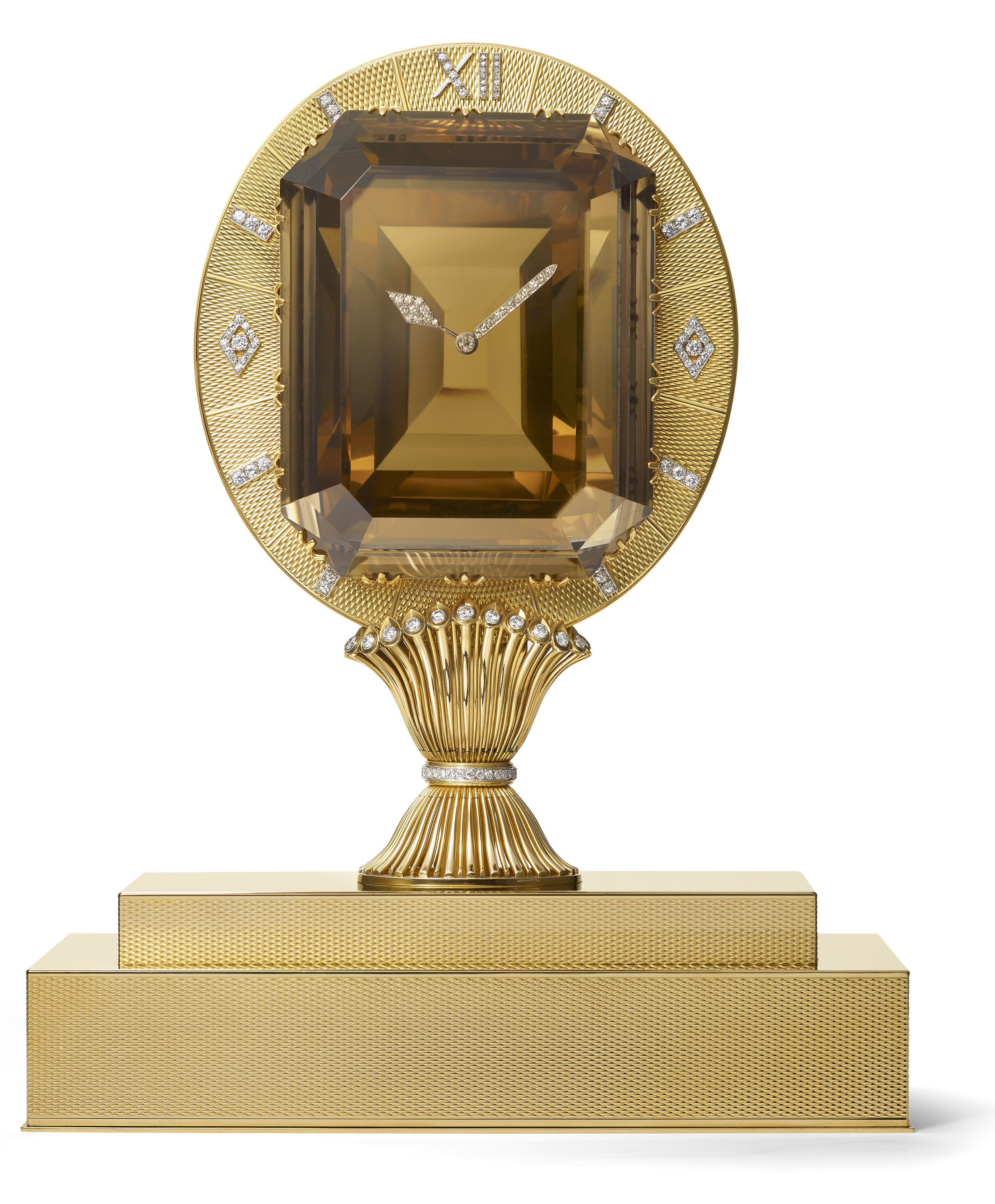
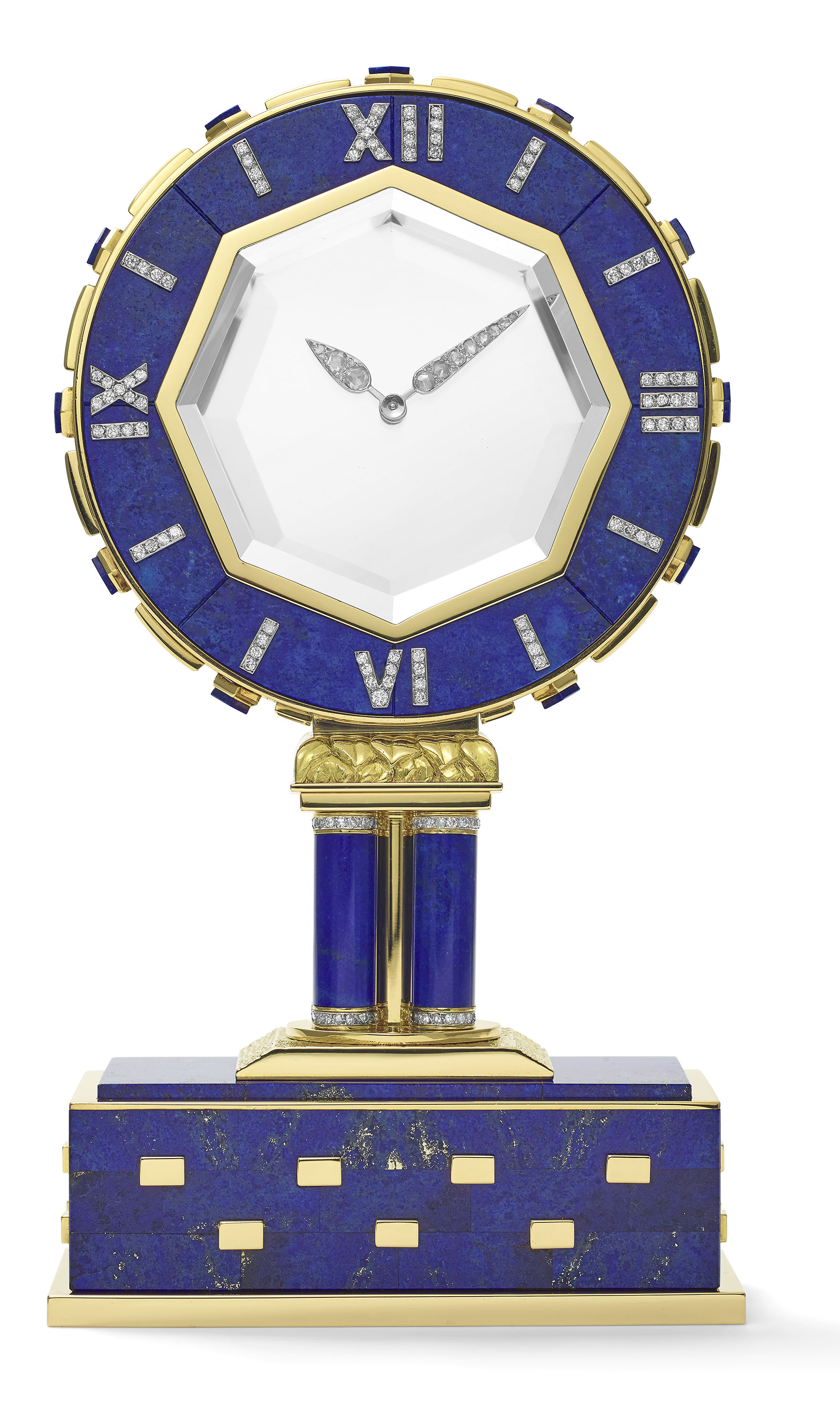
Cartier continued producing mystery clocks after World War II. The Maison’s artisans demonstrated redoubled creativity, working with the diversity of gemstones and color contrasts in an expressive registry emblematic of the Maison’s style. Bold compositions were born, such as the central axis clock created in 1956, entirely in yellow gold, with a smoked quartz dial. The clarity of precious metals is joined by the sparkle of diamonds adorning the hands and the numerals on the dial. In the 1960s, Cartier continued to cultivate the clean lines that decreed the success of the “Model A” mystery clock in the early years of the century, as evidenced by the central axis clock purchased by Barbara Hutton in 1970. The contrast between the blue of the lapis lazuli and the yellow gold of the adornments offered a touch of modernity to the sober design.
Contemporary mystery clocks
Mystery clocks have continued to be produced since 1912. Several months—and sometimes more than a year—are needed to create these timepiece treasures. They incarnate rarity and uniqueness, prized by collectors and clock-lovers alike.
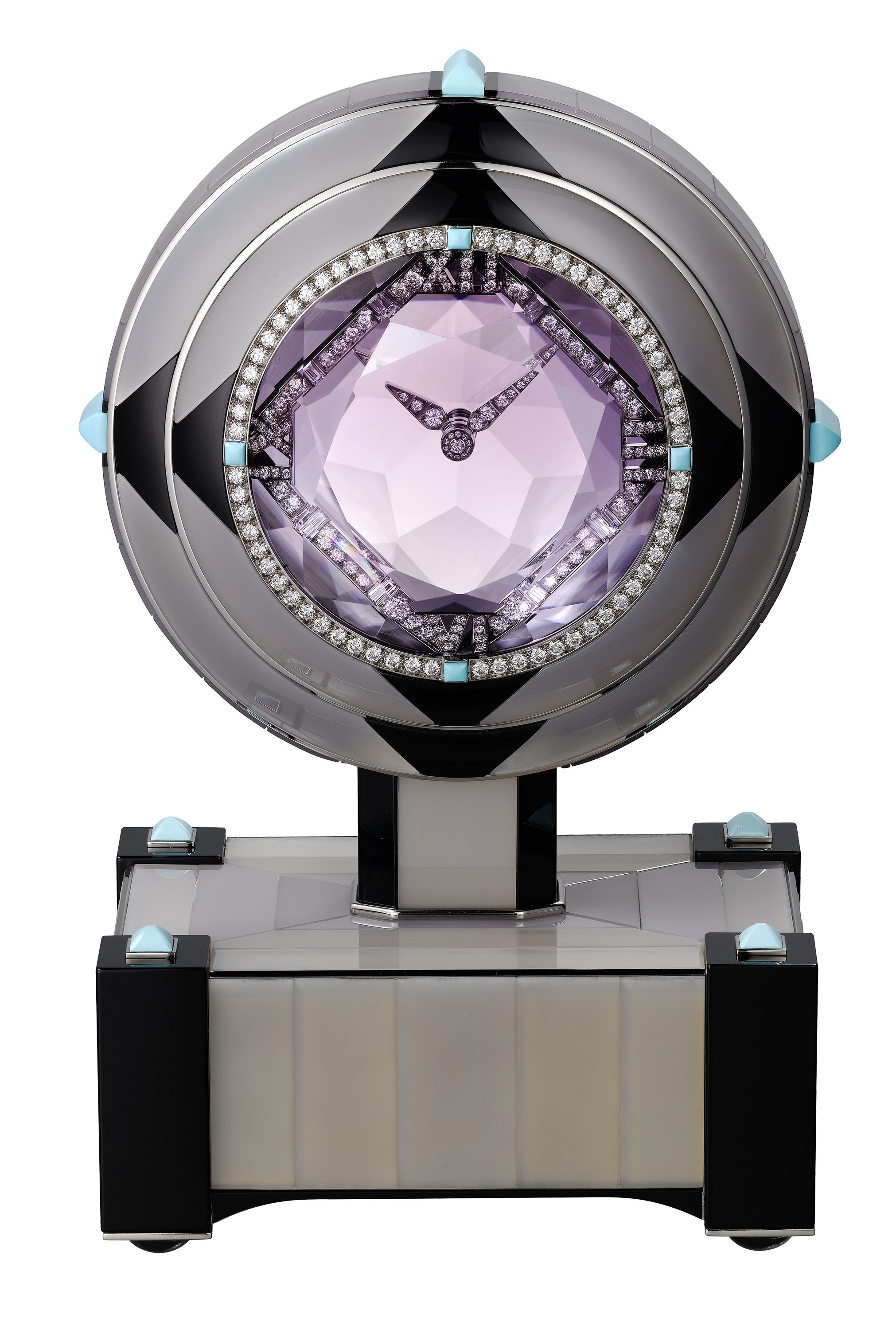
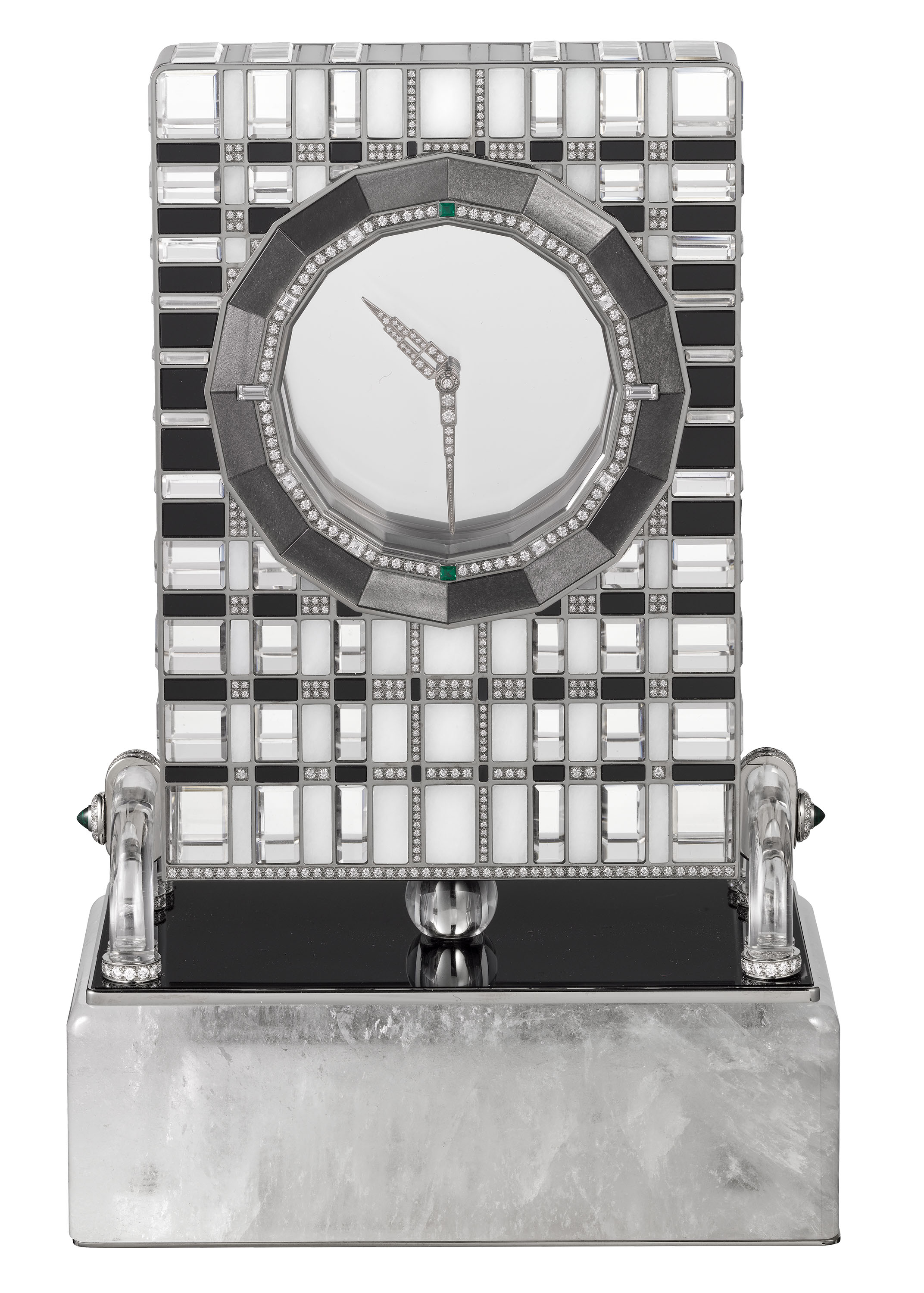
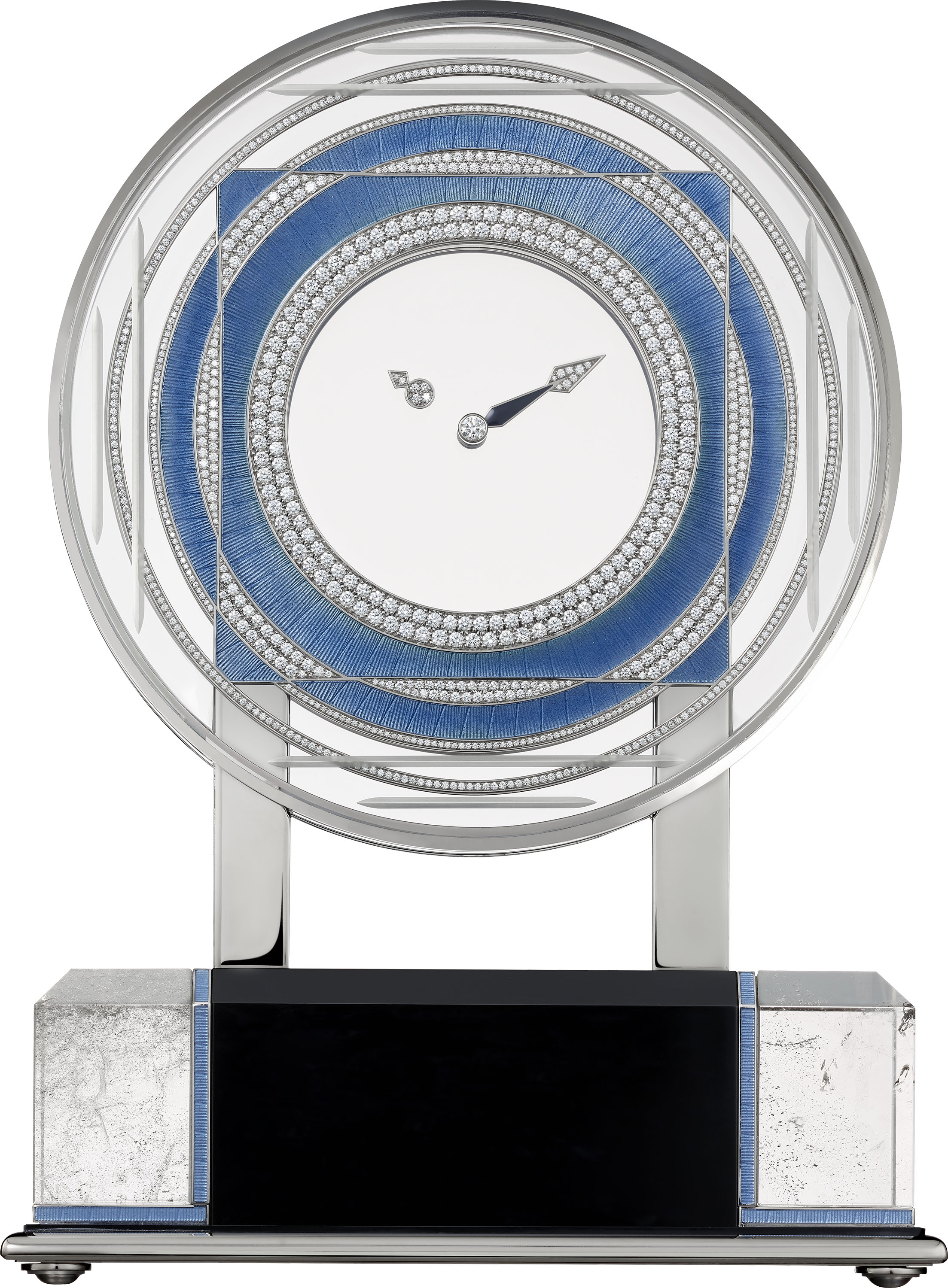
Embracing various eras and styles, mystery clocks still offer designers and artisans a broad playing ground for their imaginations. They allow them to explore volumes and shapes, to venture into daring aesthetics leveraging the illusion inherent in the mechanism, echoing the universe of High Jewlery, as exemplified in the “Model A” mystery clock presented in 2016. Its onyx and diamond lines crisscross the rock crystal creating surprising depth effects. The optical illusions proper to kinetic art also provide a new way to infuse rhythm into the design. In a mystery clock created in 2017, the rock crystal is broken up by lines of diamonds and applications in guilloche enamel, creating a captivating whorl around the dial.
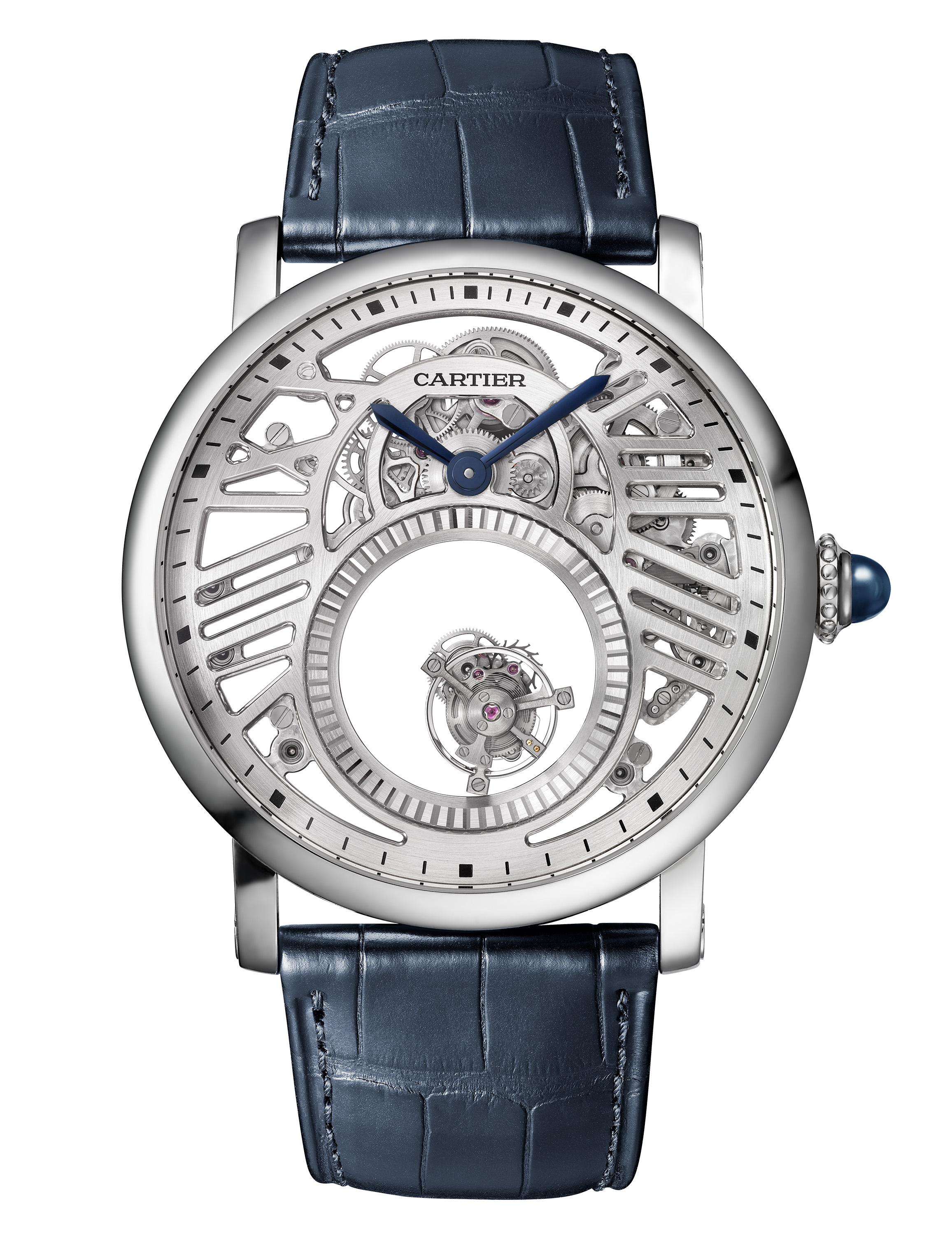
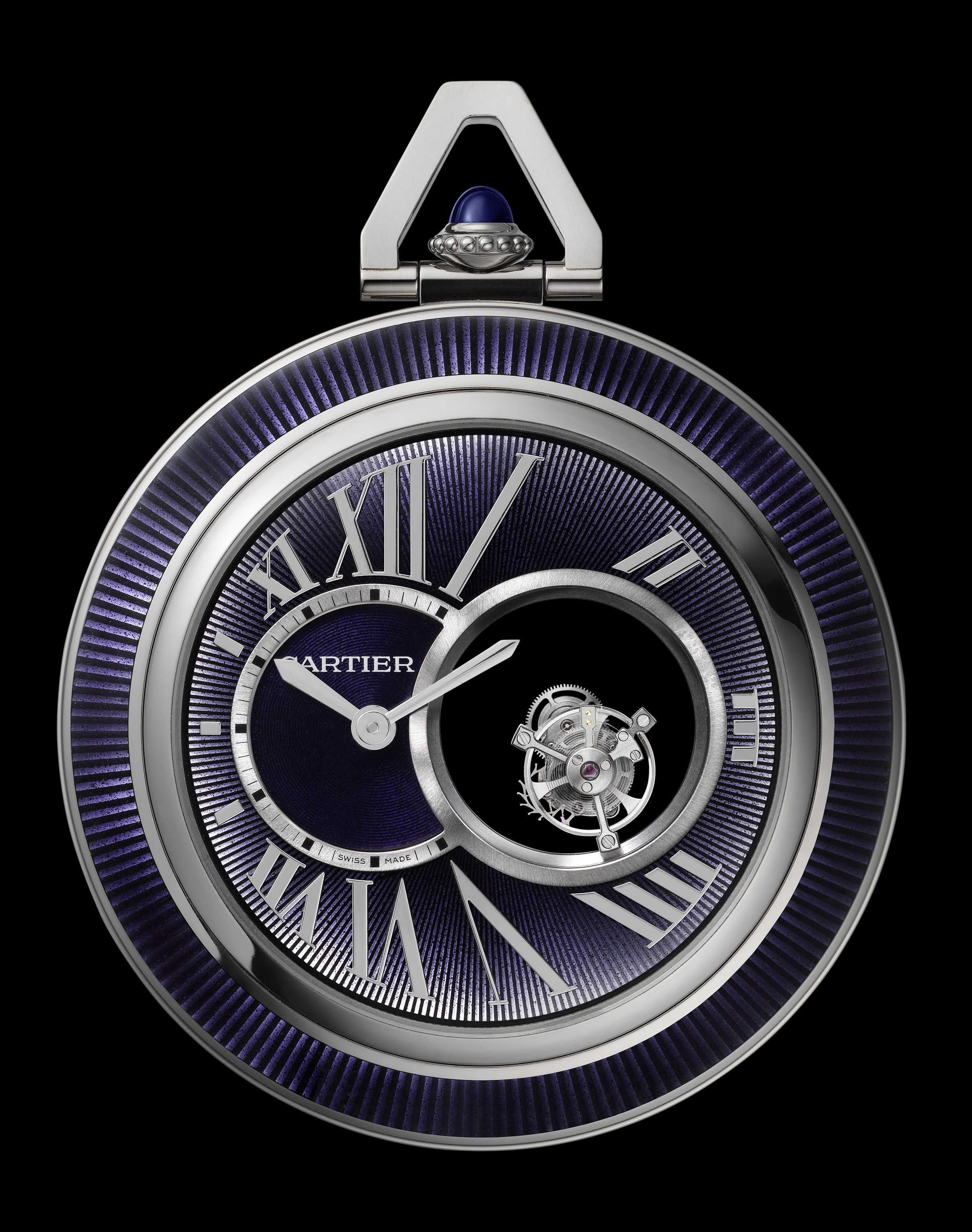
In parallel with aesthetic changes, today’s mystery clocks apply their technological advances to other sectors of horology. Embodying tradition and innovation, their mechanism is miniaturized to embellish the dials of exceptional watches. In 2013, the Rotonde de Cartier L’Heure Mystérieuse watch transposed the movement characteristic of mystery clocks to the wrist. That same year, the workshops succeeded in integrating a fundamental complication in the horology lexicon, the double tourbillon, into a mystery movement. The Rotonde de Cartier Double Tourbillon Mystérieux offers a spectacular result: the tourbillon appears suspended in the air without any apparent connection to the movement.
Today as yesterday, the magic of the mechanisms of these exceptional timepieces still has the power to amaze: it speaks volumes about the preciousness of time.